

Eleven shots, spanning seventeen long years. Yet, the trail of time narrated by Monica Biancardi (Naples, 1972) is anything but brief. Instead, it tells of a deep affection and a prolonged encounter named Saleha and Sara, two Bedouin twins the artist met during her numerous trips to Palestine. The exhibition Il capitale che cresce (The Growing Capital), curated by Chiara Gatti, open at the MAN museum in Nuoro from April 24th to June 14th, 2026, documents the sisters’ growth through black and white photographs taken with medium-format analog cameras.
The exhibition, supported by PAC 2025 – Plan for Contemporary Art, promoted by the Directorate General for Contemporary Creativity of the MIC – Ministry of Culture, is accompanied by seven maps etched on plexiglass detailing the progressive fragmentation of the Palestinian territory from 1917 to the present, a travel video retracing the journey from East Jerusalem to the village of Hataleen, and a selection of drawings exploring the theme of the sea, created by children from the community.
The exhibition also features a talk titled Il capitale che cresce: sguardi sulla Palestina che cambia (The Growing Capital: Glimpses of a Changing Palestine), scheduled for Thursday, April 23rd. This event will see the director of the MAN museum, Chiara Gatti, in conversation with Monica Biancardi, delving into the genesis of the project and its core themes – time, transformation, the right to freedom – offering the public a chance to engage with the creative and human process behind it. The exhibition catalog is published by Interlinea, with graphic design by Studio Sonnoli and critical texts by Chiara Gatti and Lorenzo Benedetti, including a conversation between Eyal Weizman and Monica Biancardi.
In this interview, Biancardi explores some of the subtexts of the exhibition project, offering critical insights into the ongoing transformations in human and cultural geographies.
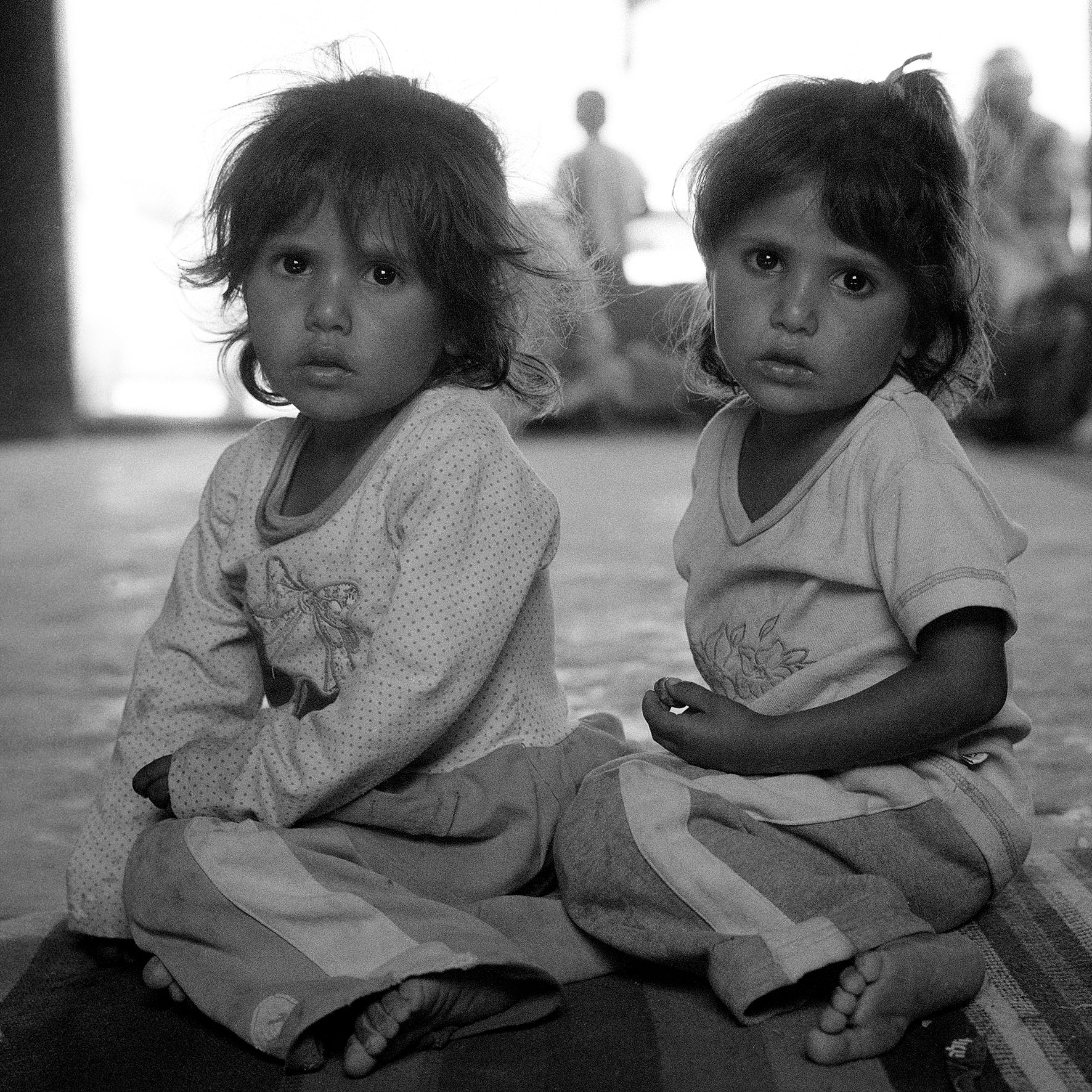
Monica Biancardi, Il capitale che cresce, Sarah and Saleha. Pigment print, 2009
In the images dedicated to the two girls, the off-frame space is not dominant, although present, while everything seems to focus on their gazes, directed towards the observer. How, by observing the eyes of the protagonists, is it possible to perceive traces of their life experiences and the historical context in which they are immersed?
«From the first moment I set foot in the Bedouin communities, I was, I dare say, drawn in by their gazes, losing myself in their depths. And the twins’ gazes, year after year, reflected a constant joy for life, dreaming of completing their studies, of starting to travel, of dressing as they wished. But after COVID, which altered the course of the planet, a tension and unease began to emanate from those splendid eyes: the dimension of reality had swept away the dream, replaced by resignation. Having passed childhood, they were forced to abandon their studies to be offered in marriage to the highest bidder.»
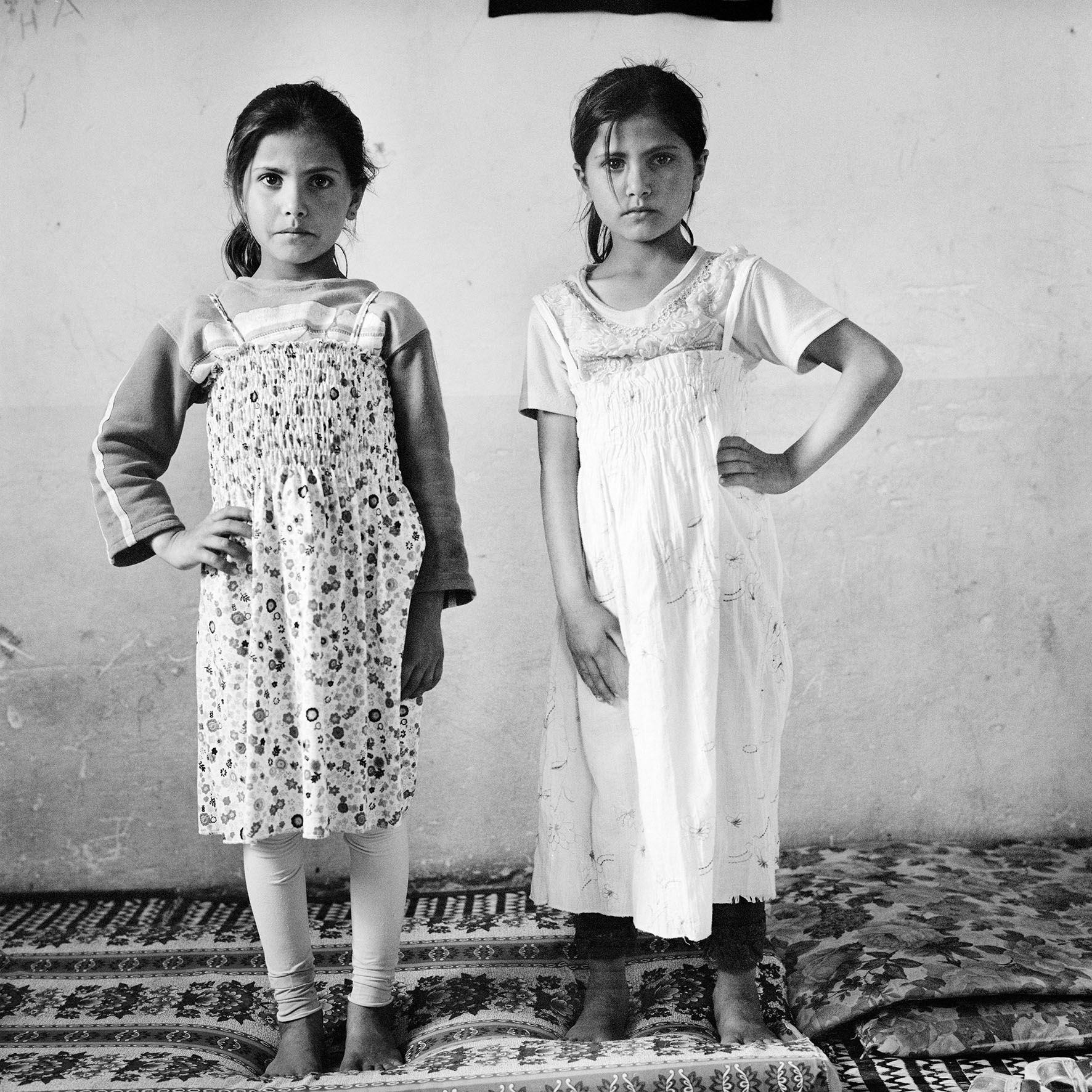
Monica Biancardi, Il capitale che cresce, Sarah and Saleha. Pigment print, 2013
The two girls share the name “Saleha/Sarah,” which in Hebrew means “princess” or “noble woman.” Is there a dissonance between the etymology of the name and the treatment they receive from the political reality they live daily? Was this contrast intentional from the beginning of your work, or did it emerge during the process? Did it open a reflection in your research?
«As Eyal Weizman observes in the conversation we have in the book accompanying the exhibition, twinhood reveals magic regarding similarity, but also unease. Initially, I had no idea where immortalizing the growth of the two girls year after year would lead me. Over time, the work has gained meaning, leading me to conceive of the beautiful twins as the face of the land they inhabit, divided between Palestine and Israel. Though conceived and born from the same womb, they present different characteristics. The twins embody, in their manners, gestures, and voices, the status of ‘princesses’ who are not allowed to move, to be nomadic, despite being Bedouin. They live within the clan in the Hebron desert, designated as Area C, of great interest to the Israelis, who subject them to continuous constrictions, dramatically worsened after October 7, 2023. Paradoxically, they have become settled nomads.»
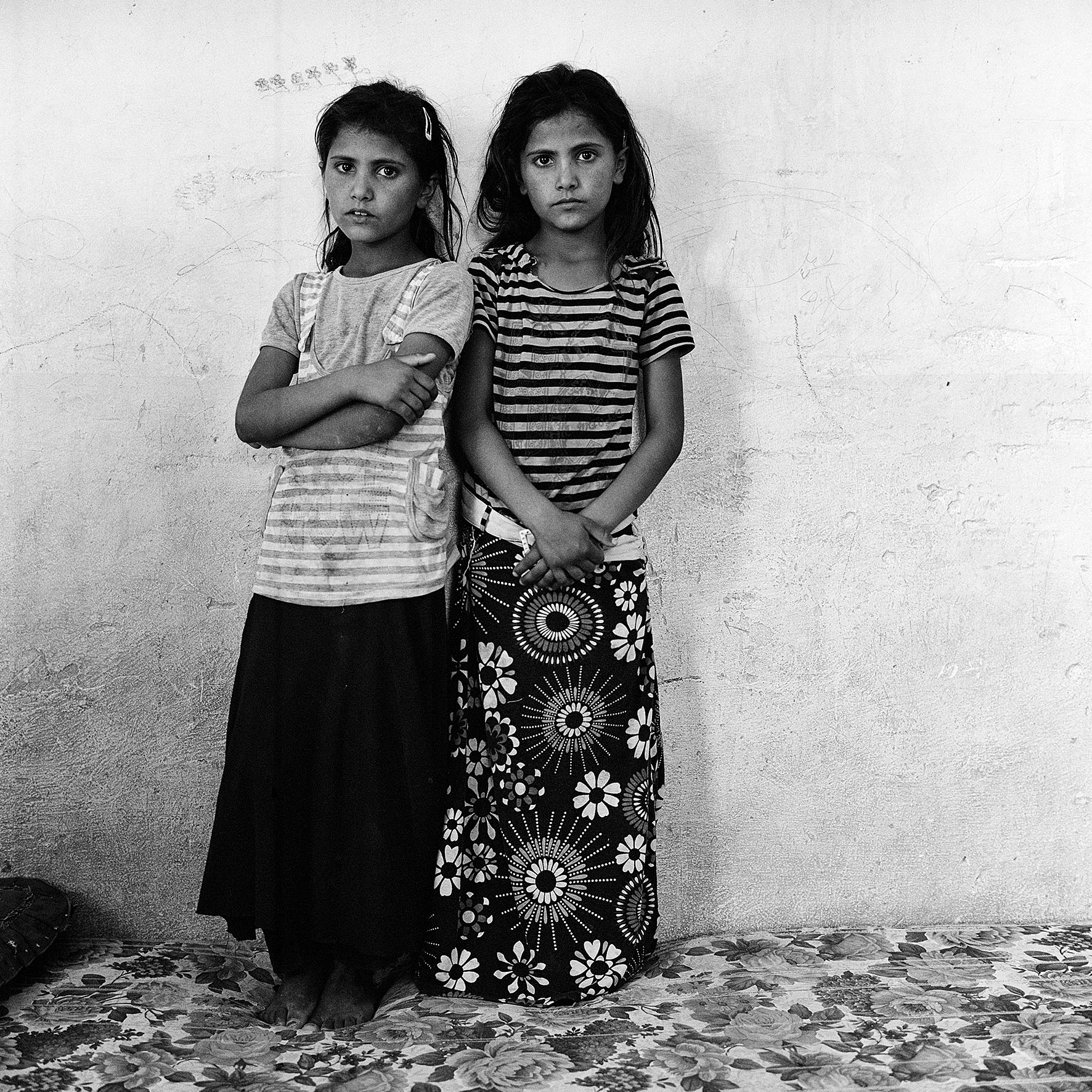
Monica Biancardi, Il capitale che cresce, Sarah and Saleha. Pigment print, 2014
If you were to put yourself in the shoes of a “curator” of the drawings by the children of Hataleen village, what common thread would you identify in how they represent the sea? What kind of imagery and emotion emerges, in your opinion, in those who have never had access to that space?
«From the drawings, I identify the representation of an unknown, boundless mass, which translates into the use of any color that overflows the boundaries, meaning the sheet of paper, where everything is possible. I believe that when experience with reality is denied, what emerges is the imagination of an endless place, made of absolute freedom, and consequently, a space to hold desires.»
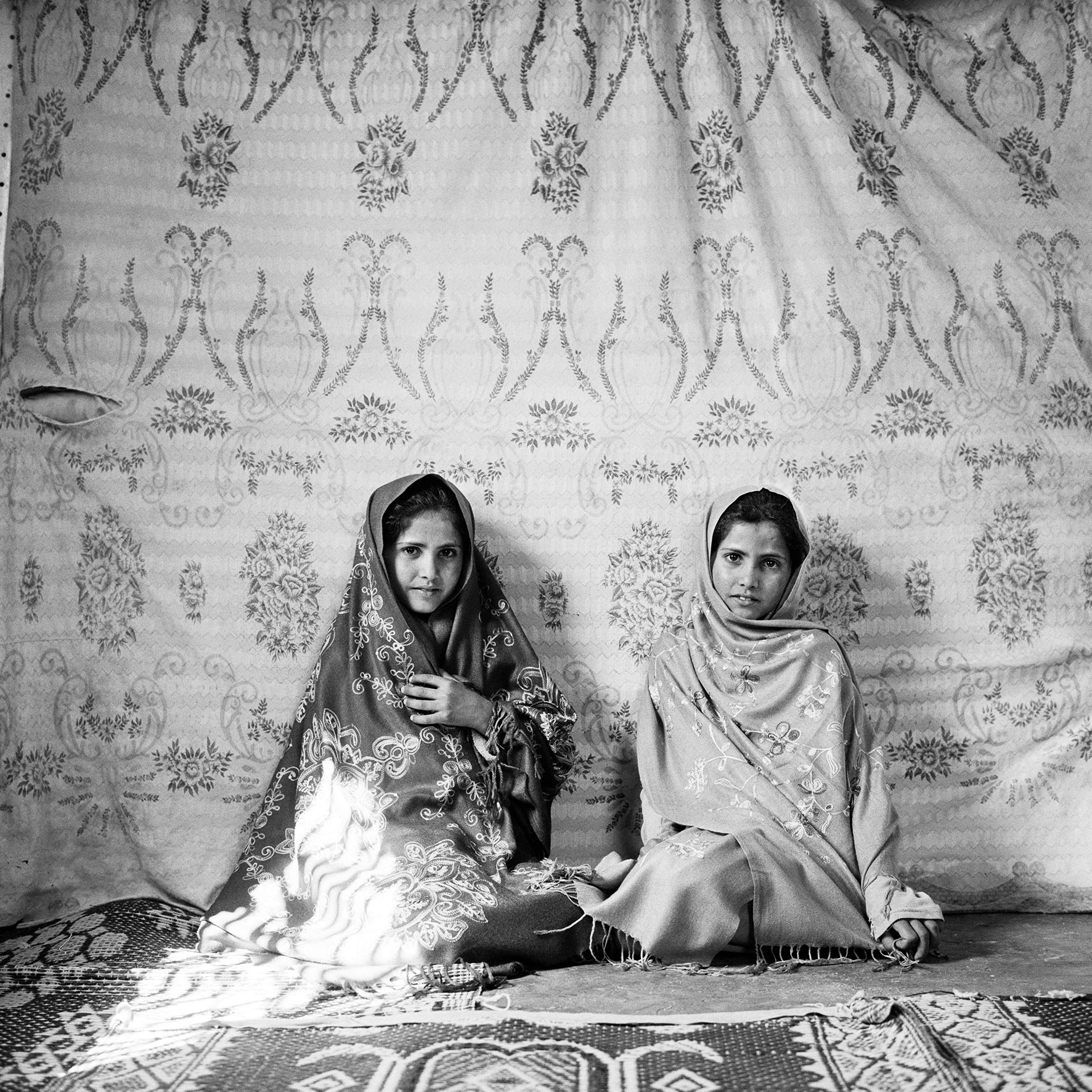
Monica Biancardi, Il capitale che cresce, Sarah and Saleha. Pigment print, 2015
Il capitale che cresce is a “double” title, like the twin protagonists, because on one hand, it seems to indicate a sense related to human capital, and on the other, it suggests an economic reading of a capitalist system that often has little to do with human lives. What interpretation can you offer us on the title itself and what we can grasp during your exhibition?
«The title rightly implies a dual meaning that intertwines the geopolitical and anthropological dimensions. If in the Israeli-Palestinian conflict, capital translates into the growth of territory acquired through colonization, by taking away others’ land, in the patriarchal Bedouin society, it is reflected in the female offspring: daughters, through the promise of marriage, are configured as a real economic resource.»
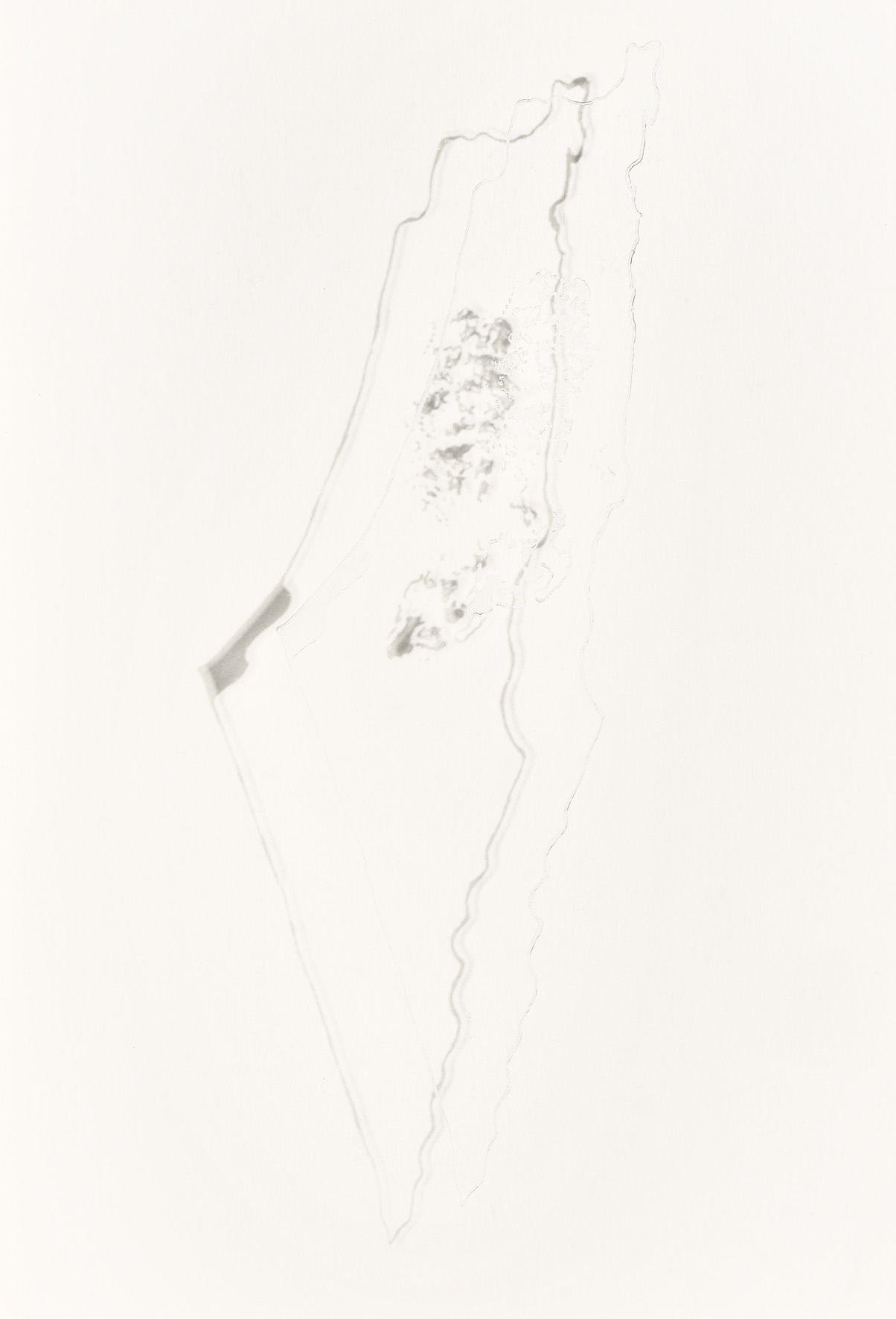
Monica Biancardi, Palestine. Etched map on plexiglass, 2023
You chose to include seven maps etched on plexiglass to depict the progressive fragmentation of the Palestinian territory from 1917 to the present. How important is it for you to offer the public a visual representation of over a century of transformations? And what historical and geographical aspects become possible keys to interpretation, according to your project?
«It is fundamental to ‘shed light’ on everything. The practice I use to represent the progressive fragmentation of a territory is etching on transparent plates (etched in negative to produce the positive). When the seven maps are illuminated, the shadow cast on the wall of the device reveals the borders defined over the years by UN cartographers. Only the last one is empty, with a pencil hanging inside its frame, awaiting the establishment of the next borders – a terrible human invention that clashes with the Universal Declaration of Human Rights.»
Justice and truth for Giulio Regeni.