Pussy Riot vs. the Biennale: A Proposal for a Pavilion of Dissent
Tensions at the Venice Giardini continue to escalate. In recent days, Finland announced a diplomatic silence in protest of the Russian Pavilion's presence, and increased pressure is coming from Brussels, which threatens to cut funding allocated to the Biennale. Adding to the already complex situation are the demands of cultural professionals and artists, such as the Pussy Riot collective.
The Russian collective, famous for its artistic protests and led by Nadya Tolokonnikova, is not only calling for Moscow's exclusion but is also advocating for an "ethical occupation" of the historic building, proposing to transform it into an exhibition space dedicated to works created by Russian political prisoners.
Pussy Riot's Counter-Narrative Strategy
The Pussy Riot's proposal aims to dismantle the Kremlin's rhetoric, which frames their return to Venice as a victory against alleged Western "cancel culture." Tolokonnikova has been very clear: while the Pavilion is Russian property, it is located on Italian soil and operates under agreements with the Biennale. Therefore, according to the activists, the Italian government and the Foundation have full political authority to say "no" to Russian propaganda and "yes" to the voices of dissident artists.
The idea is to present a "resistance exhibition" in opposition to the official exhibition, curated by Smart Art, a company linked to figures close to the government and Minister Lavrov. Displaying works created in prison would not only be an act of denunciation but also a way to recontextualize the building, transforming it from an emblem of an imperial and belligerent country into a sanctuary for the Russia that is now silenced or in exile.
Clash with Biennale Leadership
The Venice Biennale, for its part, has so far attempted to maintain a position of "neutrality." President Pietrangelo Buttafuoco has repeatedly stated that the institution rejects all forms of censorship, advocating for art as a "space for dialogue." This is a position that the dissident collective firmly rejects: "The Biennale claims the decision doesn't depend on them, but that's false. Allowing Russian participation is a political choice by Italy, not an obligatory act."
The tug-of-war is also playing out on the sanctions front. The Pussy Riot has reminded the world that while Europe opens its doors to Russian delegates, the country's "best citizens" are imprisoned for protesting the war or have been killed. The silence of institutions, for the collective, amounts to complicity with Russian soft power, which Moscow has now fully integrated into its military doctrine.
Towards May 9th: The Pavilion as a Battlefield
As the exhibition The Tree is Rooted in the Sky prepares to open, the atmosphere in Venice is incandescent. The pressure from the Pussy Riot, along with over 6,000 signatories of an international petition against Russia's presence, has put the Biennale in a corner.
If the Pavilion opens its doors without changes to its program, there is a real possibility that it will become the primary target of performative actions and daily protests, transforming the entire Venetian edition into a prolonged conflict. The Pussy Riot, with their historic ability to turn the body and presence into a political weapon, have already won the image battle: whatever happens at the Giardini, the Russian Pavilion will no longer be seen as a space for art but as a space for propaganda.
Novedades — Society
La participación cultural: más allá de la mera asistencia, la necesidad de compartir el poder
```html La participación cultural: más allá de la mera asistencia, la necesidad de compartir el poder La participación se ha convertido en un término ubicuo, presente en convocatorias, proyectos europeos, programas culturales y planes de regeneración urbana. Se presenta como un
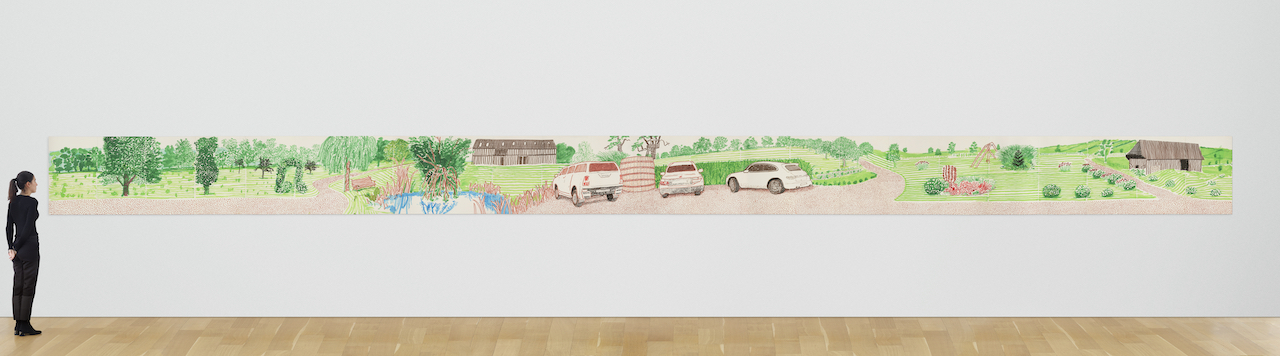
David Hockney's Monumental 12-Meter Print Heads to Christie's Auction
A truly unique lot is being offered by Christie's, available online from March 17 to 31, and on display at the major London galleries until March 31. This remarkable piece is one of David Hockney's largest creations, a staggering 12 meters long, printed on a single sheet of paper, and his most

El Greco Masterpiece Uncovered in Vatican: Hidden Under a Forgery
Art history is frequently punctuated by unexpected and serendipitous discoveries. Among these is the latest revelation from the Vatican Museums, where a routine conservation intervention has brought to light an authentic painting by El Greco, which had remained invisible for decades beneath a

Modena's Gate26A Hosts Aleksandr Nuss's Art: Where Matter Erodes and Light Reveals
Modena offers a serene escape from the vibrant chaos of nearby Bologna, presenting itself as an ordered and pristine city, a tranquil setting for everyday life. Within this calm environment, an independent space named Gate26A, founded by a collective of four individuals, injects a dynamic ener

Peggy Guggenheim's London Years: The Birth of a Collector in Venice Exhibition
Many are unaware of a crucial, often overlooked chapter in the life of Peggy Guggenheim, the visionary who transformed a palazzo on the Grand Canal into a bastion of modernism: her entrepreneurial venture with the Guggenheim Jeune gallery in London. The exhibition, Peggy Guggenheim in London: B
Selvatica 2026 in Biella: Art and Nature in Dialogue, Featuring Historical Authors and New Talents
The eleventh edition of Selvatica – Art and Nature in Festival, a biennial event held in Piazzo, Biella's historic district, has commenced and will run until July 19, 2026. The festival aims to foster a dialogue between artistic languages, scientific research, and educational practices to crea