Nanni Balestrini's Illustrated Revolt
Frittelli Arte Contemporanea is hosting a significant exhibition, seven years after the passing of Nanni Balestrini (1935–2019). The show offers a fresh perspective on his work, moving beyond a simple chronological recounting to provide a deeper understanding. Born in Milan in 1935, Balestrini is recognized as a pivotal, radical, and influential figure in Italian culture of the latter half of the twentieth century. A prominent member of the Neo-avant-garde and Gruppo 63, his artistic journey inextricably intertwined poetry, visual arts, and political commitment.
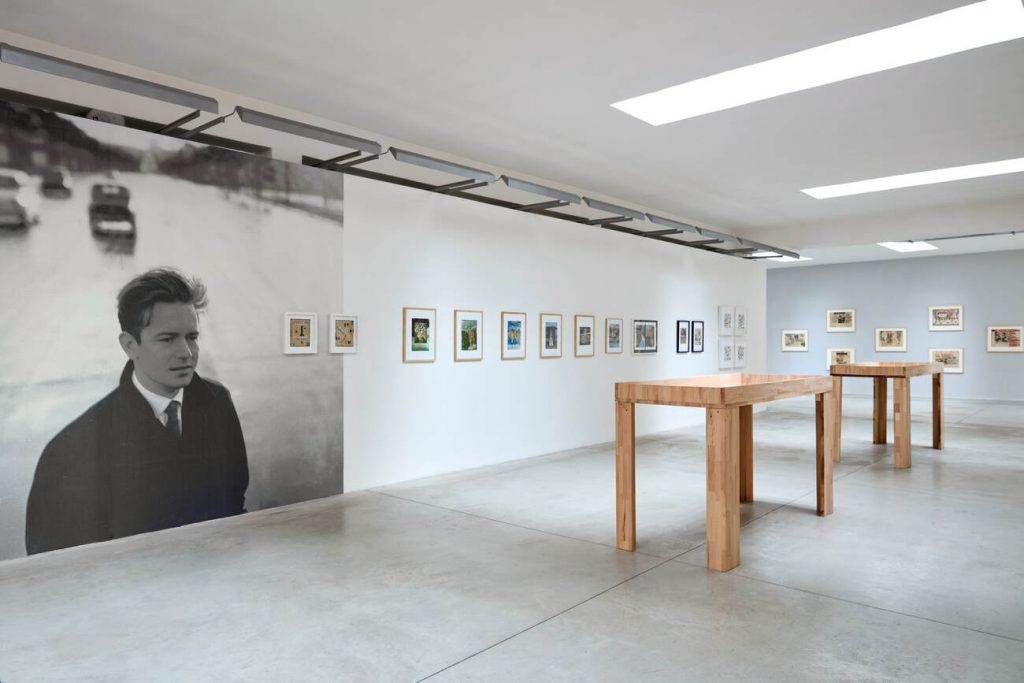
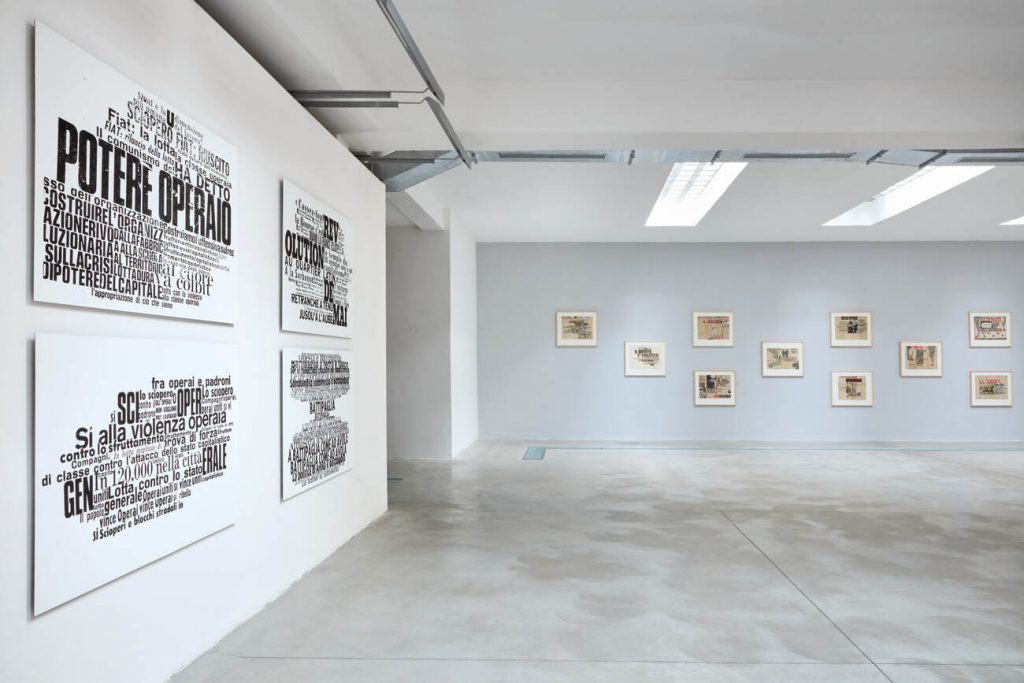
Curated by Marco Scotini, this comprehensive retrospective spans over fifty years of Balestrini's career, gathering more than one hundred works, including pieces on paper, pictorial compositions, and collages. The selection ranges from his early 1960s series, Qualcosapertutti (1961-65), to later compositions created shortly before his death, such as La machine à fantasmes (2015) and Cento fiori (2018). The exhibition path, open until April 17, delves into some of the artist's most significant thematic cycles, offering a holistic view of his research and highlighting the continuous connection between his linguistic experimentation and political intensity. His methodological approach maintained remarkable coherence across decades, with montage and seriality forming the core of an ever-evolving practice. This underscores how his visual production is inseparable from his literary and poetic endeavors. Newspaper clippings, slogans, and political texts are deconstructed and reassembled, creating a visual language that defies traditional discursive linearity, where words and images coexist on an equal plane.
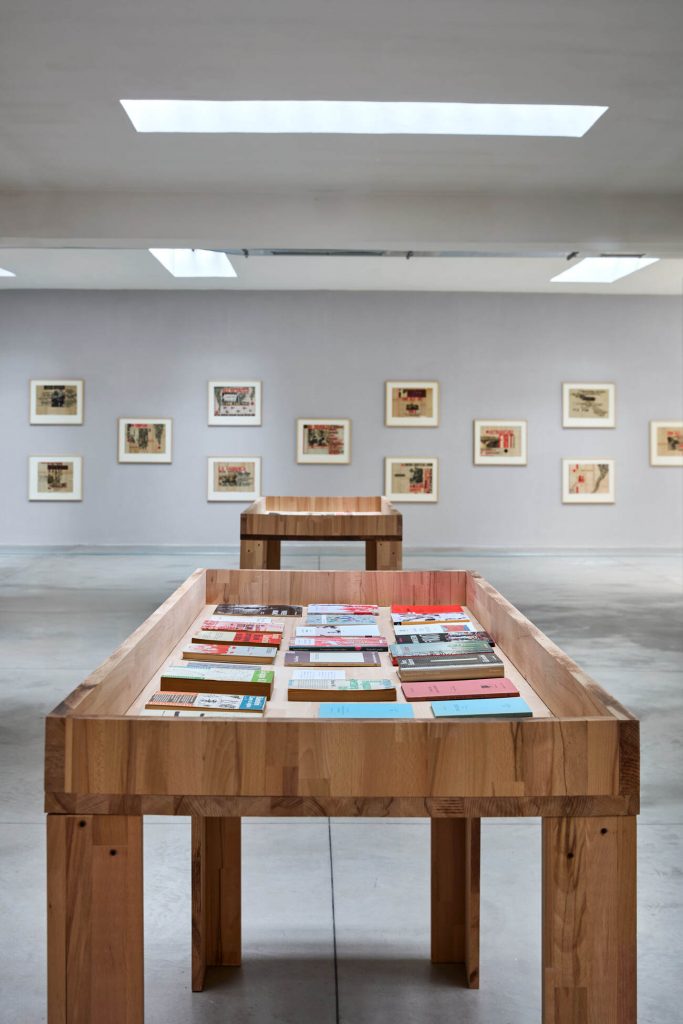
Throughout the exhibition, the viewer is invited to a dynamic experience, constantly oscillating between reading and observation. It's as if one confronts a perpetually shifting language, never static, demanding both attention and time. A closer examination, however, reveals a rigorous compositional structure where texts intermittently capture attention: some words emerge clearly, while others merge subtly with the composition, generating a fragmented narrative that prompts the visitor to actively participate in the process of meaning-making.
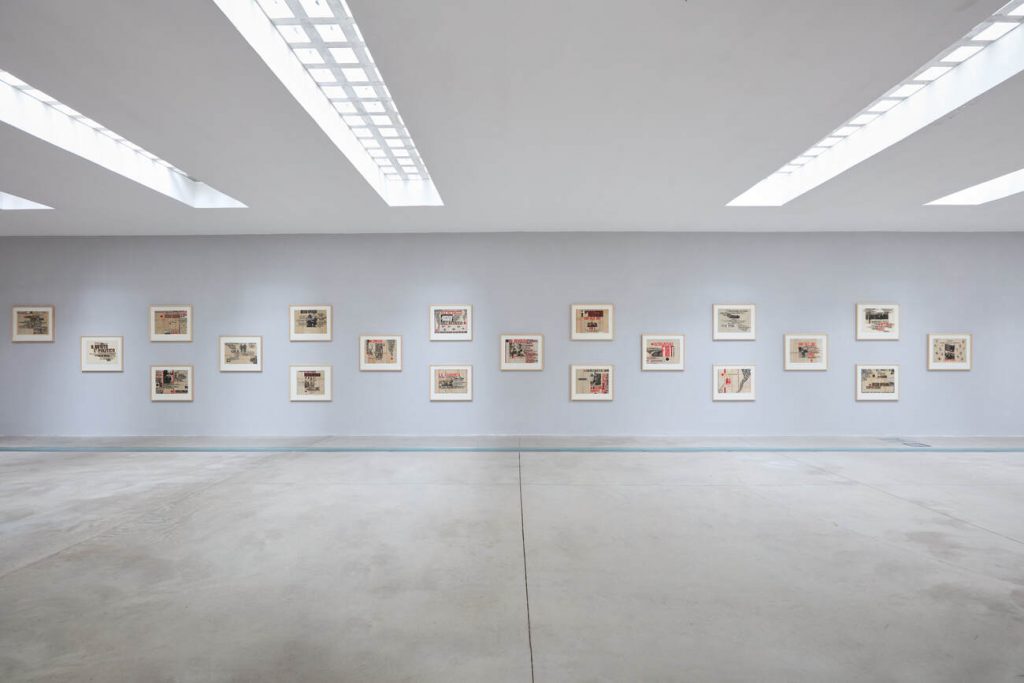
The exhibition design evokes the idea of a "Revolt" that extends beyond mere content, manifesting in the visual experience itself. It unfolds through the gallery spaces like a living archive. This tension is particularly evident in works from the 1960s and 1970s, where political engagement is more explicit. The Potere Operaio (Workers' Power) series (1975) marks a crucial point in his career, created shortly after the dissolution of the eponymous extra-parliamentary movement (active from 1967 to 1973). These works directly embody the atmosphere of those years, characterized by profound social conflicts and a redefinition of the relationship between the individual and labor. Collage, in this context, is not merely a technique but an ideological strategy that aims not to represent reality, but to incorporate it. Fragmentation becomes a means to challenge monolithic narratives of power, creating new spaces for ambiguity and resistance. The Potere Operaio series adopts an approach that mirrors the disruptive tactics of workers' movements, serving as a device that translates the historical experience of class struggles into their aesthetic extension.
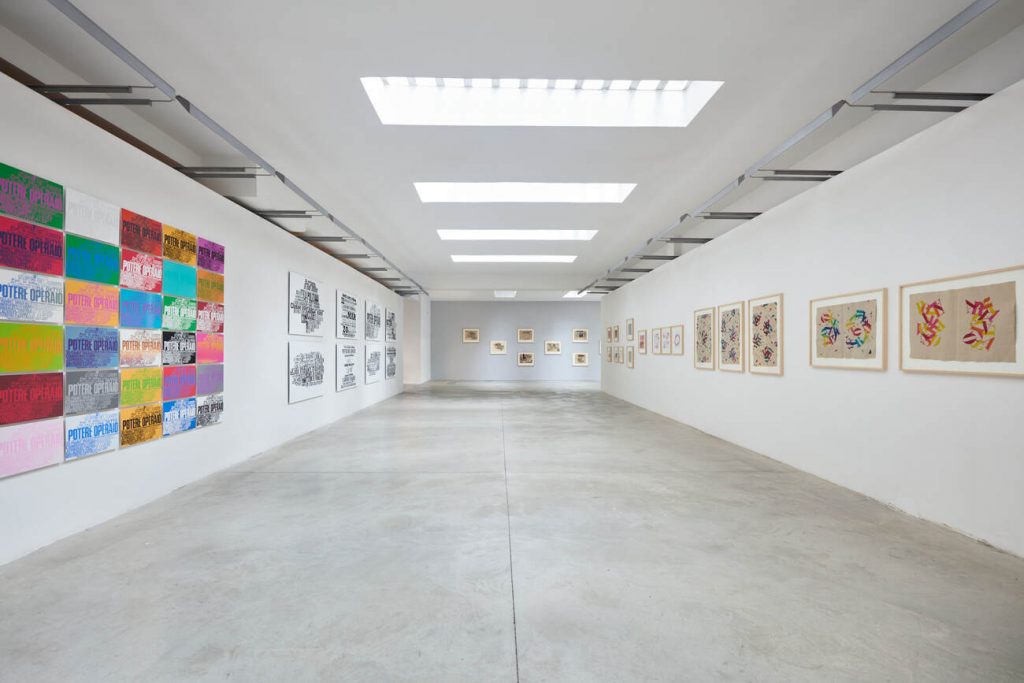
The "Revolt"—understood both in a historical-social sense and as a formal gesture—thus emerges as a permanent condition of Balestrini's practice. As in all his work, the text doesn't merely flow; instead, it explodes, inviting us to navigate space by exploring a multiplicity of possible interpretative paths. A further key to understanding can be found in the similarity between the exhibition's title and his own book, La violenza illustrata (Illustrated Violence) (Einaudi, 1976).
In his more recent works, from the 1980s to the 2010s, the artist employs plastic materials, corrugated surfaces, and superimposed color fields. His research acquires greater subtlety but no less penetration, focusing on perception and the construction of meaning. Words evolve into increasingly autonomous and abstract elements, and geometric composition takes on a predominant role in creating meaning, as exemplified by the Ondulé series (1981).
"The Illustrated Revolt" stimulates a crucial reflection on how we interpret the time we live in. By conveying the complexity of an artist capable of transforming every surface into a field of inquiry and subversion, the exhibition is not merely a retrospective. Instead, it is an opportunity to appreciate the extraordinary clarity with which Nanni Balestrini continues to challenge contemporary communication forms and utilize art as a powerful tool for questioning our present.
Novedades — Society
La participación cultural: más allá de la mera asistencia, la necesidad de compartir el poder
```html La participación cultural: más allá de la mera asistencia, la necesidad de compartir el poder La participación se ha convertido en un término ubicuo, presente en convocatorias, proyectos europeos, programas culturales y planes de regeneración urbana. Se presenta como un
David Hockney's Monumental 12-Meter Print Heads to Christie's Auction
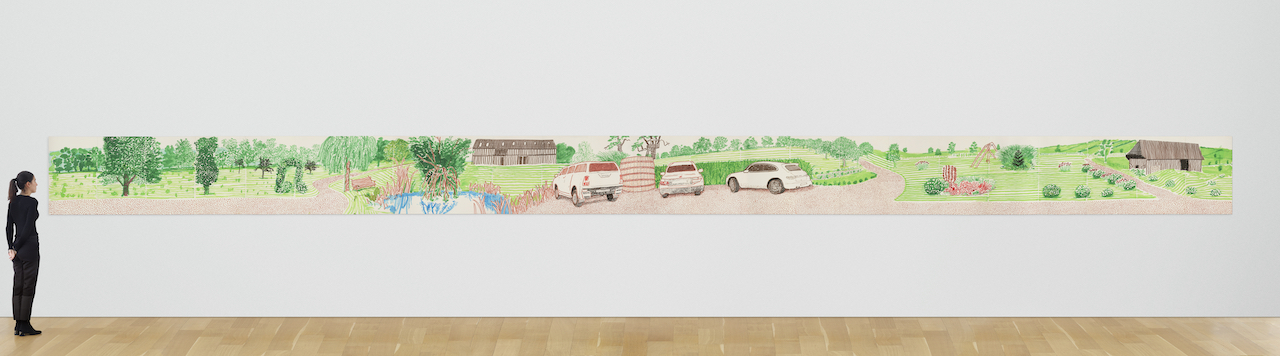
A truly unique lot is being offered by Christie's, available online from March 17 to 31, and on display at the major London galleries until March 31. This remarkable piece is one of David Hockney's largest creations, a staggering 12 meters long, printed on a single sheet of paper, and his most

El Greco Masterpiece Uncovered in Vatican: Hidden Under a Forgery
Art history is frequently punctuated by unexpected and serendipitous discoveries. Among these is the latest revelation from the Vatican Museums, where a routine conservation intervention has brought to light an authentic painting by El Greco, which had remained invisible for decades beneath a
Modena's Gate26A Hosts Aleksandr Nuss's Art: Where Matter Erodes and Light Reveals
Modena offers a serene escape from the vibrant chaos of nearby Bologna, presenting itself as an ordered and pristine city, a tranquil setting for everyday life. Within this calm environment, an independent space named Gate26A, founded by a collective of four individuals, injects a dynamic ener

Peggy Guggenheim's London Years: The Birth of a Collector in Venice Exhibition
Many are unaware of a crucial, often overlooked chapter in the life of Peggy Guggenheim, the visionary who transformed a palazzo on the Grand Canal into a bastion of modernism: her entrepreneurial venture with the Guggenheim Jeune gallery in London. The exhibition, Peggy Guggenheim in London: B
Selvatica 2026 in Biella: Art and Nature in Dialogue, Featuring Historical Authors and New Talents
The eleventh edition of Selvatica – Art and Nature in Festival, a biennial event held in Piazzo, Biella's historic district, has commenced and will run until July 19, 2026. The festival aims to foster a dialogue between artistic languages, scientific research, and educational practices to crea