Mercurio: Luca Angeloni in mostra allo Spazio TORRSO di Pesaro
Spazio TORRSO a Pesaro lancia un progetto espositivo ambizioso che include tre mostre e una residenza d'artista. L'obiettivo è esplorare la pittura contemporanea da diverse prospettive, partendo da un dialogo con le principali teorie del Novecento. Il programma prende spunto da figure come Clement Greenberg, che nel 1960 identificava la "flatness" come elemento distintivo della pittura moderna, e Gilles Deleuze, che nel 1981 dedicò un intero corso universitario alla pittura, interrogandosi sulla relazione tra immagine, materia e percezione.
La recente traduzione di questi testi fondamentali (Greenberg nel 2011 e Deleuze nel 2024) evidenzia un vivo e rinnovato interesse per la pittura in Italia e a livello internazionale. In questo contesto teorico, la rassegna di Spazio TORRSO si propone di mettere alla prova la pittura contemporanea attraverso categorie centrali quali struttura e materia, rappresentazione e presenza, processo e racconto. L'intento è di verificare il legame delle pratiche pittoriche attuali con i grandi dibattiti teorici del secolo scorso. La residenza artistica, invece, si concentrerà sulla pittura come medium installativo, esplorando cosa succede quando un'opera viene collocata fuori dalla parete, nello spazio, trasformando la percezione dello spettatore.
La prima mostra di questa rassegna, intitolata "Mercurio", è dedicata a Luca Angeloni, un giovane artista nato nel 2000 a Massa-Carrara, e segna la sua prima personale. Il progetto espositivo si concentra sul tema della materia, intesa non solo come componente tecnica, ma come vero e proprio motore e protagonista del processo creativo.
Angeloni concepisce il dipinto come un processo quasi industriale. Inizia applicando materiale grezzo sulla tela, che poi raffina attraverso una sequenza di stratificazioni, cancellazioni e trasformazioni. Durante questo procedimento, i "passaggi di stato" assumono un'importanza particolare: sono momenti in cui la materia si disgrega e genera forme inattese. L'artista definisce questi episodi "malfunzionamenti", ovvero errori o deviazioni che interrompono la linearità del processo ma che, proprio per questo, aprono a nuove possibilità di significato. In queste fratture, la figura si scompone e si ricompone in frammenti, senza mai tornare completamente alla sua forma originaria.
Nella pittura di Angeloni, la figurazione emerge attraverso una costruzione concreta, quasi architettonica. Il quadro si configura come un cantiere in cui materiali, strutture e superfici si accumulano, si trasformano e si stratificano. La relazione di Angeloni con la materia è profondamente legata anche al territorio in cui è cresciuto, ai piedi delle Alpi Apuane, una zona in cui l'estrazione del marmo modella intensamente il paesaggio. Le montagne, continuamente scavate dalle cave, appaiono come ciò che rimane dopo il taglio della pietra. Questo rapporto con una materia che viene estratta, frantumata e trasformata radicalmente si riflette nella sua pittura: il quadro diventa un luogo in cui frammenti si mescolano, minerale e detrito convivono in una nuova composizione. Il gesto pittorico sembra voler agire sulla materia nel momento stesso in cui essa è ancora instabile, come se fosse metallo allo stato liquido. Alla fine del processo emerge una figura compatta, un peso reale che si impone sulla superficie.
Il lavoro di Angeloni sembra evocare l'immagine descritta da Francis Ponge nel testo L’ostrica, dove un oggetto chiuso e ruvido nasconde al suo interno un universo inatteso. Allo stesso modo, la sua pittura si presenta inizialmente come una superficie opaca e resistente ma, attraverso un lavoro insistente su di essa, si apre rivelando strati, riflessi e profondità. Talvolta, come scrive Ponge, "una formula imperla la gola madreperlata", un riferimento a un momento raro in cui dalla materia emerge una forma inattesa, capace di trasformarsi in ornamento. È proprio in questa tensione tra opacità e rivelazione, costruzione e rottura, che la pittura di Luca Angeloni trova la sua forza. Il quadro diviene, alla fine del processo, un organismo vivo, pulsante, nato dall'attrito tra materia e gesto. Un nuovo universo viene a crearsi e in esso l'immagine non è semplice rappresentazione ma si afferma come presenza concreta, dinamica e in costante rinnovamento.
Mercurio: Luca Angeloni Exhibition at Spazio TORRSO in Pesaro
Spazio TORRSO in Pesaro is launching an ambitious exhibition project that includes three shows and an artist residency. The aim is to explore contemporary painting from various perspectives, starting with a dialogue with major 20th-century theories. The program draws inspiration from figures like Clement Greenberg, who in 1960 identified "flatness" as a distinctive element of modern painting, and Gilles Deleuze, who in 1981 dedicated an entire university course to painting, questioning the relationship between image, matter, and perception.
The recent translation of these fundamental texts (Greenberg in 2011 and Deleuze in 2024) highlights a vibrant and renewed interest in painting in Italy and internationally. In this theoretical context, Spazio TORRSO's series aims to test contemporary painting through central categories such as structure and matter, representation and presence, process and narrative. The intention is to ascertain the connection between current painting practices and the great theoretical debates of the last century. The artist residency, on the other hand, will focus on painting as an installation medium, exploring what happens when a work is placed off the wall, within the space, transforming the viewer's perception.
The first exhibition in this series, titled "Mercurio" (Mercury), is dedicated to Luca Angeloni, a young artist born in 2000 in Massa-Carrara, and marks his first solo show. The exhibition project focuses on the theme of matter, understood not just as a technical component, but as the true engine and protagonist of the creative process.
Angeloni conceives painting as an almost industrial process. He begins by applying raw material to the canvas, which he then refines through a sequence of stratifications, erasures, and transformations. During this procedure, "state changes" take on particular importance: these are moments when matter disintegrates and generates unexpected forms. The artist defines these episodes as "malfunctions"—errors or deviations that interrupt the linearity of the process but which, precisely because of this, open up new possibilities of meaning. In these fractures, the figure deconstructs and recomposes into fragments, never fully returning to its original form.
In Angeloni's painting, figuration emerges through a concrete, almost architectural construction. The canvas is configured as a construction site where materials, structures, and surfaces accumulate, transform, and stratify. Angeloni's relationship with matter is also deeply linked to the territory where he grew up, at the foot of the Apuan Alps, an area where marble extraction intensely shapes the landscape. The mountains, continuously excavated by quarries, appear as what remains after the stone has been cut. This relationship with a material that is extracted, fragmented, and radically transformed is reflected in his painting: the canvas becomes a place where fragments mix, mineral and detritus coexist in a new composition. The painterly gesture seems to want to act on matter while it is still unstable, as if it were liquid metal. At the end of the process, a compact figure emerges, a real weight that asserts itself on the surface.
Angeloni's work seems to evoke the image described by Francis Ponge in his text The Oyster, where a closed, rough object conceals an unexpected universe within. Similarly, his painting initially presents itself as an opaque and resistant surface but, through insistent work upon it, opens up to reveal layers, reflections, and depths. Sometimes, as Ponge writes, "a formula pearls the mother-of-pearl throat," a reference to a rare moment when an unexpected form emerges from the matter, capable of transforming into an ornament. It is precisely in this tension between opacity and revelation, construction and breakage, that Luca Angeloni's painting finds its strength. The canvas becomes, at the end of the process, a living, pulsating organism, born from the friction between matter and gesture. A new universe is created, and in it the image is not simple representation but asserts itself as a concrete, dynamic, and constantly renewing presence.
Novedades — Society
La participación cultural: más allá de la mera asistencia, la necesidad de compartir el poder
```html La participación cultural: más allá de la mera asistencia, la necesidad de compartir el poder La participación se ha convertido en un término ubicuo, presente en convocatorias, proyectos europeos, programas culturales y planes de regeneración urbana. Se presenta como un
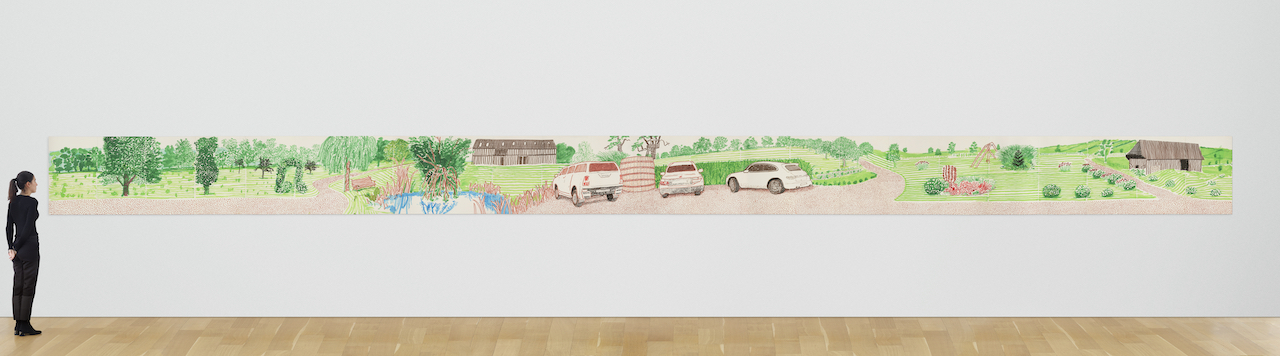
David Hockney's Monumental 12-Meter Print Heads to Christie's Auction
A truly unique lot is being offered by Christie's, available online from March 17 to 31, and on display at the major London galleries until March 31. This remarkable piece is one of David Hockney's largest creations, a staggering 12 meters long, printed on a single sheet of paper, and his most

El Greco Masterpiece Uncovered in Vatican: Hidden Under a Forgery
Art history is frequently punctuated by unexpected and serendipitous discoveries. Among these is the latest revelation from the Vatican Museums, where a routine conservation intervention has brought to light an authentic painting by El Greco, which had remained invisible for decades beneath a
Modena's Gate26A Hosts Aleksandr Nuss's Art: Where Matter Erodes and Light Reveals
Modena offers a serene escape from the vibrant chaos of nearby Bologna, presenting itself as an ordered and pristine city, a tranquil setting for everyday life. Within this calm environment, an independent space named Gate26A, founded by a collective of four individuals, injects a dynamic ener

Peggy Guggenheim's London Years: The Birth of a Collector in Venice Exhibition
Many are unaware of a crucial, often overlooked chapter in the life of Peggy Guggenheim, the visionary who transformed a palazzo on the Grand Canal into a bastion of modernism: her entrepreneurial venture with the Guggenheim Jeune gallery in London. The exhibition, Peggy Guggenheim in London: B
Selvatica 2026 in Biella: Art and Nature in Dialogue, Featuring Historical Authors and New Talents
The eleventh edition of Selvatica – Art and Nature in Festival, a biennial event held in Piazzo, Biella's historic district, has commenced and will run until July 19, 2026. The festival aims to foster a dialogue between artistic languages, scientific research, and educational practices to crea