Different Ways of Thinking the Fragment: Silvia Beltrami and Giuseppe Gallace in Dialogue
Themes of solitude, suspension, distance, internal fractures, and abstraction from the world subtly yet profoundly connect the works of Silvia Beltrami (born Rome, 1974) and Giuseppe Gallace (born Soverato, 1993). These two artists are featured in the ongoing 'Frammenti' exhibition, running until April 18, 2026, at SAC – Spazio Arte Contemporanea in Robecchetto con Induno, just west of Milan. Curated by Nicoletta Candiani and Sofia De Pascali, the exhibition takes its name from the Italian word for 'Fragments.' These fragments are conceptualized as irreducible parts of an incomplete whole, semantic marginalia that gain central significance in the artists' visual languages. Their works interweave and converse gently throughout the exhibition space.
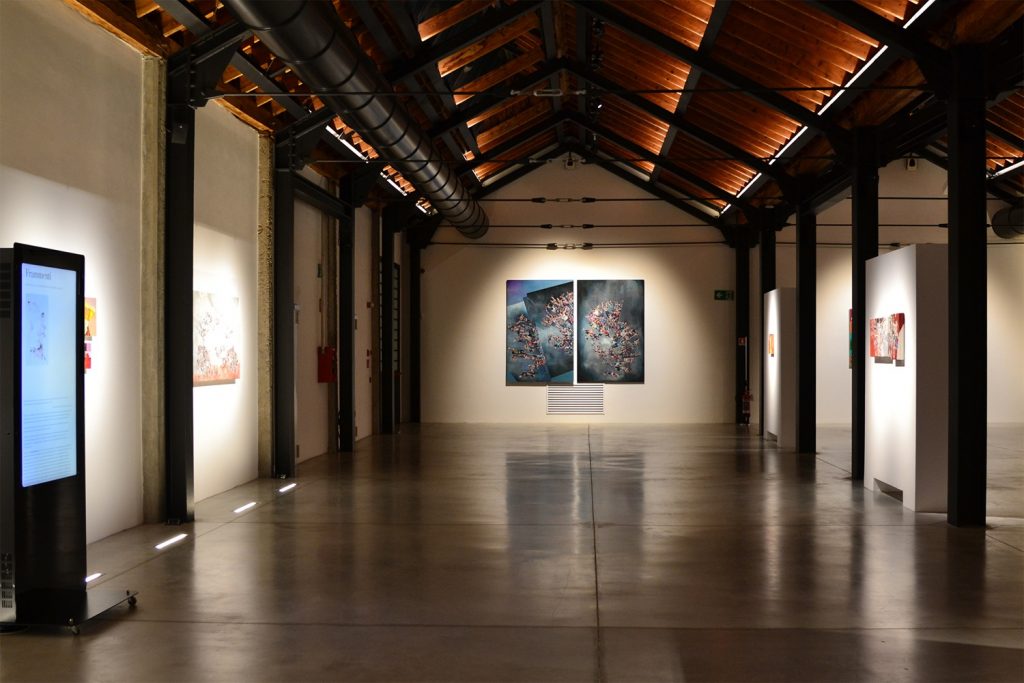
Silvia Beltrami's artistic exploration of the fragment is particularly evident in her extensive use of collage. Employing various materials such as canvas, paper, and wood as her surfaces, she constructs countless bodies suspended within an ambiguous environment. One is left to wonder: are they dancing, levitating, or falling? Do they assert control over the space, or are they engulfed by it? Their very existence seems defined by a perpetual struggle to reassemble themselves or by the explosion of their own coherence. Any hint of emotion, expression, or intention is constantly undermined and distorted by the pervasive fragmentation inherent in each piece.
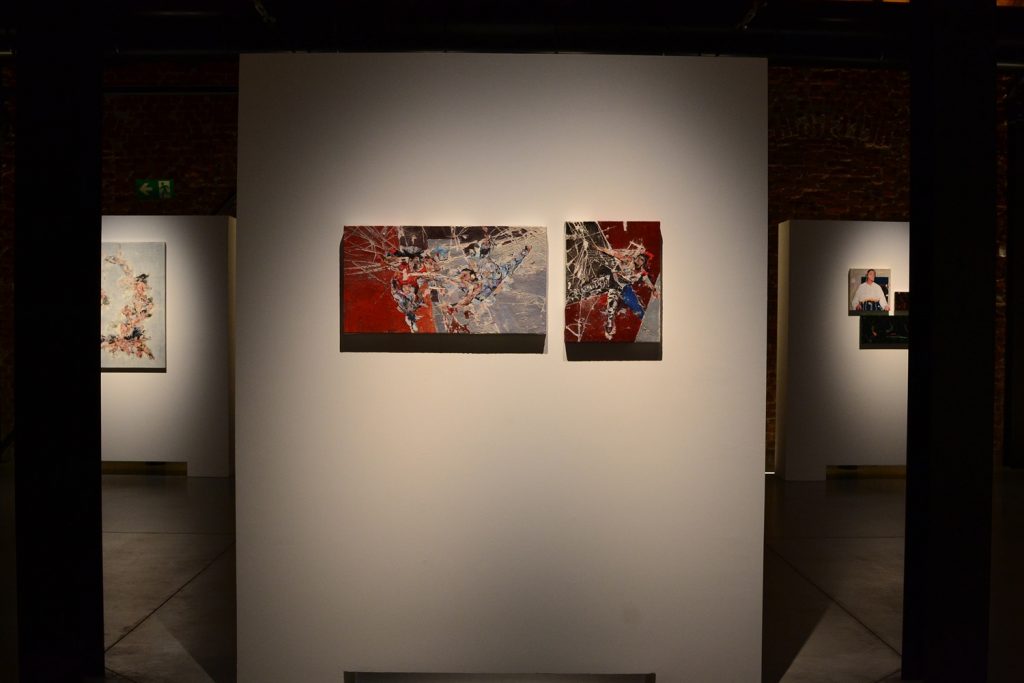
What initially appears as an energetic dance transforms, upon closer inspection, into a grotesque ecstasy. Arms, legs, torsos, eyes, mouths, armpits, feet, noses – no part of the body coheres with its adjacent section. While a fragment typically implies a piece of a whole, in Beltrami's art, it becomes a centrifugal force, destined never to return to its origin. If the poses of her figures evoke a tormented, Matisse-like dance, the bodily details plunge us into a Cronenbergian 'pulp' aesthetic. This intense engagement extends to the artist's own process, a 'body-to-body' struggle with her work. Beyond her broad experimentation with supports, her surfaces bear scratches, incisions, and gestures, further amplified by the 'strappo d’affresco' technique. In this recent development of her practice, Beltrami first works on a section of her studio wall, then detaches it and transfers it to a new support.
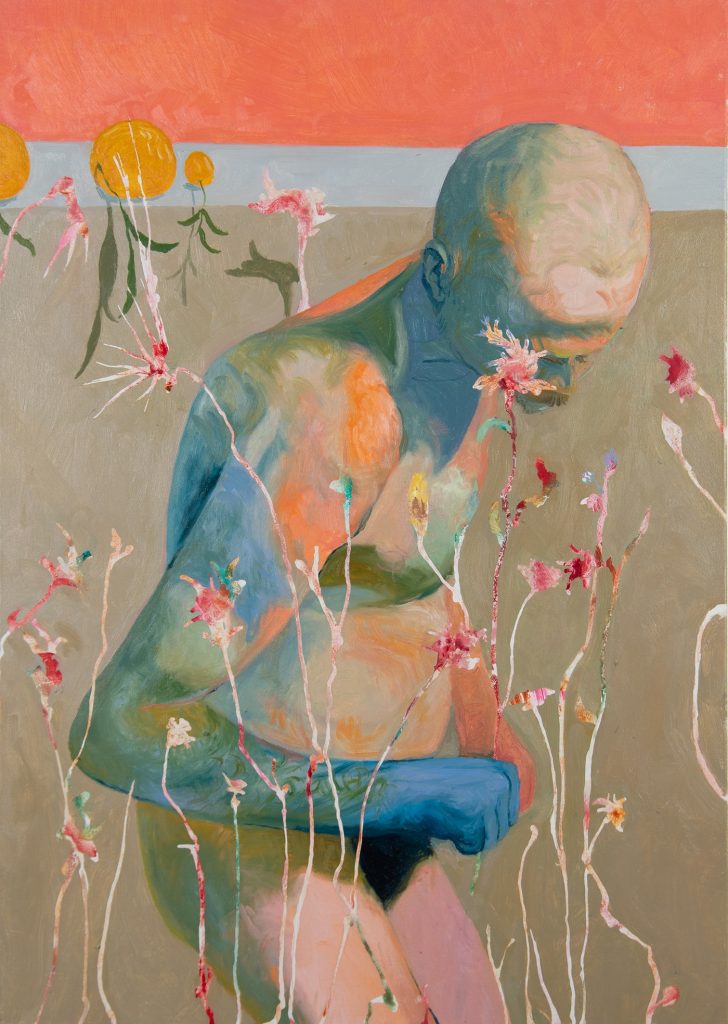
In the paintings of Giuseppe Gallace, created specifically for this exhibition, the fragment takes on a more evocative, and at times parasitic, quality. This is particularly evident in the ubiquitous flowers that populate his scenes, simultaneously inhabiting and alienating themselves from the compositions. Perhaps self-portraits, perhaps memories, or even never-lived moments: the figures emerging from Gallace's brush inhabit spaces often bathed in midday light, remaining inert and suspended within an undefined temporal realm. Across vast fields of yellow, orange, red, and blue, figures of men and women gaze into the distance, lost in what might be recollections or reconsiderations, conveying a sense of alienation even from themselves.
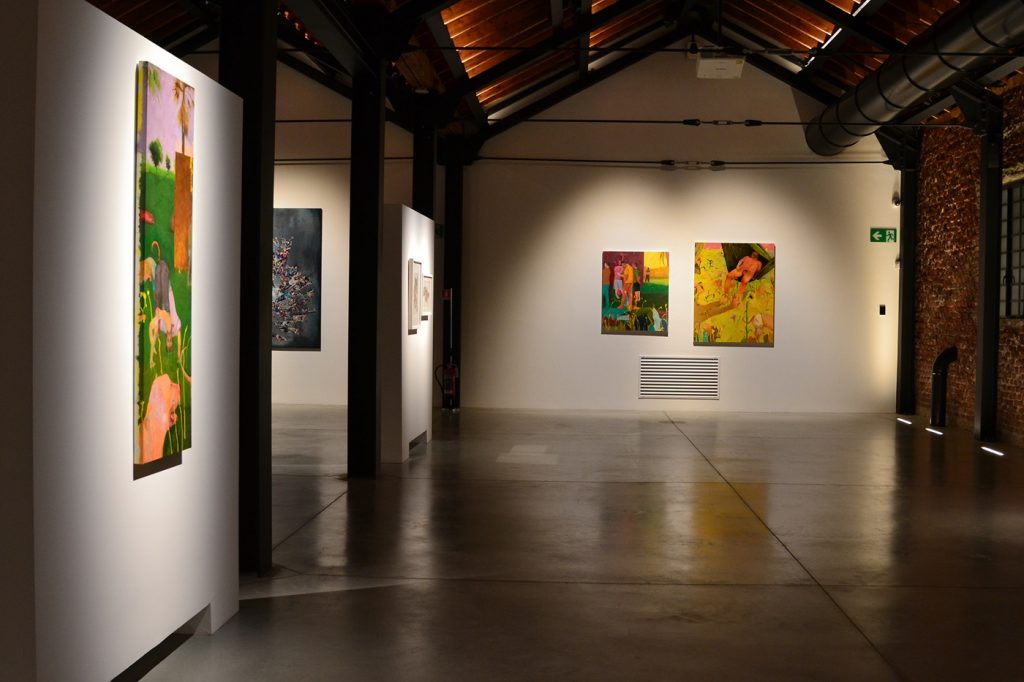
Whether set in domestic scenes, gardens, urban environments, or abstract backdrops, Gallace's paintings are traversed in the foreground by floral elements perched atop long stems. These are the result of painterly layers, isolated from their context, and their recurrent yet unsettling presence makes them stand out prominently, like a dream or perhaps a subtle, unshakeable unease. It’s a surreal and silent invasion, a creeping threat of suffocation. Or perhaps, a poignant reminder of fragility, connected to the present, to memory, and to existence itself. Within the SAC space – which serves not only as an exhibition venue but also as a hub for experimentation, education, and community engagement for artists and the local area – the dialogue between Silvia Beltrami and Giuseppe Gallace unfolds through echoes and counterpoints, always avoiding didacticism. In their artistic investigations, the fragment is not a loss, but rather a grammar. It is a language both artists employ to articulate what the whole cannot fully encompass.
Novedades — Society
La participación cultural: más allá de la mera asistencia, la necesidad de compartir el poder
```html La participación cultural: más allá de la mera asistencia, la necesidad de compartir el poder La participación se ha convertido en un término ubicuo, presente en convocatorias, proyectos europeos, programas culturales y planes de regeneración urbana. Se presenta como un
David Hockney's Monumental 12-Meter Print Heads to Christie's Auction
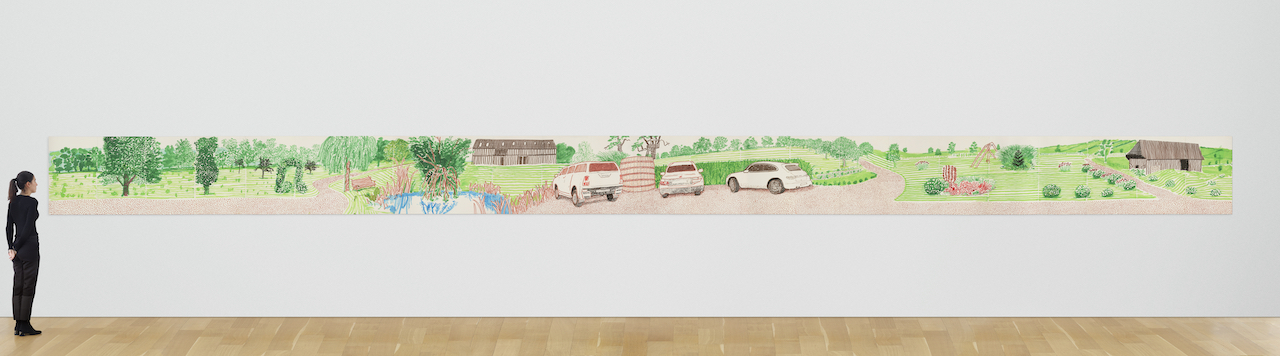
A truly unique lot is being offered by Christie's, available online from March 17 to 31, and on display at the major London galleries until March 31. This remarkable piece is one of David Hockney's largest creations, a staggering 12 meters long, printed on a single sheet of paper, and his most
El Greco Masterpiece Uncovered in Vatican: Hidden Under a Forgery
Art history is frequently punctuated by unexpected and serendipitous discoveries. Among these is the latest revelation from the Vatican Museums, where a routine conservation intervention has brought to light an authentic painting by El Greco, which had remained invisible for decades beneath a
Modena's Gate26A Hosts Aleksandr Nuss's Art: Where Matter Erodes and Light Reveals
Modena offers a serene escape from the vibrant chaos of nearby Bologna, presenting itself as an ordered and pristine city, a tranquil setting for everyday life. Within this calm environment, an independent space named Gate26A, founded by a collective of four individuals, injects a dynamic ener

Peggy Guggenheim's London Years: The Birth of a Collector in Venice Exhibition
Many are unaware of a crucial, often overlooked chapter in the life of Peggy Guggenheim, the visionary who transformed a palazzo on the Grand Canal into a bastion of modernism: her entrepreneurial venture with the Guggenheim Jeune gallery in London. The exhibition, Peggy Guggenheim in London: B
Selvatica 2026 in Biella: Art and Nature in Dialogue, Featuring Historical Authors and New Talents
The eleventh edition of Selvatica – Art and Nature in Festival, a biennial event held in Piazzo, Biella's historic district, has commenced and will run until July 19, 2026. The festival aims to foster a dialogue between artistic languages, scientific research, and educational practices to crea