Diego Perrone: The Threshold of the Visible in a Glass of Water – Exhibition at Di Marino, Naples
A simple glass of water on a table presents a minimalist scene, yet it brims with potential and invites contemplation. Its clean lines intersect with striking clarity. Perhaps light streams in from a corner, accentuating the interplay of shadows cast by the glass. Or maybe it's the midday sun, projecting a dynamic kaleidoscope into the liquid. This setting could be outdoors, amidst a bustling, dusty square where sounds swirl around the glass like a lively carousel. Alternatively, it might be found in the grand hall of a rustic villa, with fine dust particles suspended in air that has long been still. Or even in a high-ceilinged room within a historic city apartment. In any scenario, one can effortlessly become engrossed in the depths of a single glass of water.
For Henry Miller, escaping Paris for Greece at the outset of World War II, the glass of water was an epiphany. In The Colossus of Maroussi, he describes: «Along the dusty paths were tables casually arranged. Quiet couples sat there, speaking in low voices in the darkness, sipping glasses of water. Everywhere I saw the glass of water.» For the American author, the transparent presence of this ubiquitous form in Greek streets reflected an aura of quiet, underlying, and invigorating sacredness, continuously passing from hand to hand, from one gaze to another. One could indeed compose a literary history of the glass of water as a compelling narrative element, a more serene, almost meditative, counterpoint to Chekhov's gun – a crucial object that promises a turning point or profound insight.
For his inaugural exhibition at the Galleria Umberto Di Marino in Naples, on view until May 2, 2026, Diego Perrone draws inspiration from another passage concerning revelation or manifestation: Emily Dickinson’s There’s a certain Slant of light. The poem reads: «There’s a certain Slant of light, / Winter Afternoons – / That oppresses, like the Heft / Of Cathedral Tunes.» The works presented by the Asti-born artist (b. 1970) for this occasion stem from the fluid impression of light as it permeates glass – whether through the grand panes of Gothic architecture or, on a more intimate and human scale, through a simple glass of water.
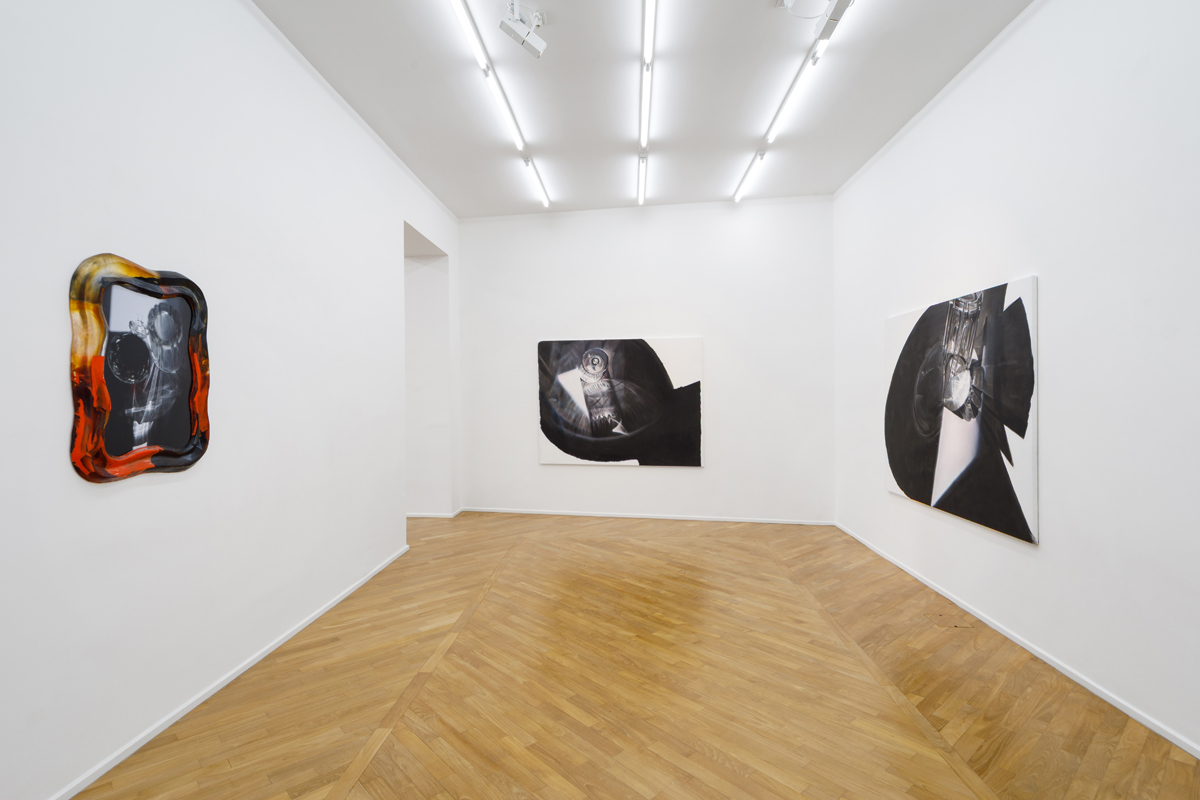
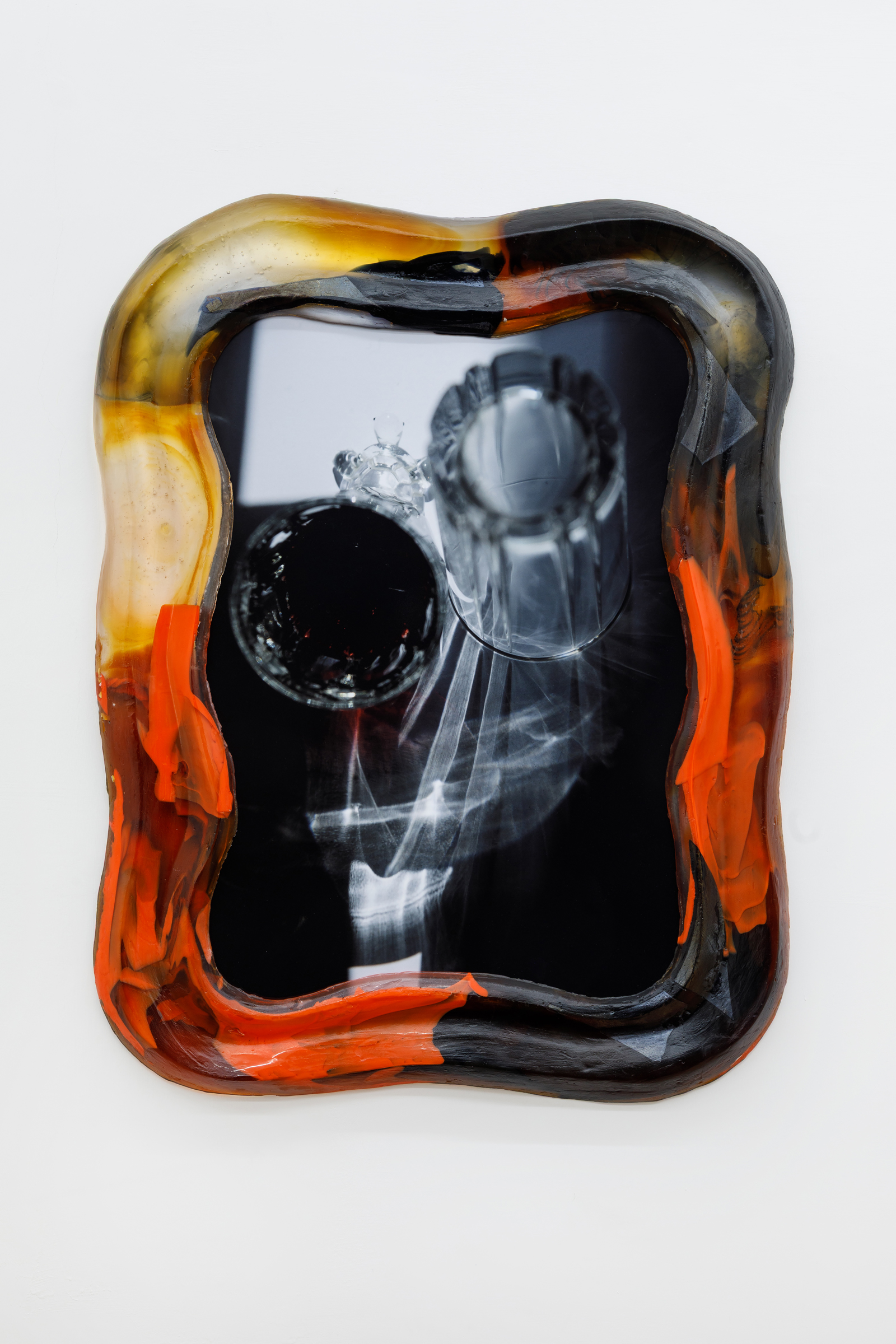
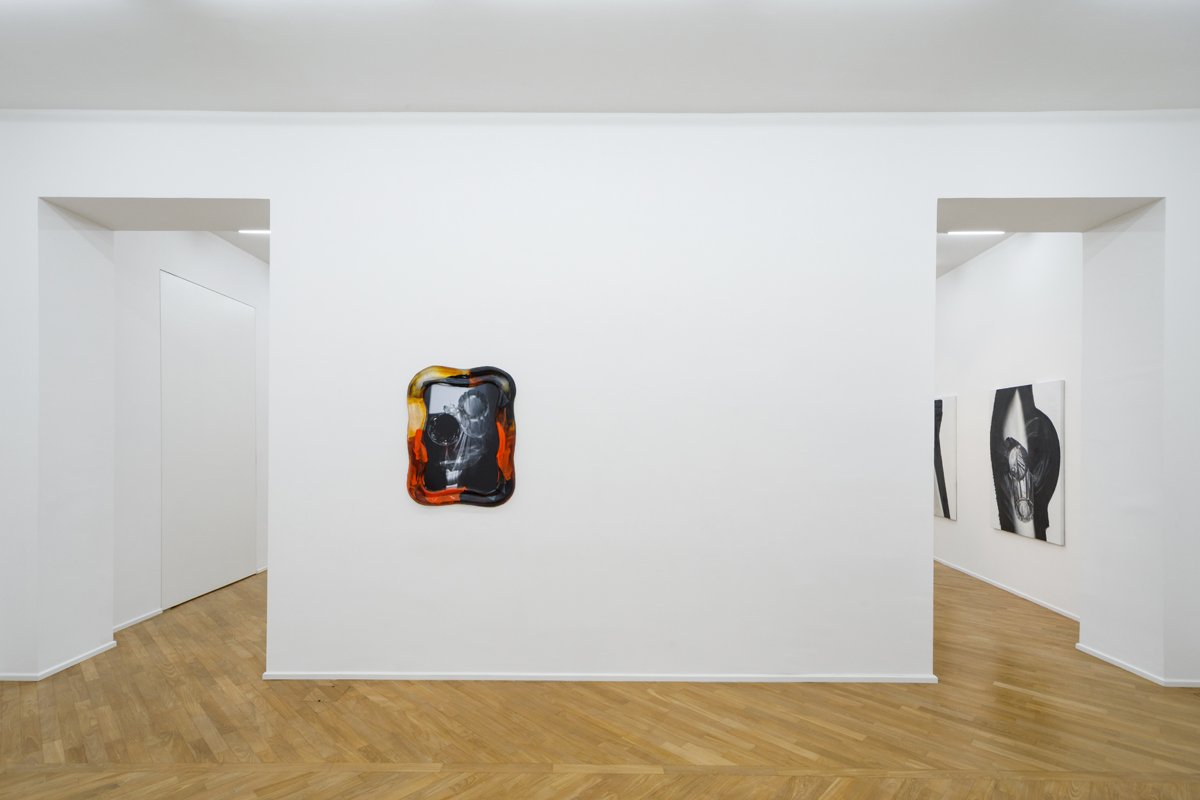
His photographs, encased in glass paste frames, encapsulate a rigidified natural world within a crystalline boundary, while light caustics – the concentrated rays of light reflecting or refracting on curved surfaces, captured precisely at their moment of appearance – seem perpetually suspended, awaiting their eventual fade. Complementing these are large-scale paintings, a new direction in Perrone’s work, executed with airbrush, charcoal, and pastels. In these pieces, fields of shadow against a white background define light without ever fully seizing it, instead emerging as an elusive, fragmented presence. The consistent subject is the glass of water on a table, deconstructed, fragmented, and in turn fragmenting, serving as a lens through which diverse spatial perceptions and segments are refracted.
Throughout his artistic practice, Perrone has frequently explored these subtle deviations in the everyday, almost imperceptible shifts that open doors to unexpected dimensions. From his early video works in the latter half of the 1990s – some of which are also currently on display in Naples at another exhibition in the Fondazione Morra Greco – the mundane reveals a precious crack, allowing a latent tension to surface, a possibility for deviation to be embraced and lost within. In his sculptural works, this inclination manifests as a more pronounced lean towards the eccentric, where material juxtapositions and overlays render the fracture and discontinuity even more palpable.
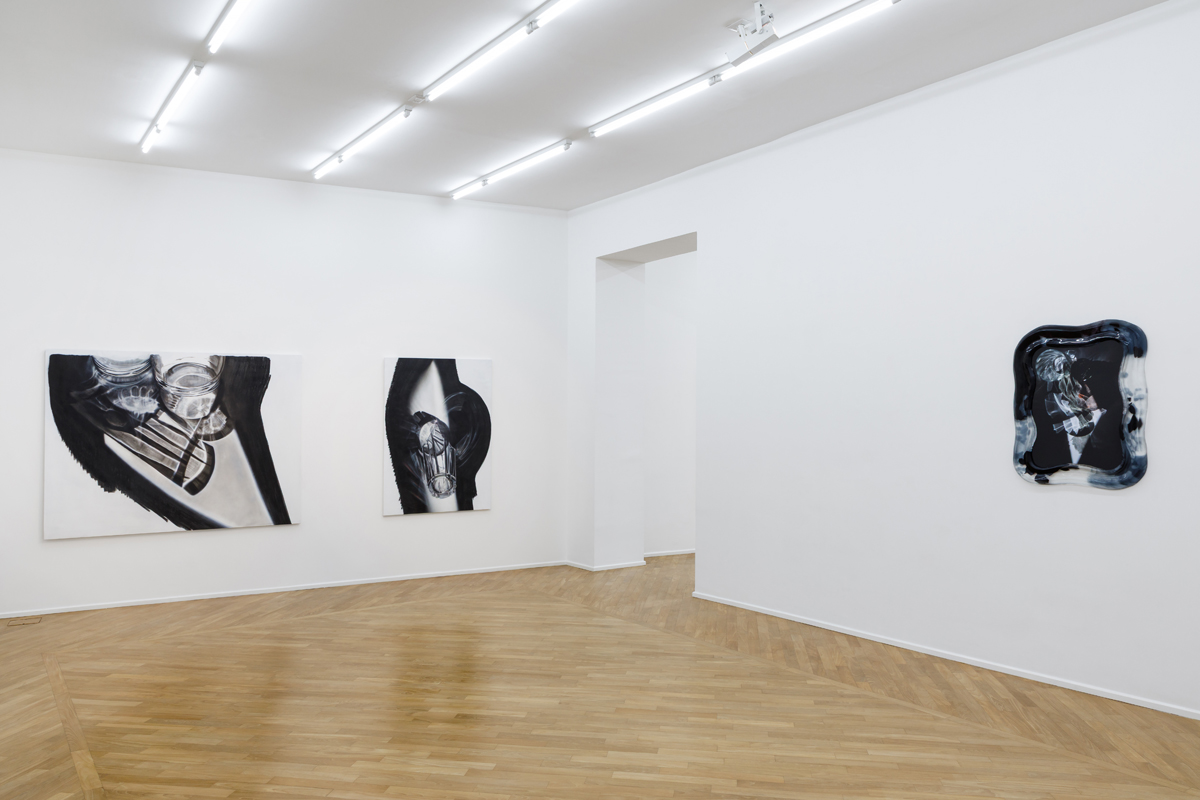
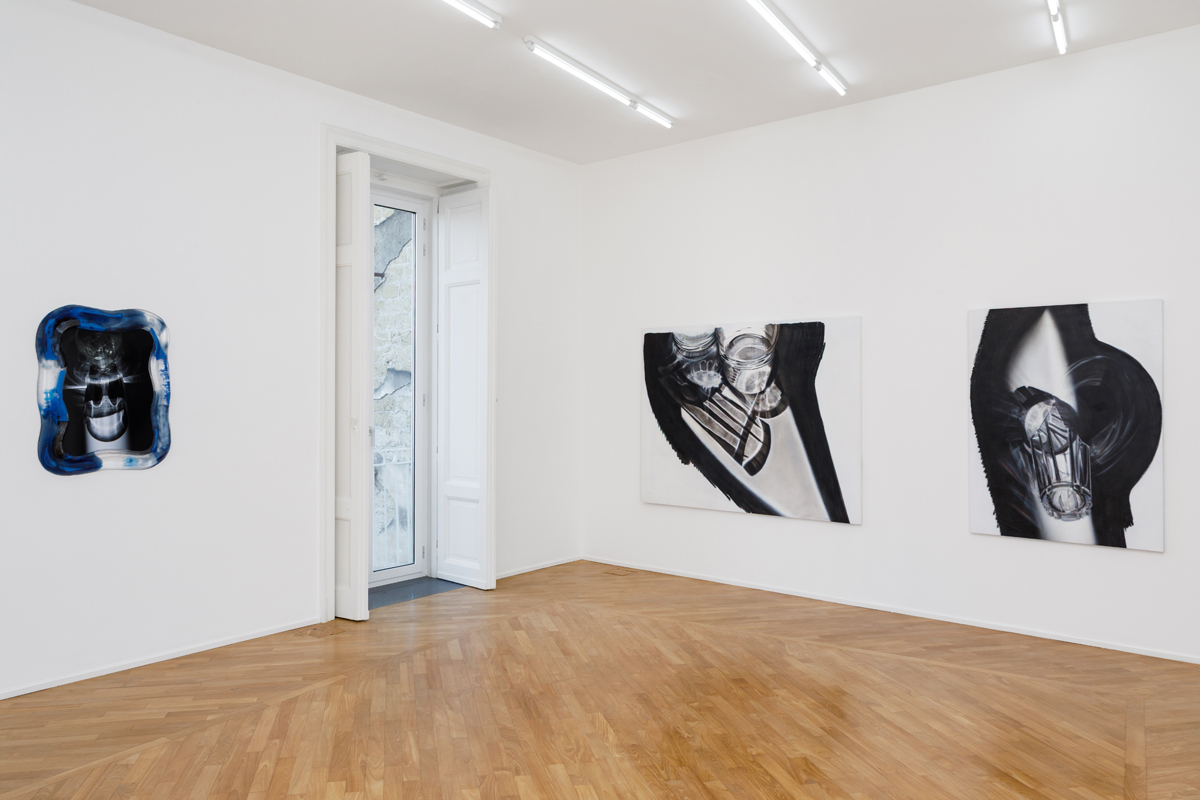
On the critical surface of his paintings – an area Perrone has explored more deeply recently, particularly during his time in Naples – this dual register seems to achieve a balance. The imagery retains a sculptural, protruding quality, extending the rich conceptual tradition of still life. It positions the object in an ambiguous state: immobile yet potentially in motion, stable yet on the verge of upheaval, inherently narrative precisely because it seems to defy conventional storytelling.
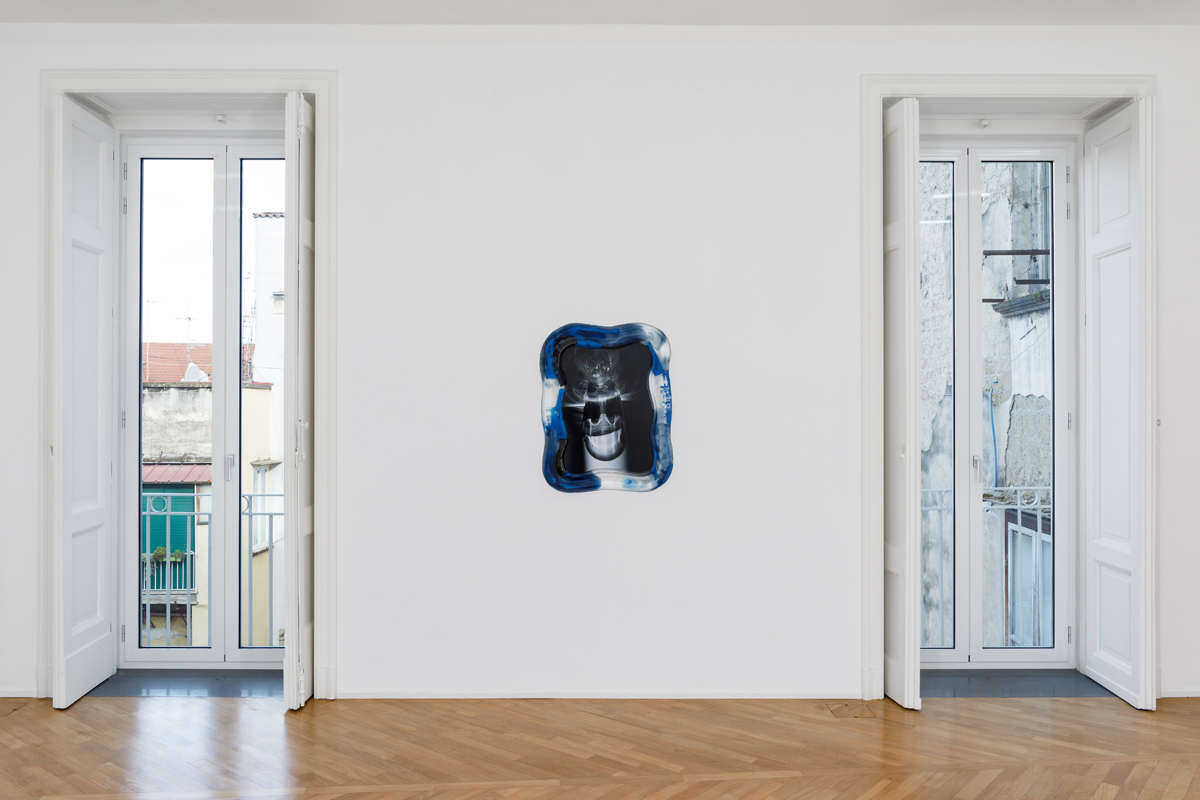
Thus, the compelling force of the glass of water draws the gaze. As one approaches or recedes, the vision distorts, expands, and fragments without ever coalescing into a definitive image. Suspending its causal link with reality, what remains is an unstable vibration, a presence that transcends the visual field and hints at an origin beyond the margin or the frame, as if the observed phenomenon is already slipping elsewhere.
Novedades — Society
La participación cultural: más allá de la mera asistencia, la necesidad de compartir el poder
```html La participación cultural: más allá de la mera asistencia, la necesidad de compartir el poder La participación se ha convertido en un término ubicuo, presente en convocatorias, proyectos europeos, programas culturales y planes de regeneración urbana. Se presenta como un
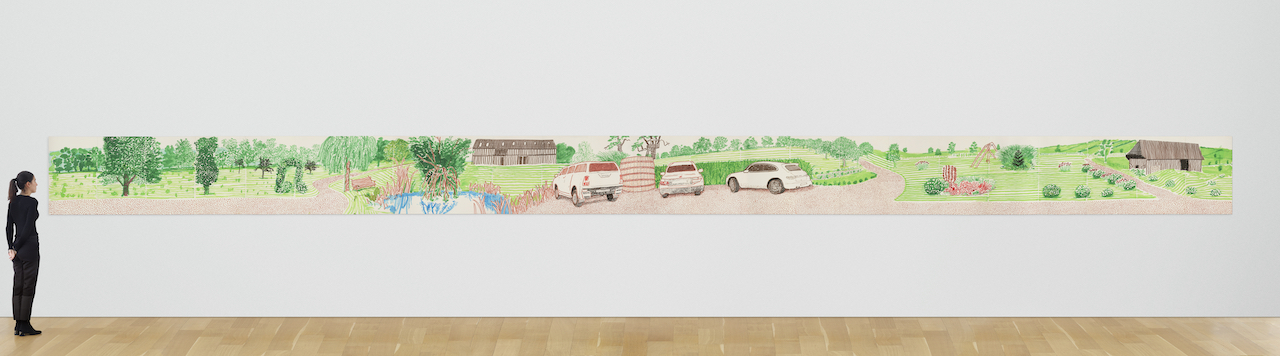
David Hockney's Monumental 12-Meter Print Heads to Christie's Auction
A truly unique lot is being offered by Christie's, available online from March 17 to 31, and on display at the major London galleries until March 31. This remarkable piece is one of David Hockney's largest creations, a staggering 12 meters long, printed on a single sheet of paper, and his most
El Greco Masterpiece Uncovered in Vatican: Hidden Under a Forgery
Art history is frequently punctuated by unexpected and serendipitous discoveries. Among these is the latest revelation from the Vatican Museums, where a routine conservation intervention has brought to light an authentic painting by El Greco, which had remained invisible for decades beneath a

Modena's Gate26A Hosts Aleksandr Nuss's Art: Where Matter Erodes and Light Reveals
Modena offers a serene escape from the vibrant chaos of nearby Bologna, presenting itself as an ordered and pristine city, a tranquil setting for everyday life. Within this calm environment, an independent space named Gate26A, founded by a collective of four individuals, injects a dynamic ener

Peggy Guggenheim's London Years: The Birth of a Collector in Venice Exhibition
Many are unaware of a crucial, often overlooked chapter in the life of Peggy Guggenheim, the visionary who transformed a palazzo on the Grand Canal into a bastion of modernism: her entrepreneurial venture with the Guggenheim Jeune gallery in London. The exhibition, Peggy Guggenheim in London: B
Selvatica 2026 in Biella: Art and Nature in Dialogue, Featuring Historical Authors and New Talents
The eleventh edition of Selvatica – Art and Nature in Festival, a biennial event held in Piazzo, Biella's historic district, has commenced and will run until July 19, 2026. The festival aims to foster a dialogue between artistic languages, scientific research, and educational practices to crea