Armitage and Kanwar at Palazzo Grassi in Venice: Painting and Video as Acts of Dissent on the Present
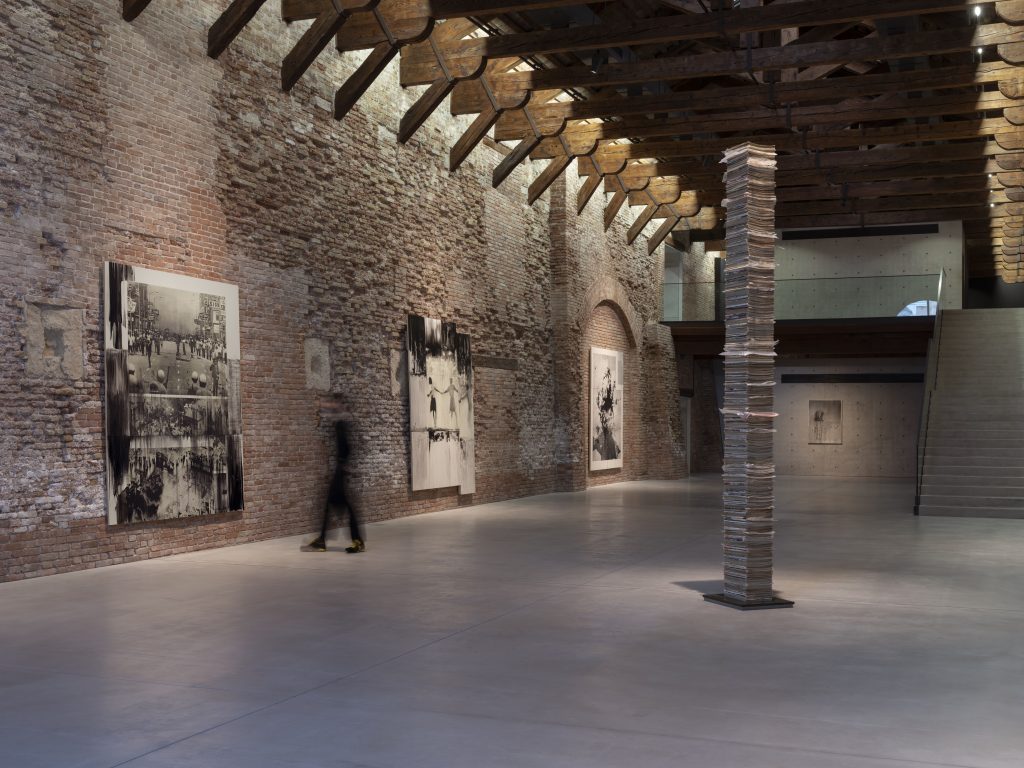
From March 29, 2026, to January 10, 2027, Palazzo Grassi in Venice will host two of the season's most significant exhibitions: "The Promise of Change" by Michael Armitage and "Co-travellers" by Amar Kanwar. These exhibitions are presented in conjunction with installations by Lorna Simpson and Paulo Nazareth at Punta della Dogana. The museum, part of the Pinault Collection and accessible from Campo San Samuele in the San Marco sestiere, offers bright and airy spaces overlooking the Grand Canal and Ca' Rezzonico, with its intact eighteenth-century charm. The Pinault Collection, long committed to contemporary art in Venice through a program of major monographic exhibitions, has allocated the three floors of Palazzo Grassi to Michael Armitage, curated by Jean-Marie Gallais in collaboration with Hans Ulrich Obrist and Michelle Mlati. A section of the upper level is dedicated to Amar Kanwar, also curated by Gallais.
Michael Armitage, born in Nairobi in 1984 and trained in London at the Slade School and Royal Academy Schools, stands out as part of a generation that revitalizes figuration, using it to explore political, historical, and imaginative themes without nostalgia. His style blends influences from Western artistic tradition with elements of African literature, cinema, and contemporary news. His large-scale canvases are characterized by vibrant colors and strong contrasts, where human figures sometimes merge with the background, emerging or dissolving into the narrative of events.
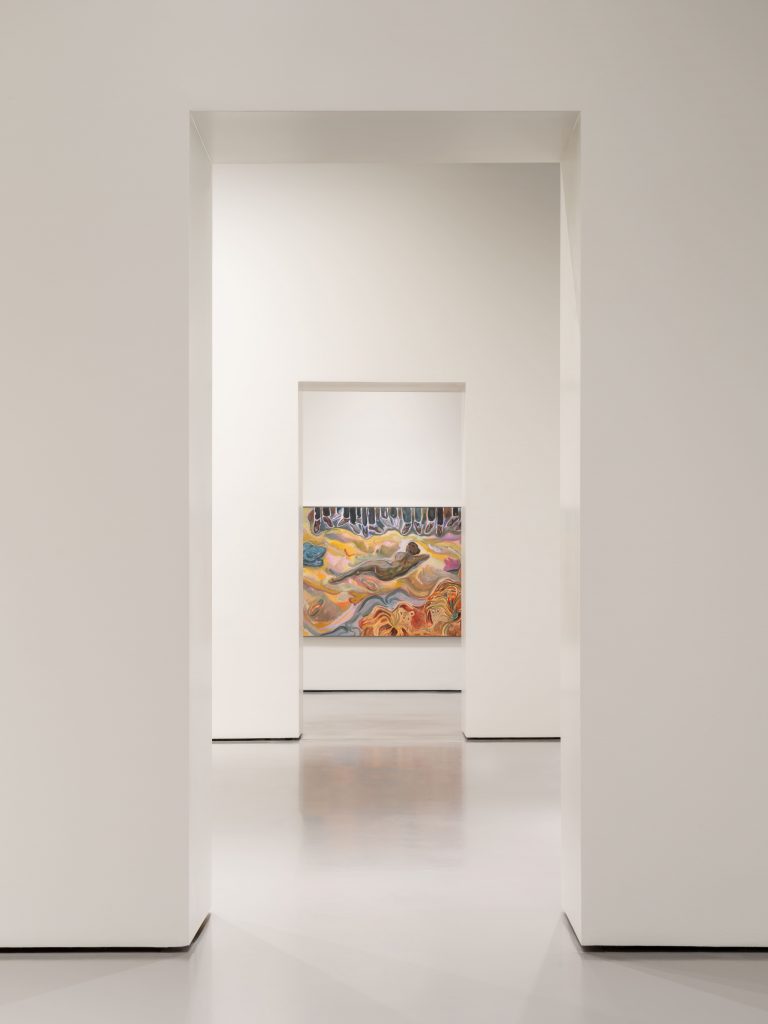
Kenya, his homeland, is a primary source of inspiration. Nairobi's rapid growth, marked by disparities and recurrent conflicts, and elections that often trigger crises, permeate his work. The events of August 2017, when presidential elections and parliamentary renewals were held, followed by the Supreme Court's annulment of the vote for irregularities on September 1st and the call for new elections in October, opened a period fraught with protests, clashes, and repression. That climate is vividly represented in his scenes of crowds, demonstrations, police charges, and gestures of power. The images oscillate between the recognizable and the undefined, expanding and losing a single focal point, where elements drawn from reality mix with presences that seem to originate from other narratives. The rhythm is continuous, almost cinematic.
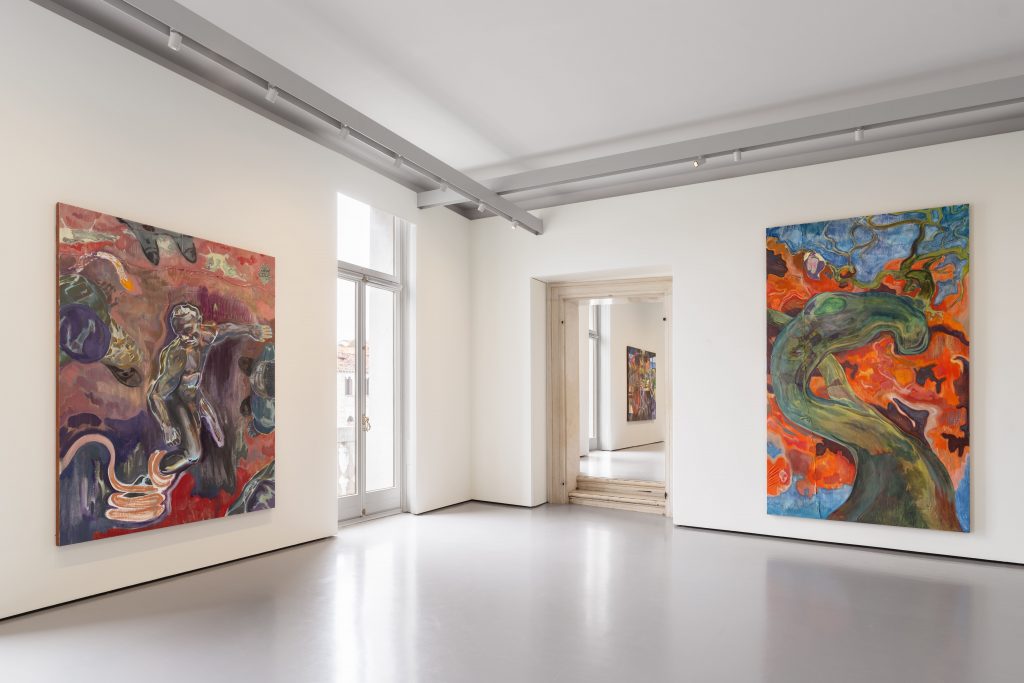
Initially, Armitage questioned his artistic medium, moving away from traditional canvas due to its strong association with Western art. He even interrupted his practice before re-embracing it with a radical change: he abandoned canvas in favor of lubugo, a fabric derived from the bark of the ficus natalensis. This material is incised and detached without harming the tree, then beaten until it becomes a soft mantle. Widely used in East Africa, including in ritual contexts, its natural texture remains visible and active. Folds, holes, and seams dictate its flow, creating a dynamic and never fully controllable surface.
A portion of the exhibition is dedicated to exploring this innovative process, while an entire section showcases his exceptional and numerous preparatory drawings, from which all his other works originate.
Armitage's artistic approach, while rooted in the great Western tradition, simultaneously subjects it to constructive criticism. He explores its principles, absorbs its legacy, but also highlights its limitations, especially when that history tends to overshadow other cultural sensitivities. For an artist still young, the scope of his research lies in his ability to re-engage painting as a complex ground for dialogue between diverse narratives, without ever oversimplifying them.
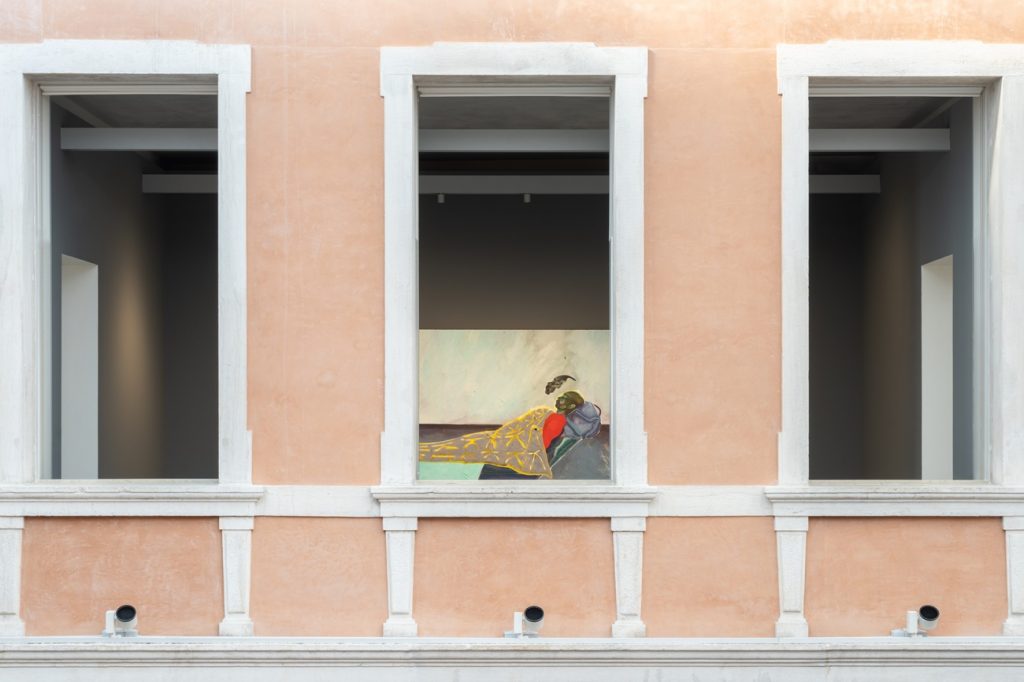
Here, female figures play a central role, adding further layers of meaning. In "#mydressmychoice," Armitage recalls a dramatic incident in Nairobi in 2014, where a woman was publicly assaulted and stripped; he crafts a scene that references the pose of the traditional Western nude to subvert its meaning. Similarly, in "Conjestina," a portrait of Kenyan boxer Conjestina Achieng, the body embodies a delicate balance between mastery and vulnerability, as if every movement epitomizes both impulse and resistance.
Armitage's most recent series focus on migration themes, exploring movements within the African continent and crossings towards Europe. His visual language becomes more essential and tense: bodies appear dispersed, sometimes almost dissolved, while the landscape is reduced to essential elements such as desert, water, and night, represented through large color fields that evoke a world devoid of certainties. The viewer's gaze is thus exposed, forced to confront the raw reality of events.
This exhibition is of significant importance and immense impact. It is striking to observe the paradox: such profound artistic research, rooted in complex political and material issues, now finds its place in the most prestigious collections and in a high-value art market. This apparent contradiction does not diminish its power; rather, it amplifies its resonance. Armitage confirms himself as one of the most incisive artists of his generation.
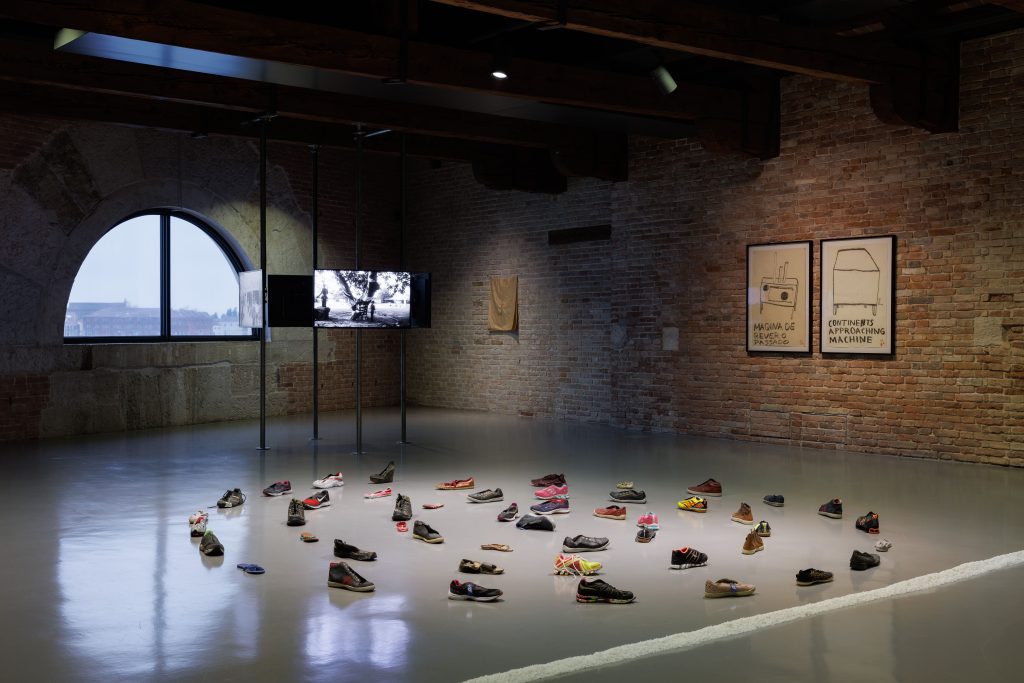
On the upper floor, the exhibition dedicated to Amar Kanwar (born in New Delhi in 1964) continues the reflection with equal intensity, albeit with a different geographical focus. His work is situated at the intersection of documentary cinema, political theory, and visual practices that emerged in India between the late 1980s and 1990s, a period characterized by territorial conflicts, social inequalities, and profound changes. Since then, Kanwar has explored crisis areas in South Asia, combining direct experience and the collection of testimonies. His work "Co-travellers" presents two temporally distant projects that illustrate his methodology.
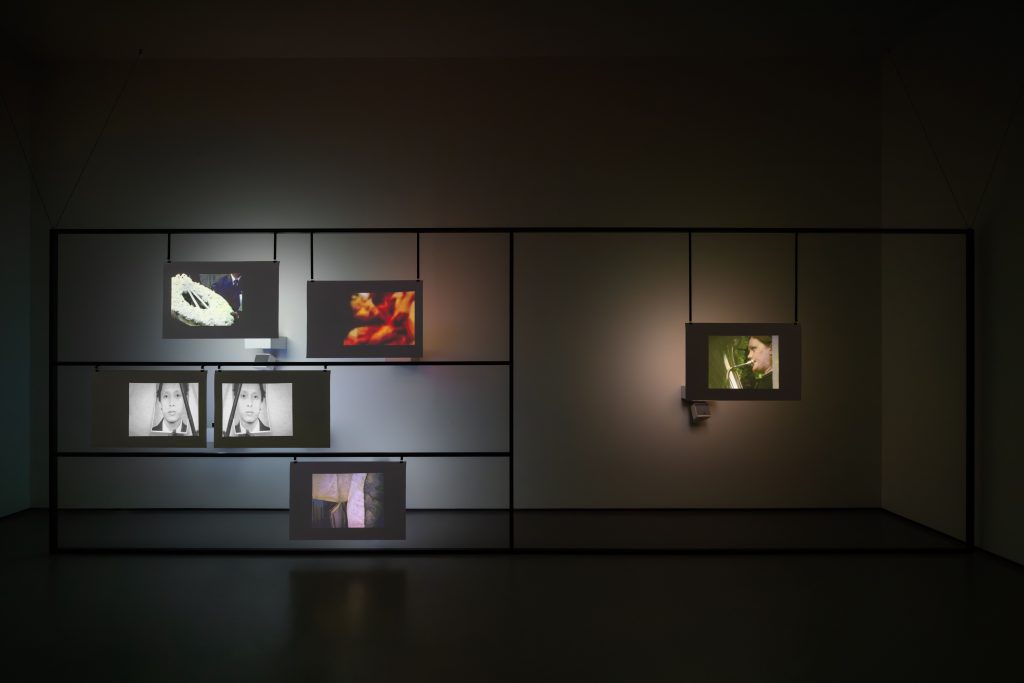
The first project is inspired by an act of civil resistance that took place in Burma (now Myanmar) during the military dictatorship. At that time, every book had to contain the official declarations of the regime on its first pages. A bookseller, Ko Than Htay, began systematically tearing out these pages, transforming a small gesture into a daily form of dissent and opposition. Kanwar reinterprets this episode through an installation that includes images, documents, and paper, where the historical event is not linearly reconstructed but evoked through fragments, omissions, and superimpositions.
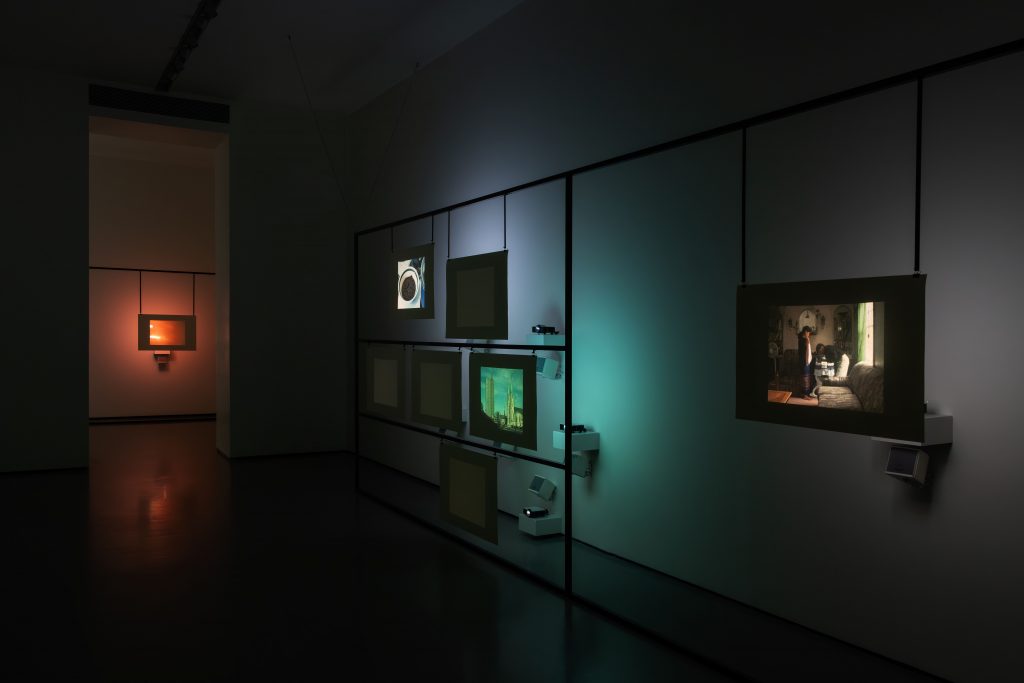
In the second work, the visitor is immersed in a darkened environment, where almost imperceptible screens reveal photographs and texts that appear and vanish without apparent hierarchy. There are no human voices or figures, but a succession of brief narratives accompanied by music. Kanwar adopts a minimalist approach, progressively reducing elements and focusing on more essential forms that allude to themes such as violence, responsibility, memory, and justice, without ever explicitly naming them. He suggests that understanding the present does not happen spontaneously; it requires active study, vision, and dedication.
This is a form of deep and challenging reflection that few can sustain; when an authoritative commissioning body decides to embrace it, it is highly commendable.
Novedades — Society
La participación cultural: más allá de la mera asistencia, la necesidad de compartir el poder
```html La participación cultural: más allá de la mera asistencia, la necesidad de compartir el poder La participación se ha convertido en un término ubicuo, presente en convocatorias, proyectos europeos, programas culturales y planes de regeneración urbana. Se presenta como un
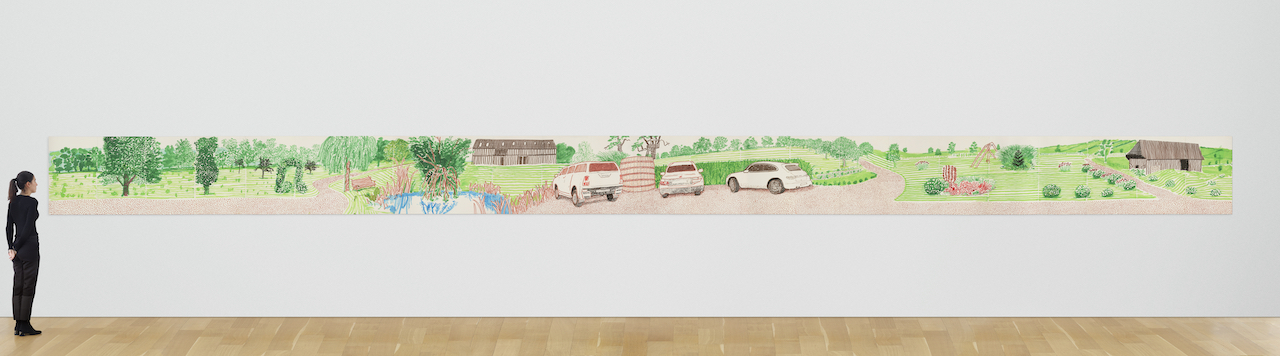
David Hockney's Monumental 12-Meter Print Heads to Christie's Auction
A truly unique lot is being offered by Christie's, available online from March 17 to 31, and on display at the major London galleries until March 31. This remarkable piece is one of David Hockney's largest creations, a staggering 12 meters long, printed on a single sheet of paper, and his most
El Greco Masterpiece Uncovered in Vatican: Hidden Under a Forgery
Art history is frequently punctuated by unexpected and serendipitous discoveries. Among these is the latest revelation from the Vatican Museums, where a routine conservation intervention has brought to light an authentic painting by El Greco, which had remained invisible for decades beneath a

Modena's Gate26A Hosts Aleksandr Nuss's Art: Where Matter Erodes and Light Reveals
Modena offers a serene escape from the vibrant chaos of nearby Bologna, presenting itself as an ordered and pristine city, a tranquil setting for everyday life. Within this calm environment, an independent space named Gate26A, founded by a collective of four individuals, injects a dynamic ener

Peggy Guggenheim's London Years: The Birth of a Collector in Venice Exhibition
Many are unaware of a crucial, often overlooked chapter in the life of Peggy Guggenheim, the visionary who transformed a palazzo on the Grand Canal into a bastion of modernism: her entrepreneurial venture with the Guggenheim Jeune gallery in London. The exhibition, Peggy Guggenheim in London: B
Selvatica 2026 in Biella: Art and Nature in Dialogue, Featuring Historical Authors and New Talents
The eleventh edition of Selvatica – Art and Nature in Festival, a biennial event held in Piazzo, Biella's historic district, has commenced and will run until July 19, 2026. The festival aims to foster a dialogue between artistic languages, scientific research, and educational practices to crea