

The “OTHER IDENTITY – Other forms of cultural and public identity” series, inspired by the exhibition of the same name created by independent artist and curator Francesco Arena, aims to be a barometer for the evolving visual language. It showcases the work of creators who use photography, video, and performance to explore themes of identity and self-representation. This week, we feature an interview with Silvia Calderoni.
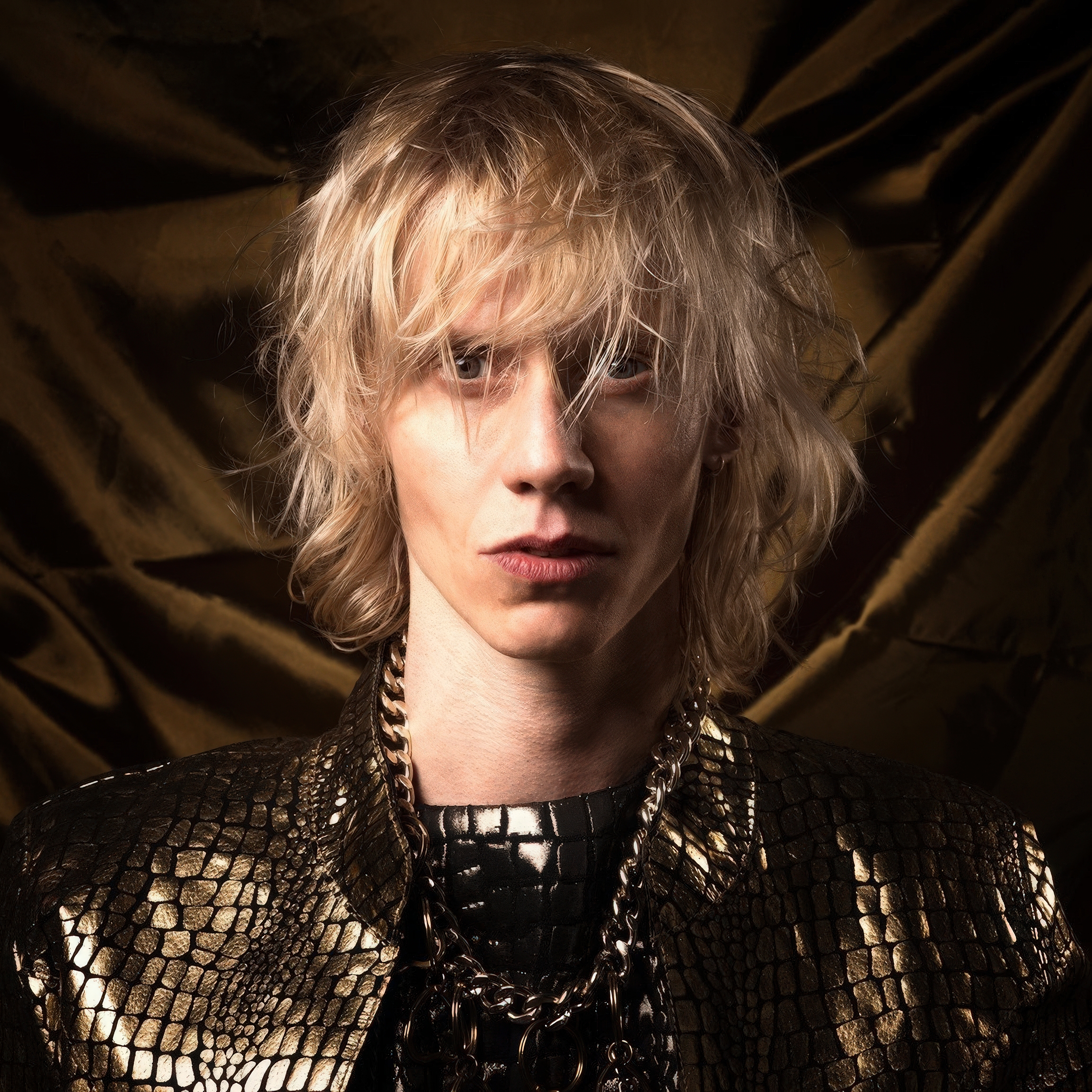
OTHER IDENTITY: Silvia Calderoni
Our private lives are increasingly public, and the representation of ourselves is constantly changing and becoming more performative in our actions. What is your definition of art?
“I don’t believe there’s a clear separation between public and private; I like to think there’s an area where these two spheres intersect, especially when we’re dealing with the arts, and in my case, live arts. Here, what is commonly considered intimate often becomes the material for our work, such as the body, identity, and our political stance. We continuously choose what to transfer into the public dimension and vice versa; it’s a system of interconnected vessels, and our actions are the grammar for many of our projects. Certainly, the widespread use of social media has intensified and blurred the potential of this endless exchange, but at the same time, it has allowed more people to ‘produce content’ and share it with millions instantly. This speed and possibility of transmission are not as easily achieved in the art world.”
We construct distinct gender identities, each person choosing to highlight specific characteristics, thereby leaving traces. What is your “identity” in contemporary art?
“Identity is a word I struggle to use, except in a political context or in relation to self-determination, both collective and personal. I don’t believe a gender identity is something you create, it’s not about a set of alternative options to choose from as if they were readily available. Rather, it’s a complex system to navigate, sometimes painful, in the direction of what we desire to be, not what we are not – and it’s also shaped by norms, often violent, by injunctions, by unwritten commands. That’s why it’s very problematic for me to use this term in the artistic field. Here, the process is entirely opposite; the direction, the drive is always towards something distant and unknown that modifies me, transforms me, and continually alters my vision, my sensitivity, the way I do things. Artistic practice is a journey, not an identity.”
How important is social and public appearance to you?
“The public and social sphere of construction has always been a space of great fun and experimentation for me during my youth. I can define it as an academy, a gym, a continuous training course – aesthetic invention and the creation of bodies have also been the space of countercultures, punk, gothic, glam, and queer and faggot cultures, ballrooms. To surprise, provoke, disappear, and reappear in ever-changing forms, fluid, reassuring, and overwhelming. More than appearing, it’s about authorship-free invention, about destabilizing forms.”
The reference, the plagiarism, the reinterpretation, the ready-made of iconography tied to the past, present, and contemporary are constantly questioned in a frantic search for a new self-identification, a new representation value. What is your representation value today?
“I would like us to momentarily shed the self, the ego, which is so cumbersome, so demanding in this present that always ends a step too soon. The direction I find most interesting is when the ego gives way to a situated gaze, when the only way to evaluate art is by using protractors and compasses. When plagiarism becomes a choice, reference a necessity, reinterpretation a heartbeat. The frantic search is not for a new self-identification but for a shared desire that will make us fall in love again.”
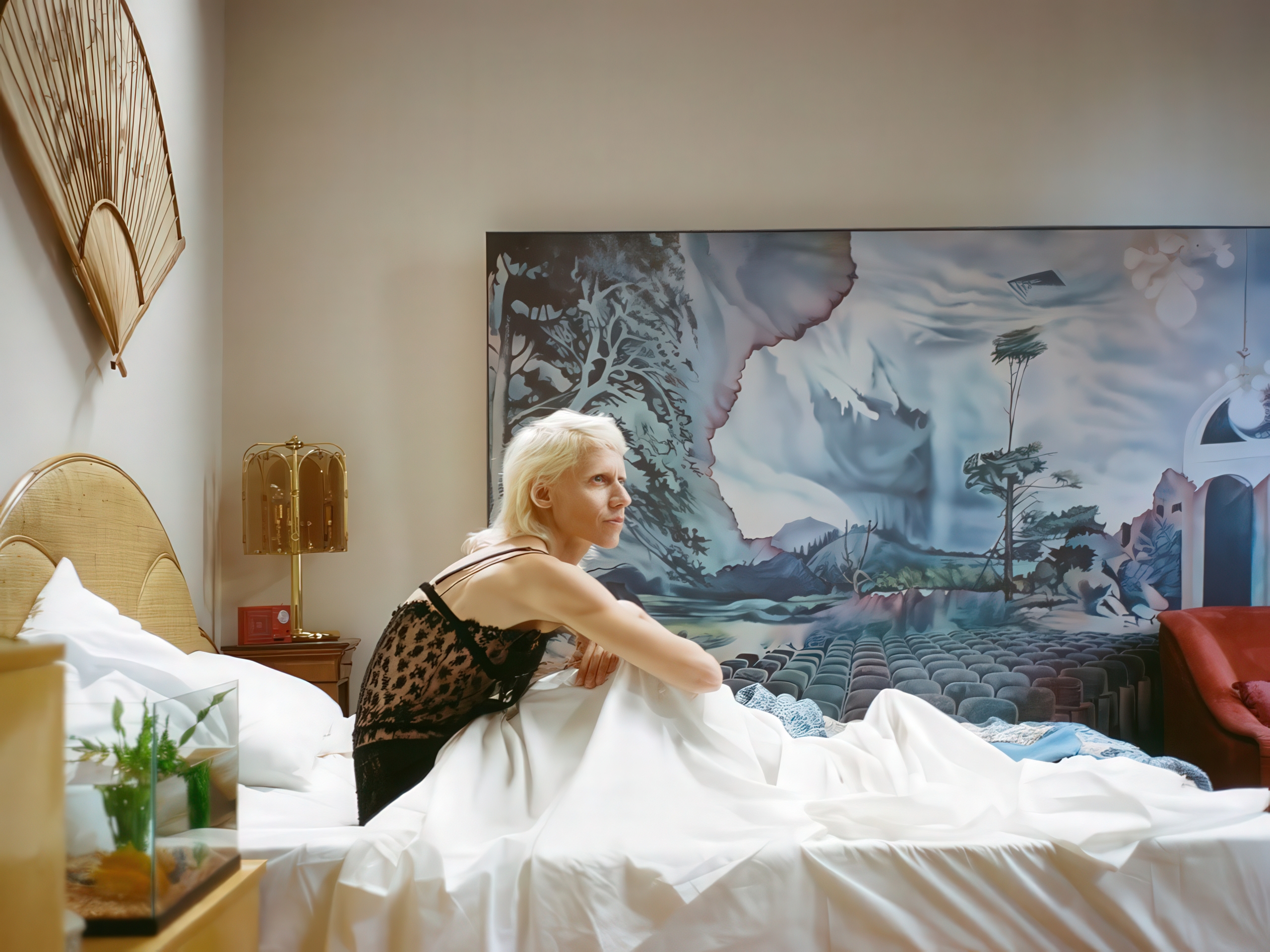
Our public “actions,” even through a work of art, overwhelm our daily lives, our intimate lives, our feelings, or rather, the reproduction of everything we are and try to appear to the world. Do you define yourself as an artist in the eyes of the world?
“Yes. And it took me a long time to be able to say this yes with confidence and pride. In this country, the figure of the artist is still often associated with privilege, with something only a few can engage with, an elite. But this is a very exclusionary and classist way of thinking about art, which is also a profession, a craft, a specific activity, as it is in other countries, and I’m not just referring to Northern European ones.”
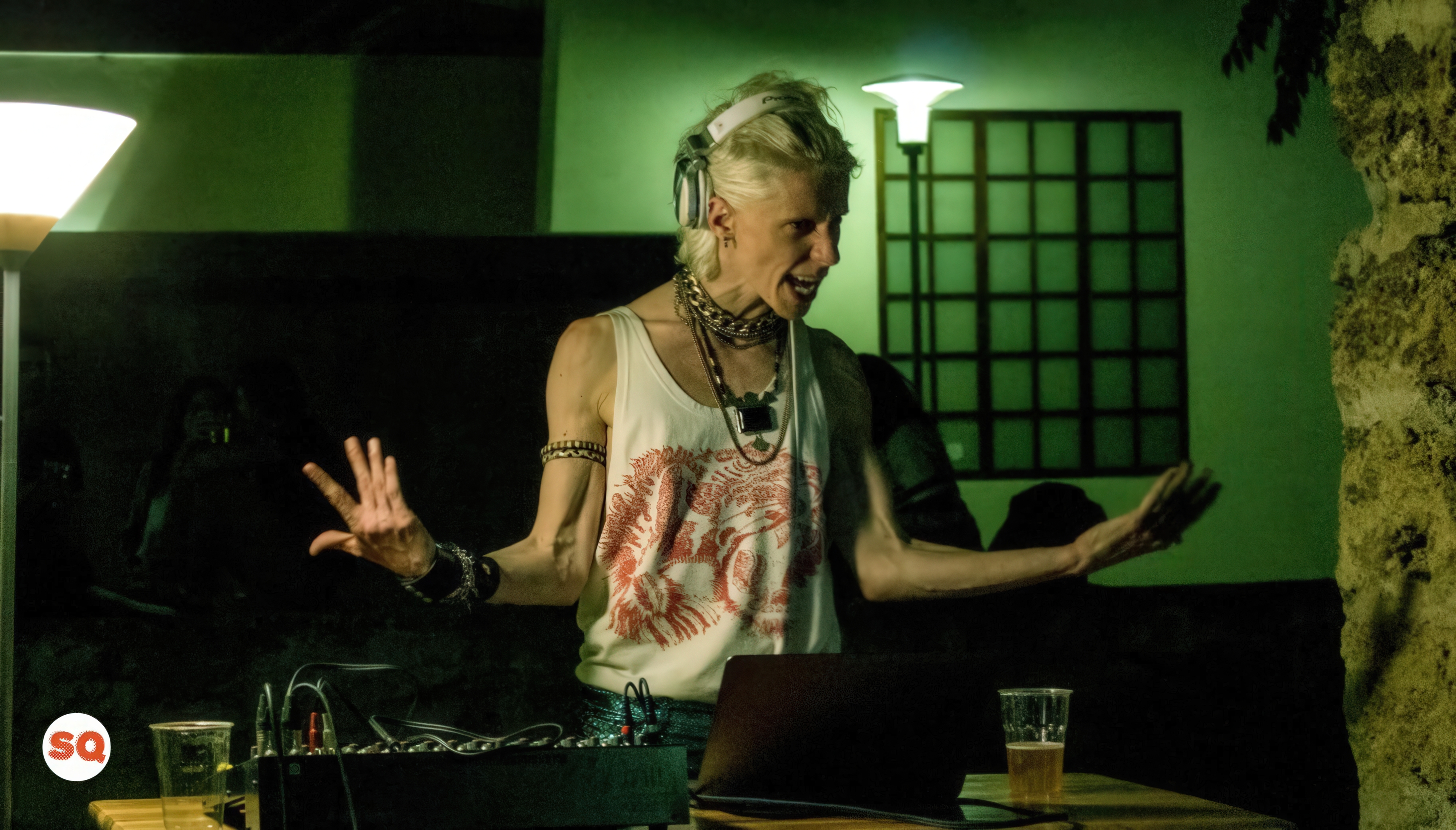
What “cultural and public identity” would you have liked to embody, beyond your own?
“I believe my work, ‘being an artist,’ especially in live arts that involve one’s body, voice, emotions, and lived time, is precisely this: to be ‘what I would have wanted to be beyond what belongs to me.’ To embody, to engage with presences other than my own, other intensities, and to progressively shape new parts of myself, translating into works with different forms, sharp gazes without heavy ballast. To be able to seek the greatest number of places where I can remain in awe.”
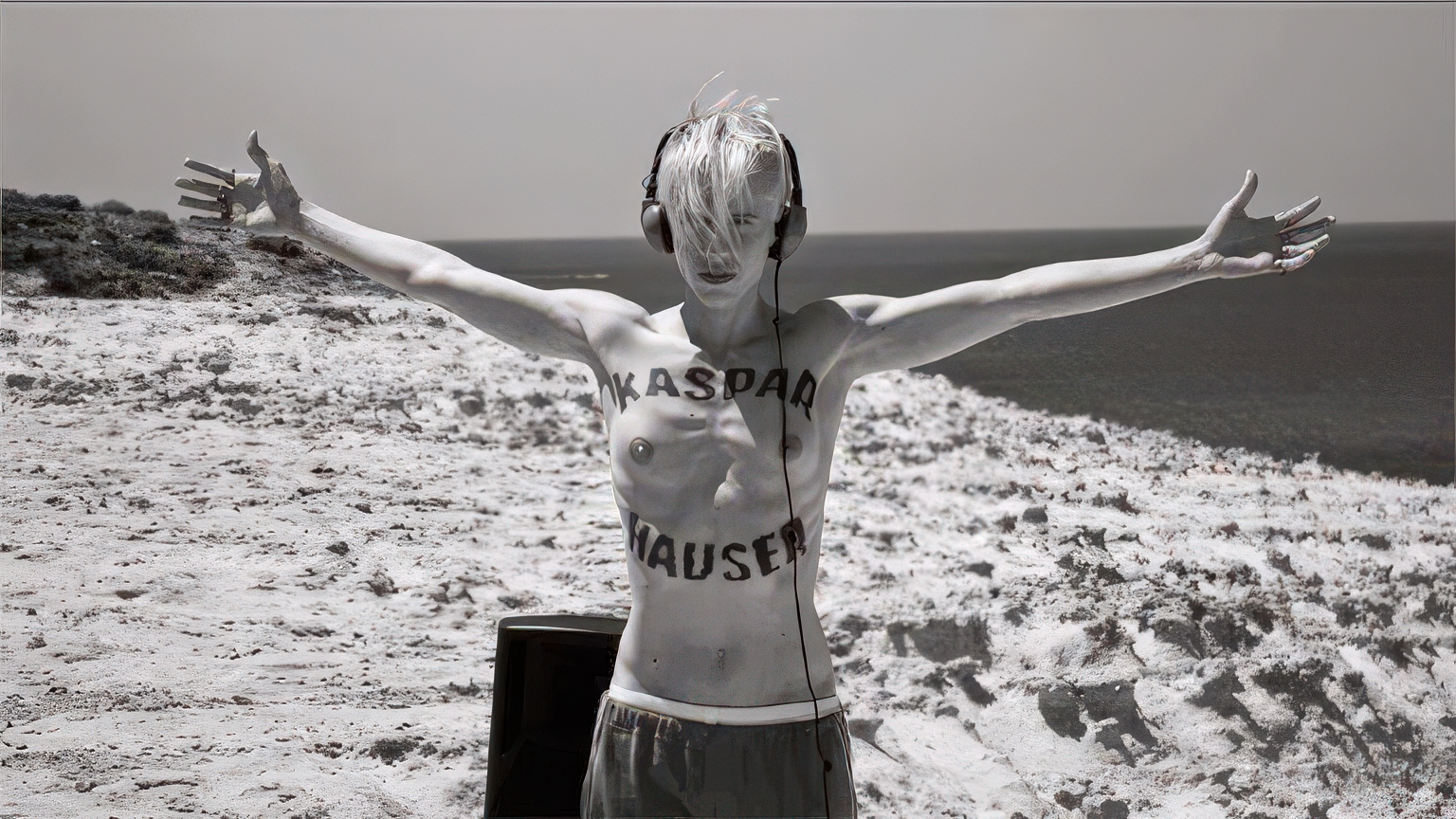
Biography
Silvia Calderoni is an actress and performer. She began her artistic training at a young age with the company Teatro della Valdoca, where she performed in various productions, including “Paesaggio con fratello rotto.” Since 2006, she has been an active member of the company Motus, performing in shows such as “Rumore Rosa,” “A place,” “ICS – racconti crudeli della giovinezza,” “Crac,” “Let the sunshine in,” “Too-late,” “Iovadovia,” “Tre atti pubblici,” “Alexis. Una tragedia greca,” “nella tempesta,” “Caliban Cannibal,” “King Arthur,” “Tutto brucia,” “Frankenstein. A love story,” and “MDLSX,” for which she also co-authored the dramaturgy with Daniela Nicolò.
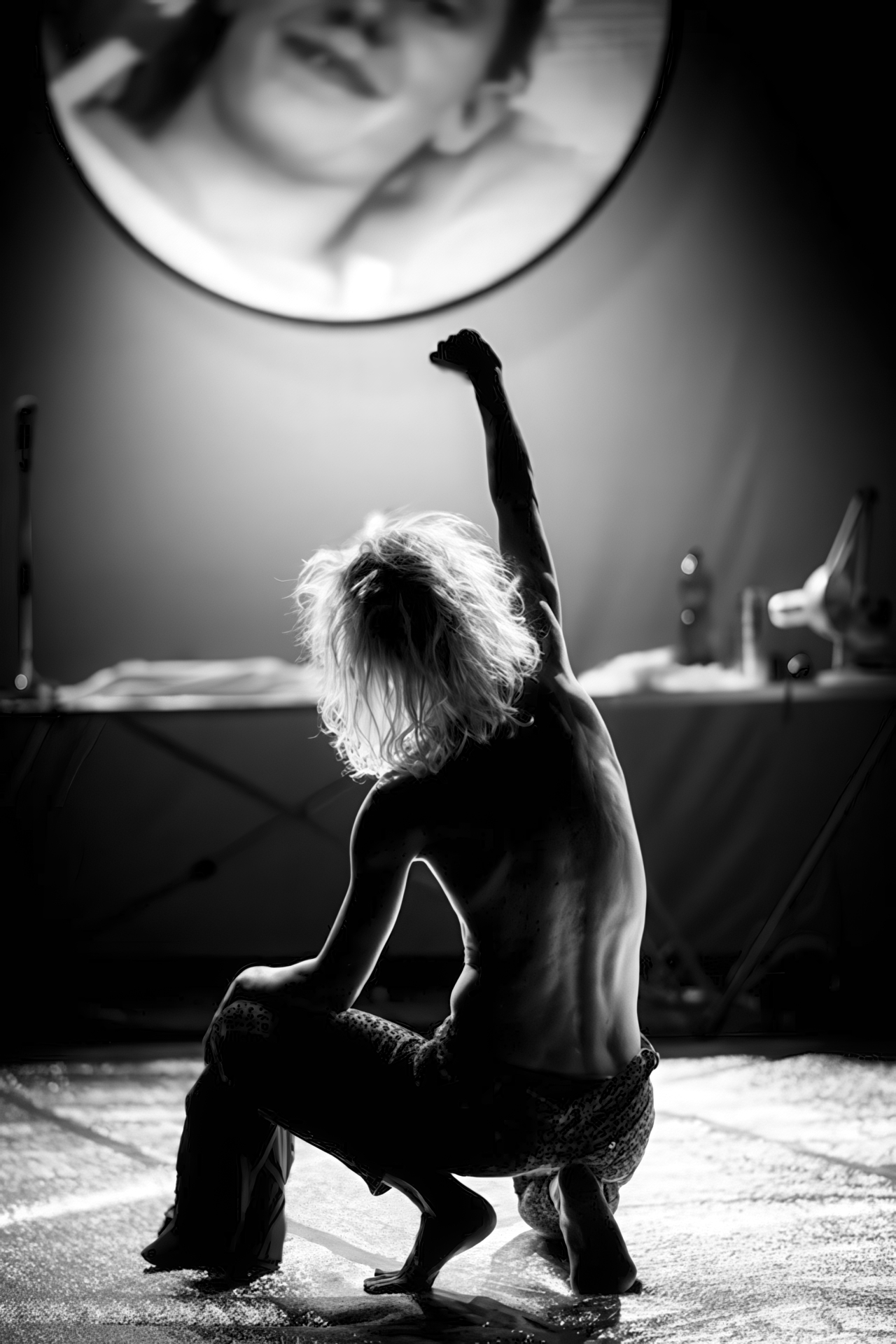
She starred in “The Plot is the Revolution” alongside Judith Malina, the historic founder of The Living Theatre. In 2022, she returned to the stage with Valdoca in “Enigma. Requiem per Pinocchio e Bestemmia” (2025). She received the Ubu Prize in 2009 for best actress under 30. In cinema, she played Kaspar in “La leggenda di Kaspar Hauser,” a cult film directed by Davide Manuli (2012), and appeared in “Last Words” (2020) by Jonathan Nossiter, the Sky Romolus series directed by Matteo Rovere, and “Non mi uccidere” (2021) by Andrea De Sica. She starred in the miniseries “Ouverture of Something that NeverEnded” (2020) directed by Gus Van Sant and Alessandro Michele, and in the film and video opera “Moonbird” (2022) by Rä Di Martino.
She was an associate artist for the Queering Platform at the Kowloon Cultural District in Hong Kong (2020/23), artistic consultant for Sherocco Festival (Ostuni), and currently, along with Silvia Bottiroli, Michele Di Stefano, and Ilenia Caleo, she is a curator for the Short Theatre festival (Rome).
Since 2012, she has been collaborating with Ilenia Caleo on a research atelier; in 2019, they created KISS, a performative project with 23 performers, and later, for the Queering Platform at Freespace West Kowloon in Hong Kong, they conceived the nomadic project SO IT IS. In 2021, they were part of Flu水o, a cross-disciplinary project that won the Italian Council (9th Edition 2020), for which they created the performative action “thefutureisNOW?” (Milan, Seoul, Shanghai). In 2022, they created the installation “Pick Pocket Paradise” for the exhibition “Espressioni con frazioni” at the Castello di Rivoli – Museo di Arte Contemporanea (Turin). They are associate artists for the Italian Pavilion at the 2023 Venice Architecture Biennale.
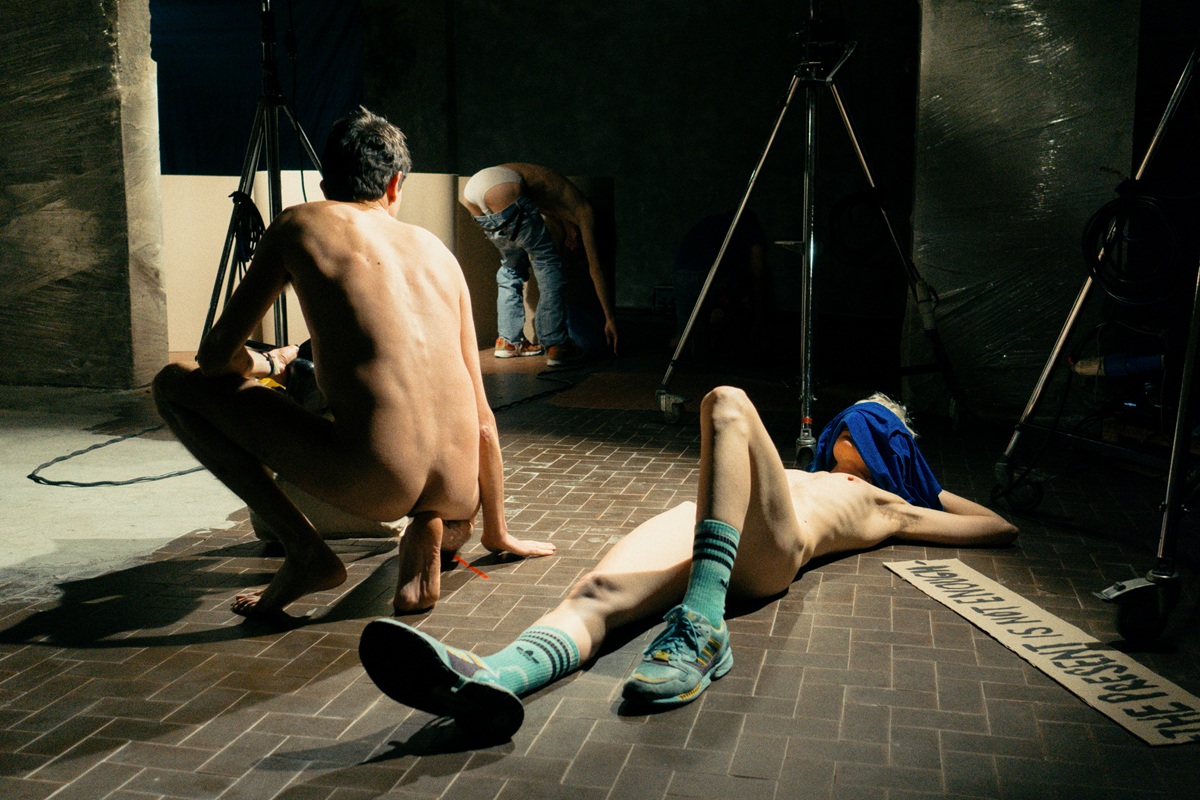
In 2023, “The present is not enough” premiered in Hamburg, co-produced by Azienda Speciale Palaexpo – Mattatoio | Progetto Prender-si Cura, Kampnagel (Hamburg), Kunstencentrum Vooruit vzw (Ghent), Motus Vague. In 2025, their latest performative work, “Temporale (a lesbian tragedy),” was released and is currently on tour.