
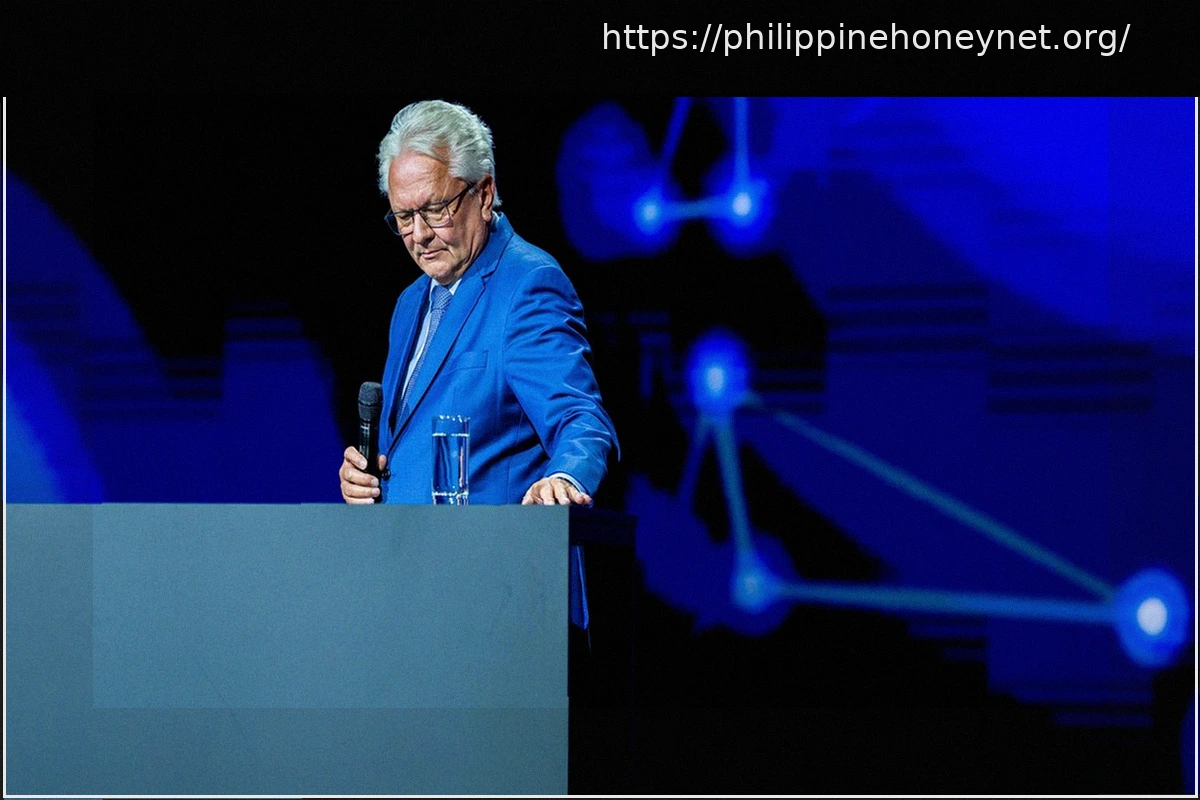
Rheinmetall CEO Armin Papperger has defended himself against criticism regarding controversial statements about Ukrainian drone manufacturers, attributing them to a misunderstanding. Papperger stated on Tuesday at the Hannover Messe that his remarks were “misrepresented.” He also emphasized his respect for Ukraine’s achievements.
Recently, an interview where Papperger compared Ukrainian drone manufacturers to “housewives” caused international criticism. He pointed to the often improvised production methods, suggesting some drone parts were produced “with 3D printers in the kitchen,” which he deemed not innovative.
At the trade fair, he explained that his statements were taken out of context. He had made three points: Firstly, Rheinmetall does not currently offer simple, low-end drones. Secondly, modern systems are often modular, “like a Lego system.” Thirdly, he wanted to highlight that many people in Ukraine are involved in production. “We can be proud that even the Ukrainian housewives are working,” Papperger said. He explained that media reports then interpreted this as him referring to Ukrainian drone manufacturers as housewives.
“In Contact Almost Every Week”
At the Hannover Messe, the world’s most important industrial trade fair, Papperger sought to de-escalate the situation. Rheinmetall is in contact with Ukrainian representatives “almost every week,” who specify their needs. This also helps NATO identify capability gaps.
The CEO identified the increasing use of automated systems and drones as key lessons learned from the war. These have proven effective, even against protected targets. At the same time, there is a need to catch up in traditional weapon systems. “There are too few of them,” Papperger noted, referring to artillery and long-range precision weapons. Air defense also plays a crucial role, with the situation changing “very quickly,” partly because drones are increasingly dominating the battlefield. Rheinmetall is therefore investing around 600 million euros annually in research and development.
Rheinmetall CEO Warns of Shortages
Concurrently, Papperger warned of impending shortages in the industry. “The biggest challenge is the supply chain,” he said. The goal is to reduce dependencies, for example on China, and source critical components from multiple countries. “You need at least two or three countries where you can get the same good,” Papperger stated.
The company has therefore restructured its procurement and is securing alternative sources in countries like Australia or Argentina. Additionally, Rheinmetall has significantly increased its inventory. According to the company, critical goods worth approximately 8 billion euros are currently stocked. This burdens capital and liquidity but is necessary to be able to deliver in an emergency, Papperger explained. Rheinmetall currently has an order backlog of around 64 billion euros.
Papperger dismissed concerns that the high backlog could overwhelm production, asserting it is manageable given the strong growth. While he admitted there have been delays in individual programs, he clarified that the order backlog is spread over many years and therefore predictable. He anticipates a growth of 40 to 45 percent for the current year, provided that investments in additional capacity are made early.
The Rheinmetall CEO highlighted the increased trust between the state and industry as crucial for expanding capacities. This enables faster investments, such as the construction of new plants. He cited the example of the plant in Unterlüß, Lower Saxony, where Rheinmetall invested around half a billion euros – initially without a firm order, which followed later. This trust is “the most important thing and the decisive factor,” Papperger emphasized, calling it the foundation for quickly strengthening defense capabilities in Germany, Europe, and the NATO alliance.