

Paris Internationale, a nomadic fair from Paris, has opened its doors in Milan at Palazzo Galbani (April 18-21). Positioned during Milan’s busiest art weeks, it aims not to overlap but to create space for reflection and deeper engagement with art. We spoke with director Silvia Ammon.
Why Milan? And Why Now?
Milan has long been a subject of discussion for us. Several founding galleries have strong ties to the city, and Milan has always possessed a unique ecosystem: a robust collecting culture, a deep tradition in contemporary art, and a remarkable proximity between art, design, architecture, and production. In recent years, it has become increasingly international, with new galleries, initiatives, and a growing collector base. Milan Art Week and the Salone del Mobile generate extraordinary creative energy. Paris Internationale has always positioned itself at the intersection of artistic experimentation and cultural exchange; this felt like the right context and the right moment.
The Evolving Collector in an Internationalizing City
Many of the prominent collectors who have shaped the contemporary art scene over the past decades are gradually stepping back, leaving a degree of uncertainty about the next generation. Milan is particularly interesting in this regard; it has a long-standing tradition of serious collectors, often connected to design, architecture, and industry. Alongside them, a new generation is emerging whose interests span across disciplines and who are drawn to discovery and experimentation. Paris Internationale resonates well with this kind of curiosity, favoring focused presentations where collectors can dedicate time to the works and engage in more in-depth conversations with galleries.
Adapting the “Anti-Fair” Format to Milan
The fair has always been highly curated, almost an “anti-fair” in its format and atmosphere. The guiding principles remain the same: a rigorous selection, a deliberately limited number of galleries, and an emphasis on exhibition-like presentations. Equally important are the principles that shaped Paris Internationale: keeping participation costs accessible for galleries, ensuring free entry for visitors, and developing a robust public program of talks, performances, and guided tours. Rather than replicating the Parisian edition, the Milanese chapter adapts the format to a different context. Milan has a particular rhythm, shaped by design, architecture, and production, and this proximity between disciplines inevitably influences how works are experienced.
Complementary to the Existing Ecosystem
Our intention from the outset has been to position Paris Internationale as a complementary platform. We operate on a deliberately human scale, with a curated selection, and emphasize exhibition-style presentations. This creates a different experience compared to larger fairs: visitors tend to stay longer, and works can be observed with greater attention. Another important element is multigenerational dialogue: emerging spaces and more established galleries are presented on the same level, fostering an environment where discovery and continuity coexist.
The Key to Deeper Engagement
This is precisely why Paris Internationale remains so intentionally focused. During art weeks, visitors are often overwhelmed by the sheer number of events and exhibitions. Our response is not to add more volume but to create a space where people can slow down. It is this experience, this attention, that allows discoveries to resonate.
Criteria for Gallery Selection
Thirty-four galleries are participating in the inaugural edition. Firstly, we look for galleries with strong, coherent programs – galleries that support artists long-term and play an active cultural role in their local ecosystems. Secondly, we prioritize projects conceived as curatorial proposals (galleries are asked to present solo or two-artist shows, not a catalog of unrelated pieces). Finally, we aim to maintain a balance between emerging and established galleries, creating a multigenerational dialogue that reflects the complexity of contemporary artistic production.
Highlights and Featured Artists
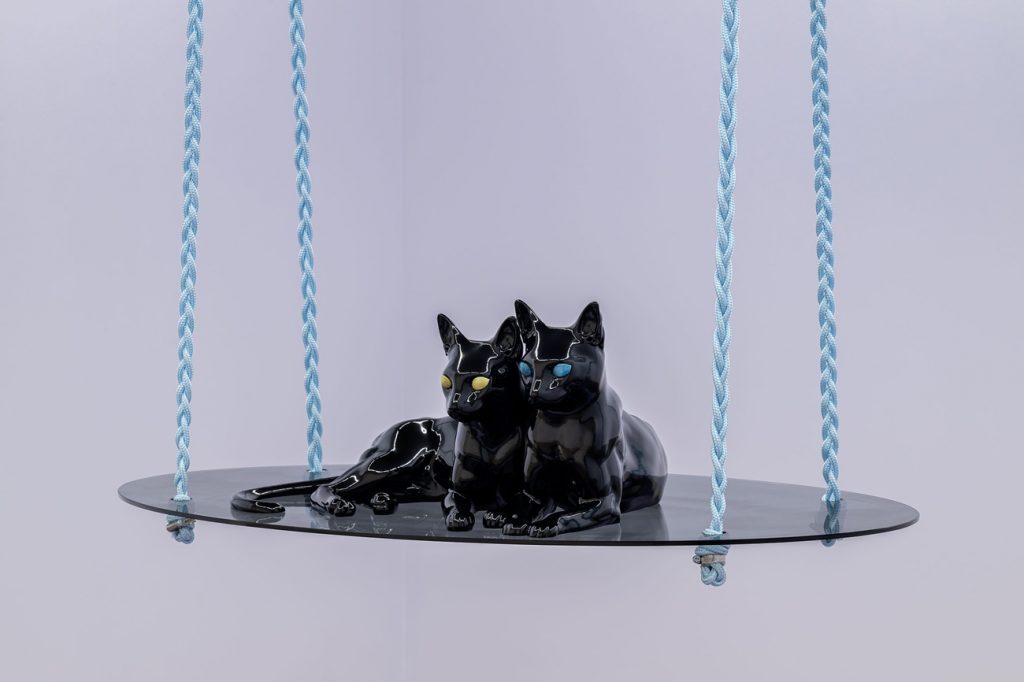
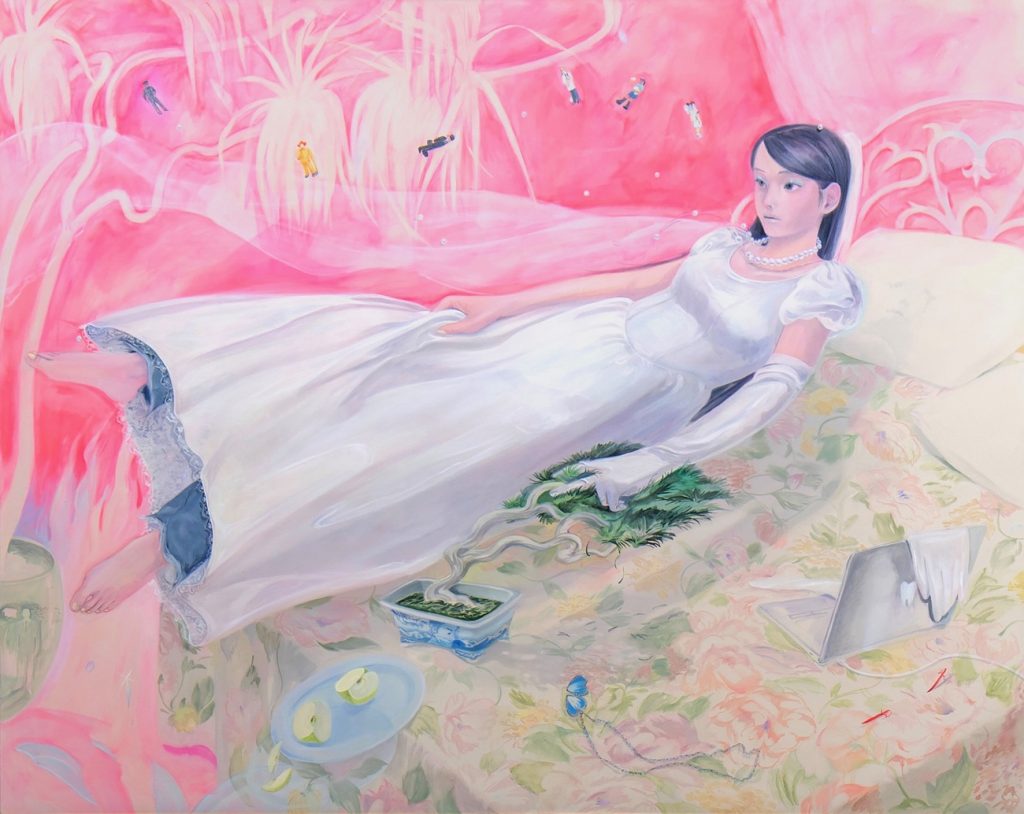
The presentations will reflect the diversity of generations and artistic practices that define Paris Internationale. It brings together established members of the Paris Internationale community such as Ciaccia Levi (Paris/Milan), Crèvecœur (Paris), Deborah Schamoni (Munich), Gregor Staiger (Zurich/Milan), Stereo (Warsaw), and Veda (Milan), as well as new entrants including Emanuela Campoli (Paris/Milan), Jocelyn Wolff (Paris), Luisa Delle Piane (Milan), and Sylvia Kouvali (London/Piraeus). Several galleries will bring works by prominent figures – from Leonora Carrington and David Medalla to Robert Mapplethorpe, Olivier Mosset, Gaetano Pesce, Lee Scratch Perry, Caroline Bachmann, and Nicole Wermers. Alongside historical names, a new generation of artists will be showcased, including Inès Di Folco Jemni, Anthea Hamilton, Ibuki Inoue, Thomas Kręcicki, and Lou Masduraud. The Italian scene will be strongly represented, with artists such as Benni Bosetto, Ambra Castagnetti, Anna Franceschini, Luca Monterastelli, and Dominique White.
A New Chapter, Not Just Expansion
We tend to avoid thinking of Paris Internationale as a brand in the conventional sense. When the fair was founded in 2015, it stemmed from a desire to propose an alternative model: independent, collaborative, human-scale. It’s a fair created by galleries for galleries, built on principles of collegiality, inclusivity, experimentation, and accessibility, with the ambition of placing artists and connections at its center. The Milanese edition marks the opening of a new chapter, demonstrating that this model can resonate outside of Paris. However, the ambition is not to multiply editions everywhere; what matters is finding contexts where this vision makes sense.