
Modena offers a serene escape from the vibrant chaos of nearby Bologna, presenting itself as an ordered and pristine city, a tranquil setting for everyday life. Within this calm environment, an independent space named Gate26A, founded by a collective of four individuals, injects a dynamic energy into the city’s atmosphere, transforming it, even if only for the duration of an exhibition.
Gate26A was born from a clear desire to create a space in constant dialogue with its urban surroundings. This simple room functions as a true transit gate, a crossroads for arrivals and departures dedicated to site-specific interventions. Within its compact 19 square meters, contemporary art forms are not just encountered but are actively “chewed, spat out, and reassembled” to find their ultimate expression. The raw, yet fitting, language used here reflects an approach that eschews traditional museum rhetoric with its sterile panels and captions. The founders of Gate understand how to disrupt an environment to surprise viewers, working intimately with artists’ poetic visions and allowing the space itself to exude what could be called an “expanded” artwork. It is the location that completes the piece, communicating what art sometimes prefers to conceal.
This space embraces challenges and isn’t afraid to disrupt the conviviality of the “packaged city.” For instance, with the complicity of artist DeadMeat, the collective once led a group of adolescents to believe that the pop duo Benji and Fede had passed away. This provocative yet vital spirit has persisted for a decade, supported by grants from the Modena City of Media Arts circuit, within a city that occasionally invests in such initiatives.
Opened on April 11th and running until May 3rd, the new exhibition features the work of Aleksandr Vladimirovich Nuss (a visual artist born in 1999, active between Modena and Bologna), marking a moment of apparent tranquility within the space. Titled The image is the first thinking, the Gate26A environment transforms into a device of revelation, perfectly suited to a body of work situated at the intersection of memory, space, and the symbolic construction of imagery. Here, light, which as explained “gives and takes,” becomes the pivotal element of the exhibition. Through this precise setup, Nuss explores a radical ontological question, asking what remains of an image once its descriptive function is removed. The answer materializes in the discarded and the ephemeral, in that fleeting first glance we give to things before the mind solidifies their form; the image thus becomes a perceptual threshold, a residue of experience suspended between vision and disappearance.
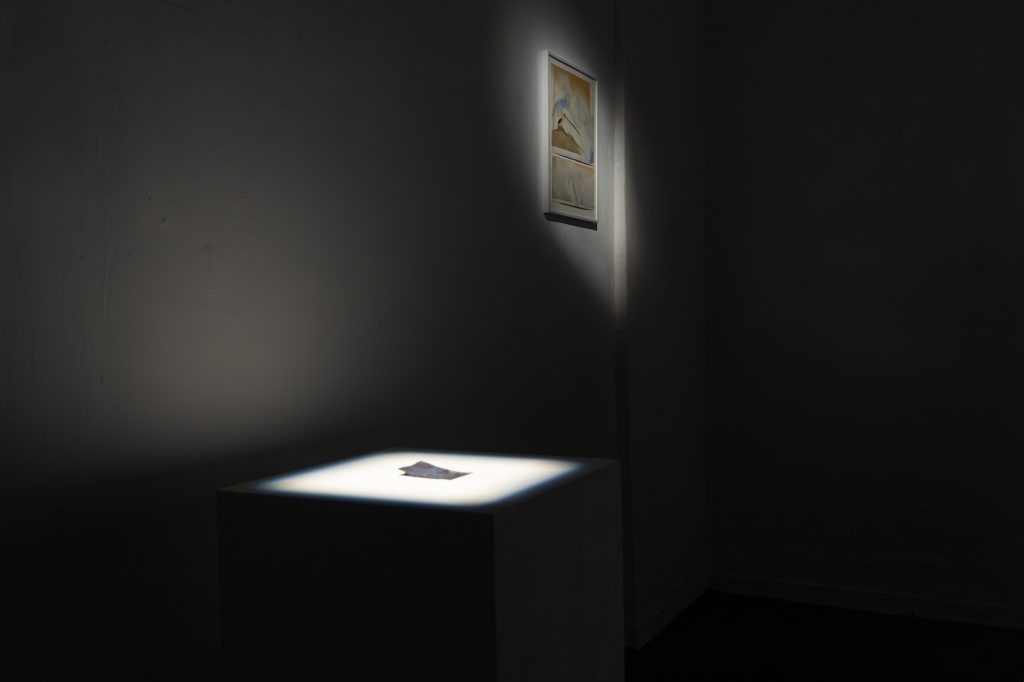
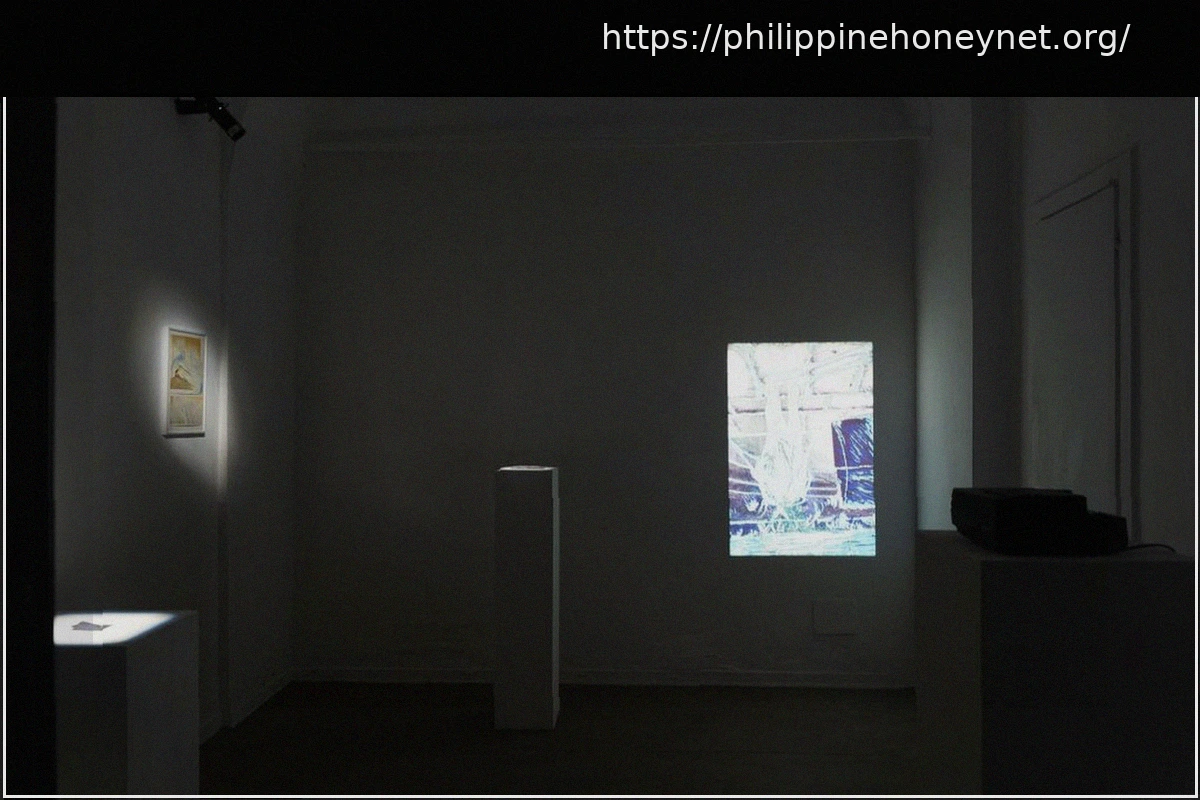
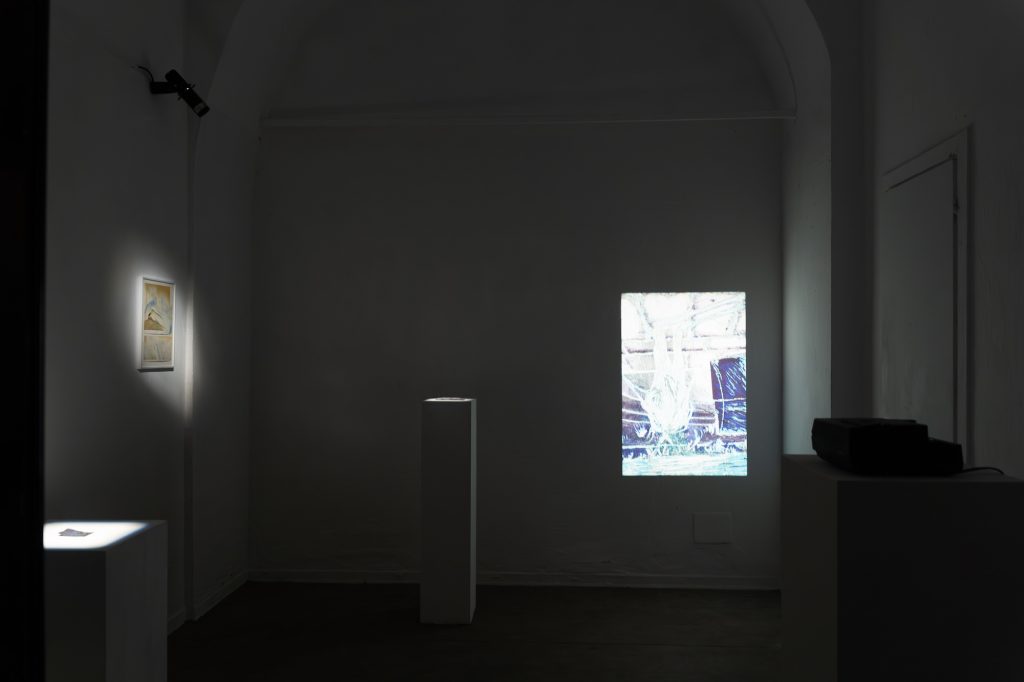
The space is presented in near-total darkness, starkly contrasting with the pastel orange walls and portico visible from the street. The light sources are subtle and precisely positioned. Stepping inside feels like entering a mental darkroom, a liminal environment where discovery requires delicacy and proximity. The arrangement of the four works eschews chronological order, instead following the natural human inclination to explore a space clockwise. White plinths of varying heights hold small fragments of sandpaper, displayed like lecterns. This choice aims to bring the viewer closer to the artist’s perspective during the creation of the work, necessitating a bowed, top-down view. Meanwhile, a wall-mounted piece interacts with a projected installation, acting as a magnifying lens for the intimate scale of the exhibited works.
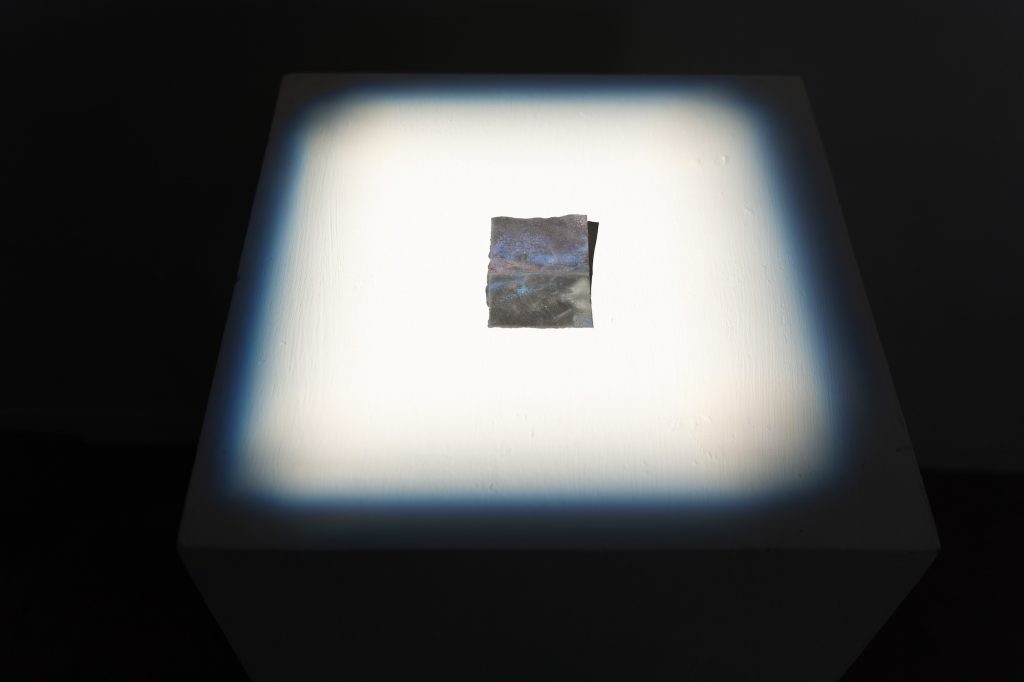
Knowing the working methods of both the collective and the artist, the exhibition’s architecture initially suggests an almost clinical and methodical rigor. The sandpaper fragments appear as specimens ready for microscopic analysis; yet, as one lingers in the space, this coolness dissolves. The work reveals itself as an amulet, and the apparent sacred urn becomes a place of pure introspection. In Senza titolo VII (Per uscire dalla luce del giorno) – an artwork created through abrasions on a cut page – a spotlight pierces the canvas with a diagonal beam. There is no consecratory ritual, nor any intention to isolate the piece, only the urgency to make it emerge.
The persistent use of fragile and abrasive materials introduces a continuous tension between appearance and erasure. The artist’s gesture does not build; it subtracts. It does not add material; it erodes it. The surface becomes a field of resistance where the mark manifests as a trace of irreversible friction, where seeing, in essence, equates to registering a loss. This concept expands spatially with Il respiro del Grande Risveglio (abrasions on slide), where the image ceases to be an object and becomes a luminous event. A projection immerses the observer in an unstable process, where the work is only revealed in its transit, constantly on the verge of vanishing.
Ultimately, as the exhibition title suggests, the image is indeed the first thought. Everything, from the materials to the setup, works to produce visual suppositions rather than certainties. Nothing is explicit, yet we leave with a detail imprinted in our minds, born from a texture or a cut of light. Alongside Nuss’s works, the Gate26A space becomes a metaphor for our inner selves, moving away from the idea of a logical, rational brain to embrace a mind as a fertile space, a dark archive where the most authentic sensations settle and reveal themselves.
This exhibition is not merely a display of an individual’s work but the materialization of a profound desire for translation and collaboration. On one side is Nuss, who erodes matter to reveal its essence. On the other is a space that rejects the standardized dynamics of commercial galleries to preserve its identity as a spontaneous and independent collective. Together, they demonstrate that the priority lies not in the exhibition display but in the construction of a participatory and, in this case, intimate experience, returning to the city a place where art is, first and foremost, discovery and community.