
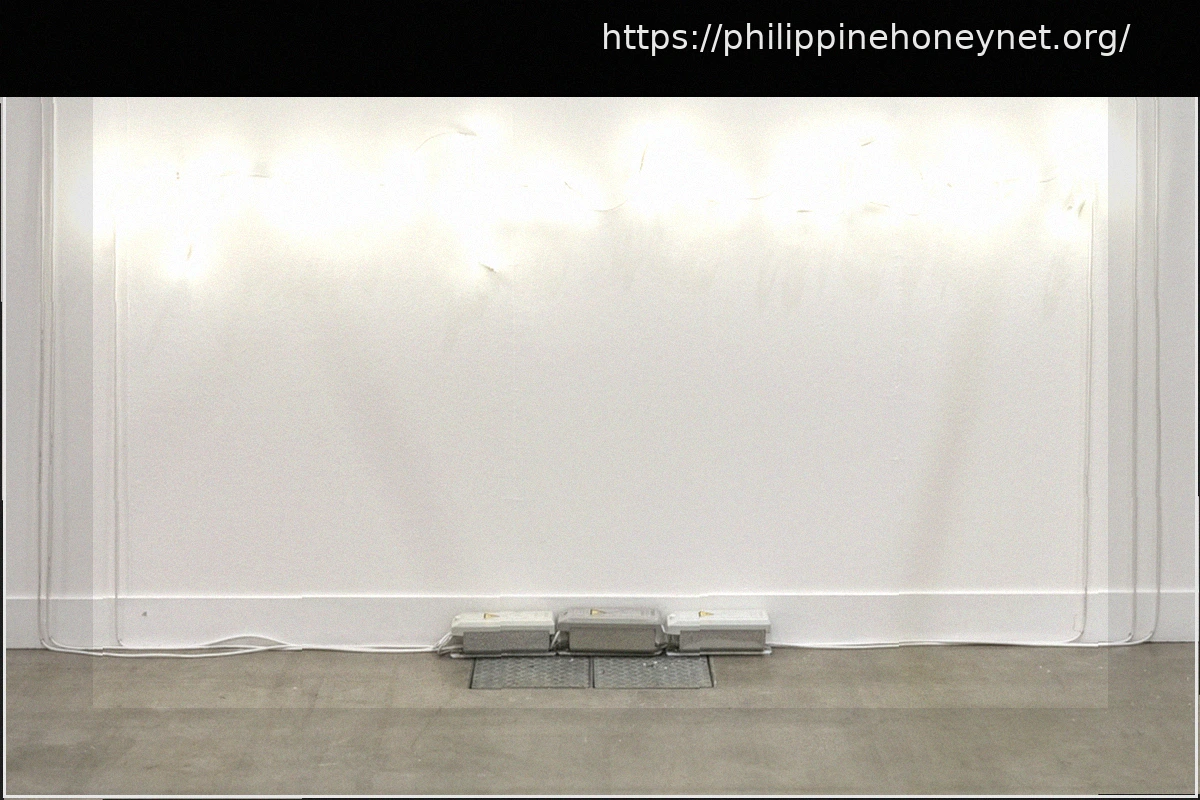
The question, “Any news from the collector?”, posed by Christian Jankowski and visualized in neon at Galleria Enrico Astuni, echoed through miart 2026. The fair debuted at the new South Wing of Allianz Mico, offering a spectacular view of Milan’s CityLife skyline. Marking its 30th anniversary, miart featured 160 stands across three floors, under the direction of Nicola Ricciardi, with “New Directions” as its leitmotif. Amidst Milan’s evolving international art scene, characterized by new fairs and galleries, the time has come to assess the outcomes. Jankowski’s question prompts a direct response from the gallerists: “Any news?”
“In recent years, Milan has definitively established itself as an emerging art center to watch, with momentum particularly evident in the last year,” shares Freddie Burness, Managing Director of Cadogan Gallery. The London-based gallery, with over forty years of experience, opened its Milanese branch three years ago, coinciding with the city’s expanding ecosystem. “The city has seen a significant influx of international visitors, alongside a growing number of galleries opening new spaces and new art fairs like Paris Internationale. This has fostered a strong synergy between local and international collectors.” Regarding sales at their stand, Burness reports, “Despite a slower start, our sales have been positive so far, with works priced between approximately €5,000 and €50,000.” This aligns with the global trend where business is driven by moderate, considered figures, keeping transactions vibrant. Notably, the latest Art Basel and UBS Global Art Market Report 2026 by Clare McAndrew indicates a 4% increase in fair sales in the past year, the highest since 2022. Now, the ultimate test unfolds on home ground.
“We viewed miart as a local fair, for a curious, present, and engaged collector audience,” reveals Massimo De Carlo, whose gallery has spaces in Milan, London, Hong Kong, Paris, and Seoul. “It paid off, although we had expected a bit more.” Sales were predominantly under €50,000 – the market’s operational comfort zone – including seven pastels by Nicole Wittenberg, a bronze sculpture by Alicja Kwade, and an oil on linen by Austyn Weiner. Mazzoleni, another key player in the Milanese scene with a new space in Via Senato recently opened, also reports positively. Present at miart 2026 with a double stand in the ‘Established’ and ‘Anthology’ sections, the gallery declared “great success” for Marinella Senatore’s new tapestry production and strong performance for works by Francolino, Reimondo, Moccia, and McGill.
Scattered across the booths were references to the city’s ongoing institutional exhibitions. Mai 36 Galerie showcased Robert Mapplethorpe (in dialogue with Jacopo Benassi), elegantly complementing ‘Le forma del desiderio’ at Palazzo Reale. Andrew Kreps Gallery and SpazioA featured Chiara Camoni, who will represent Italy at the Venice Biennale, hinting at upcoming major exhibitions. Meanwhile, business continued within the fair. “We are extremely happy with this edition of miart, which has been a market success since day one,” states P420 from Bologna. “The commercial response has been excellent, with sales for almost all our artists.” Xian Kim (€7,000-€20,000), Khaled Jarada (€1,000-€6,000), and Shafei Xia (€5,000-€30,000) sold out. Alessandro Pessoli (€8,000-€40,000), Adelaide Cioni, Helene Appel (€7,000-€15,000), Franco Vaccari (€5,000-€25,000), and Merlin James (€10,000-€20,000) also saw strong sales, with significant interest and ongoing negotiations for Riccardo Baruzzi, Pieter Vermeersch, Paolo Icaro, Irma Blank, Francis Offman, and June Crespo.
Antonio Addamiano, founder and gallerist of Dep Art Gallery, expressed dissatisfaction with the fair’s logistics and the layout of the exhibition areas. “miart 2026 has been an unpleasant surprise for both exhibitors and visitors regarding the logistics and complex connection of the three exhibition areas,” he confided. “The lack of clarity in navigation, escalators, and elevators did not compensate for the beautiful view and entrance of Milano City Life and its park. The selection of international galleries and their proposals remain very valid.” His stand featured a dialogue between prominent Italian and American artists, including Valerio Adami, Tom Wesselmann, and Salvo, alongside two gems by Alex Katz. Addamiano reported “excellent feedback from foreign visitors and numerous ongoing negotiations.” He noted that for works over €100,000, collectors are taking their time, a shift from past euphoria and speculation. While no sales were concluded by Saturday evening, he anticipates future deals.
Uncertainty among industry professionals focused on the layout of the fair, particularly for gallerists on the second floor, while emerging artists seemed to benefit from the spaciousness of the South Wing. “miart continues to be a fair that, for better or worse, works,” stated Sara Cirillo, Senior Director of Secci. Their stand, dedicated to Alfredo Pirri with works priced between €30,000 and €35,000, yielded excellent results, confirming that a clear proposal resonates with the public. “In our opinion, the new spatial organization is less convincing; in an attempt to make the flow more fluid, it has actually become more fragmented, leading to a less immediate overall reading.” Leonardo Farsetti of Galleria Frediano Farsetti also found the new venue’s spaces problematic for visibility and accessibility, especially on the second level. The first-level spaces were more cramped than the previous location, making some works less accessible. He noted that collectors are increasingly focused on quality, documentation, and artist positioning in the current market. While satisfied with sales, he believes Milan’s economic potential could yield greater rewards.
Further feedback, received hours before closing, was mixed. Barbara Magliocco, founder and director of Orma, making her debut at the fair, found her participation “very positive, with concrete results starting from the preview.” Their stand, dedicated to artists Almudena Romero and Mercedes Lachmann, attracted strong interest, leading to the sale of four works priced between €3,600 and €7,000. There was also interest from museums and foundations, with a Milanese foundation acquiring two Romero works and international requests for commissions for Lachmann. The Italian market’s response was described as encouraging. Alessandro Castellini of Giò Marconi reported the sale of works by Schifano and Alice Visentin, with significant interest in Patrizio di Massimo’s bed and an Adami from 1967. He anticipates “many contacts and opportunities for post-fair work.”
So, “any news from the collector?” The collector is certainly present, with the fair reporting 16,700 VIP contacts, a 20% year-on-year increase. However, they are proceeding with caution. The collector is slow, informed, and less inclined to engage in speculative dynamics. While sales under €50,000 remain consistent, those above are becoming more infrequent and elongated. The fair continues to function as a space for persistent relationship-building. Jankowski’s question yields no definitive answer, only signals pointing towards “new directions.”