

Scheduled to open on June 6, 2026, the new Medina Triennial is quickly becoming one of the most anticipated events on the international calendar. This large-scale, distributed periodic exhibition is notable not only for its format but also for its unique setting: Medina, a small New York State village on the Erie Canal. Far from metropolitan art hubs, Medina has been chosen as a site for experimentation, fostering a dialogue that intertwines art, ecology, and civic infrastructure.
Curated by Kari Conte and Karin Laansoo, the inaugural Medina Triennial, titled All That Sustains Us, will feature 39 artists and collectives from five continents. Over 100 works will be dispersed throughout the public space and various buildings and locations within the area, including disused schools, local museums, parks, churches, and hospitals. The exhibition deliberately eschews the traditional white cube, instead embracing the scale of the entire village. As Conte and Laansoo explain, “All That Sustains Us revisits a question artist Mierle Laderman Ukeles (also featured in the exhibition) posed in 1969 and continues to ask: what does it take to keep things going?”
“The Medina Triennial explores the forms of labor, knowledge, and commitment that sustain civic life, ecological systems, and the built environment, especially under challenging conditions. The works gathered here are the result of research and dialogue with artists, offering multiple perspectives. What unites them is a shared focus on the forces, materials, and ideas that hold communities together, and the conditions under which these structures begin to crumble.”
With support from the New York Power Authority and the New York State Canal Corporation, public entities responsible for electricity and water canal maintenance respectively, the project is the culmination of a year of fieldwork. Its curatorial approach is firmly rooted in reducing the environmental impact of artistic production by prioritizing local processes and fostering direct relationships with the community, materials, and ecological systems of the region. The exhibition’s thematic cores branch out from this foundation, exploring relationships with the land and extractive processes, water management, labor and repair, the construction of the public sphere, and the visible and hidden systems that govern daily life.
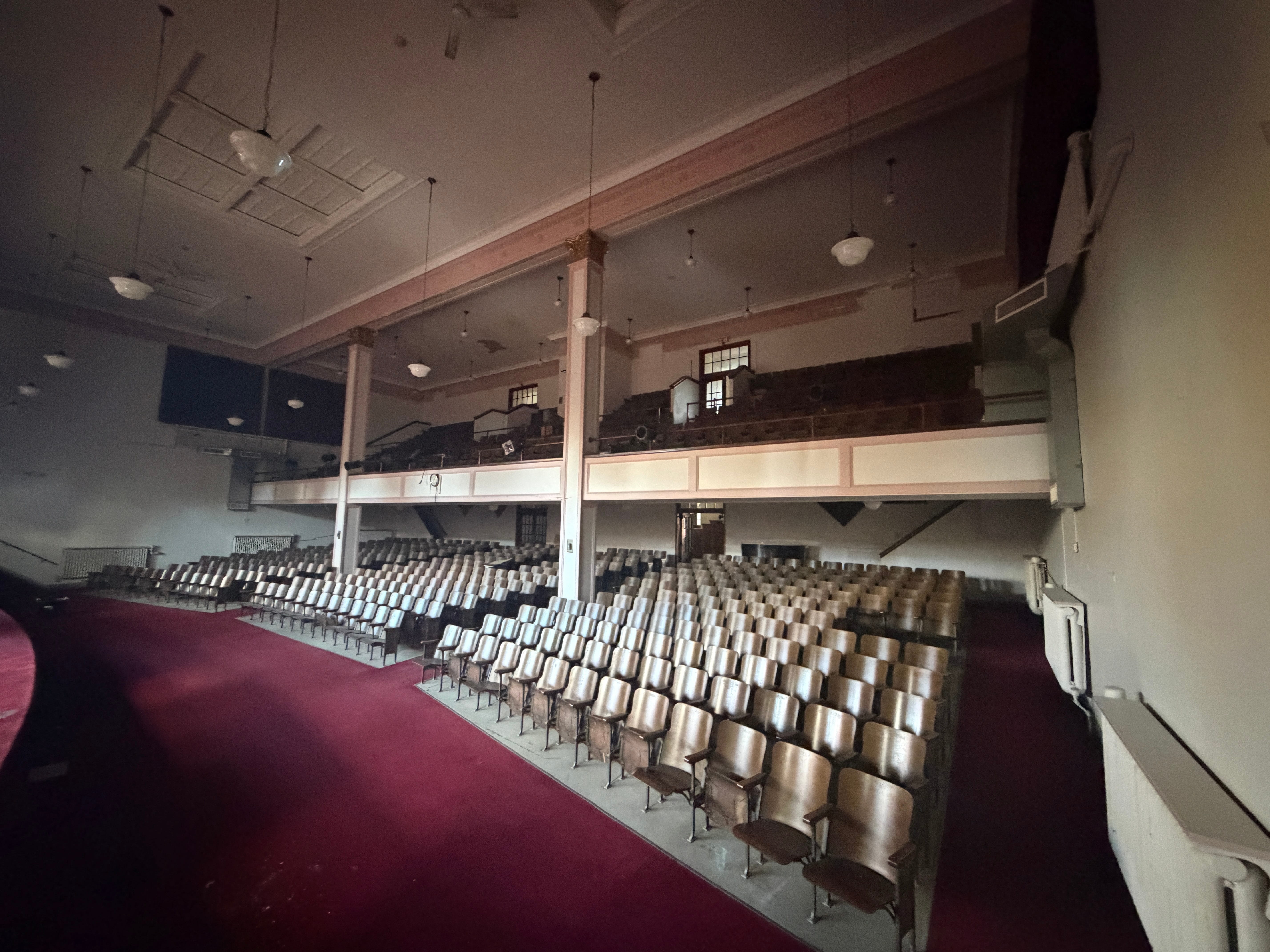
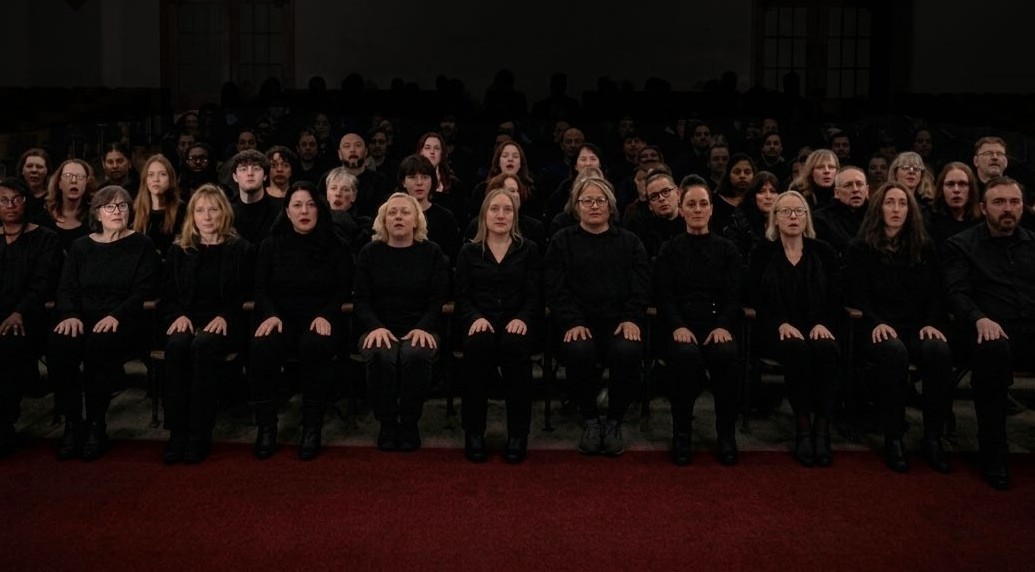
The roster includes established names from the international biennial circuit and historically significant artists, such as Lina Lapelytė, a Golden Lion winner at the 2019 Venice Biennale, alongside Tania Candiani, Asad Raza, Harun Farocki, and Alice Bucknell. Many participating artists’ work is explicitly engaged with geopolitical, ecological, and social issues. This includes the Nigerian artist Victoria-Idongesit Udonian, who will also be present at the 2026 Venice Biennale, and Palestinian photographer Taysir Batniji, who has long explored conditions of mobility and conflict. Michael Wang‘s practice focuses on ecosystems and environmental economies, while Jane Jin Kaisen delves into diasporic memories and colonial legacies. Selva Aparicio works with discarded natural materials, employing traditional artisan techniques like weaving, carving, and sewing.
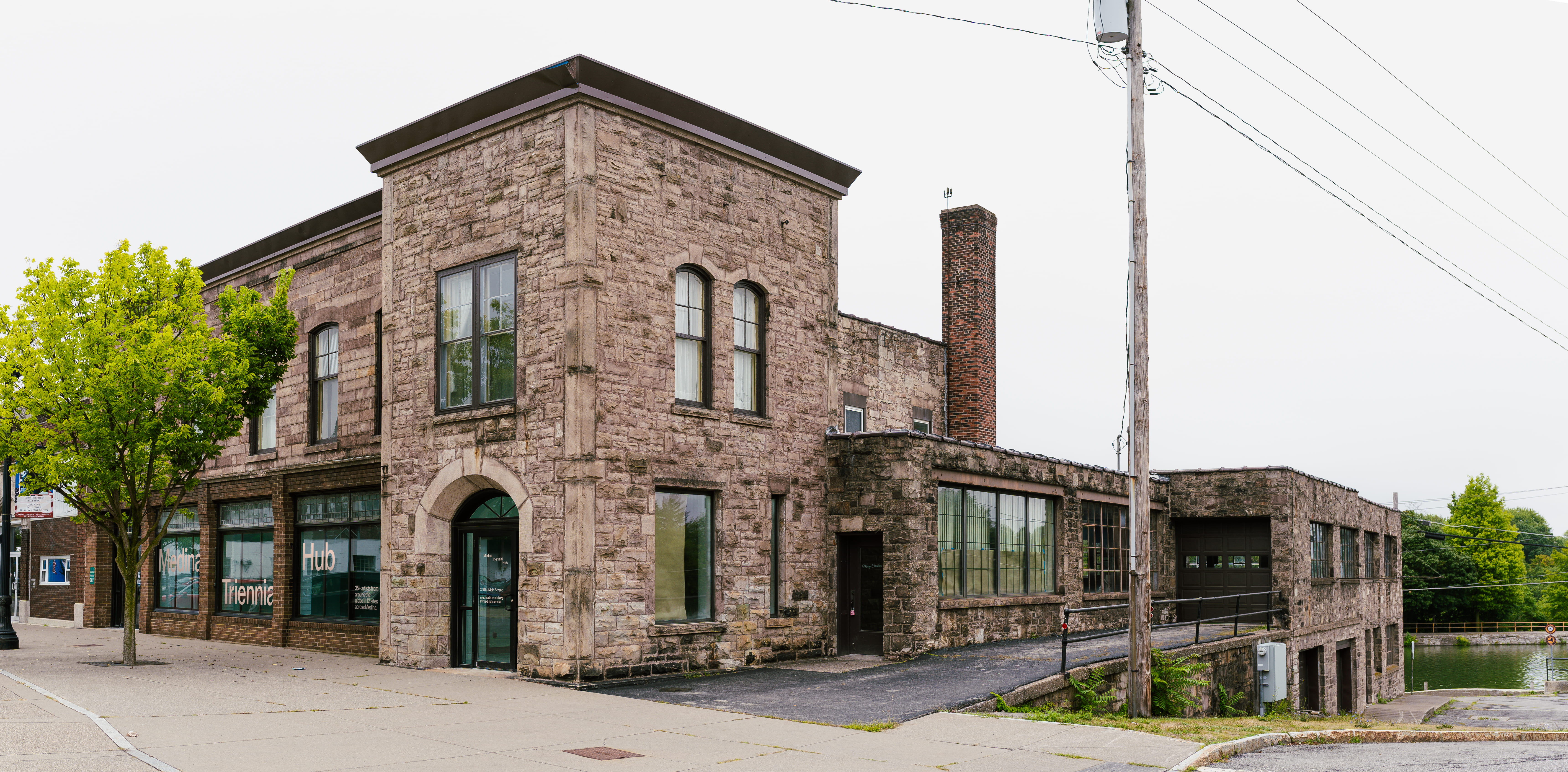
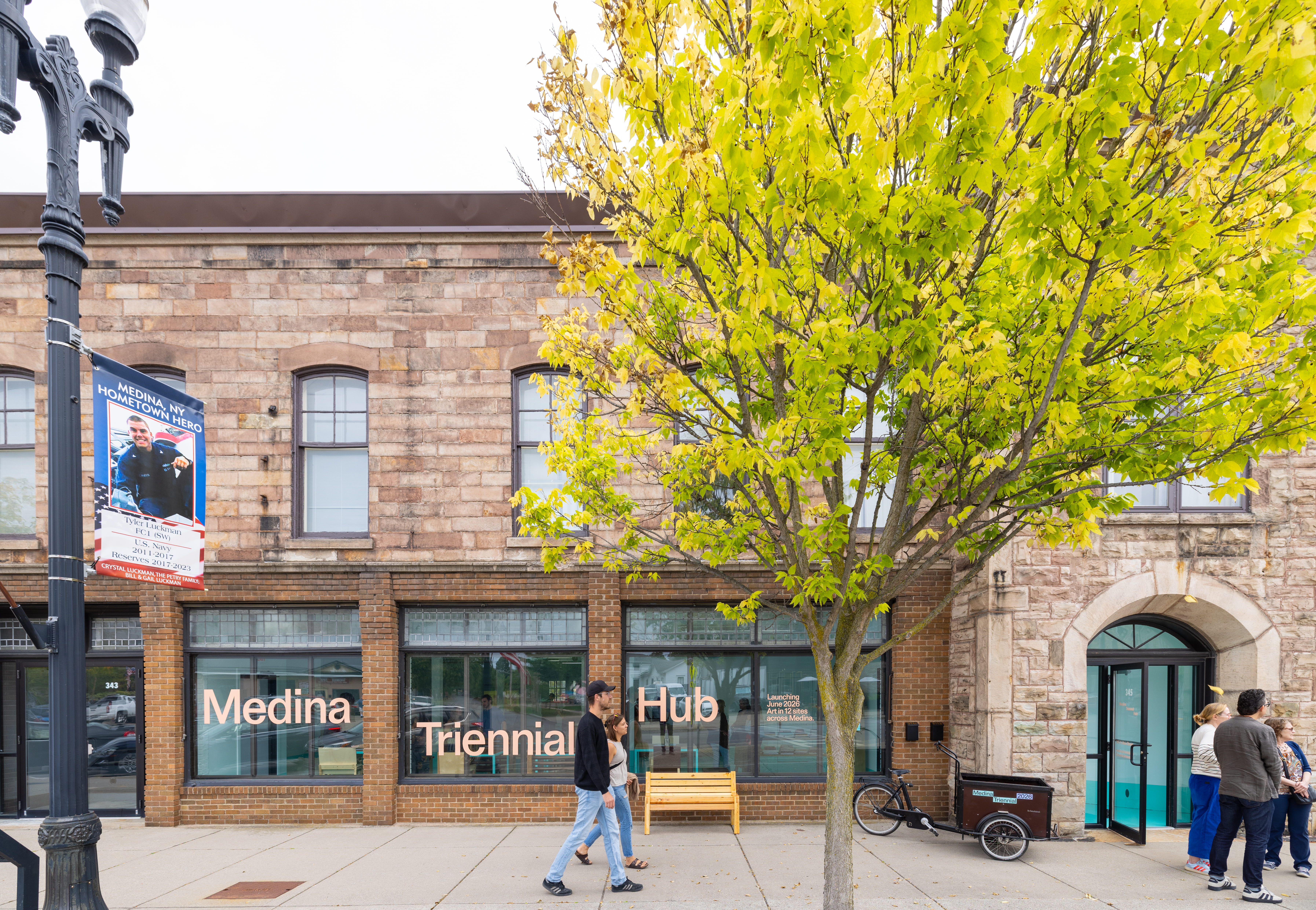
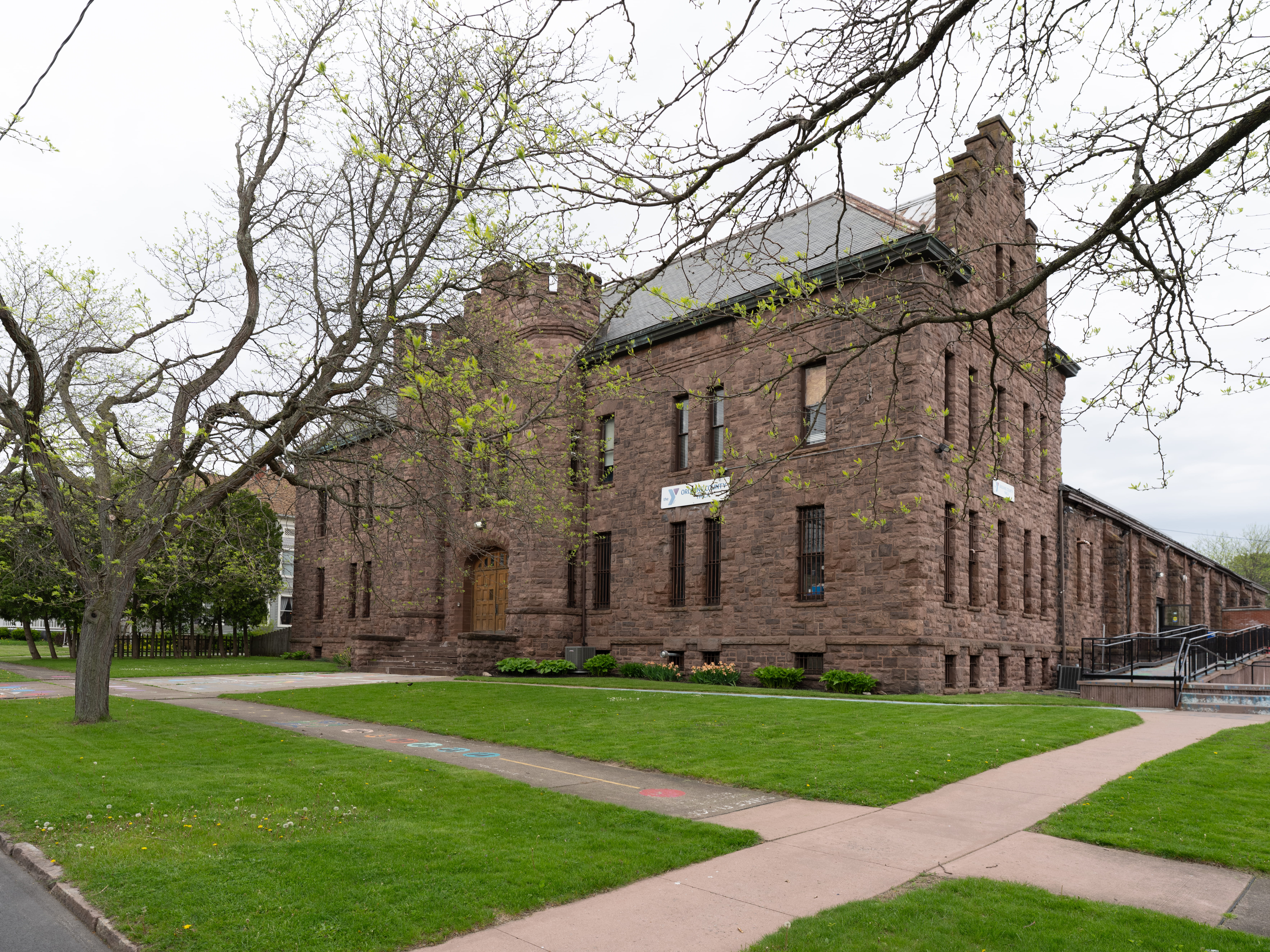
A central element is the Fieldwork residency program, which has enabled artists to develop their projects on-site, allowing for extended timelines and deep immersion in the context. This approach results in works that bridge installation, scientific research, and social activation, challenging the extractive model often associated with large international exhibitions. The Triennial’s headquarters are located in a former sandstone hotel overlooking the Erie Canal, complemented by a primary exhibition space housed in a school closed for over 30 years. A network of interventions will radiate from these hubs, engaging the entire urban fabric. From this spring, Aparicio and Wang will be in residence in Medina; the former will work on a sculpture, while the latter will realize Future Sugarbush, an artist-designed maple grove, and Sugarbush Energy, a canned maple sap beverage that will be available free of charge throughout the Triennial and at select Medina businesses.
Many of the Medina Triennial 2026 projects are conceived as collaborative processes, often in dialogue with local residents, researchers, farmers, and institutions. Examples include Mary Mattingly‘s Floating Garden, a floating garden built with the community, and Lina Lapelytė’s performance Faithfully Recording, where singers and laborers collaborate on a public sculpture. In other instances, artistic intervention directly engages with the region’s infrastructure, as in the work of Asad Raza, an artist based in Berlin but born in nearby Buffalo, who will redirect Erie Canal water to one of the exhibition venues.
The participating artists in the Medina Triennial 2026 are: Ash Arder, Selva Aparicio, James Beckett, Taysir Batniji, Alice Bucknell, Tania Candiani, Jay Carrier, FIBRA, Harun Farocki, Futurefarmers, Jeneen Frei Njootli, Greg Halpern, Terike Haapoja, Carole Harris, Scott Hocking, Gözde İlkin, AKI INOMATA, Richard Ibghy & Marilou Lemmens, Kärt Ojavee, Anne Duk Hee Jordan, Jane Jin Kaisen, Matt Kenyon, Evelyne Leblanc-Roberge, Dionne Lee, Lina Lapelytė, Matthew López-Jensen, Cathy Lu, Mary Mattingly, Asad Raza, Gamaliel Rodriguez, Deirdre O’Mahony, Abraham O. Oghobase, Selma Selman, Finnegan Shannon, Jean Shin, SIDE CORE, Victoria-Idongesit Udondian, Mierle Laderman Ukeles, Michael Wang.