
Within the halls of Palazzo Te, there comes a moment when the space transcends its identity as a palace and functions purely as an image. Architecture appears to shift and warp, proportions seem to hold but then fracture, classical orders allure the eye only to betray it, and the Cortile d’Onore imposes itself as both structure and artifice. This is an experience of controlled instability, a form of understanding achieved through disorientation. Indeed, everything here originates from a shift in perspective. The palace stands on what was once known as the Tejeto island, a marshy, unstable terrain reclaimed from the swamp and transformed into a pleasure residence by Federico II° Gonzaga. This act—or perhaps a vision—rewrites the natural space conceived by the great Giulio Romano, who created a place that not only represents the world but stages it, bends it, and reinvents it. The “Palace of Lucid Deceptions,” as it’s called, is not a mere metaphor but a program with a hidden rule governing every shift of the gaze.
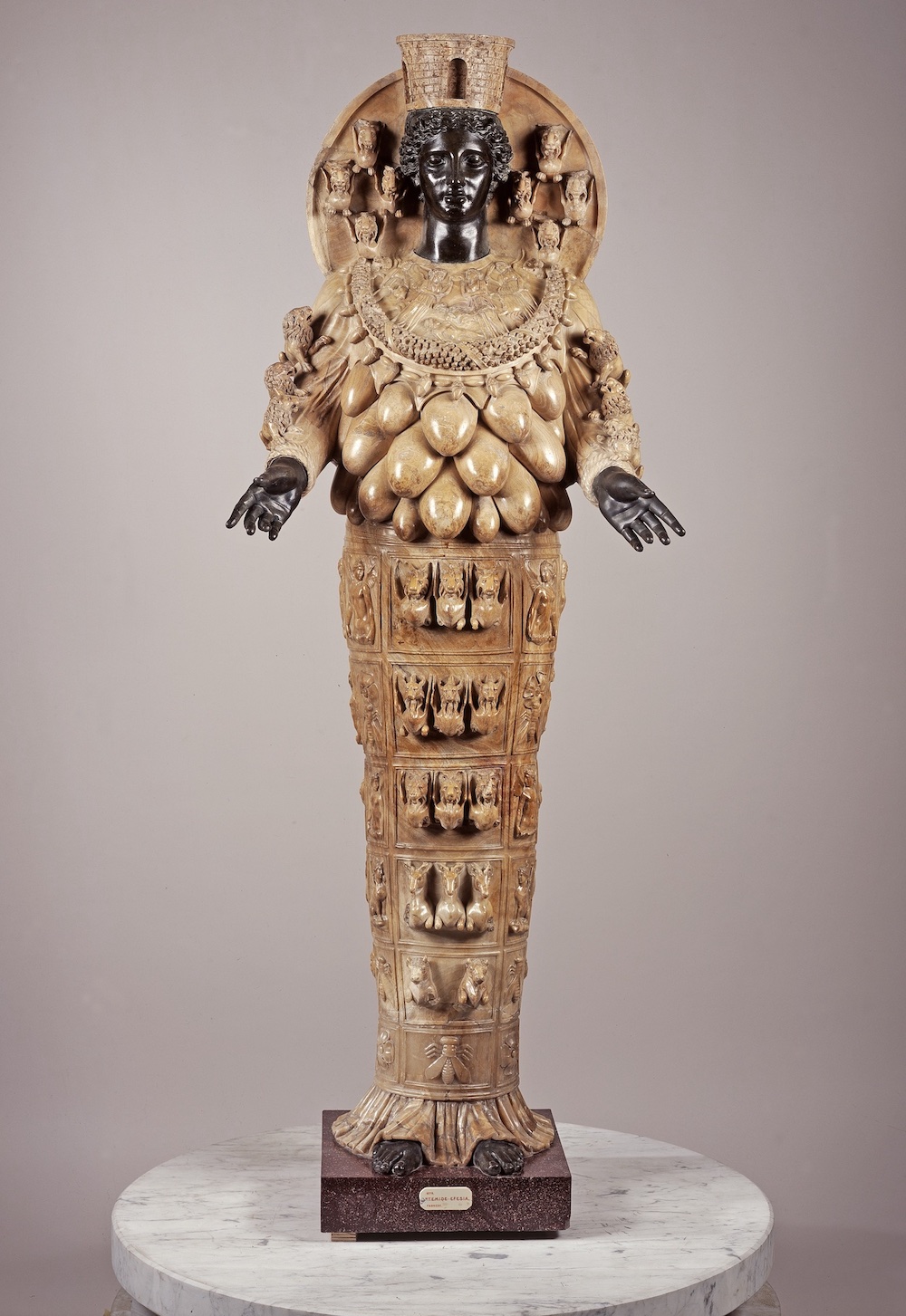
In this setting, images never belong to a single, defined time, nor can they be contained within a linear interpretation. They return, transform, and re-emerge in unexpected forms, as if each figure carries a memory that persists and reactivates in the present. It is in this instability that their power lies. They are not documents of an era but active presences, capable of traversing time and continuously producing new meanings. At Palazzo Te, images function through survival, re-emerging, shifting, and accumulating tensions that are never exhausted in their origin. Ancient figures reappear in new guises, classical myths move through the rooms as still-active presences, and the past behaves like a living material that insists in the present. It is here that the masterpiece of Giulio Romano reveals its most radical nature as a place where time does not flow but stratifies and ignites through sudden reapparitions.
This dynamic closely recalls what Georges Didi-Huberman defines as the anachronism of images, where they are not remnants of the past but forms that survive, re-emerge, and generate meaning each time they are seen again. At Palazzo Te, this survival is not a side effect; it is the very structure of the project. Images do not merely decorate the space; they reactivate it, entering into relation with the architecture, the gaze, and the present of the observer. It is within this unstable field, composed of returns, shifts, and reinventions, that the exhibition Inventing Nature. Leonardo, Arcimboldo, Caravaggio is situated.
Rather than introducing a theme, the exhibition intercepts a process already underway: the construction of nature as an image, as knowledge, and as a device of power. It is not a simple representation of the natural world but its transformation into something observable, classifiable, and replicable. Thus, that initial moment—when the palace seems to fracture under the gaze—becomes a critical threshold, suggesting with almost brutal clarity that nature, here, coincides with the way it is conceived, constructed, and staged.
Curated by Barbara Furlotti and Guido Rebecchini, the exhibition aligns with the Foundation’s programmatic direction, continuing a reflection that moves from metamorphosis to nature understood as an “other” to be comprehended and conquered. This is a far from innocent premise, as it implies a precise genealogy: that of the modern gaze, which separates, classifies, and ultimately possesses the natural world. The exhibition is organized into seven sections – Create, Destroy, Surprise, Know, Reproduce, Amaze, Animate – which function as a veritable dramaturgy. From generative and divine nature, we quickly move to its catastrophic dimension, then to its domestication through scientific observation, its replication in artistic laboratories, and finally its transformation into spectacle and automaton. It is a clear trajectory, from wonder to dominion, from observation to simulation.
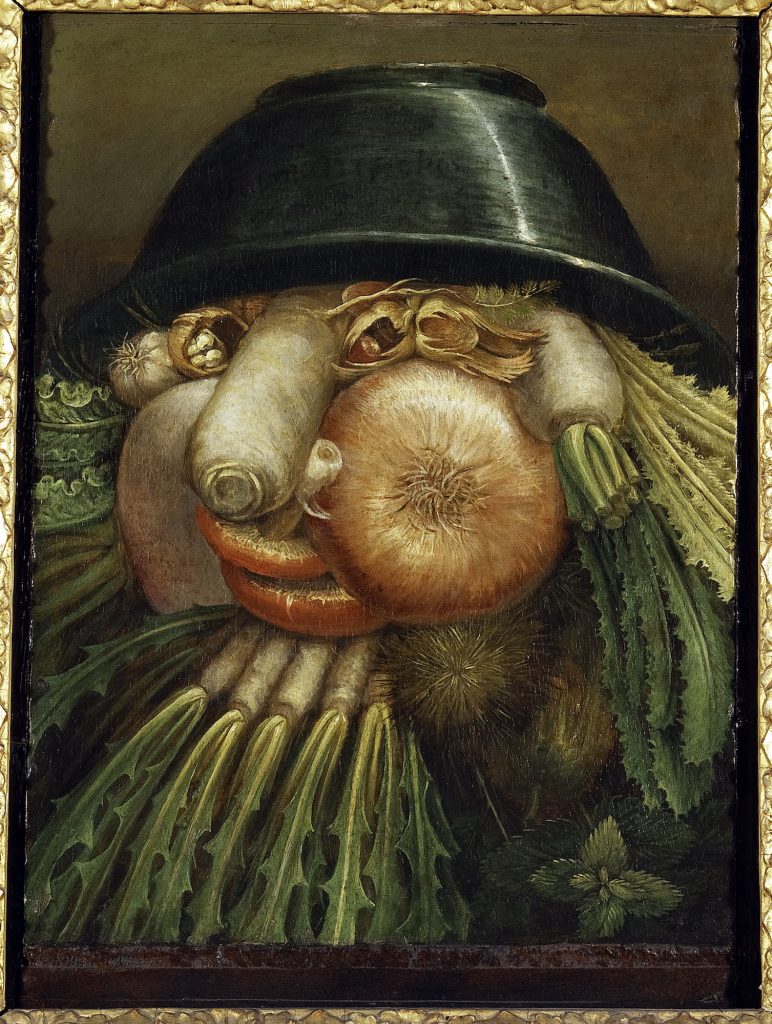
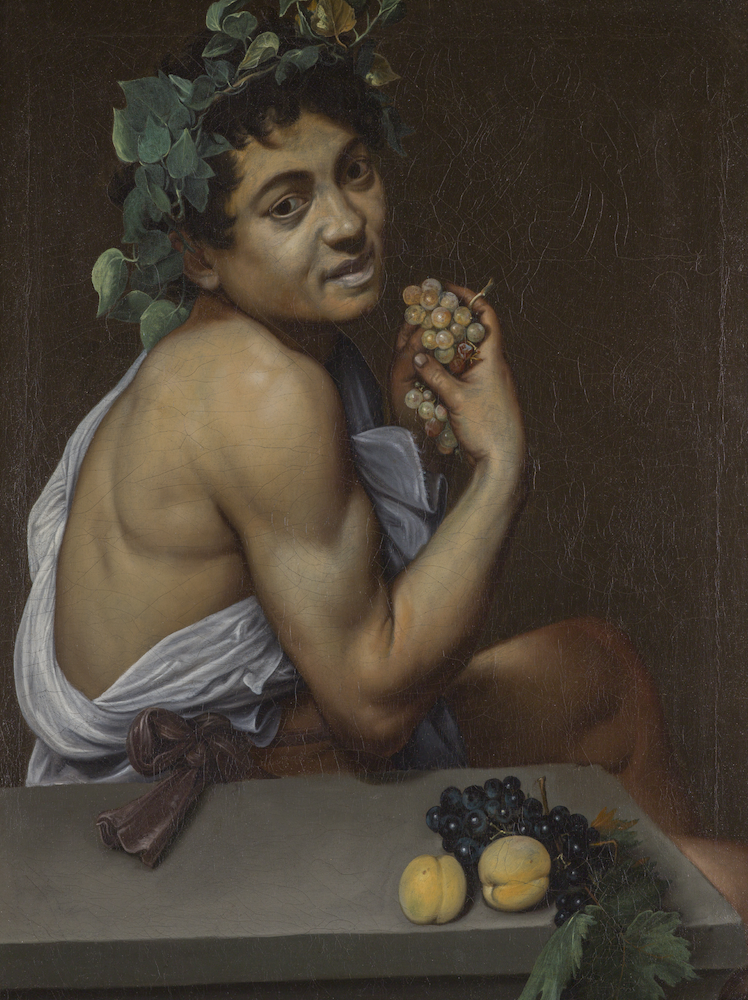
In this narrative, the dialogue with the palace is not a mere added value but the focal point of the entire project. The rooms frescoed by Giulio Romano—especially the dizzying Camera dei Giganti—do not simply house the works but amplify them, challenge them, and sometimes overshadow them. The nature that collapses, explodes, and recomposes itself under divine power finds here a scenography that is already, in itself, a declaration of poetics. The world is unstable but representable and, therefore, ultimately controllable. The works presented—from Leonardo to Caravaggio, passing through Arcimboldo and the Carracci—are not here to reinforce a canon but to support an idea. Leonardo observes and dissects nature in its most extreme movements, transforming it into an analyzable phenomenon; Arcimboldo recomposes it into mental images that oscillate between playfulness and disquiet; Caravaggio embodies it, making it an ambiguous body, already traversed by a theatrical tension that culminates in staging.
However, the turning point lies elsewhere, in the sections dedicated to knowledge and reproduction, where natural history collections and nascent classificatory science find visual form. Here, nature is gathered, ordered, translated into images and objects. From drawings of plants and animals to Wunderkammer, to casts and artifacts that obsessively imitate natural data. This is the moment when astonishment gives way to possession. Indeed, the section “Amaze,” with Arcimboldo and the reconstruction of a cabinet of curiosities, marks an ambiguous transition; what begins as encyclopedic curiosity transforms into sophisticated court entertainment. Nature becomes play, artifice, spectacle. It is no longer something to be known but something to be exhibited. The exhibition concludes with “Animate,” where automatons and mechanisms simulate the movements of the natural world, anticipating a proto-technological dimension that appears surprisingly familiar today. Here, nature is no longer even imitated; it is replaced. The cycle is complete, and the distance between the natural and the artificial is definitively erased.

The exhibition design opts for a cautious, almost understated approach, constructing micro-architectures that engage discreetly with the frescoes. This choice avoids confrontation but perhaps also refrains from pushing the project’s potential to its fullest, allowing the inherent spectacle of the works—and the palace itself—to dominate the scene. And it is precisely here that the exhibition’s most interesting ambiguity emerges. Inventing Nature declares its intention to question the origins of a problematic relationship between humans and the environment, yet it sometimes seems captivated by the very apparatus it critiques. The carefully constructed wonder risks overshadowing critical distance. The control of nature is shown, evoked, even celebrated, rather than truly challenged. The result is a solid, learned, visually powerful exhibition, capable of effectively conveying the complexity of the 16th century. But it is also an exhibition that walks a fine line between analysis and fascination. For if it is true that nature, here, is a cultural invention, it is equally true that invention continues to seduce.