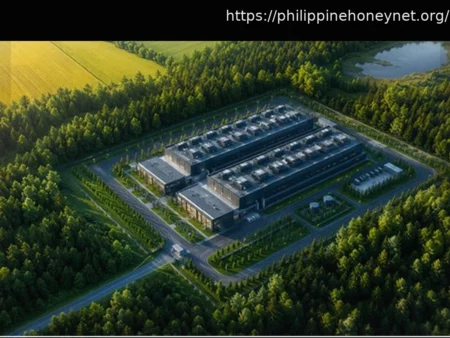

Elon Musk aims to establish a massive semiconductor production facility in Texas, leveraging new technology from Intel. While Intel shareholders are celebrating, questions remain about the feasibility of this enormous undertaking.
A statement from Elon Musk sent Intel’s stock soaring by three percent. At Tesla’s earnings call in late April, he announced that Intel’s latest manufacturing process, codenamed “14A,” would be utilized in his planned AI chip megafactory, dubbed “Terafab.” The following day, after Intel reported strong quarterly results, its stock climbed another 20 percent.
Musk’s grand vision for the Terafab involves building a facility in Austin, Texas, that will integrate all semiconductor production steps under one roof: design, fabrication, memory chip production, final assembly, and testing. Currently, these processes are geographically dispersed.
For example, Nvidia, based in California, designs the most powerful AI chips, while its AI accelerators, such as the H100 or B200 series, are manufactured by the contract manufacturer TSMC in Taiwan. The highly specialized memory chips crucial for AI applications are predominantly supplied by SK Hynix or Samsung in South Korea.
Pilot Facility Already Costs $3 Billion
Musk is investing heavily in his ambitious project. The pilot chip production facility alone is estimated to cost around $3 billion and will initially be located on the Tesla factory grounds in Texas. The construction of the main Terafab, projected to cost between $20 and $25 billion, will reportedly be undertaken by Musk’s aerospace company, SpaceX.
Musk is not shy about using superlatives. His Terafab is envisioned to produce chips with enough computing power annually to consume one terawatt of electricity when operational. According to Reuters, this would be approximately twice the amount of electricity currently generated by the entire United States.
Musk’s primary intention with these AI chips is to supply his own corporate empire. Tesla requires them for its vehicles and robots, while SpaceX and his AI company xAI will need them for data centers, some of which he plans to build in space. Musk stated at the initial plan unveiling in March, “We either build the Terafab, or we won’t have the chips.” He views relying on Nvidia, the market leader in AI chips, as “not a long-term strategy.” Musk also claimed at the presentation that all chip factories worldwide combined currently produce only two percent of what he anticipates needing for his future projects.
Can Musk’s Plan Succeed with Intel?
The initial phase of the Terafab is expected to cost $25 billion. In its full build-out, Musk aims for a monthly output of one million wafers, which, according to reports, would represent about 70 percent of TSMC’s current global production.
Musk hopes that with Intel’s assistance, he can achieve in a few years what specialists like TSMC have taken decades to accomplish. During the March presentation, he announced plans to manufacture 2-nanometer chips at the facility – the most advanced technology that TSMC is currently bringing to mass production. With the recent pivot to Intel’s 14A manufacturing technology, the goal shifts to the next-generation manufacturing process, which Intel itself has not yet fully developed. Musk anticipates that his Terafab and Intel’s 14A process will be ready simultaneously.
Not only are Musk’s scale ambitions high, but so is his approach. The semiconductor industry has largely followed a distinct model since the late 1980s. On one side are designers like Apple, Nvidia, and AMD. On the other are contract manufacturers, primarily TSMC, which operate the expensive factories where circuits are etched onto silicon. Even giants like Google and Amazon, despite developing their own AI chips, outsource their manufacturing to these foundries.
TSMC is not the only bottleneck. The highly complex lithography machines used by TSMC to pattern leading-edge chips are exclusively manufactured by the Dutch company ASML. ASML, in turn, relies on specialized mirrors and lenses that can only be produced with such quality by Zeiss in Germany.
In-House Chip Manufacturing
Musk aims to reverse this highly specialized division of labor in Texas. Tanjeff Schadt, a semiconductor specialist at the consulting firm Strategy&, explains: “Since the late 1980s, the strict separation between chip design and manufacturing has been a successful model.” He notes that hyperscalers and tech conglomerates have designed their own chips, known as custom silicon, in recent years but deliberately as designers without their own factories.
Musk’s endeavor involves bringing manufacturing back in-house. “However, the implementation will again involve a collaboration with an established manufacturer, as the high entry barriers would otherwise be insurmountable,” Schadt states. For this implementation – the core business of the “Terafab” – Musk needs Intel.
Doubts About the Plan’s Scale
Analysts share Musk’s assessment that computing power and the chips required for it are increasingly vital geopolitical resources. Doubts primarily revolve around the sheer scale of Musk’s undertaking. Additionally, there are hard-to-quantify variables. For instance, Musk announced that Optimus robots would work in his factory – robots that are themselves not yet market-ready.
For Intel, Musk’s announcement comes at an opportune time. The former industry leader has lost ground to TSMC and in August 2025 allocated nearly ten percent of its new shares to the US government in exchange for redirected subsidies from the Chips Act. Intel’s current CEO, Lip-Bu Tan, indicated last year that the manufacturing division might struggle without external major clients. Musk could now become that major client.
Semiconductor expert Schadt views this announcement as a wake-up call for Europe. “The scale of this announcement and our current industrial policy are in a different league by comparison,” he remarks. Every new factory globally exacerbates the same bottlenecks – in specialized machinery as well as skilled labor – which European projects must also contend with.