

Commissioned by Gayane Umerova, President of the Uzbekistan Arts and Culture Development Foundation (ACDF), When Apricots Blossom draws its inspiration and title from a poem by the renowned Uzbek writer Hamid Olimjon. The exhibition traces the transformations of the Karakalpakstan region, from the ecological collapse of the Aral Sea’s drying up to initiatives for rethinking its future, highlighting the knowledge, traditions, and resilience of its communities.
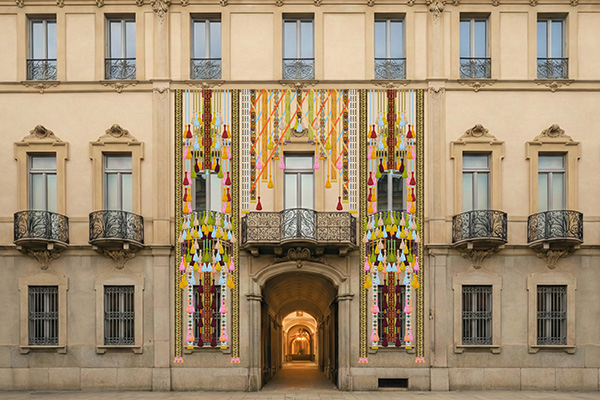
Curated by architect Kulapat Yantrasast, the exhibition invites reflection on themes of hope, renewal, and resilience. It features a significant selection of installations, specially commissioned design works, and public programs conceived as a journey through three fundamental elements of the region’s life: textiles, food, and living spaces. The exhibition is a true invitation to discover the cultural heritage of the Aral Sea region and Karakalpakstan, once home to one of the world’s largest inland lakes. Despite dramatic environmental changes over the past decade, its communities continue to preserve and adapt their cultural practices. From vibrant textile installations and a contemporary reinterpretation of the traditional yurt to specially designed bread trays created in collaboration with Uzbek artisans, all the works emphasize how artisanal traditions pass down knowledge, identity, and memory from generation to generation.
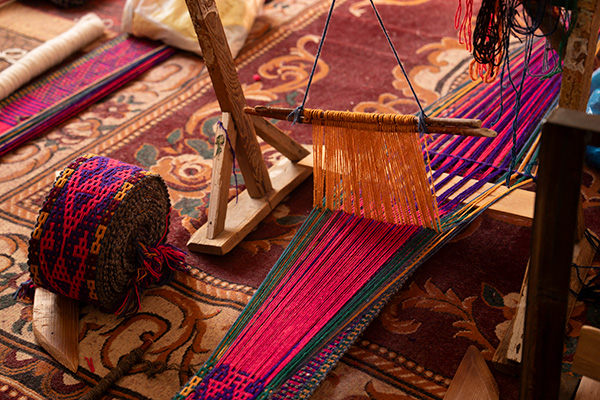
For When Apricots Blossom, twelve international designers have contributed new works. They collaborated closely with artisans from Uzbekistan to explore traditional materials such as wood, silk, ceramics, felt, and reeds, creating contemporary interpretations rooted in local artisanal knowledge. Notable contributors include Bethan Laura Wood, Bobir Klichev, Didi NG Wing Yin, Fernando Laposse, Marcin Rusak, Nifemi Marcus-Bello, Sanne Visser, and Sevara Haydarova Donazzan, alongside design studios Glithero, Studio CoPain, and Raw-Edges.
Among the commissioned works is the film Where The Water Ends, created by director Manuel Correa and architect Marina Otero Verzier. The film presents the Aral Sea region through the lives, rituals, and gathering spaces of the Karakalpak communities. It reflects on how memory is preserved in a context of climate collapse, offering a powerful narrative perspective that integrates the exhibition’s broader analysis of cultural resilience. This contributes to making When Apricots Blossom an opportunity to contemplate how cultural heritage can inspire new ways of thinking about sustainability, community, and the future.