

Andrea Gubitosi’s work first came to my attention in 2023 during the exhibition “Le promesse dell’arte” (The Promises of Art) at Musap – Museo Artistico Politecnico di Napoli, curated by Diego Esposito. At that time, the artist presented “THE MAIN DISH,” an installation that served as a disturbing reminder of a very recent past that collective consciousness was already trying to expel: the SARS-COVID-19 pandemic.
At the center of the scene, a pangolin—a totemic animal of illegal trafficking and a biological bridge for the virus—was presented as the main course. An innocuous mammal whose scales, among the most trafficked animal products globally, fuel an illicit international market. Gubitosi thus created a political and biological short circuit, highlighting how humans are an integral part of a system they actively contribute to compromising.
“MALIGNANT VALLEY” (2024) radicalized this tension. It’s a delegated performance where the costume of “Orticaria”—an avant-garde dress linked to drag culture aesthetics—transforms the body into a symptomatic surface. Tumorous masses weigh it down and embellish it like jewelry, while a checkered tablecloth-skirt evokes a domestic and convivial imagery. The work was born from a real wound, connected to eco-mafias in the Vallo di Diano, and speaks of an irreversible contamination where the distinction between environment and individual collapses: a sick land generates compromised bodies.
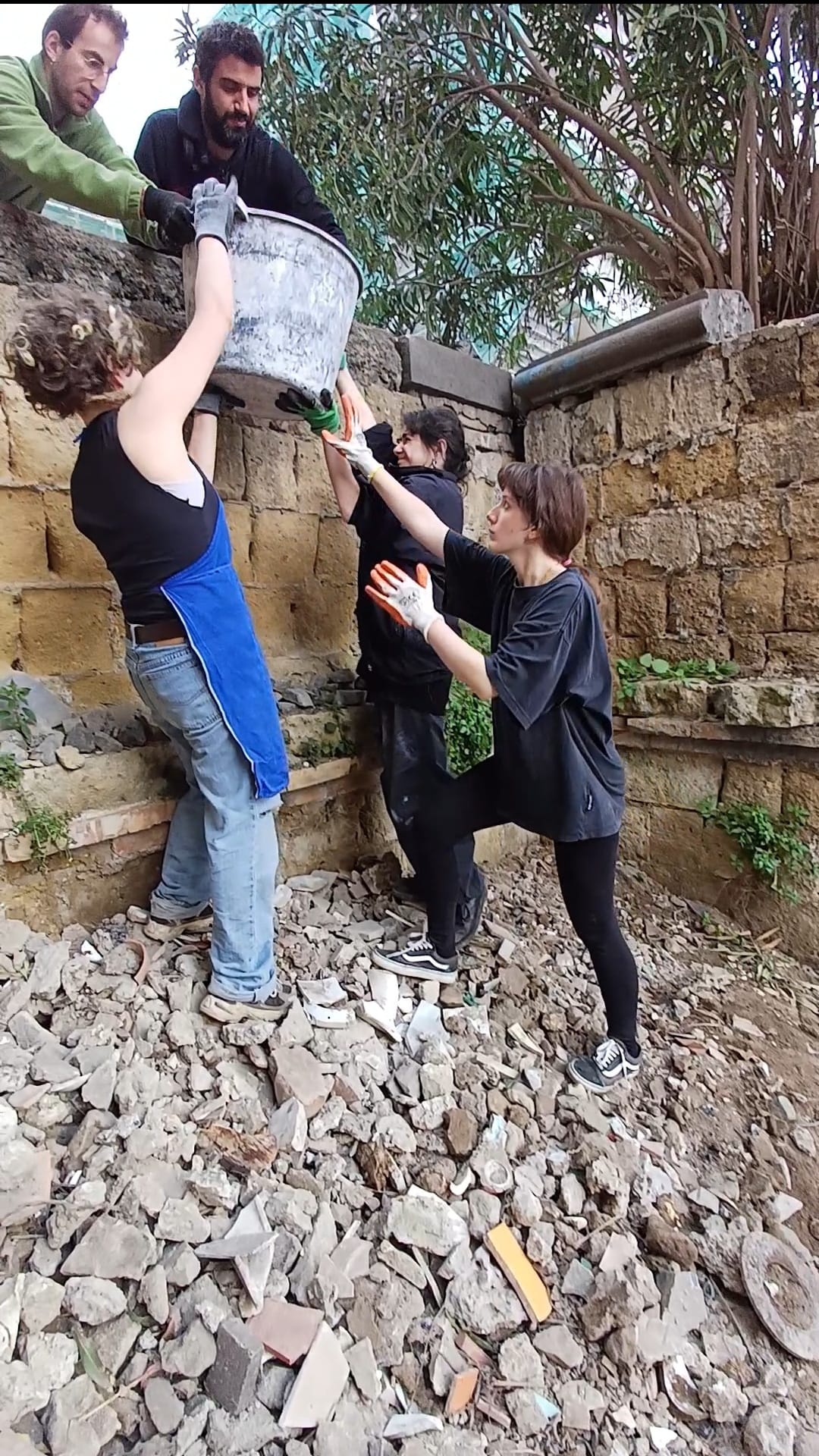
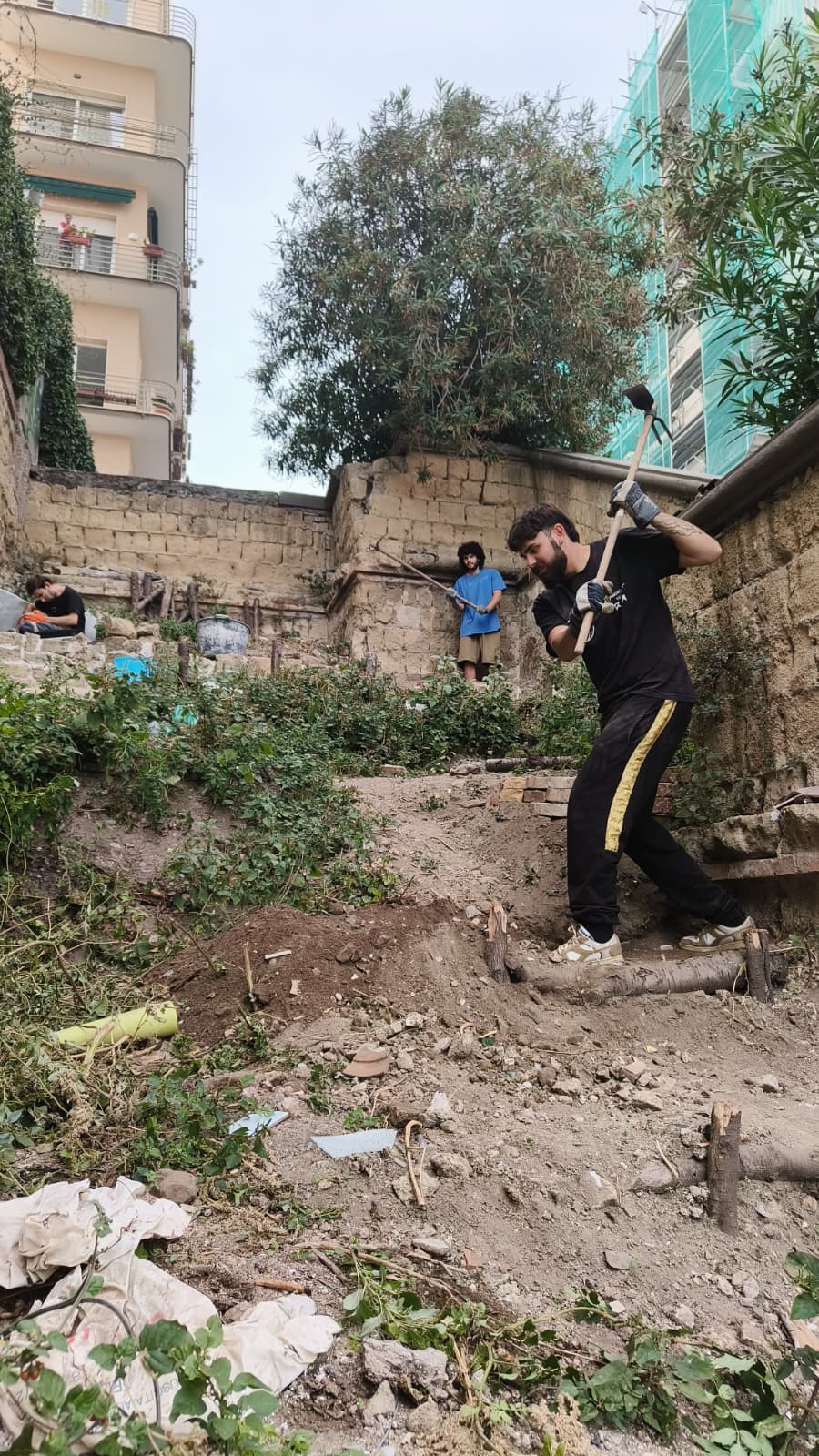
For at least two years, the practice of the artist, born in Naples in 2001, has expanded into a collective dimension with the project “Aiuola Verdetufo” (Verdetufo Flowerbed), which takes the form of a present-day archaeological park. In Vomero, near the Aldo Giuffrè staircase, a triangle of abandoned land has been transformed into a site for shared research and art. Through an initial excavation, the remains of an underground Naples emerged—syringes, personal items, building materials—giving rise to a true genealogy of waste.
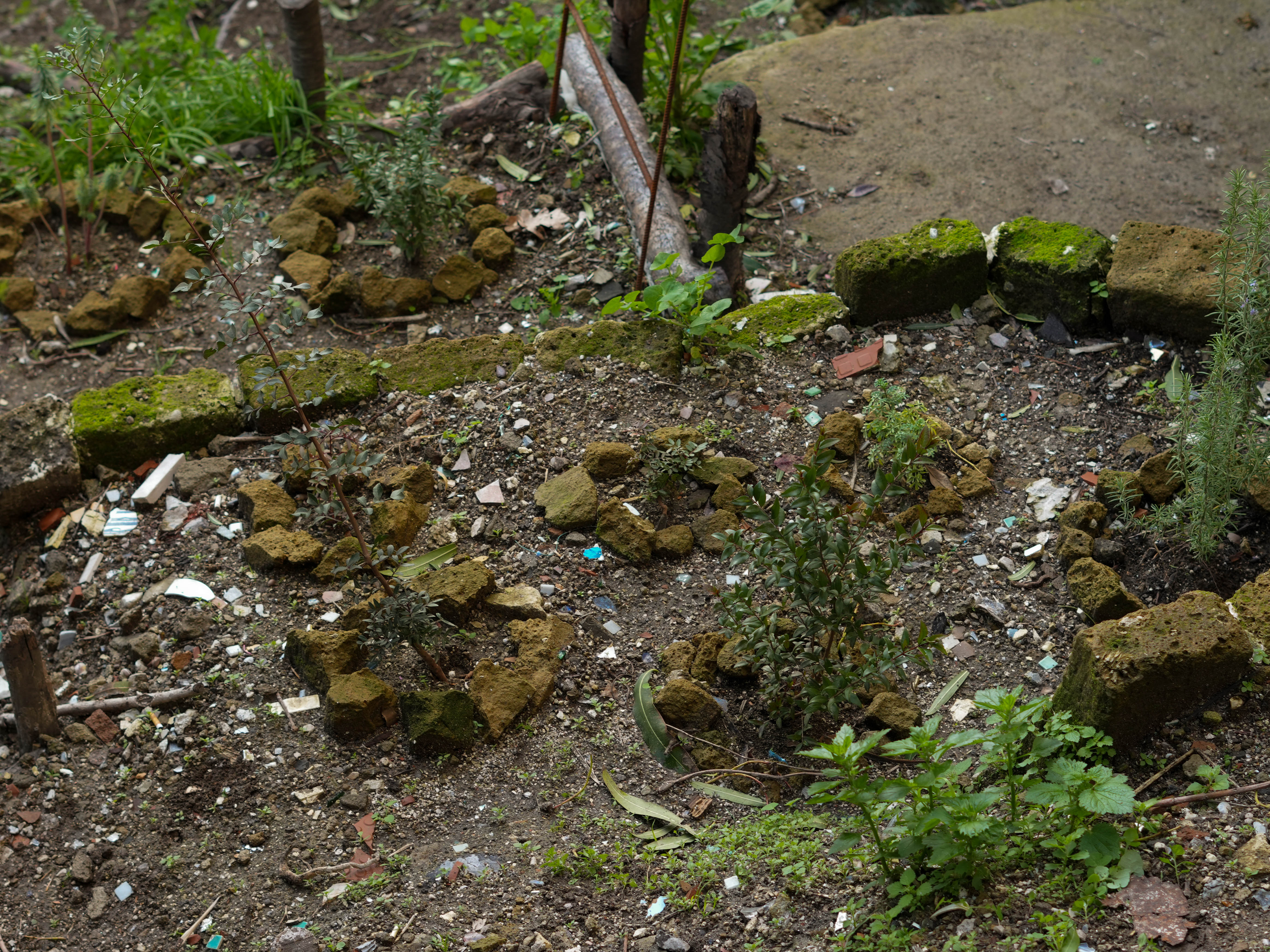
Concurrently, a study of the indigenous flora of the Mediterranean maquis has developed, aiming to reintroduce local species and reconstruct a fragment of the original landscape. This layering allows nature, human intervention, and memory to coexist, activating collective participation through moments of shared care and clean-up practices, also documented on a dedicated Instagram account.
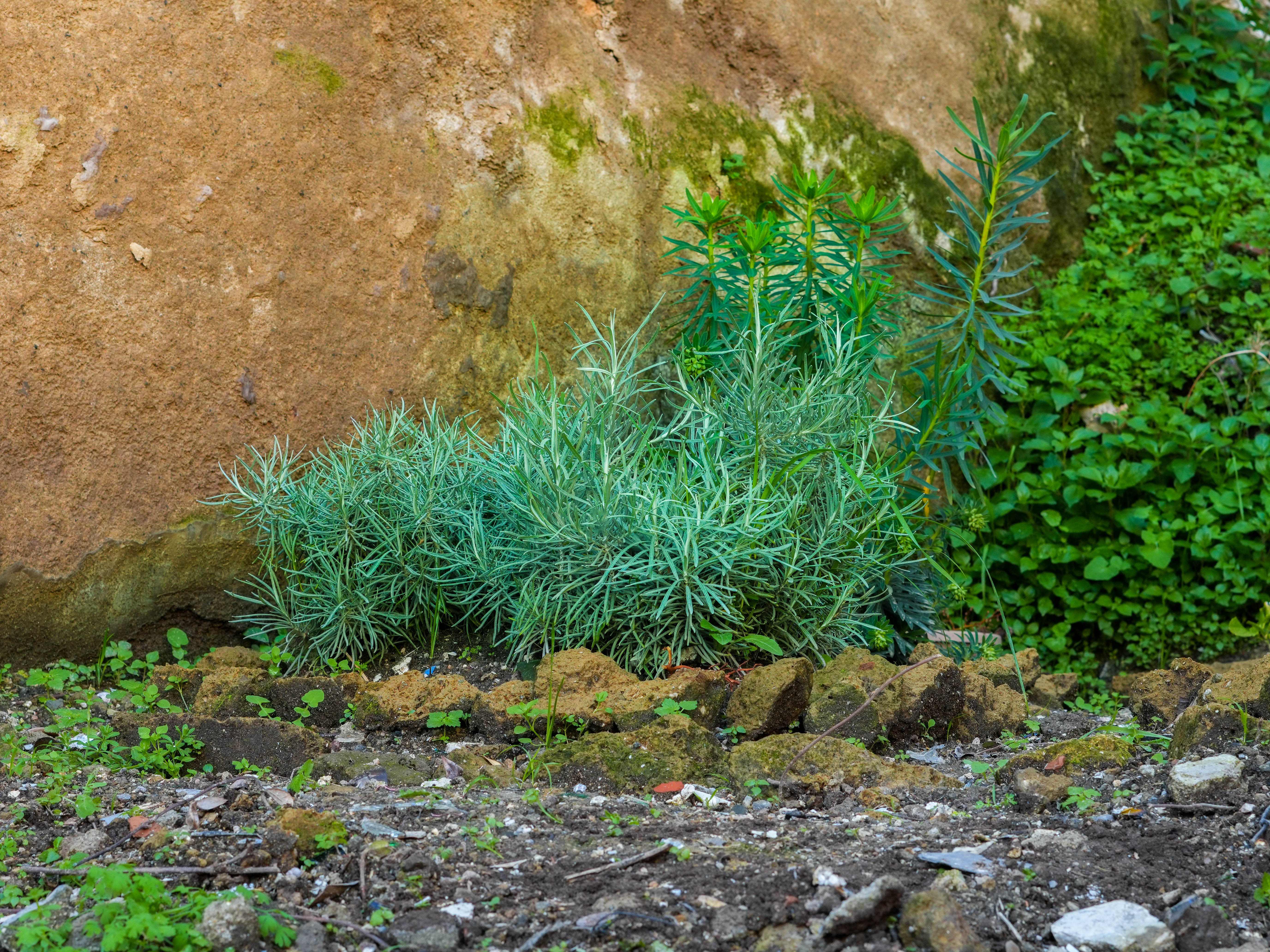
A central moment was the planting event on December 14, 2025, during which over 30 wild and endemic plant species were reintroduced into the space, as a gesture of defense and reactivation of a lost landscape. The action took on a symbolic and ritualistic dimension, recalling the tradition of the Piedigrotta festival: a time of passage and purification, marked by collective sounds and gestures. Similarly, the planting of the trees was accompanied by rudimentary tools and shared practices, configuring itself as an act of care and purification of the place.
On April 18, 2026, the artist will inaugurate his Flego studio to the public, presenting the “Aiuola Verdetufo” project as a moment of restitution and activation. The open studio will also include his most recent works, with particular attention to the Campi Flegrei area, understood as a territory that generates processes. This new area of investigation, in an experimental phase, focuses on the resonance of the Phlegraean volcanic phenomenon, opening up a reflection that connects geological processes, environmental transformations, and the stratification of the living.