
The enduring legacy Andy Warhol left on artistic and visual culture compels reflection on what binds his persona and his work. Rather than focusing on the myth surrounding his figure, the exhibition Andy Warhol. Passaggio in Italia 1975-1987, running until June 20, 2026, at the Galleria Crédit Agricole in the Refettorio delle Stelline, Milan, delves into the generative insights of his artistic process. The exhibition highlights the fascination the American artist held for Italy, particularly during his stays in Naples and Milan between the 1970s and 1980s. Works, notebooks, documents, posters, invitations, and photographs narrate his relationships with gallerists Lucio Amelio in Naples, Alexander Iolas in Milan, and Lucio Anselmino, who was active in Milan as well as Turin and Ferrara.
Warhol’s affection for Southern Italy, first discovered during a visit in 1956, blossomed starting in 1976 with his collaboration with Lucio Amelio on Fate Presto, published in Il Mattino newspaper. This work is part of the larger Terrae Motus project, conceived in the emotional wake of the Irpinia earthquake, which powerfully juxtaposed the destructive forces of nature with the violence of terrorism and the Camorra, issues that deeply affected Naples at the time.
In this context, Warhol’s notable series of screen prints dedicated to Mount Vesuvius (Vesuvius) was conceived, reflecting a conceptual feedback loop that influences much contemporary art. Presented in 1985, the series lent its name to the exhibition Vesuvius by Warhol held the same year at the Museo di Capodimonte. The raw, vibrant, and quintessentially Pop creative force of nature is depicted alongside its devastating and tragic consequences. This portrayal of an uncontrollable, telluric power, impossible to contain, underscores Warhol’s approach to contemporary events.
Massification, commodification, reproduction, and reproducibility are merely a few facets of his work. The “Nothingness” (“Il Nulla”), personified and capitalized in his Philosophy, which he deemed “Sexy,” can be interpreted not solely through a nihilistic lens, but also by considering the generative and emotional tendencies that emerge from tragic events.
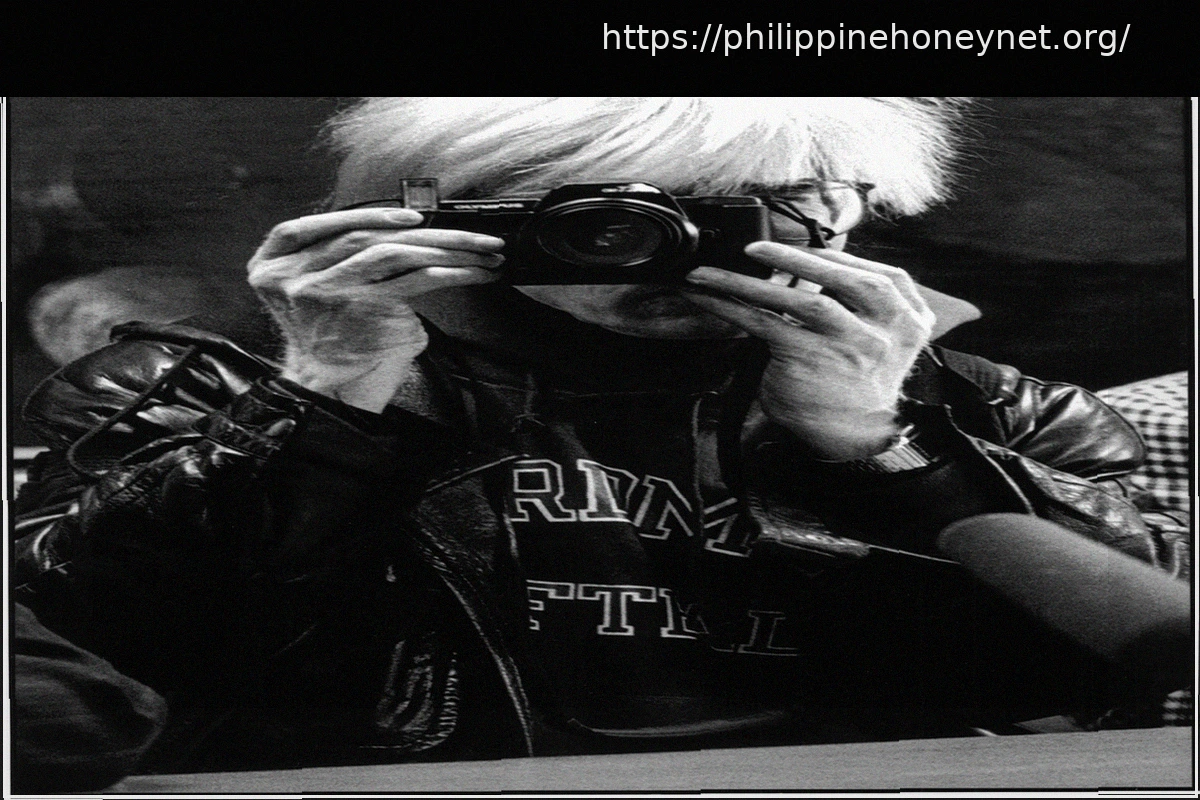
Moving beyond the superficiality we are accustomed to, Warhol in this exhibition seems to shed his white wig and sunglasses, allowing his more intimate sensitivity to emerge with quiet discretion. This reveals a connection that is often hard to pinpoint, harmonizing an aesthetic approach of established popularity with his personal experiences, now manifested in his subject choices and the color palettes he employed.
January 22, 1987, a Thursday, saw heightened police presence in Via Magenta for the highly anticipated inauguration of the exhibition Warhol. Il Cenacolo. Andy was signing everything – posters, postcards, Interview covers with Alexander Iolas’s stamp. Yet, his rockstar persona did not overshadow the thoughtful choice of a painting, Leonardo da Vinci’s The Last Supper, which revealed a significant interest for Warhol: religiosity and a retrospective gaze towards the great masters of the past. He was a man of the present and the past, tragic yet attentive, mythologized too soon, and in fact, far deeper than his public image suggested.
Pier Paolo Pasolini had also recognized this depth, dedicating a text specifically for the 1976 exhibition at Lucio Anselmino’s Milanese gallery. Initially presented in 1975 at the Turin branch of the same gallery and for an exhibition at Palazzo dei Diamanti in Ferrara, Ladies and Gentlemen featured a series of screen prints of 13 transgender women who had posed for Warhol’s polaroid camera for $50.
Pasolini described the resulting artworks as “a Byzantine apse” formed by “many cutouts.” He wrote, “I have before my eyes – the screen prints and some paintings by Warhol. The impression is of standing before a Raphaelesque fresco of isocephalic figures. All, of course, frontal. Repeated to such an extent that they lose their identity and are recognizable, like twins, by the color of their dress.”