

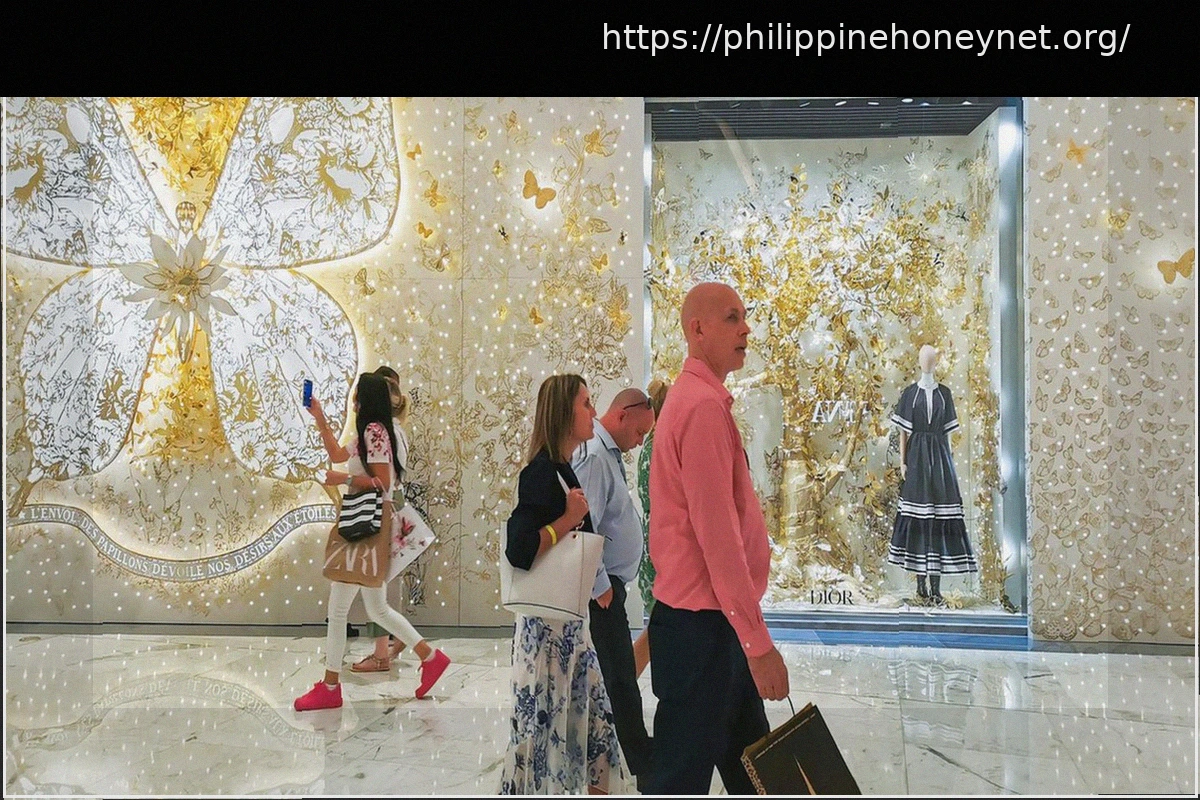
For a long time, the prevailing wisdom held that when Europe and China faltered, the Gulf region would provide a crucial anchor for luxury fashion. Now, the Iran War is directly impacting this vital region, compelling industry giants like Hermès, LVMH, and Dior to fundamentally recalibrate their business models.
As the new autumn collections were recently showcased in Paris and Milan, the Iran War was an invisible yet significant presence. These meticulously designed, expensive fashion pieces were primarily intended for a client group now profoundly unsettled. The Gulf region had served as the great pillar of stability for the luxury fashion sector, which has recently navigated a series of global crises. Luxury labels diligently crafted item after item specifically for the affluent buyers from the Middle East.
The figures unequivocally illustrate this trend. According to Bain & Company and the Italian industry association Altagamma, the market for personal luxury goods is expected to stagnate at a high level by 2025. The pool of eager customers has shrunk, with spending increasingly concentrated among a very wealthy minority, predominantly from the Gulf region. For fashion and accessories, this translates into a growing reliance on individuals who jet to Paris, London, or Munich multiple times a year to acquire bags and entire ensembles before returning to Dubai, Abu Dhabi, or Doha.
China and Europe in Crisis
Meanwhile, China is grappling with its second consecutive year of crisis: leather goods plummeted by eight to eleven percent in 2025, and local brands are capturing more market share. Bain anticipates at best subdued growth for 2026. The Middle East, in stark contrast, expanded by four to six percent and was considered the sole region “from which the industry still drew genuine confidence as 2026 began,” as Luca Solca, a luxury analyst at investment firm Bernstein, observed.
This market shift is clearly reflected in corporate financial reports. Hermès increased its revenue to 16 billion euros in 2025, a nine percent rise. In the Middle East, performance was even more robust, with approximately 15 percent growth. Kering reported an overall decline of 13 percent, with one notable exception: Bottega Veneta was the only Kering brand to grow throughout the year, supported in part by the Gulf region. During the same period, the luxury conglomerate closed a net 75 stores. The strategy of “fewer locations, higher prices” is thus being undermined precisely as the remaining boutiques face immense pressure due to the conflict.
Tourists May Stay Away
Adding to these challenges is the tourism dimension. Analyses of tax-free shopping data reveal that customers from the Gulf region are among Europe’s highest-spending shopper demographics, with transaction values significantly surpassing the European average. Piral Dadhania, a luxury analyst at the Royal Bank of Canada, warned in early March that Gulf customers might simply choose to remain home after the Ramadan fasting month – partly as a direct consequence of the war. This would deal a substantial blow to luxury sales across Europe.
Since late February, the Iran War has intensified the impact on these two critical areas: local business and shopping tourism. Flight bans, cancelled connections, and restricted operations at major aviation hubs like Dubai, Doha, and Abu Dhabi are severely disrupting travel. The Chalhoub Group, which operates around 900 stores for brands such as Versace, Jimmy Choo, and Sephora, fully closed its Bahrain operations; in the Emirates and Saudi Arabia, staff presence is largely voluntary. Kering simultaneously shut boutiques in four Gulf markets and cancelled all business travel to the region.
The timing is particularly critical. Bernstein estimates that the conflict halved sales in the region in March and likely reduced quarterly revenue by approximately one percentage point. This is because Ramadan, from February 18th to March 20th, has long been one of the most crucial shopping seasons in the Gulf: according to a joint study by Google and Visa, fashion sales in Saudi Arabia during the peak period just before Eid al-Fitr typically surge by up to 136 percent compared to ordinary weeks. This year, however, this vital period coincided with the initial intense phase of the conflict. Wealthy Gulf customers, who traditionally travel to Europe immediately afterward, have largely been absent thus far.
Nonetheless, even without the Iran War, the fashion industry was poised for a challenging year. Handbags and leather goods, long the most dependable profit generators, are reaching their limits: price increases of 50 to 70 percent since 2019 and escalating complaints about declining quality are eroding consumer acceptance. Excess inventory is migrating to outlets and resale platforms like Vestiaire Collective – with the consequence that brands become more visible in discounted channels, thereby suffering a loss of their exclusive aura.
Dior Suffers Differently from Rolex
Unlike watches and jewelry, which maintain a degree of stability as tangible assets made of precious metals during crises, “fashion” goods are strictly seasonal. If summer collections in Tehran and other parts of the Gulf region remain on the racks or cannot be delivered, they can only be sold at substantial discounts within a few months. This directly impacts profit margins.
For prestigious luxury shopping streets such as Munich’s Maximilianstrasse, Düsseldorf’s Königsallee, or Hamburg’s Neuer Wall, the Middle East conflict is far from an abstract concern. A significant portion of summer sales originates from traveling customers from the Gulf region who seek to replenish their wardrobes – and who may now be notably absent.
Furthermore, there is a more subtle yet profound effect: when affluent clients worldwide witness images of explosions in Dubai, they re-evaluate their travel plans and, in some cases, even modify their relationship with overtly hedonistic consumption. This impacts fashion more severely than jewelry, as its desirability is not based on an expected preservation of value, but on a lifestyle sentiment that is currently being shaken. And this makes the Iran War the most costly season for luxury houses in a very long time.