


A concept resonates throughout art history with the ease of a breath: movement. Not merely as formal dynamism, but as transformation, transition, a continuous shift in perception and material. With Movimento (perpetuo), **Vincenzo Schillaci’s** exhibition at Fondazione La Rocca in Pescara (on view until April 30th), this word once again challenges the exhibition space and the visitor’s experience. We posed some questions to curator **Gaspare Luigi Marcone** to guide the public through a journey that seems to invite contemplation rather than mere explanation.
In an era that often prioritizes the event over the process, what critical necessity drives an exhibition today that embraces movement as its fundamental working principle?
“The primary necessity, being a solo exhibition, stems from the artist’s research and creative process. The term movement, of course, can be understood, defined, and interpreted heterogeneously – from philosophy to physics – or it can manifest in various artistic forms or techniques, from video art to performance. In Vincenzo Schillaci’s work, one of many possible definitions might be ‘any form of change.’ While every definition inherently excludes something, change remains a cornerstone principle for the artist.”
In your initial encounter with Vincenzo Schillaci’s work, which order of problems appeared most pressing: that of form, that of method, or that of a more general posture towards the image?
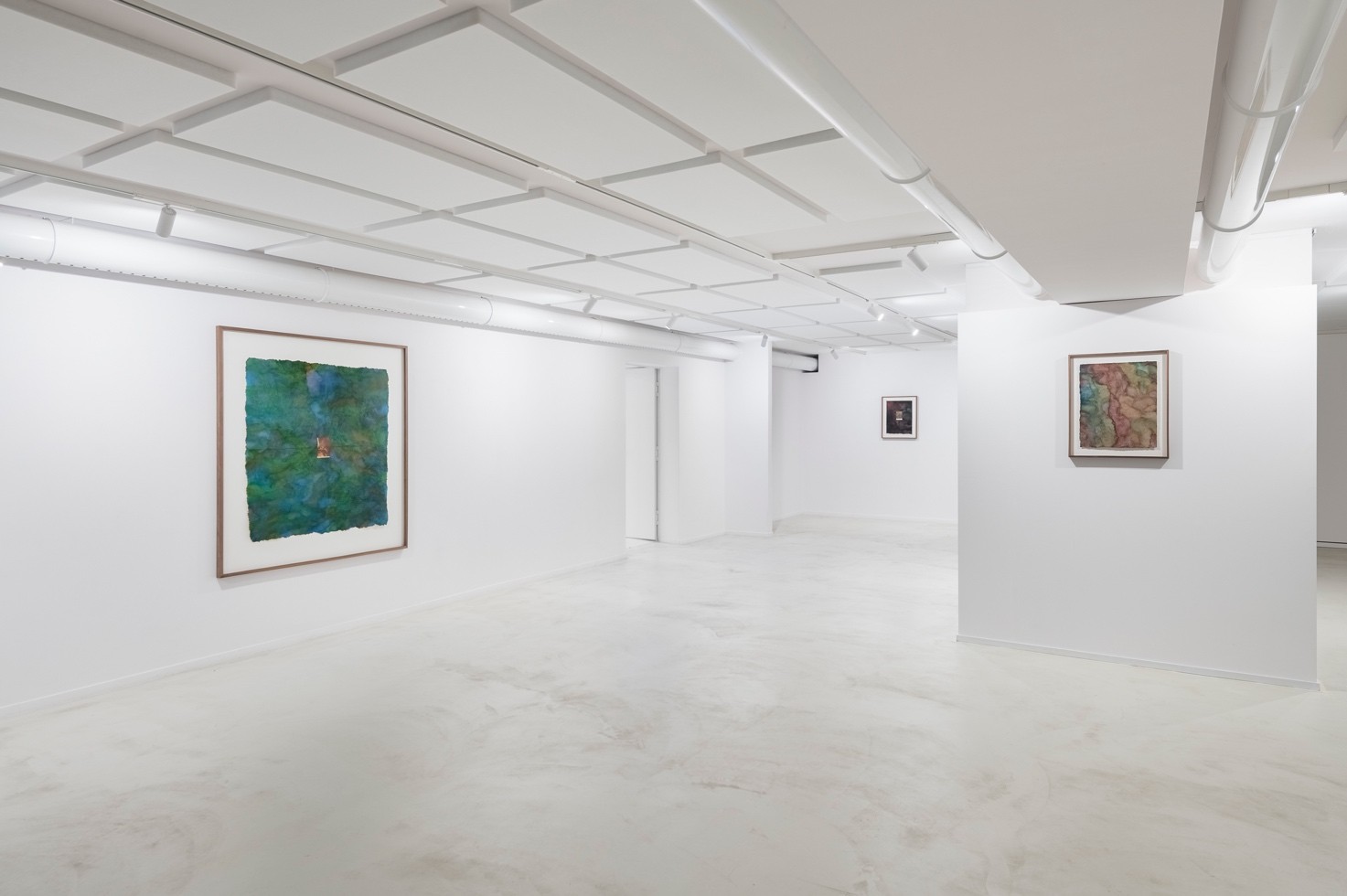
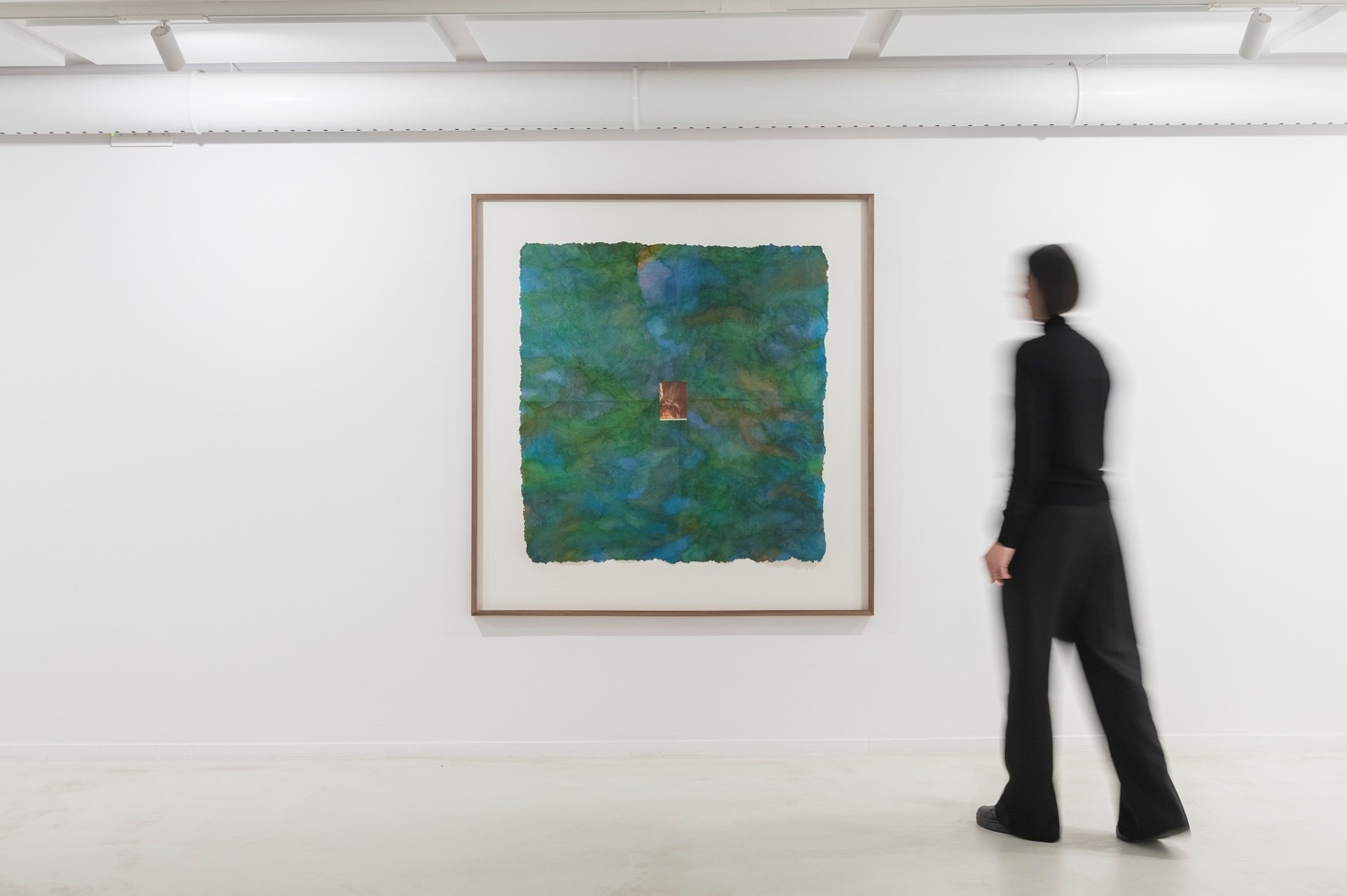
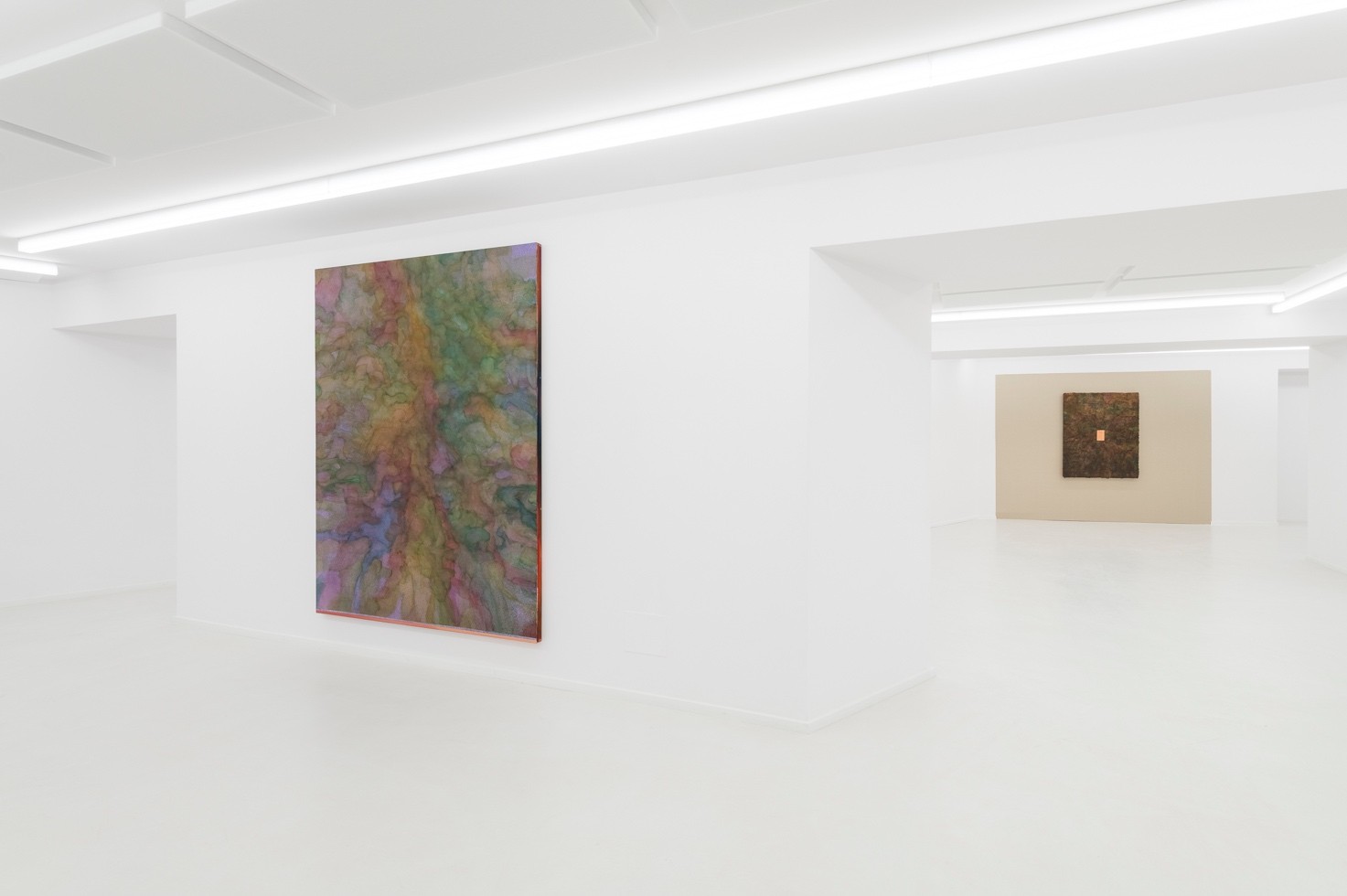
“To use a Manzonian phrase, in Schillaci’s work, these ‘problems’ merge and harmonize ‘seamlessly’; form generates, destroys, and regenerates from his working method, which, as a final result, offers images that are simultaneously sums and subtractions of images in flux. To give a concrete example: in the Phantàsma series, the stratifications of colors, pigments, plaster, marble dust, and other materials overlap and corrode at the very moment of the artistic act; the images change at the very moment of their genesis.”
How did the exhibition project develop over time: through a progressive focusing or via a series of successive adjustments dictated by the evolving work?
“The project features new works, but some belong to ‘cycles’ on which the artist has been working for years, primarily created in 2025. The construction of the exhibition path originated from a very clear and clean general idea which, however, naturally refined itself in progress; parallel to the creation of works for Fondazione La Rocca, the artist presented another body of work in his solo show Movimento at Galerie Rolando Anselmi in Rome (June-October 2025). The Roman exhibition and frequent studio meetings, along with the progressive realization of new works destined for the Pescara exhibition, further clarified, in a ‘perpetual’ way, the curatorial and exhibition project.”
What function did the spaces of Fondazione La Rocca assume in defining the exhibition path: simple container or active element of measure and rhythm?
“The exhibition was modeled on the architectural macro-structure of Fondazione La Rocca, but some spaces were extensively disrupted and redefined to create ‘environments,’ pathways, and guiding threads more congenial to the artist’s creative action. It is important to emphasize the enthusiasm and willingness of the president and founder Ottorino La Rocca, and his entire team, in embracing and implementing the concepts of the artistic and curatorial project.”
Schillaci’s painting proceeds through stratifications that do not always lend themselves to an ordered reading: as a curator, how do you accompany research that seems to evade linear interpretation?
“We should first clarify the definition of ‘ordered reading.’ The concepts of stratification, metamorphosis, and deconstruction possess an almost ‘ontological’ fascination, rich in surprise and wonder, in addition to being highly relevant today. Each of Schillaci’s works could be read as a memoir. Schillaci certainly has his own ‘linearity’; his research is cultured, dense, perhaps even ‘difficult,’ but it becomes more comprehensible and enjoyable the more one ‘enters’ his work. Today, movement that becomes frenzy prevents ‘contemplating’ the artwork with the right time and rhythm; everything is seen and consumed in a few seconds. The contemplative moment can become contemplative movement if adequate time is dedicated to experiencing the work as ‘thinking enjoyment.’ To speak of contemplation today might seem obsolete or anachronistic to some, but in certain cases, it becomes foundational; it is a form of resistance. It is well known that even in the most prestigious museums, in front of seminal works, our gaze focuses for only a few seconds. Perhaps, as with other artists, Schillaci’s linearity, if you’ll pardon the pun, is not ‘rectilinear’; perhaps it is a curved, undulating line, or perhaps, even better, it is a logarithmic spiral, and the logarithmic spiral is among the most harmonious and ordered forms.”
Within the landscape of contemporary Italian art, how does Vincenzo Schillaci’s research position itself today, and which elements of his journey do you believe have emerged with greater clarity in this exhibition project?
“One could easily respond, as often happens for other artists, that his work is a unicum; and in part, that is true. Schillaci fits into a fragmented context, which, as we know, is typical of contemporaneity, but he manages to draw from a healthy idea of tradition – just think of many of the materials he uses in his works – both technically and conceptually. He is an artist who has metabolized, and constantly metabolizes, certain enduring, one might say eternal, concepts from art history and culture, reformulating them according to his own sensibility. One example suffices: the ideas of becoming, metamorphosis, and transformation can be traced back to Heraclitean fragments, passing through Nietzschean thoughts up to the latest contemporary reflections. Many artists, using diverse works and techniques, engage with these ideas. Every artist, as is natural, during their intellectual and human formative journey, assimilates an infinity of concepts and stimuli which then, with varying gradations and intensities, directly or indirectly enter their work and are slowly released or returned. The exhibition’s pace, in the alternation of works on panel, paper, or bronze, is the very synthesis of his works as ‘concept-objects’.”
How does the idea of movement relate to our present without translating into an explicit or illustrative reference?
“Connecting to some previous answers about the idea of ‘movement,’ one could say that everything is movement without being explicit or illustrative, but rather realistic, concrete, and pragmatic. Planets and galaxies are in motion, cells and bodily fluids are in motion, ideas are in motion. Nature is movement. Then, some might easily say, that the entire life of contemporary man is based on movement, to the point of frenzy and schizophrenia. Furthermore, it’s worth remembering that movement, also in the sense of dynamism, has been one of the cardinal concepts that, from Futurism onwards, characterized many artistic investigations parallel, or almost, to the development of cinema and video up to the most recent technologies. All these ideas and reflections are legitimate, one might say simple, or daily; Schillaci treasures them, latently, obliquely, yet in his works he condenses ‘his’ idea of movement, of the transformation of the image in its making, in its becoming, between presence and absence. One of Schillaci’s meanings of movement is also the transformation of an image of his work, not only perceptually, but after being seen, it remains in the observer’s mind, gradually changing into a memory or recollection, into an image, emotion, or sensation that becomes ‘something else’.”
What kind of experience is the visitor invited to undertake: a guided traversal or a sequence of pauses, reconsiderations, and returns?
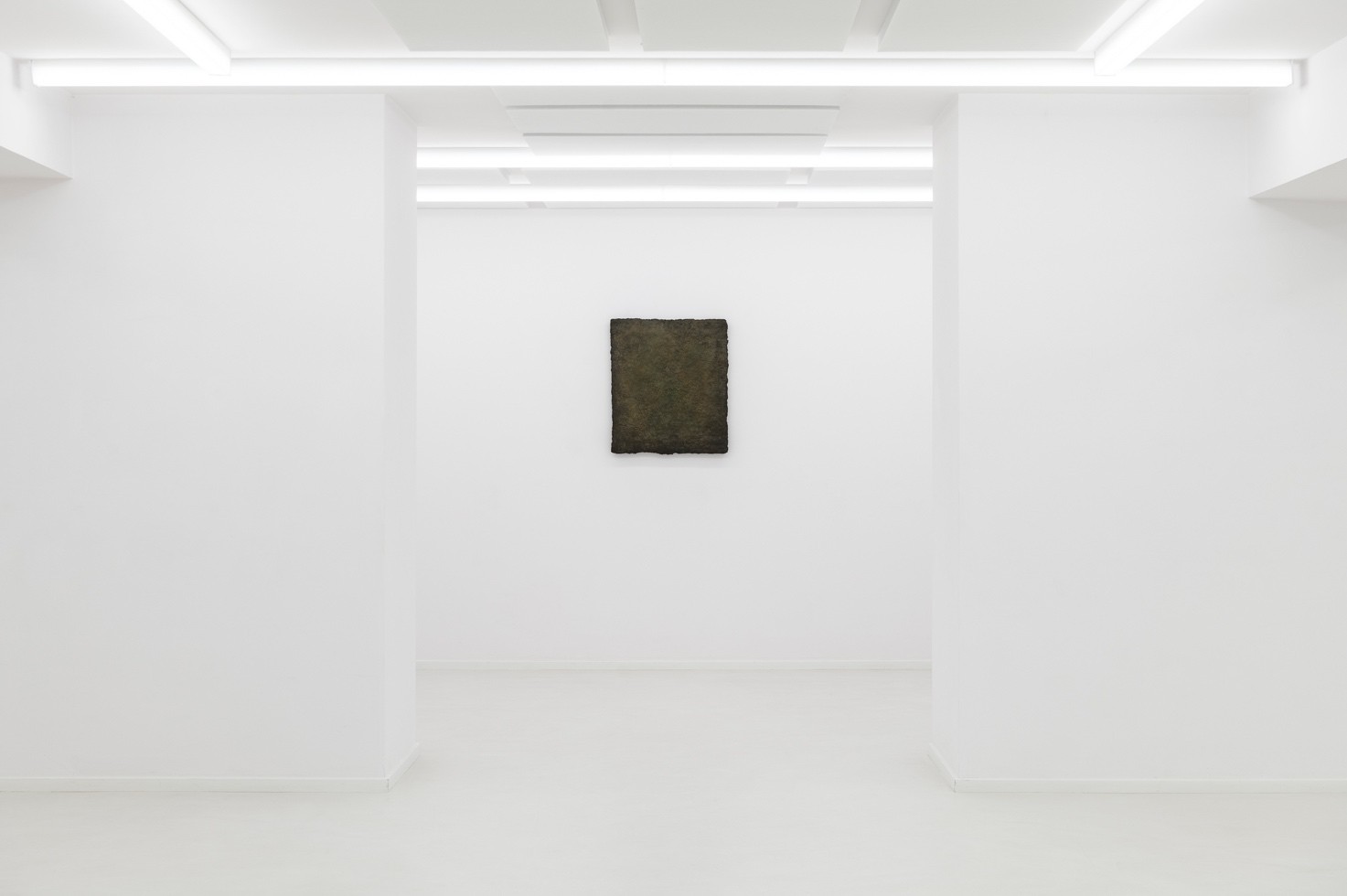
“To stay on topic, the visitor has ‘freedom of movement’; and this was clearly visible from the opening day of the exhibition. Then, of course, beyond the obvious physical paths, between the entrance and exit of the exhibition space, there are primary paths or connections that link the exhibited works and other ‘environments,’ or ‘moments,’ to be discovered or rediscovered based on individual sensitivity. To give concrete examples: three pieces from the Phantàsma cycle are exhibited, one at the entrance, one midway, and the last at the end; thus, the spirit of this cycle ‘hovers’ like a phantom (in the Aristotelian sense) throughout the entire exhibition, from beginning to end and vice versa.
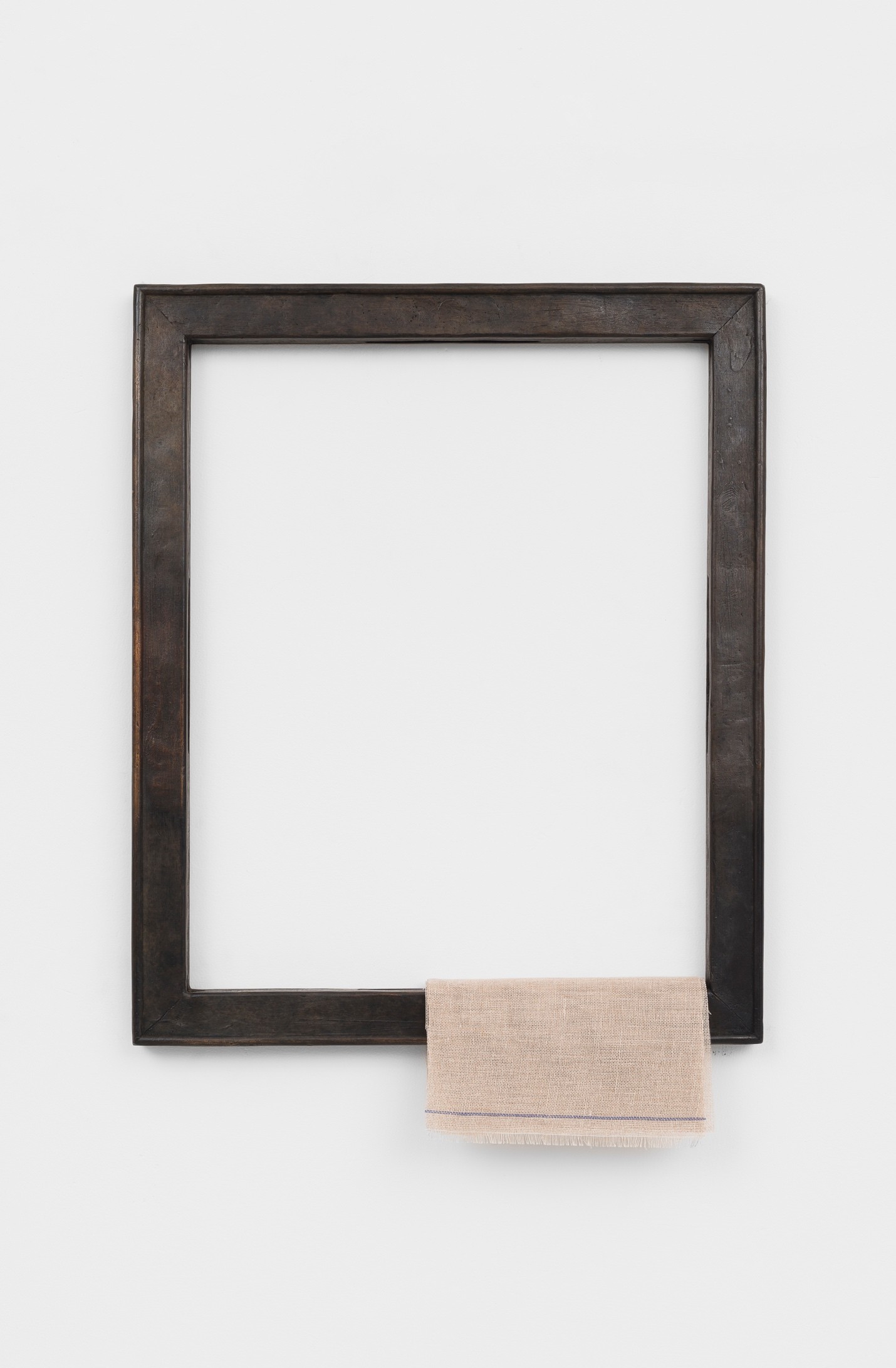
Instead, in the first room, there are mainly works on macerated and regenerated paper; it is an environment with subdued, almost laboratory-like, alchemical lighting. The only two works in different materials are a small virgin canvas (In attesa, 2025) and its transposition, after the act of painting, into metal (Di una resistenza, 2025), a galvanized copper canvas whose metallic splendor, like a good conductor, transports the visitor to the next, brighter and airier environment, structured by rooms and walls that host other works on panel or, in a rhythm of cross-references, to the two bronze works that face each other (Fare un quadro, 2025 and Autoritratto in divenire, 2025).
In these environments, there is no predetermined path; the viewer is free to move, pause, discover the works independently. The rooms and partitions created during the installation make the works appear and disappear depending on the viewpoint and direction of gaze, between fullness and emptiness, between pristine surfaces and polychrome atmospheres.”
How much does the spectator’s body, their movement through space, and their time of presence influence the construction of the exhibition’s meaning?
“As mentioned, the spectator’s freedom of movement and thus their bodily trajectories are fundamental, or rather, they were visible and experiential, retrospectively, even with a bit of surprise. During the inauguration, and in the first days of the exhibition, many people could be seen retracing the path multiple times and in different ways; involuntarily, they were ‘actors,’ or protagonists, of a performance. Someone might even catch a whiff of Sanguineti’s Laborintus.”
At the end of the journey, what do you believe is essential that remains, not as acquired content, but as a disposition of the gaze?
“Metamorphosis.”