


Just months before the 61st International Art Exhibition opens, the Venice Biennale has unveiled the fully renovated Central Pavilion at the Giardini. This significant structural project, funded by the Ministry of Culture through the PNC – PNRR, aims to restore the building’s role as the central hub of the international exhibition.
The Biennale’s Special Projects sector, led by architect Arianna Laurenzi, oversaw the work. The project was developed by a temporary consortium of professionals, including BUROMILAN – Milan Ingegneria, the Rome-based studio Labics (Maria Claudia Clemente and Francesco Isidori) and architect Fabio Fumagalli for architecture, ia2 Studio Associato for systems and fire prevention, and geologist Francesco Aucone.
The renovation work, which began in December 2024 and concluded in March 2026, adhered to the schedule, lasting a total of 16 months with an overall investment of 31 million euros.
The renovation of the Central Pavilion is one of the most complex projects within the Biennale’s infrastructure renewal program, owing to the building’s significance and the tight construction schedule. However, its unveiling takes place amidst a climate far from neutral, marked by tensions affecting the Biennale itself and its relationship with politics and the international cultural system.
The presentation on March 19 occurred during a period of intense public scrutiny for the Venetian institution. Unresolved issues regarding Russia’s and Israel’s participation in the upcoming edition have fueled a heated international debate, leading to various stances, withdrawals, and redefinitions. Furthermore, a letter signed by approximately 200 artists and curators involved in the Biennale highlighted an internal rift within the exhibition system. Concurrently, an increasingly explicit distancing between the Biennale and the Ministry became apparent, underscored by the absence of Minister Alessandro Giuli at both the presentation of the Italy Pavilion and, more recently, the inauguration of the Central Pavilion, where Vice Chief of Staff Valerio Sarcone was present instead.
It is within this context that the presentation of a long-term project like this renovation takes place. The intervention is part of the broader ‘Great Cultural Heritage Attractors’ program, which includes 22 operations distributed across the Giardini, Arsenale, Lido, Forte Marghera, and Parco Albanese. The goal is to strengthen the Biennale’s infrastructure as a permanent platform for cultural production.
The Giardini di Castello, located in the eastern part of Venice, have served as the historic home of the Biennale since its first International Art Exhibition in 1895. Originally conceived in the early 19th century as part of Napoleon’s urban reorganization plan by Gian Antonio Selva, the Giardini gradually transformed into a system of national pavilions, now numbering 29, representing a significant anthology of 20th-century architecture, with contributions from figures such as Alvar Aalto, Josef Hoffmann, Gerrit Rietveld, Sverre Fehn, and Carlo Scarpa.
At the heart of this complex stands the Central Pavilion, constructed between 1894 and 1895 as Palazzo Pro Arte. Throughout the 20th century, it underwent several transformations, eventually becoming the Italy Pavilion. While retaining its function of national representation, it continued to host the international exhibition, solidifying its role as the central exhibition hub.
A turning point occurred in 1999 with Harald Szeemann, who conceptualized the central exhibition as a unified project entrusted to a single curator, distinct from the national pavilions. From that moment, the building definitively assumed its function as the international exhibition space, officially renamed the Central Pavilion in the early 2000s. Today, the Giardini complex spans approximately 51,000 square meters, with the Pavilion occupying over 5,400 square meters.
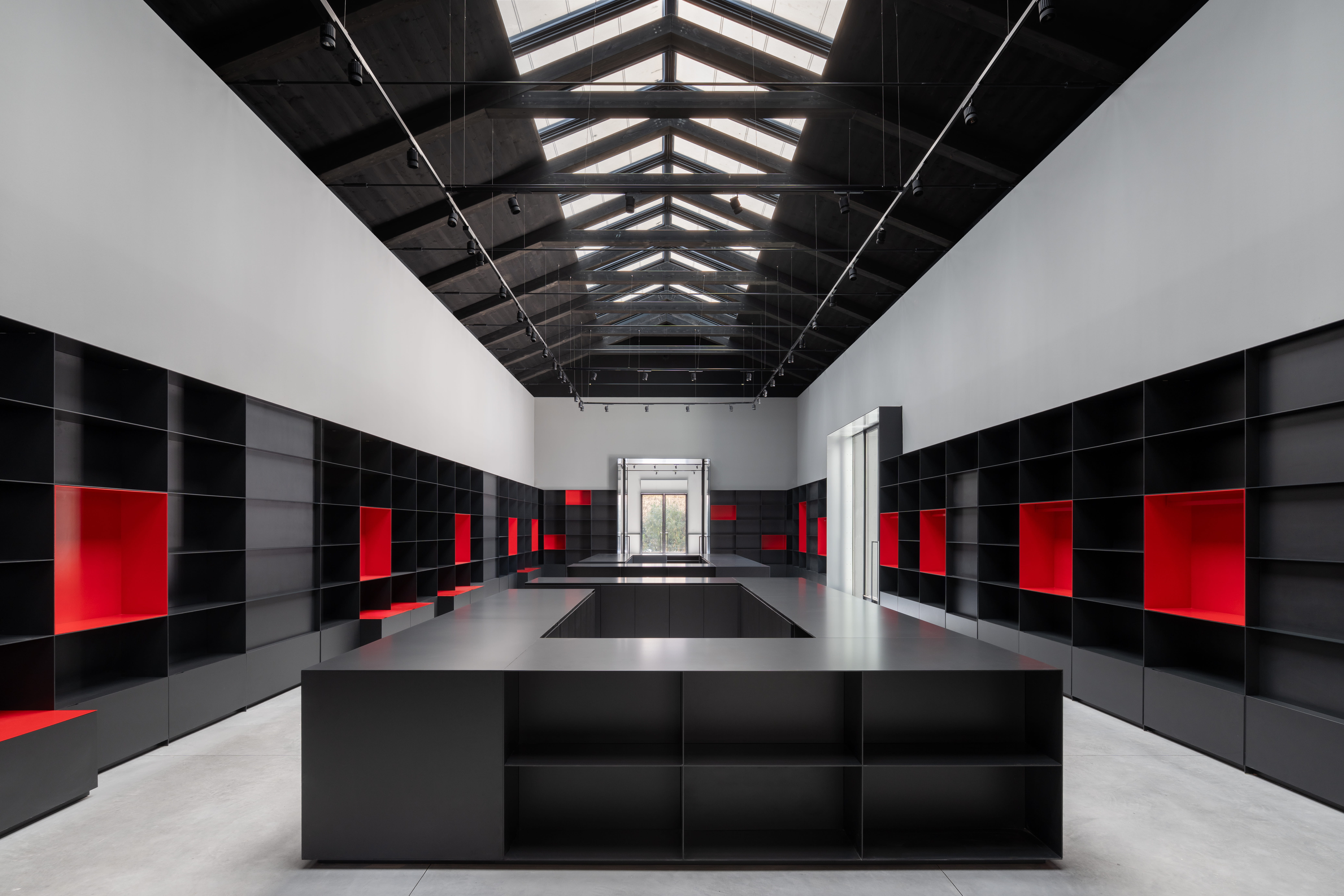
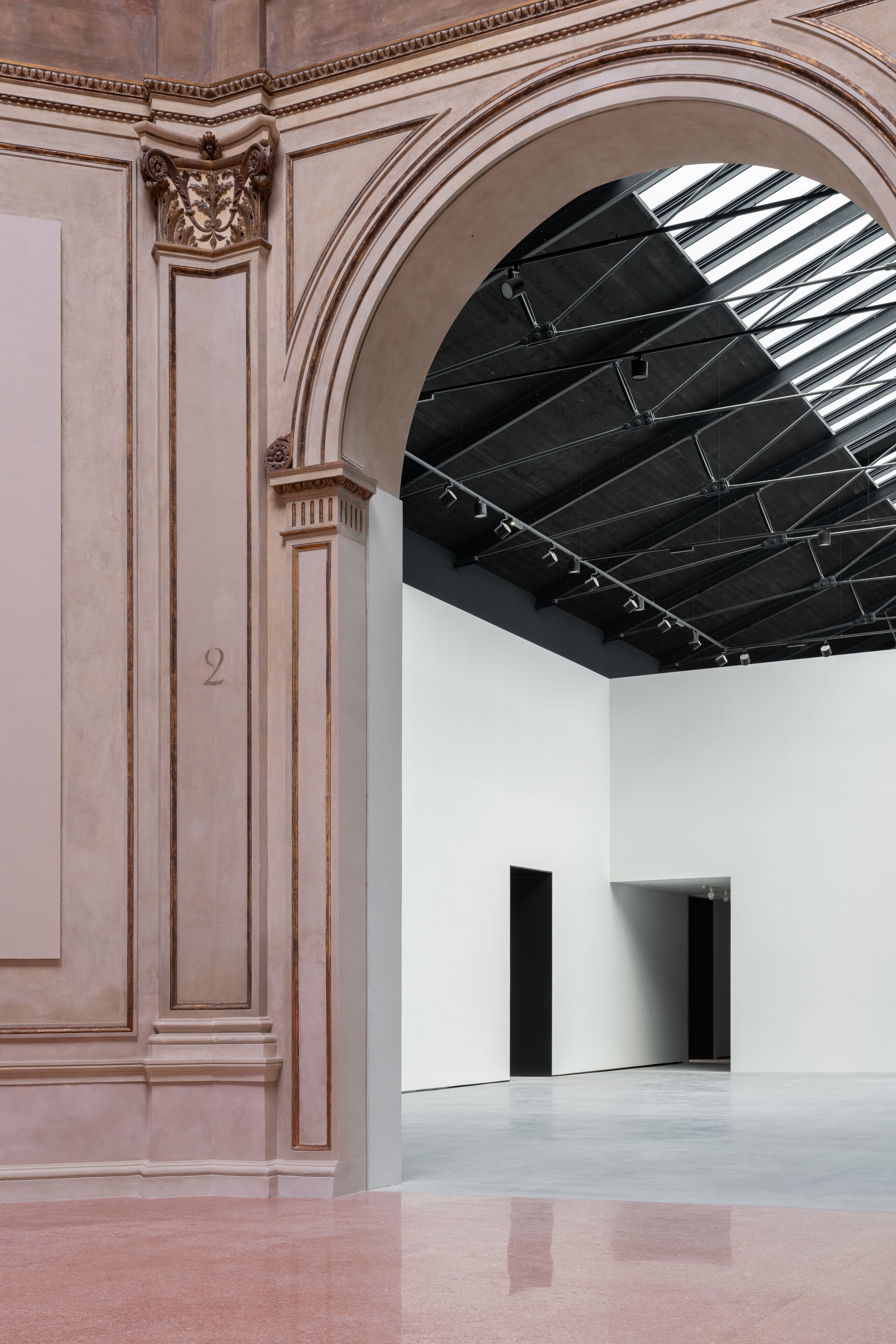
The architectural project thus tackled a historically layered building, marked by subsequent interventions that had compromised its clarity over time. The renovation is conceived as a comprehensive functional overhaul of the structure. Spaces have been reorganized with a clear logic: the Sala Chini returns as the central distributive node, while a sequence of services—bookshop, cafeteria, educational spaces—are arranged around the exhibition halls, now designed as neutral and flexible environments.
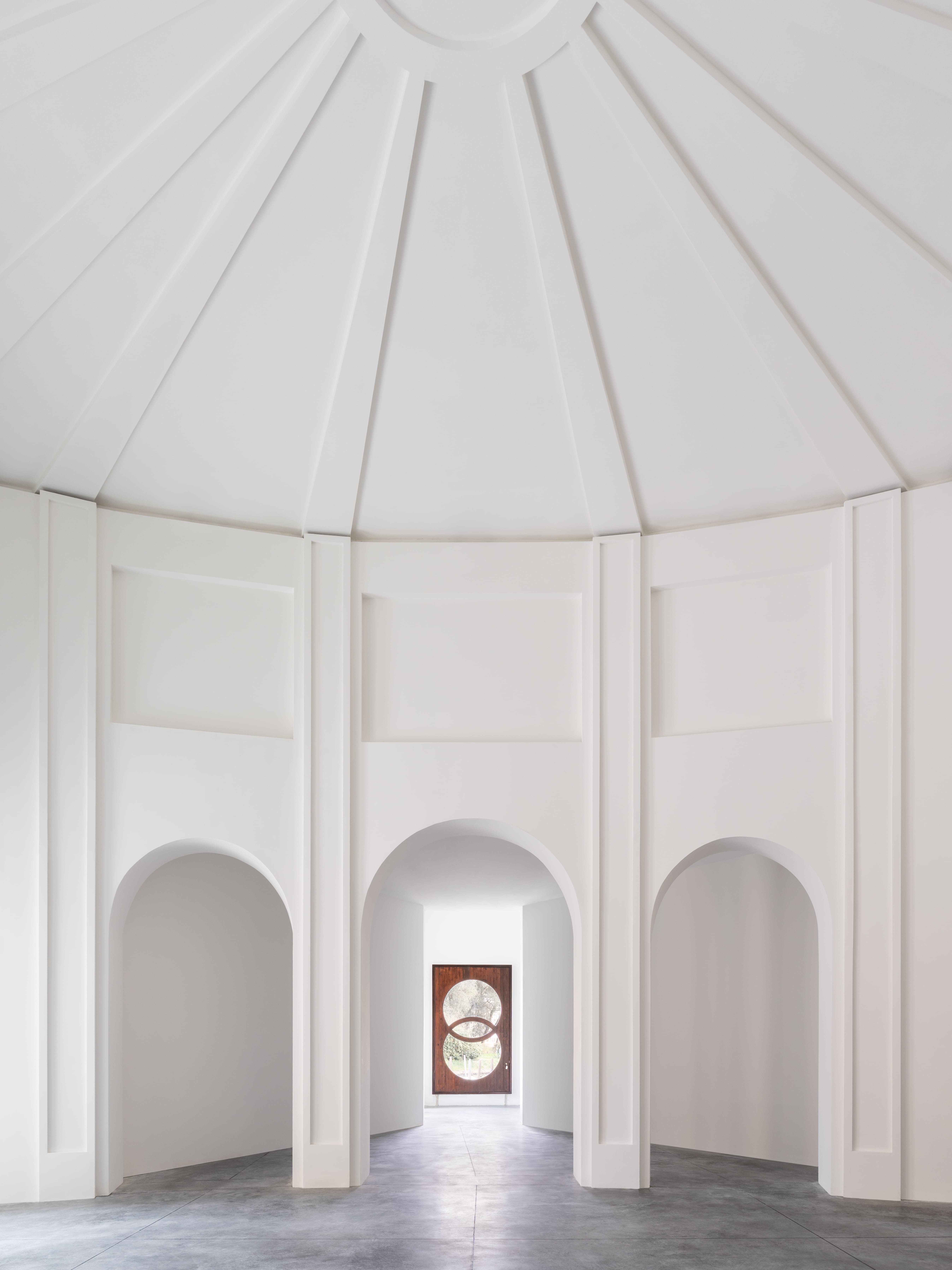
The intervention followed a distinctly non-conservative approach. Rather than merely restoring, the project selected, organized, and interpreted the building’s various historical phases, removing superfluous additions and restoring a new architectural unity. In this sense, the renovation takes on the character of a ‘critical re-invention,’ capable of blending historical memory with contemporary needs. Historic elements like the fixtures designed by Carlo Scarpa were restored and reintegrated, while the Sala Brenno del Giudice was redesigned, recovering the original forms from its 1928 project.
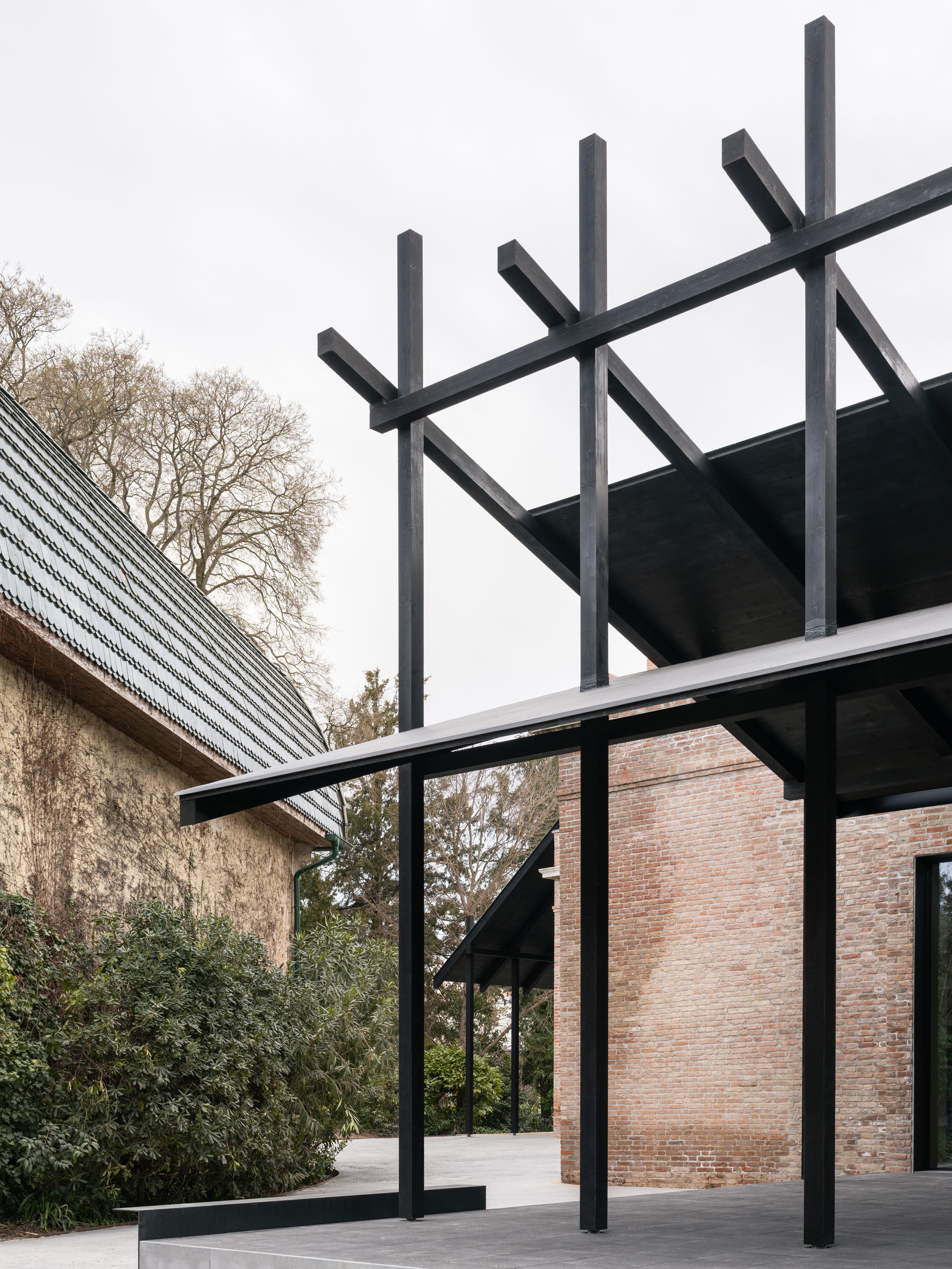
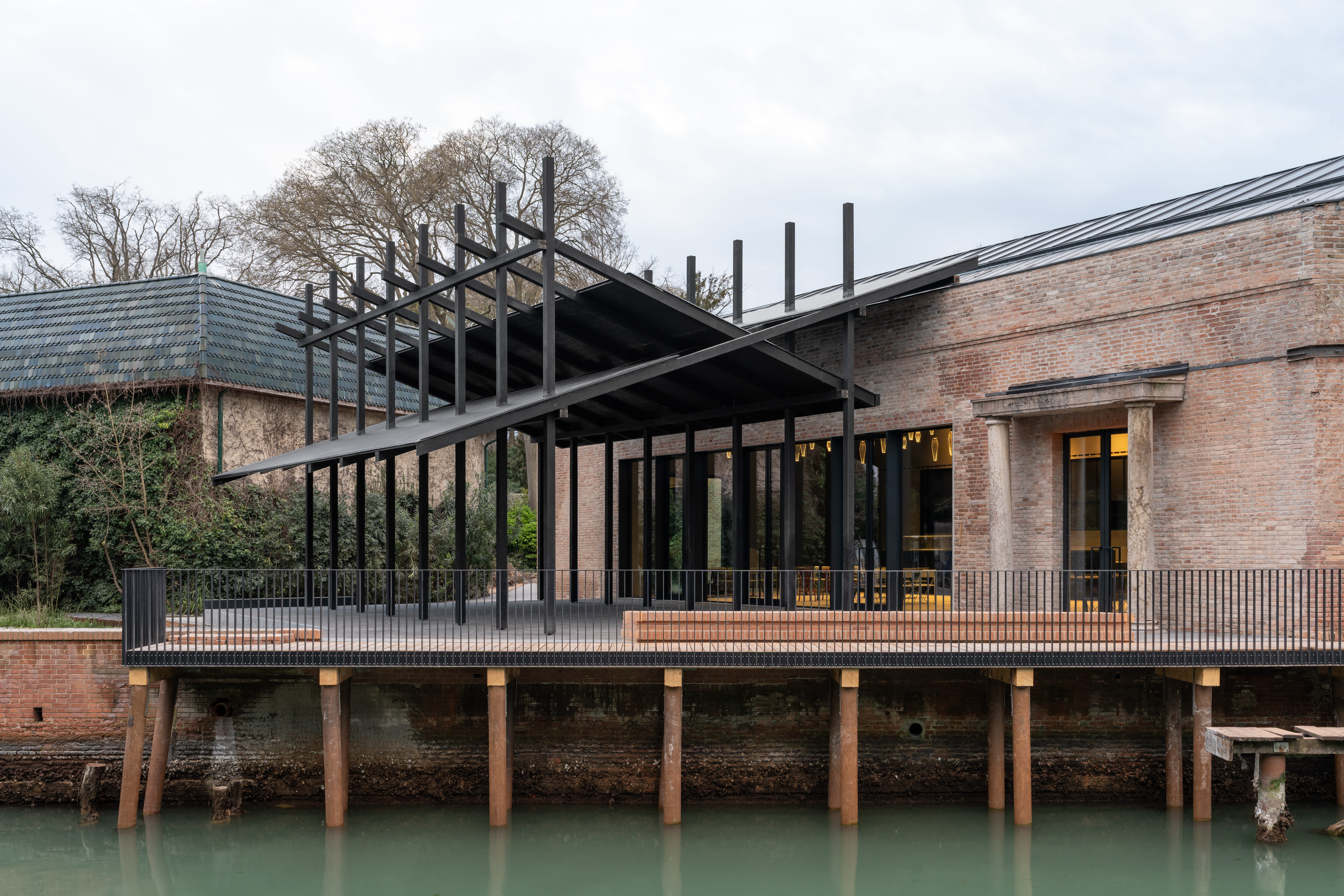
Among the most recognizable features of the intervention are the new ‘altane’ (rooftop terraces), lightweight structures made of charred laminated timber that overlook the Giardini, establishing a more direct relationship between interior and exterior and fostering a dialogue with the Venetian landscape.
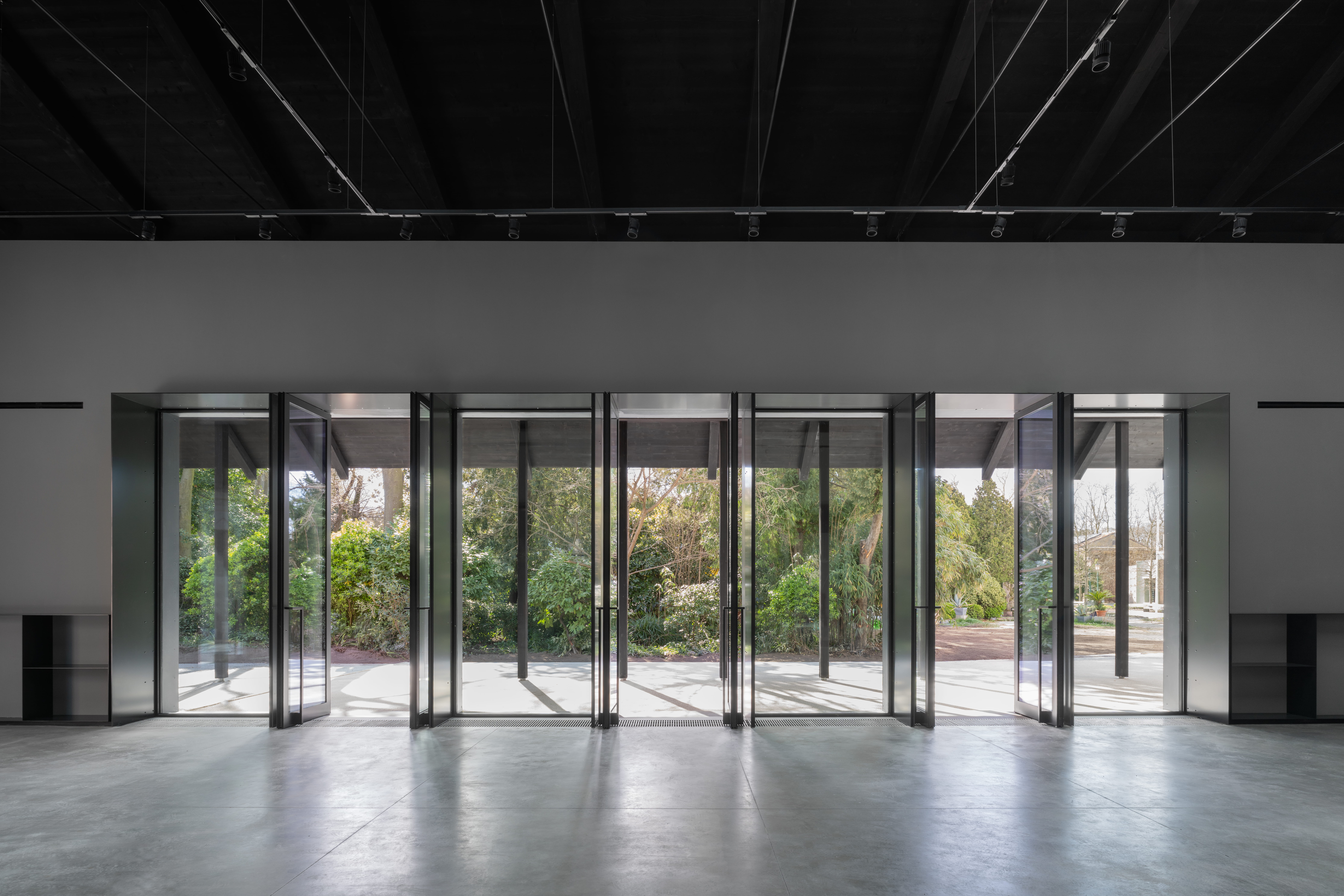
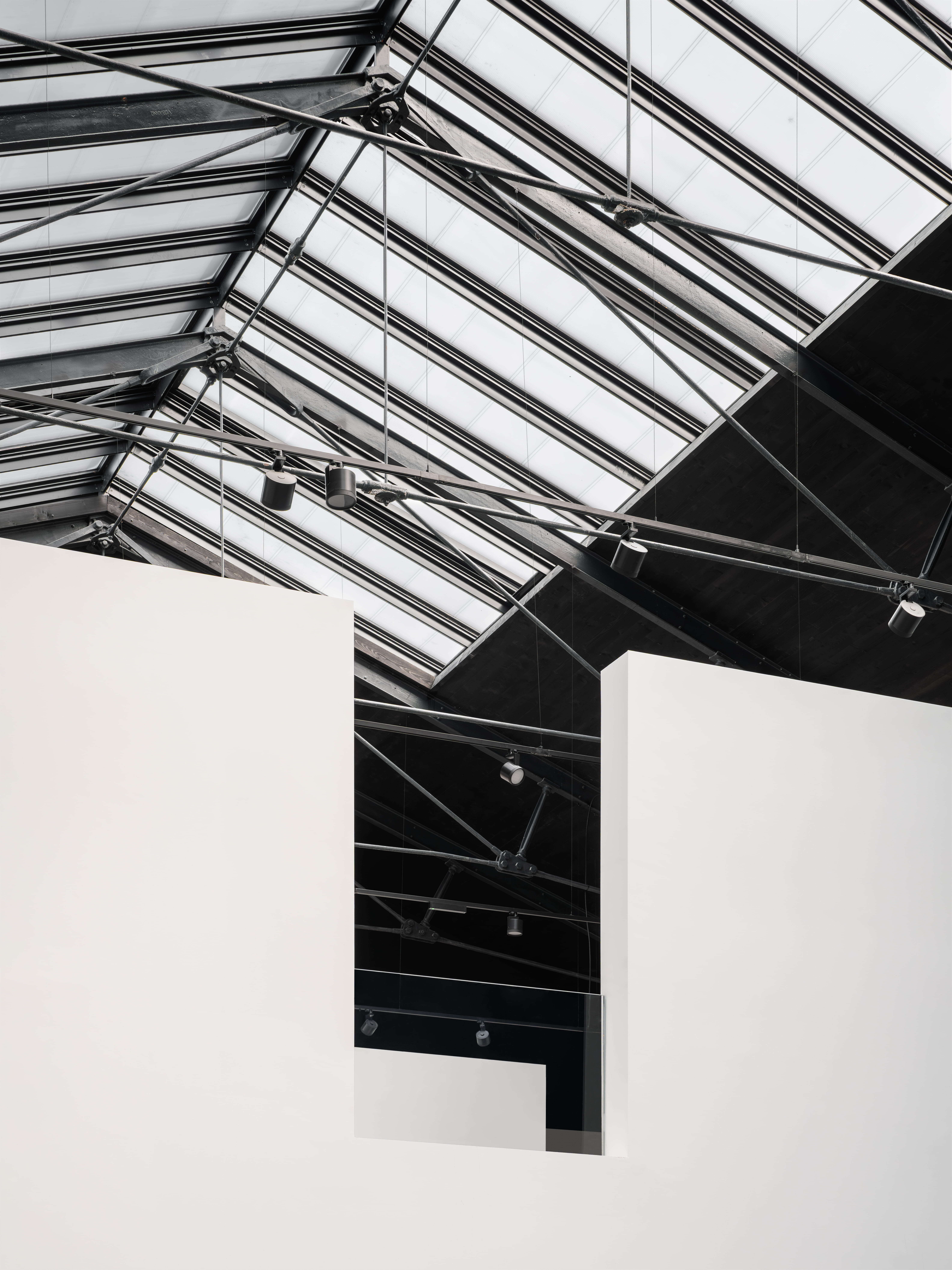
Technically, the project aims for total integration between architecture and building systems. All systems—lighting, ventilation, energy production—are incorporated into the building’s envelope, leaving exhibition spaces uncluttered. New photovoltaic and diffusing glass skylights ensure uniform natural light while contributing to the building’s energy efficiency. The goal is to achieve LEED Gold certification, affirming an approach that integrates sustainability and spatial quality.
Immediately following the presentation, the Pavilion will enter the setup phase for the exhibition In Minor Keys, conceived by the late Koyo Kouoh and continued by the curatorial team, which will open to the public on May 9, 2026. This will be the first test for an architecture designed as a flexible space, capable of accommodating complex and continuously evolving exhibition narratives.