
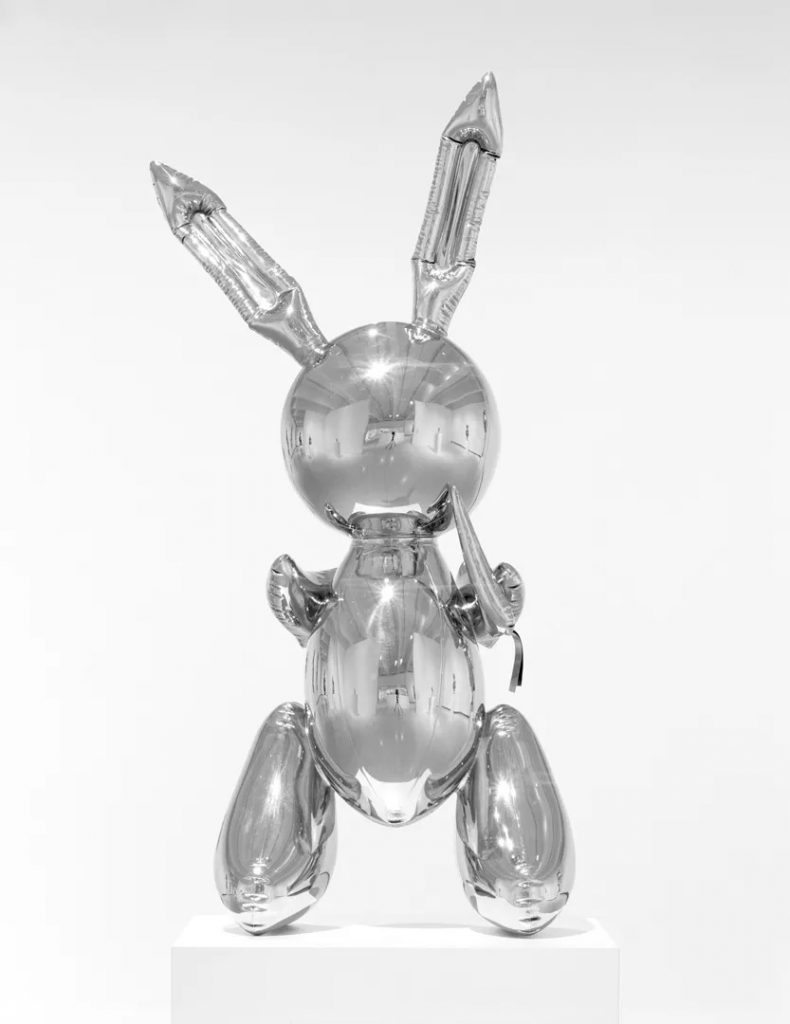
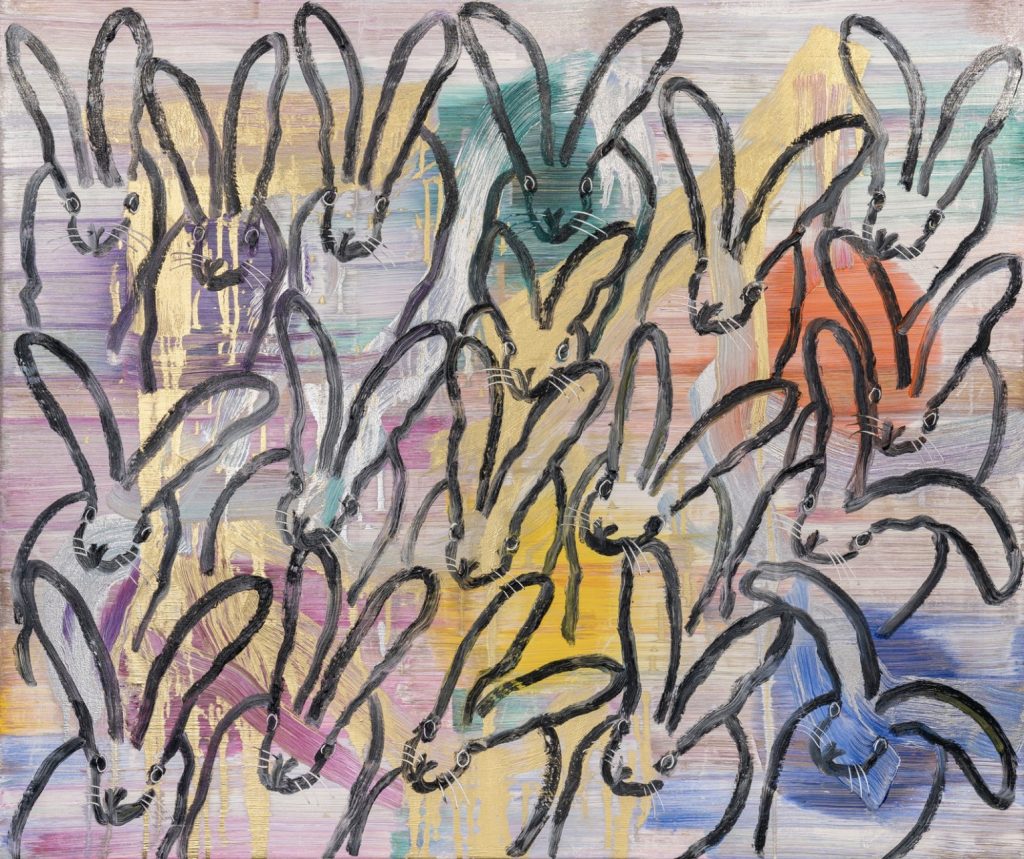
Following last year’s focus on the Easter Egg, which Fausto Melotti famously called “The most beautiful abstract sculpture” and a profound symbol of Easter and resurrection, we now turn our attention to the rabbit, continuing our festive exploration. Beyond its chocolate confectionery form, in contemporary iconography, one of the most recognized rabbit figures is Jeff Koons’ stainless steel “Rabbit” (1986). Its reflective, cool, and almost alien presence has transformed the traditional Easter symbol into an emblem for the consumer age and a bona fide art market superstar. Equally pop but far more vibrant are the rabbits by Hunt Slonem, often referred to as the “Bunnies artist.” Slonem creates thousands of these, often covering entire walls with stylized rabbit faces, characterized by thick brushstrokes, vivid colors, and antique frames.
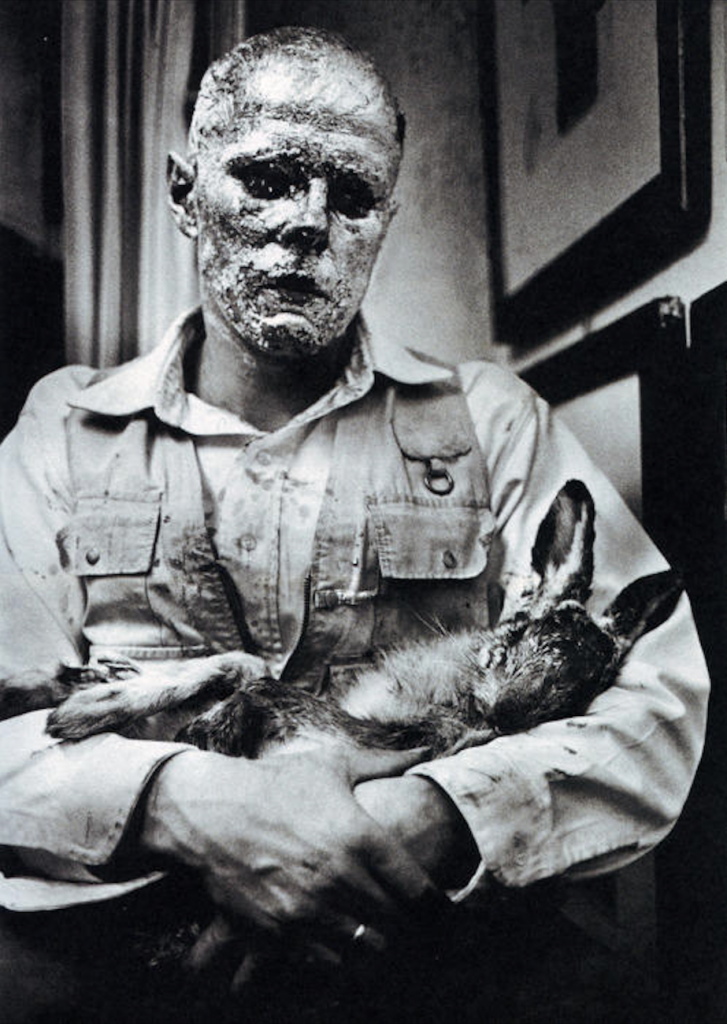
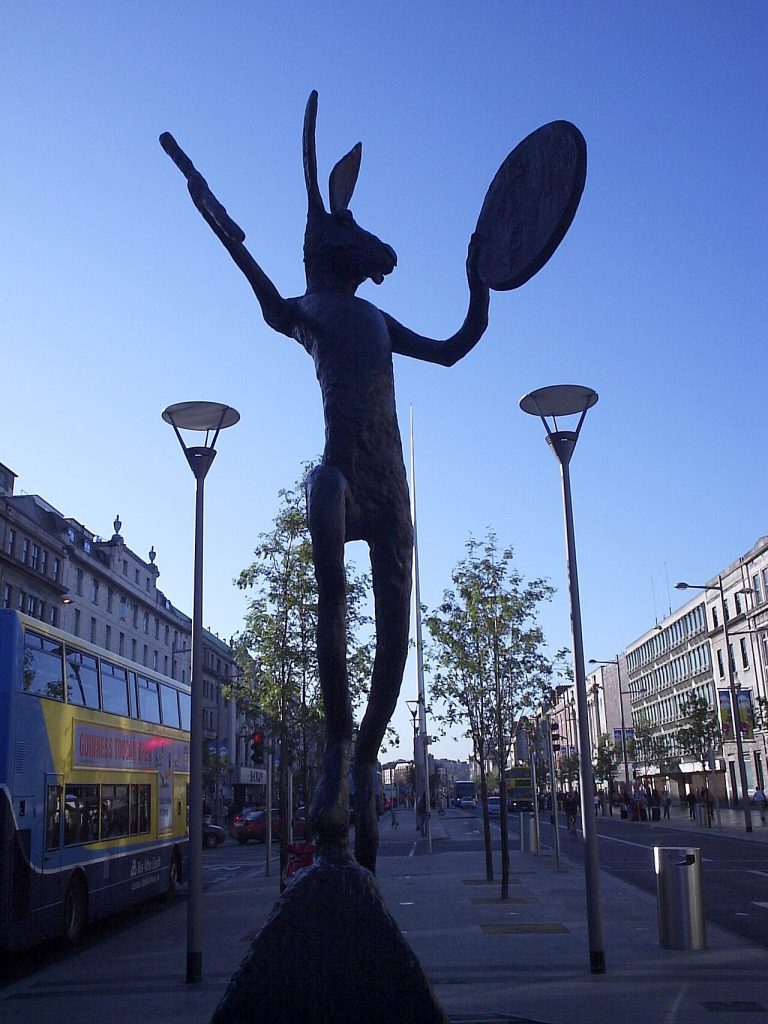
However, in art, the rabbit (and its close relative, the hare) is much more than just a pop icon. Who recalls Joseph Beuys’s “How to Explain Pictures to a Dead Hare” (1965)? This performance, undoubtedly one of the most unsettling and powerful, took place at the Galerie Schmela in Düsseldorf, where Beuys, seated with his face covered in honey and gold leaf, cradled a dead hare. While hares and rabbits are distinct lagomorphs and cannot interbreed, if we momentarily set aside strict biological classification, we can appreciate how the rabbit, like the hare, can embody the principles of movement and reincarnation, as Beuys suggested. The essence of both creatures symbolizes a connection to the earth and intuition – a connection extended to the audience outside the gallery, who could observe the action and be prompted to forge a more instinctive, intimate, and spiritual bond with art. Beuys’s hare, viewed through the lens of the Easter season, can also be interpreted as a potent image of the Paschal mystery, representing the transition between life and death. Continuing in this less pop, more spiritual vein, and still focusing on hares, we should also remember Barry Flanagan’s bronze sculptures. With their exceptionally long legs, these hares are often captured in dynamic, elegant, and even humorous poses (some dance, play instruments, or box), reminding us of the freedom from constraints and the vital energy inherent in the rabbit, a quality worth embracing, especially in challenging times, to endure and persevere.
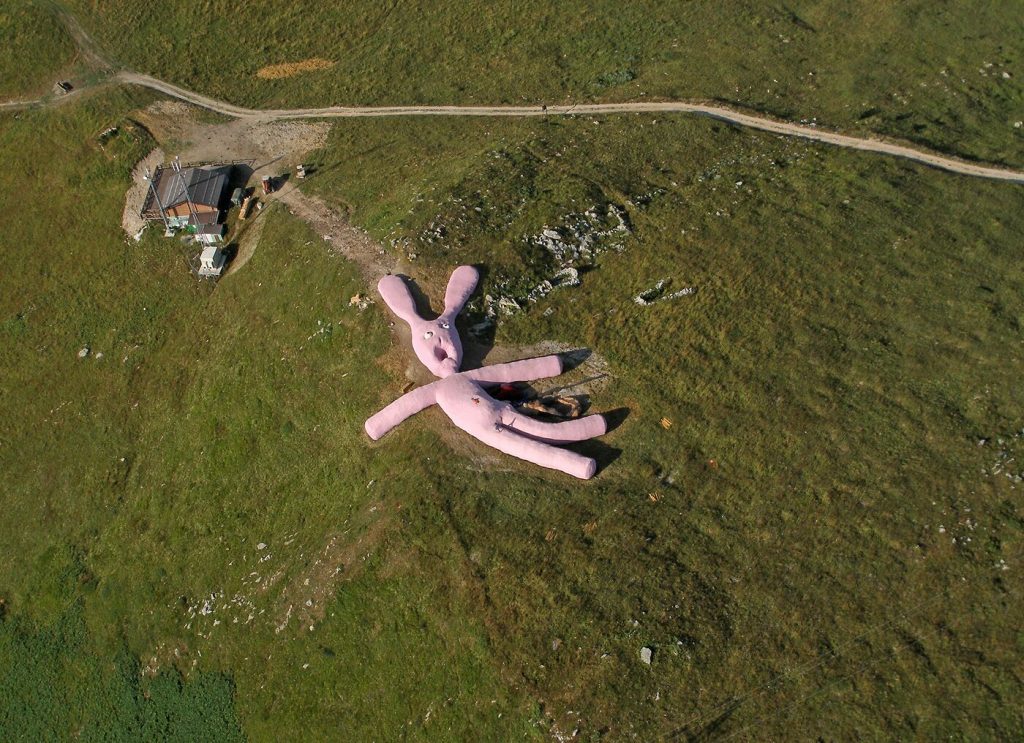
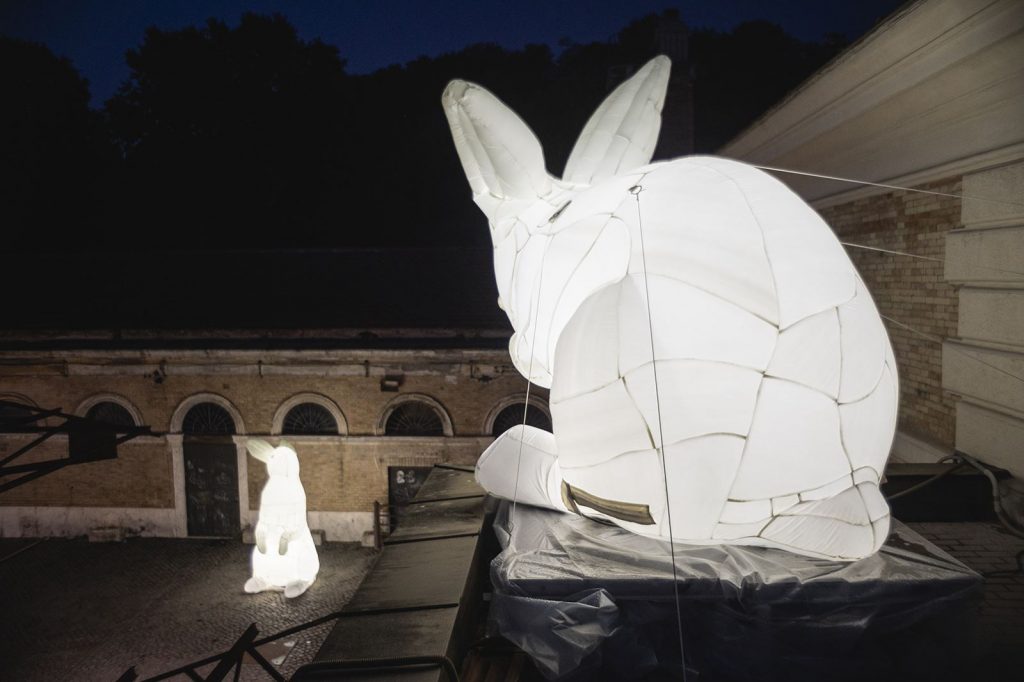
Closing our digression into hares, let’s return to the rabbit, specifically Gelitin’s giant “Hase” (2005). This immense pink rabbit, hand-knitted, famously lay sprawling on a hill in Piedmont, designed to slowly decompose outdoors. While initially appearing as an emblem of playfulness and the childlike self, the awareness of its abandonment and gradual deterioration lends it a surreal and shocking quality. This colossal rabbit powerfully represents the natural cycle of life returning to the earth. Also giant, and inflatable, are Amanda Parer’s rabbits, resembling soft plush toys but towering like buildings, emitting an intense white light at night. Similarly monumental are Tom Claassen’s rabbits, minimalist in form yet expressively conveying a comically tender heaviness. Staying within the realm of large-scale works, Florentijn Hofman’s white, enormous rabbits, placed in public spaces, seem to evoke the Eastern legend of the moon rabbit, radiating a profound sense of peace.
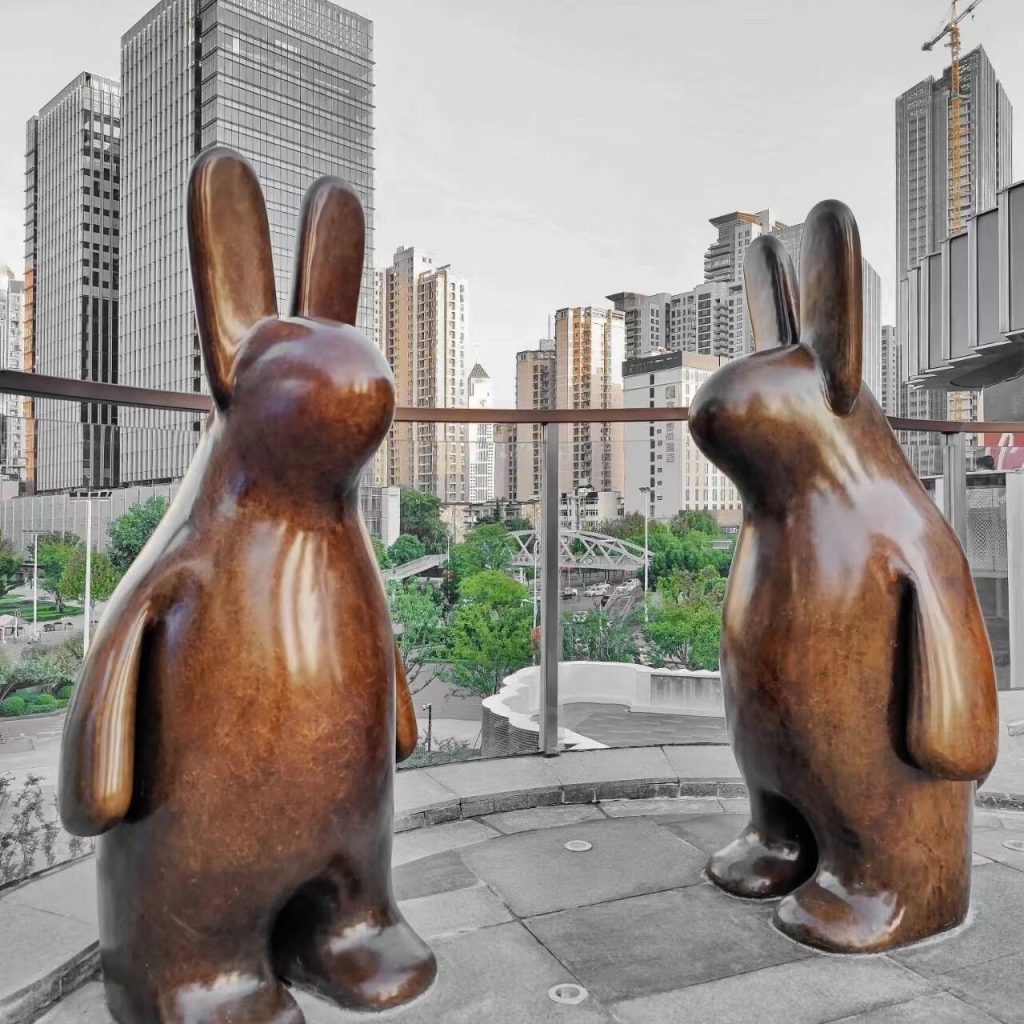
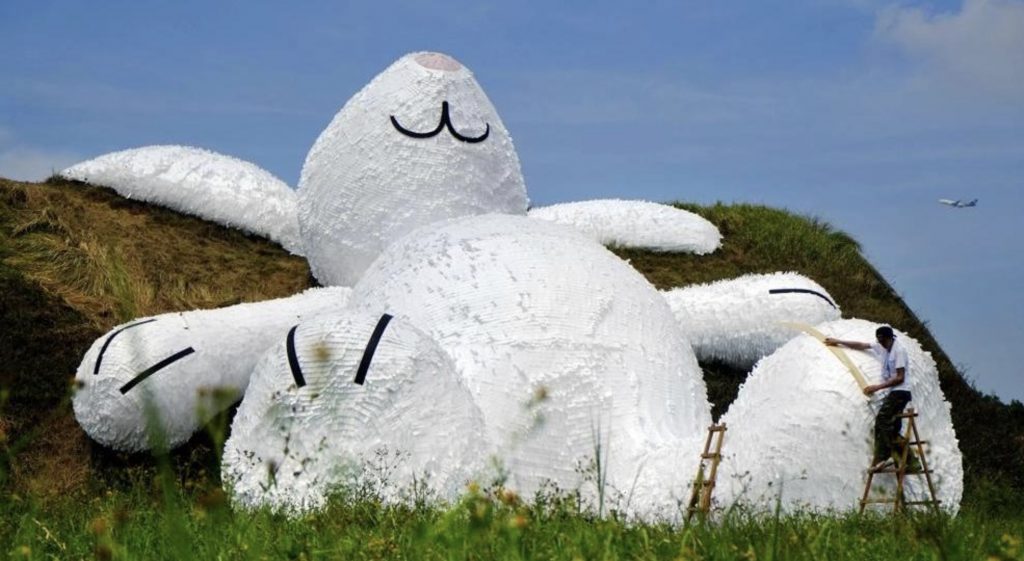
Allow me another brief digression to tell you about the Moon Rabbit, a legendary figure deeply rooted in East Asian mythological imagination, albeit with several variations. The most well-known version of the legend originates from an ancient Buddhist parable. It tells of a rabbit, a monkey, and a fox who encountered a tired and hungry old traveler, who was, in fact, a disguised deity. The monkey offered fruit, and the fox presented fish. However, the rabbit, finding nothing else edible for a human, chose to offer himself by leaping into a fire to feed the man. Moved by this selfless act, the deity saved the rabbit and etched its image onto the Moon, ensuring its example of generosity would shine brightly for all humanity forever.
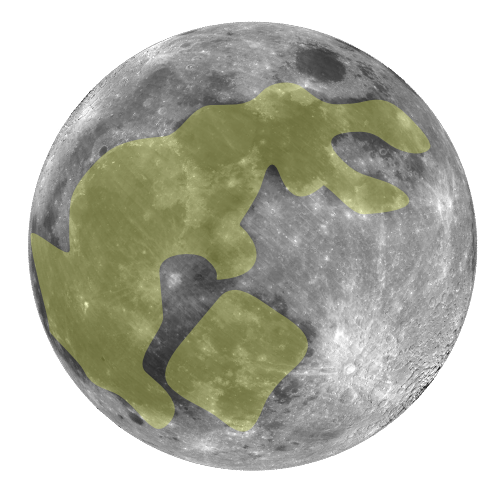
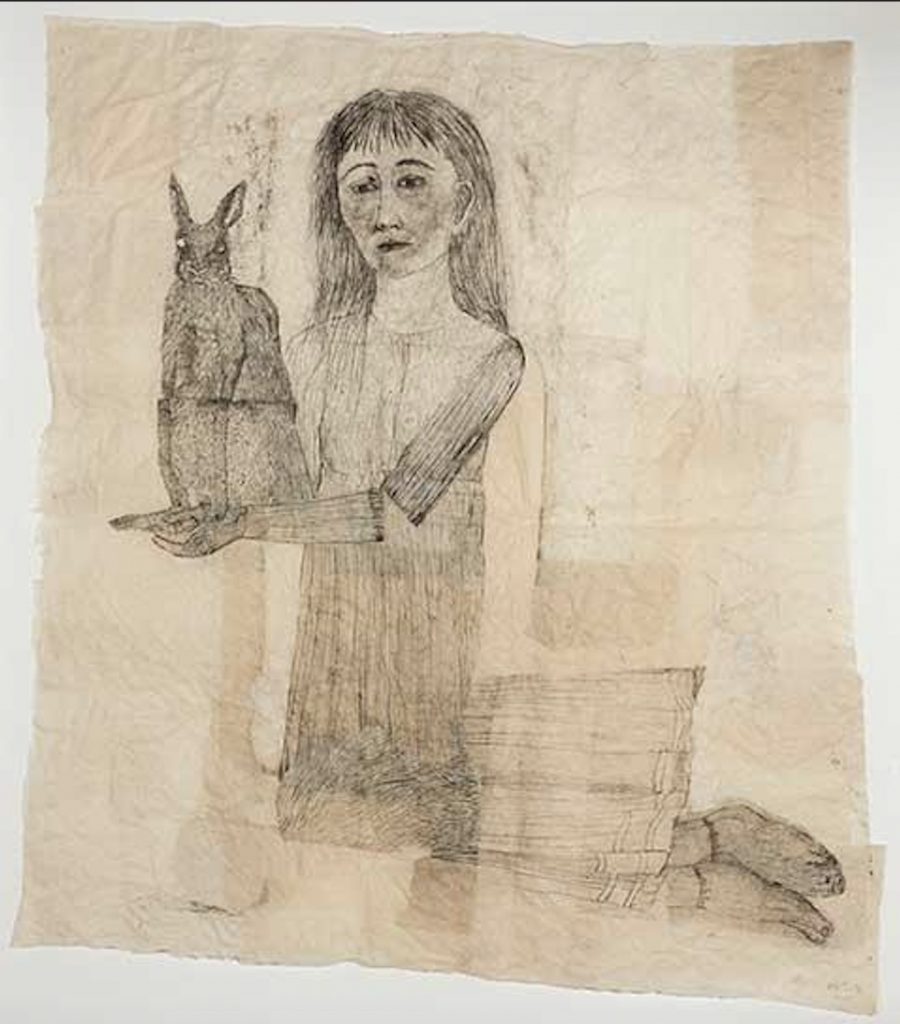
This millennia-old myth carries a precious message, one we celebrate today: sacrifice, salvation, rebirth, and resurrection. Whether appearing as a pop culture icon, a spiritual emblem, a gigantic installation, or a perception-challenging artwork, or even taking on an almost magical quality like those by Kiki Smith – which seem to emerge from a Brothers Grimm fairy tale or an archaeological find, powerfully depicting the cycle of life and the deep bond between humans and animals – the rabbit’s form is often depicted softly, almost surreally. It appears to materialize and disappear within a white, plastic-like medium, exploring, and perhaps accentuating, the boundary between being and non-being, presence and absence. The rabbit resonates deeply because it’s a symbol we’ve “domesticated” yet one that retains a sacred aura. Whether it’s an icon to be contemplated in a museum or public space, or a ritual to be celebrated at the dinner table, the rabbit stands today as our messenger of rebirth. And if it’s made of chocolate, it’s time to unwrap and enjoy it. Happy Easter!