

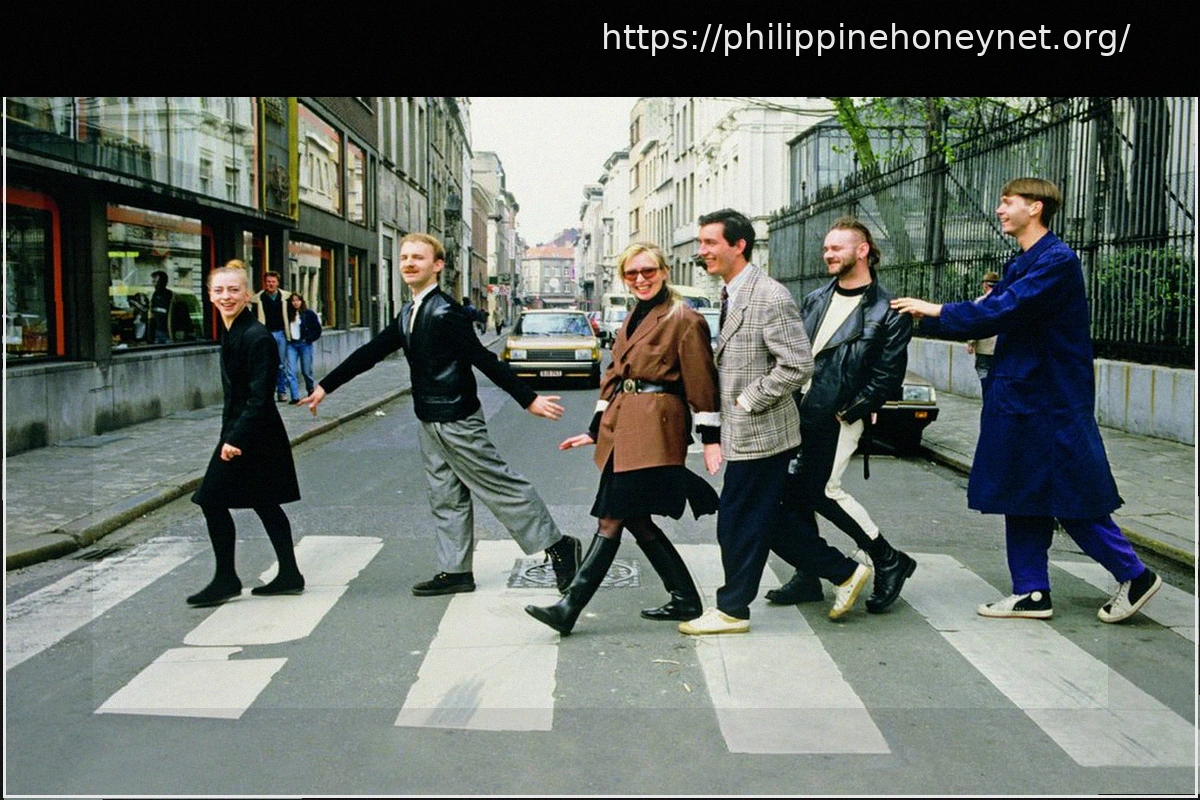
From March 28, 2026, to January 17, 2027, MoMu in Antwerp presents “The Antwerp Six,” an exhibition marking forty years since the 1986 breakthrough that launched Dirk Bikkembergs, Ann Demeulemeester, Walter Van Beirendonck, Dries Van Noten, Dirk Van Saene, and Marina Yee from Belgium onto the global fashion stage. Curated by Geert Bruloot with Romy Cockx and directed by Kaat Debo, this exhibition offers a more nuanced perspective than a mere celebration. It avoids simply canonizing a generation or fossilizing a label that emerged largely from journalistic necessity and was perhaps never truly intended as a collective brand. Instead, it recreates the atmosphere, the city, and the web of relationships that fostered this movement. Elements like the Royal Academy, the Textile Plan, local clubs, punk culture, trips to London and Tokyo, along with photographs, invitations, lookbooks, and graphic design, are all brought back into focus. The exhibition begins with a concise timeline outlining the cultural and productive landscape that sparked this phenomenon. Following this, six distinct installations, each with its own emphasis, highlight the radical individuality of each designer’s journey. Finally, a valuable section on ephemera underscores a truth that feels particularly relevant today: fashion is not merely clothing; it is a language, a stance, an picture, and a cultural mechanism. On the eve of its opening, a conversation with Romy Cockx and Kaat Debo not only re-examines the myth of the Antwerp Six but also the conditions that made it possible, questions that continue to resonate within European fashion today.
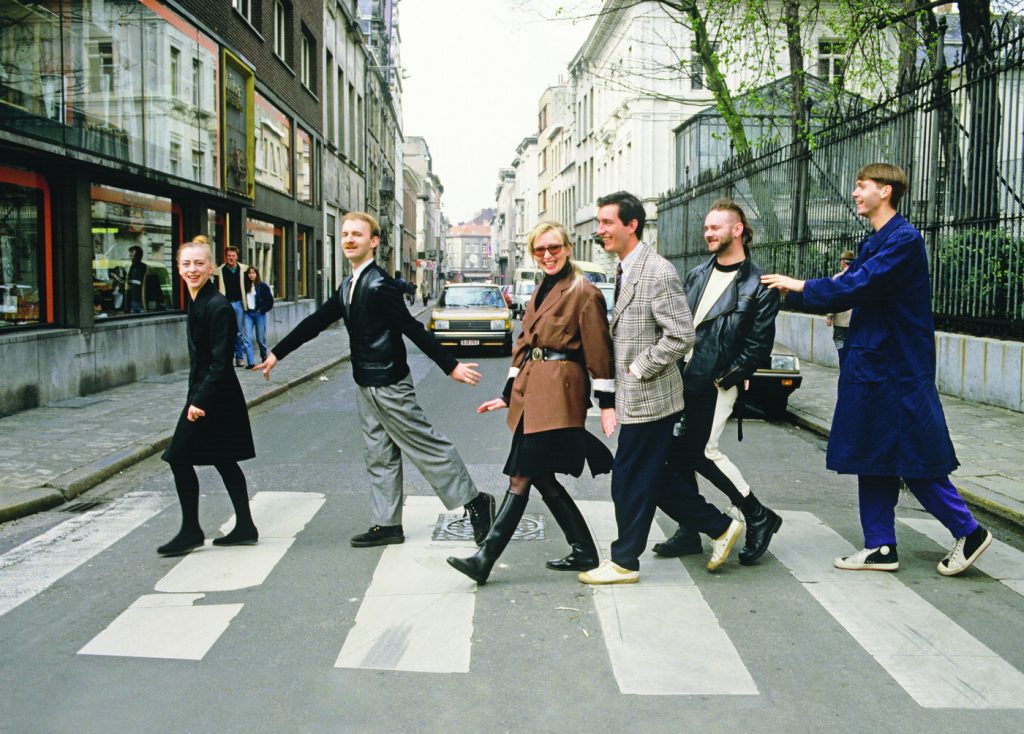
This exhibition is conceived as a celebration, yet it carefully avoids hagiography. Is it a tribute or a reinterpretation?
Kaat Debo: “It is certainly a celebration of the legacy of the Antwerp Six, but also an analysis of the context that made them possible. We were interested in showing not just the outcomes, but the economic, cultural, and creative conditions that paved the way for their international breakthrough. Rather than rewriting their history, we aim to use it as a starting point to discuss themes that are once again central today, such as creative autonomy, authorial ownership, and the ecosystems that truly allow talent to flourish.”
The exhibition journey begins with a dense chronology and then unfolds into six distinct environments. How do you shape such a well-known yet fragmented story?
Romy Cockx: “For me, the starting point was precisely that: structuring an enormous amount of material and information. Geert Bruloot knows that story intimately because he was there. My role was to ask questions, fill gaps, verify missing links, and then find a visual language capable of holding everything together. The initial timeline was conceived as a vast editing table. We wanted the international context to remain clear, but for Antwerp to emerge strongly, almost as a necessary counterpoint. It was a long, very concrete undertaking, involving securing authorizations, tracing images, and establishing hierarchies.”
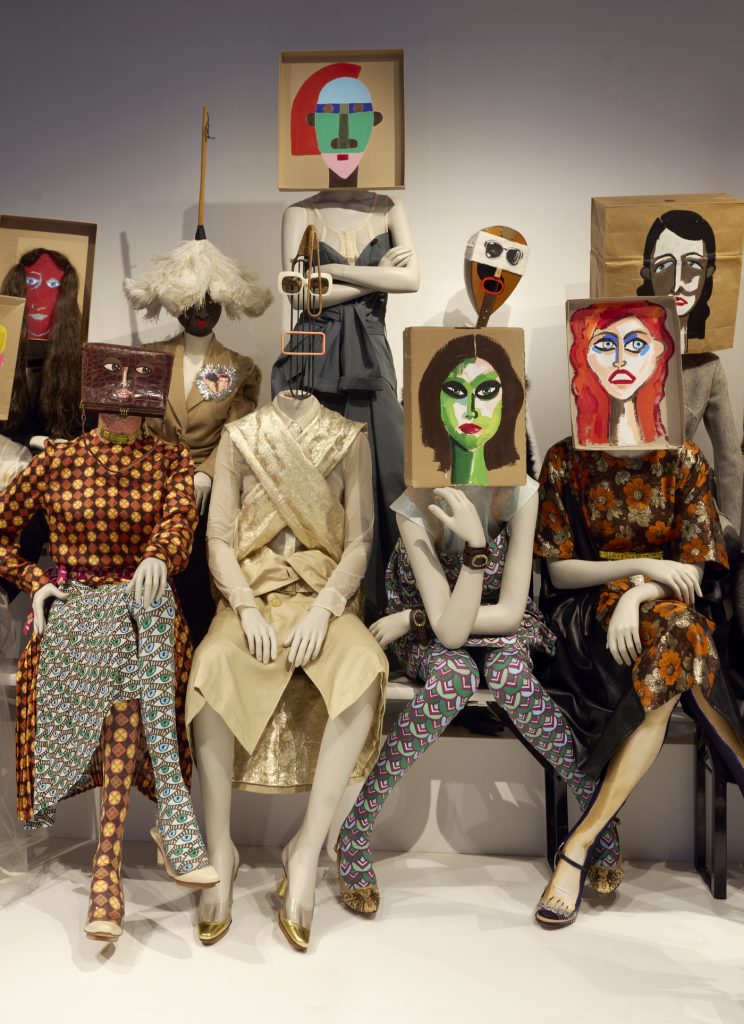
In the exhibition’s narrative, the group ceases to appear as an isolated miracle and returns to being an ecosystem. How important is it today to restore this collective dimension?
Kaat Debo: “Extremely important. The Antwerp Six were not just six extraordinary talents; they were also the product of an environment: a school, a city, an art scene, a network of graphic designers, photographers, producers, journalists, and retailers. This is a dimension we risk forgetting today because contemporary fashion tends to personalize everything, transforming every story into an individual biography. Here, however, we clearly see how innovation emerges from a constellation of relationships. And this point is relevant to the present as well, because young designers still need fertile contexts, not just visibility.”
In the rooms dedicated to individual designers, a strong participation from the protagonists is evident. How complex was it to mediate between their desire for authorial expression and museum regulations?
Romy Cockx: “Very much so, and it was one of the most interesting aspects. All six were involved in constructing their respective installations, so the curatorial work became a continuous dialogue, sometimes even a negotiation. Museums have precise limitations regarding light, temperature, conservation, and technical feasibility. Not all ideas can be realized exactly as they are conceived. Curating also means finding a viable form without betraying the original intention. Sometimes, a detail makes all the difference. I’m thinking, for instance, of the mannequins in Walter Van Beirendonck’s room, specifically produced to convey that gesture, that contact, that tension between bodies.”
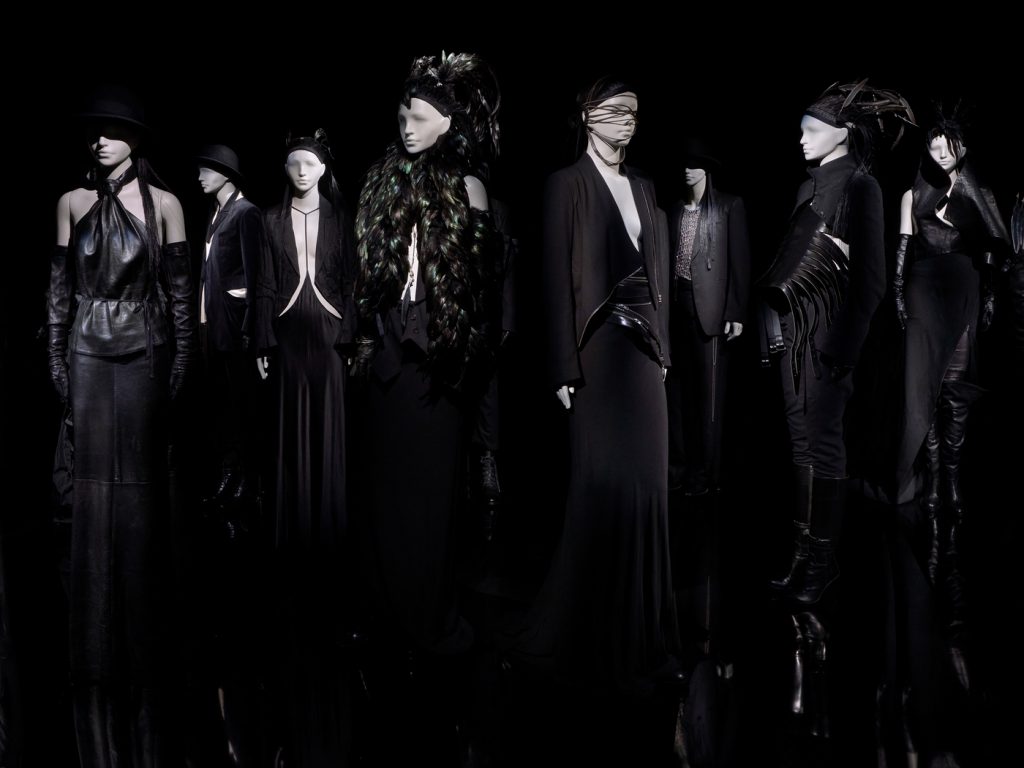
Bodies, gender, masculinity, queerness. Some trajectories of the Antwerp Six openly address these issues. Does the exhibition tackle them explicitly?
Kaat Debo: “Yes, although not in the manner of six monographic exhibitions that could delve deeply into each individual language. Here, these themes emerge within the overall narrative, and they are naturally more prominent in certain universes. In Walter Van Beirendonck’s work, as well as Bikkembergs’, the body, the construction of masculinity, sexuality, and the queer dimension are very evident elements. We didn’t want to force a single interpretation, but rather to ensure these aspects remained active in the visitor’s gaze, as a living part of the Six’s legacy.”
Perhaps one of the most successful sections is the final one, dedicated to invitations, catalogs, press kits, and ephemeral materials. Why was it important to conclude there?
Romy Cockx: “Because those seemingly secondary materials actually tell an essential story. The Antwerp Six understood very early on that fashion is also a communication system, and that invitations, images, layouts, and installations are all part of the same construction of meaning as the clothes themselves. For this section, we largely drew from the museum’s archive. The inventory wasn’t yet complete, so there was extensive work involved in reconnaissance, selection, and table testing, almost like material publishing. We wanted that room to convey precisely this: the moment when fashion steps out of the wardrobe and into the world, speaks, and becomes an image.”
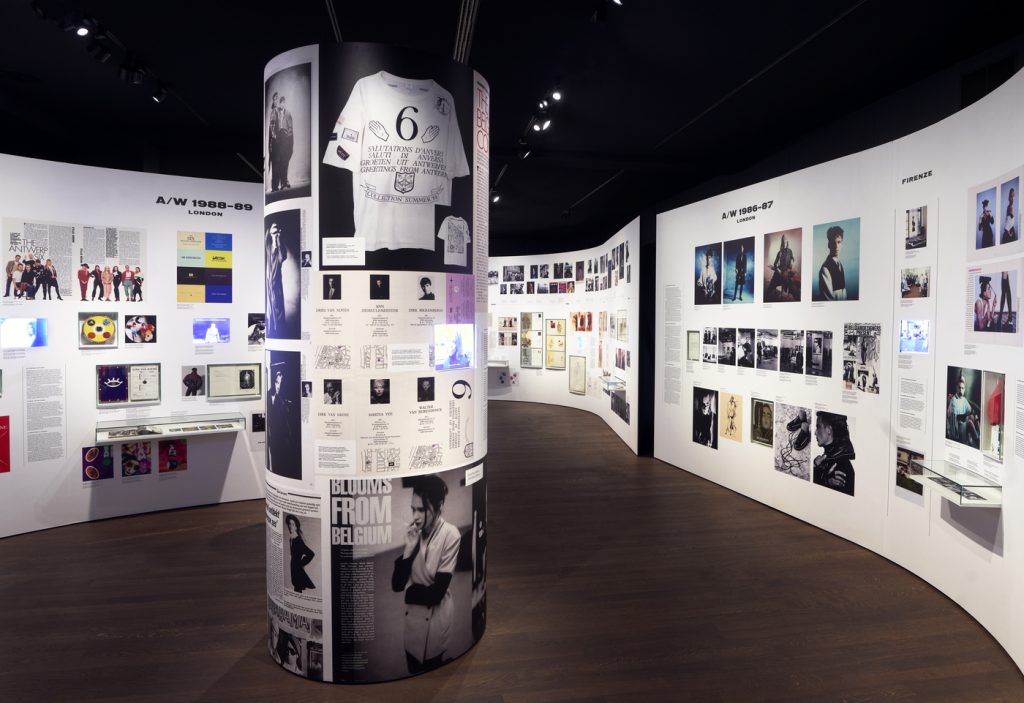
So, should visitors leave MoMu with the idea of a closed chapter or with an open question about the future?
Kaat Debo: “With an open question, undoubtedly. The Antwerp Six demonstrated that another path was possible, alongside the industry’s large structures and dominant models. That historical moment isn’t replicable; the fashion world has changed, and the conditions that generated it no longer exist in the same way. But precisely for this reason, their story remains fertile. During the ten months of the exhibition, we will also collaborate with the Academy, holding public meetings and talks, such as the one on April 29 dedicated to graphic designers Paul Boudens and Anne Kurris. Not to cultivate nostalgia, but to understand what forms new creative ecosystems can take today.”
This is perhaps the most vibrant aspect of the exhibition. “The Antwerp Six” doesn’t relegate a Belgian legend to the past; instead, it reclaims it from the comfortable embrace of commemoration. It brings it back to where great stories truly resonate: in the present.