


We live in an era where the language to describe fashion beyond its commercial function seems lost. Every fashion show is a global event, every launch a viral campaign. Yet, something feels broken. Sustainability has become a mere slogan, innovation is often confused with technical updates, and creativity is measured solely by engagement metrics. In this void of meaning, an initiative like the ITS Contest is far more than just an award.
It’s no coincidence that it takes place in Trieste, a city that has embraced its border status not as a division, but as a connection point. From this geographical and cultural periphery, ITS annually embarks on a mission to construct an alternative map of fashion design. This cartography doesn’t follow the established routes of fashion capitals but seeks inspiration elsewhere, sifting through 74 countries and over 700 applications to discover ten unique visions capable of enduring the rapid pace of contemporary attention.
A Different Sense of Time
The primary imperative that ITS champions is a redefinition of time itself. Not the accelerated timeline of seasonal collections, drops, capsules, and fleeting trends. Instead, it fosters a longer, almost artisanal approach, characterized by ten-day creative residencies, individual and collective mentoring, and visits to production facilities, historical archives, and knitting workshops. Ten days are dedicated to developing a more conscious and structured design vision – a period to pause, observe, listen, and question.
The ten designers, selected from across the globe, were not chosen for their ability to generate viral content. They were selected for their «singular vision and, above all, an extraordinary ability to tell stories,» as stated by Barbara Franchin, founder of ITS.
The ITS Excellence Award 10×10×10 – comprising 10,000 euros, a 10-day residency, and 10 months of exhibition – establishes an alternative temporality. For ten months, the works remain visible, accessible, and open to discussion. This extended period allows the public to vote for the most engaging project through the Public’s Choice Award. These ten months restore fashion’s dimension as a shared experience, freeing it from the logic of ephemeral events.

The Exhibition as a Critical Statement
The project truly comes into its own with the opening of the exhibitions at ITS Arcademy. ‘Rise and Shine’ showcases the works of the ten finalists, integrating them into a collection boasting over 15,000 projects amassed over 20 years of editions. This is not merely a celebratory display but a complex architecture that fosters dialogue between generations of designers, tracing both continuities and ruptures within an entire creative ecosystem.
Alongside this, ‘EXPOSURE – When the World Watches You, from Harry Styles to Lady Gaga’ undertakes an even more radical operation. It doesn’t celebrate icons; instead, it deconstructs their manufacturing process. The exhibition, curated by Belgian stylist Tom Eerebout, shifts focus from the final product – the garment, the brand, the designer – to the intricate network of relationships that produces the image.
Eerebout is no ordinary curator. He is the stylist who, among many others, shaped Lady Gaga’s visual universe. He possesses an insider’s understanding of image construction, the invisible effort that transforms a body into an icon. Yet, when offered the opportunity to curate an exhibition, he admitted to feeling apprehensive. It was a new, different territory. But through working on the project, he realized that styling, at its core, is already a curatorial activity: selecting, juxtaposing, building a narrative through clothing. The process was challenging, requiring him to translate established skills into a different language – the same, yet not the same.
In developing his perspective, Eerebout understands that a stylist’s primary tool isn’t the garment itself but a personal archive built over time, comprising references ranging from Buffy the Vampire Slayer to Luisa Casati, two of his confessed favorites. Cultivating one’s own taste and an archive of images and stories is what allows one to recognize what deserves to be brought into the spotlight. And perhaps this is the most profound lesson his curatorship conveys: that creativity doesn’t emerge from a vacuum but from the ability to cultivate an intimate and passionate relationship with what one has loved, studied, and internalized.
The Architecture of Appearance
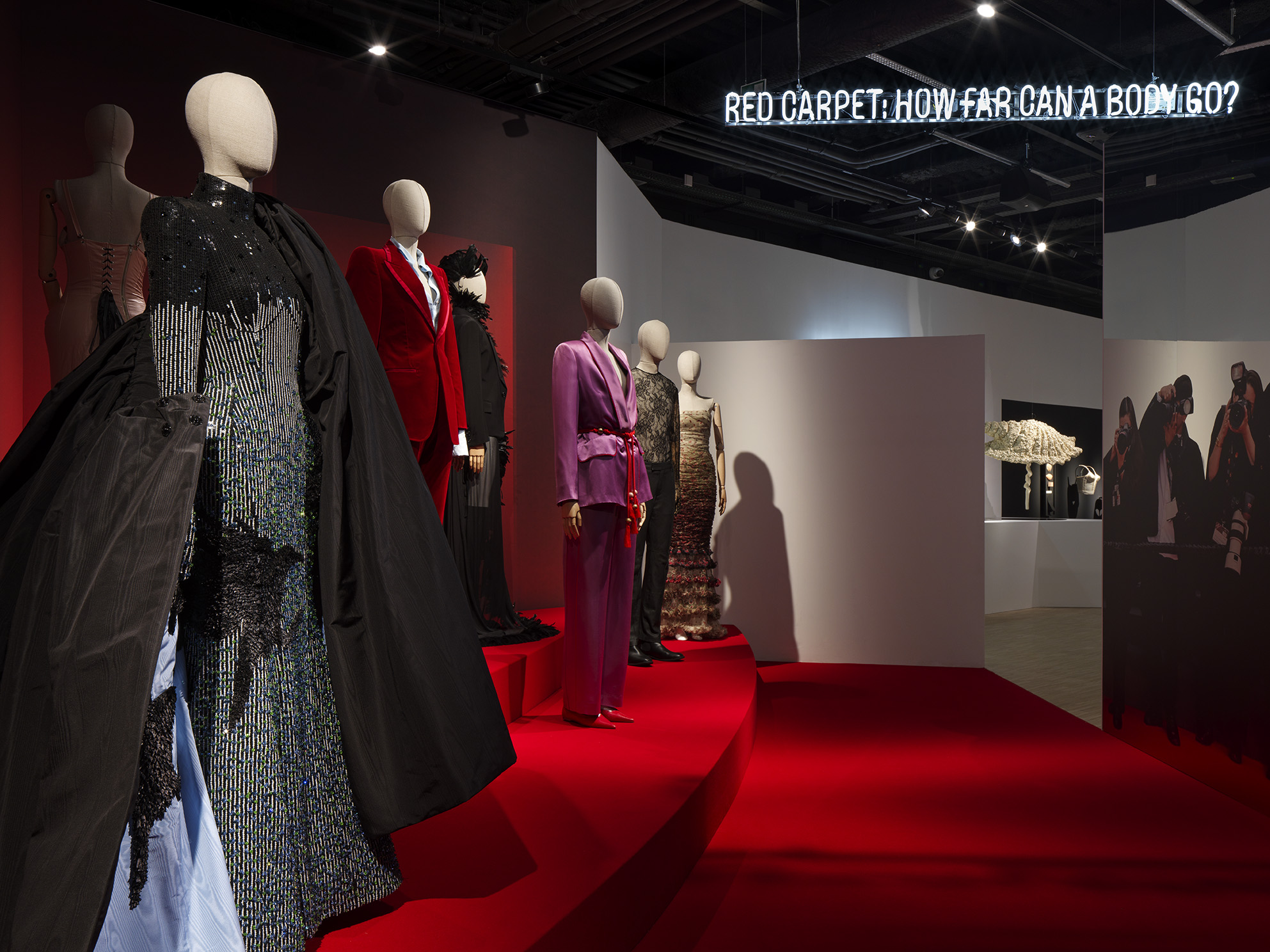
The exhibition unfolds across seven thematic, non-place spaces. ‘Red Carpet: How Far Can a Body Go’ questions the boundaries of this seemingly celebratory space. It’s not just a walkway but a stage where the transformation of the body into an image plays out – a process with real economic and symbolic consequences.
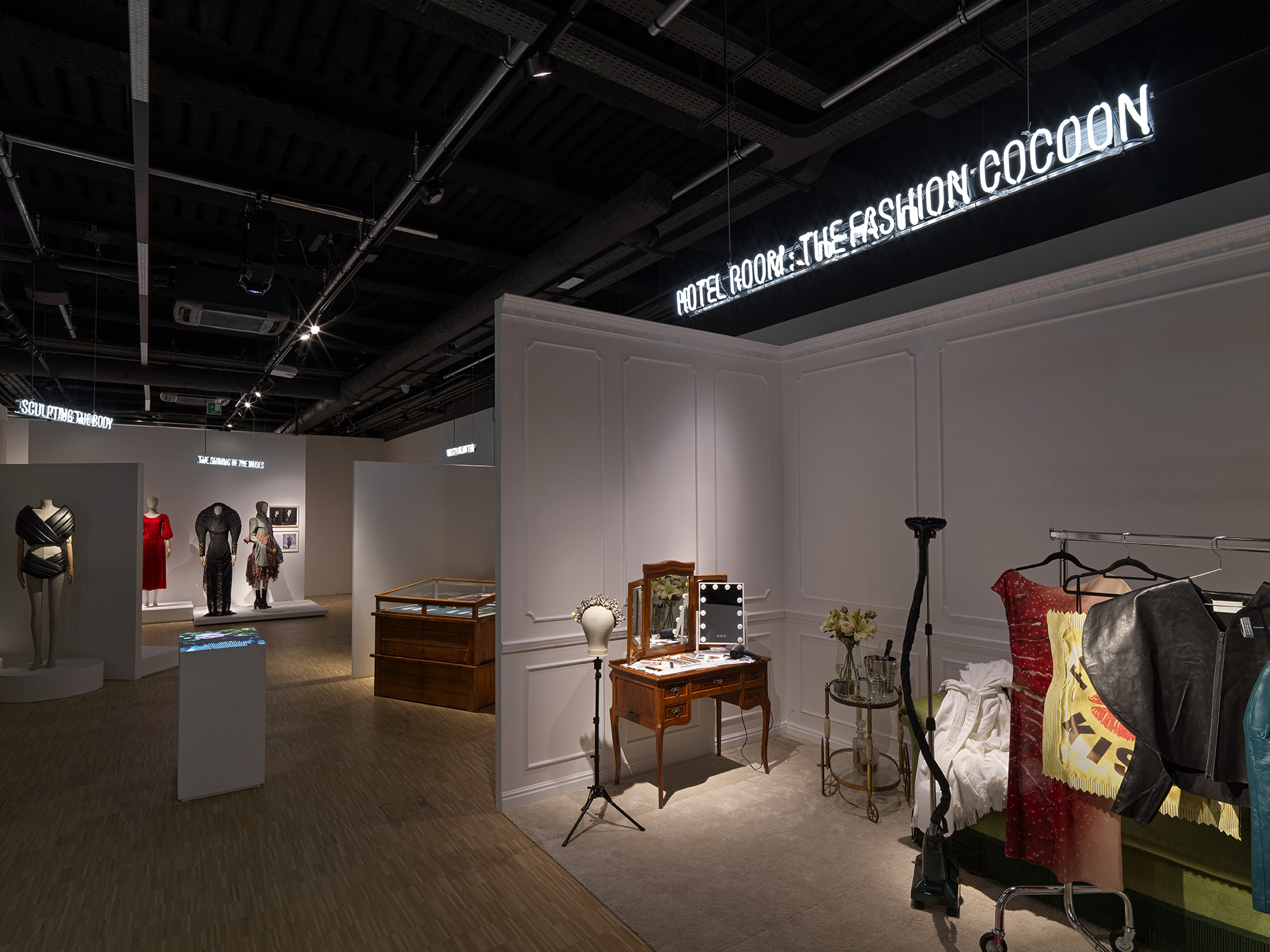
‘Hotel Room: The Fashion Cocoon’ reveals what the rhetoric of the red carpet often conceals: the preparatory work, the liminal space where private identity is negotiated with public image. The hotel room transforms into an impromptu atelier, a laboratory of metamorphosis. It is there, away from prying eyes, that the transformation occurs before the body steps into the glare of flashbulbs.
‘The Final Signature’ undertakes the boldest gesture: it brings to light what typically remains off-camera. The stylist’s final adjustment, the thread being cut, the pin securing a fold. A gesture lasting mere seconds, yet condensing hours or days of preparation. This invisible signature, the diffused authorship that image culture tends to erase, is revealed to restore complexity to a process too often simplified into the dichotomy of genius-creator/icon-wearer.
The Imperative of Community
Another crucial element permeating the ITS project warrants attention: the building of a community. This isn’t in a vague or rhetorical sense, but as a tangible network of professional, emotional, and generative relationships.
The residency program included visits to OTB headquarters, meetings with EssilorLuxottica’s creative teams, experiments with Swatch, dialogues with Fondazione Ferragamo, technical focus sessions on knitwear with Modateca Deanna, and deep dives into local artisanal knowledge via the Carnic Museum of Popular Arts. It also featured discussions with Pitti Immagine, sessions with Inside Out and Fondazione Sozzani, and encounters with figures like Orsola de Castro, Sara Sozzani Maino, and Mattia Battagion.
This dense web of relationships is not incidental; it is the very core of the project. Fashion is not created in isolation. It arises from dialogue with those who produce materials, preserve techniques, build archives, and are currently rethinking business models. This is the true capital that ITS distributes: not just funding and visibility, but a sense of belonging.
The Legacy of Former Finalists
The presence of works by past finalists in the exhibition is not merely a tribute to the contest’s history; it’s a practical demonstration of what ITS makes possible.
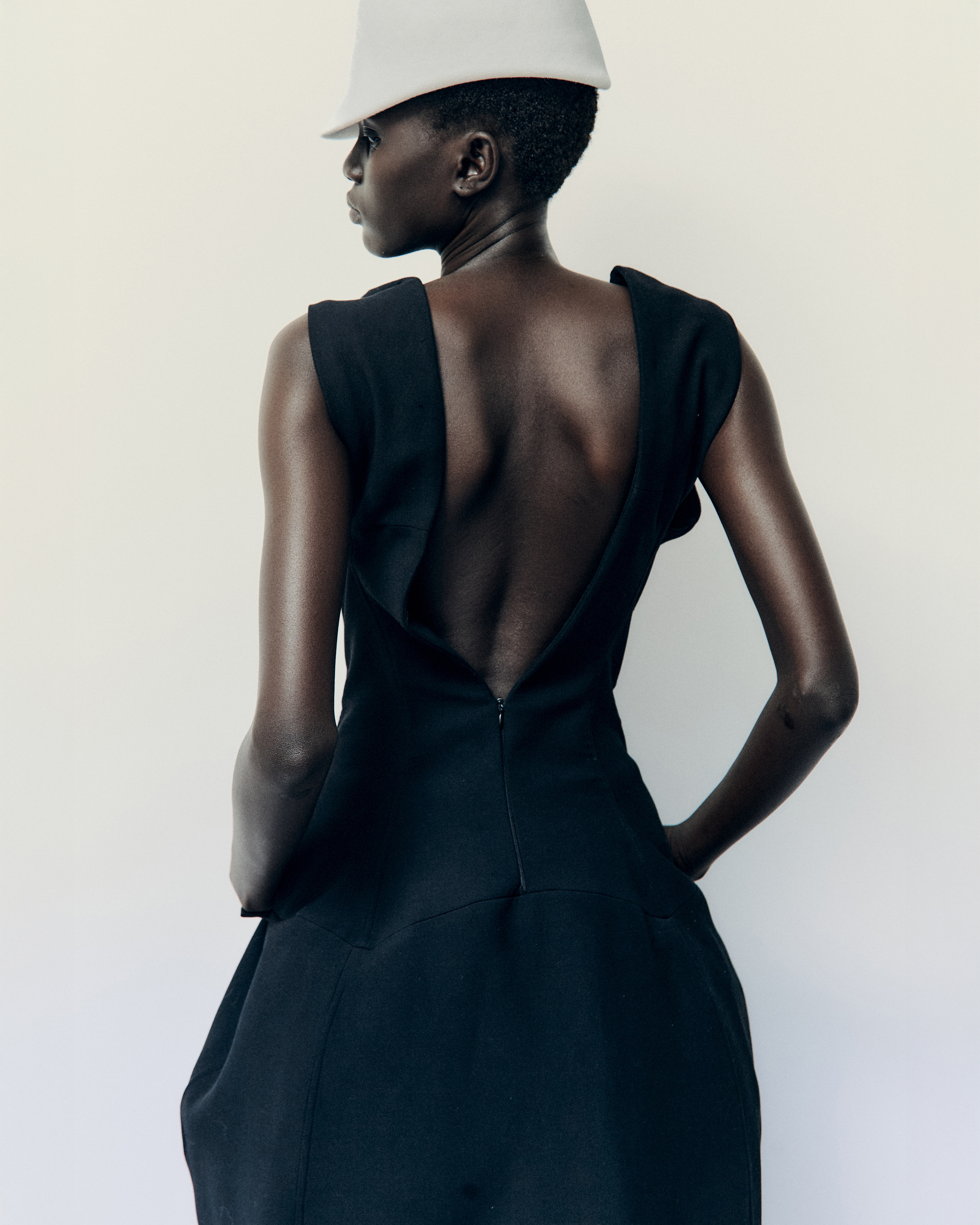
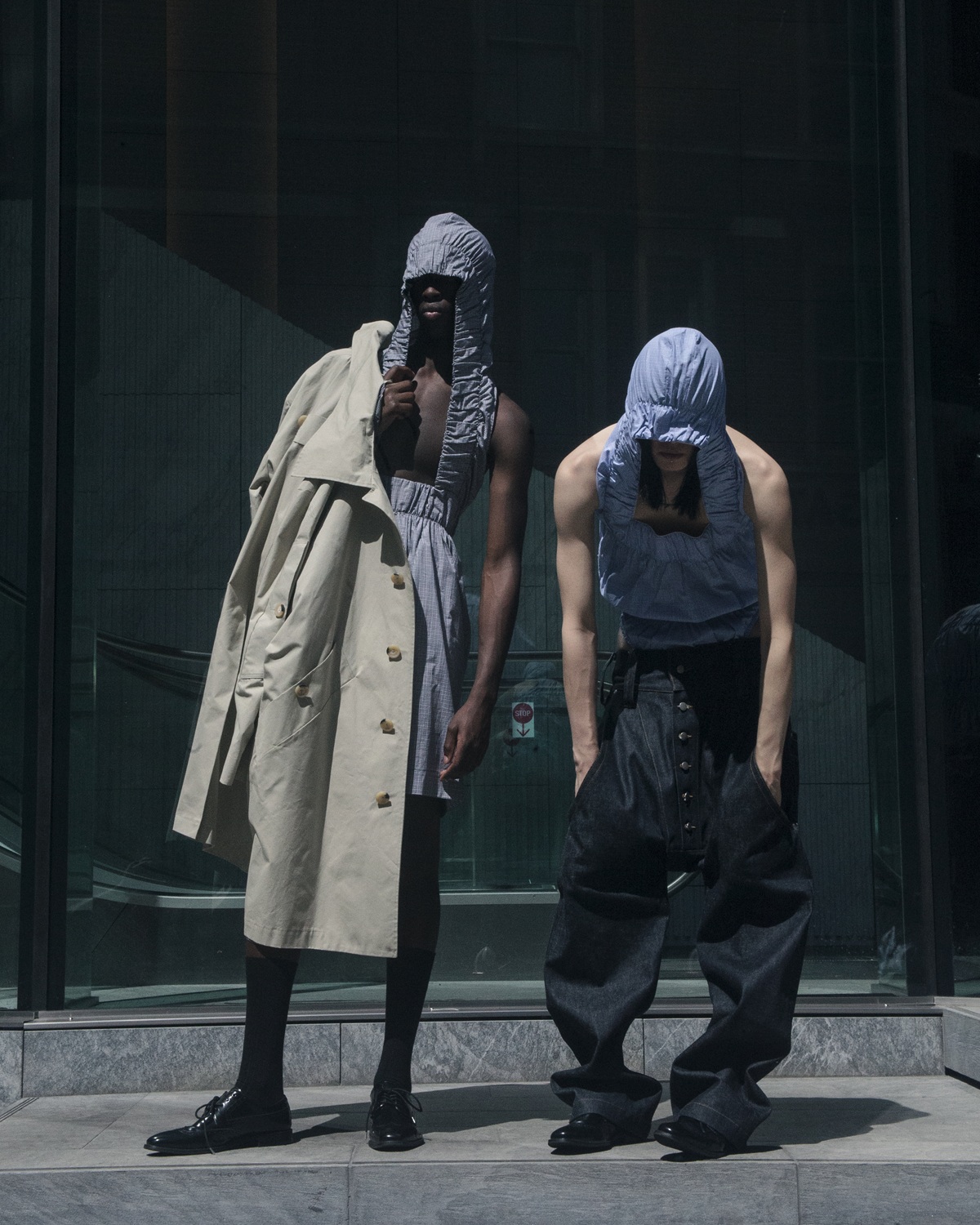
Among them, Rebar Aziz, a finalist in 2020, embodies the diverse pathways that the contest can identify and nurture. The son of a tailor specializing in traditional Iranian garments, he grew up immersed in the art of craftsmanship and transmission. He later pursued mechanical engineering before eventually finding his way to fashion. However, his technical background didn’t erase his family’s legacy; it absorbed, transformed, and redirected it.
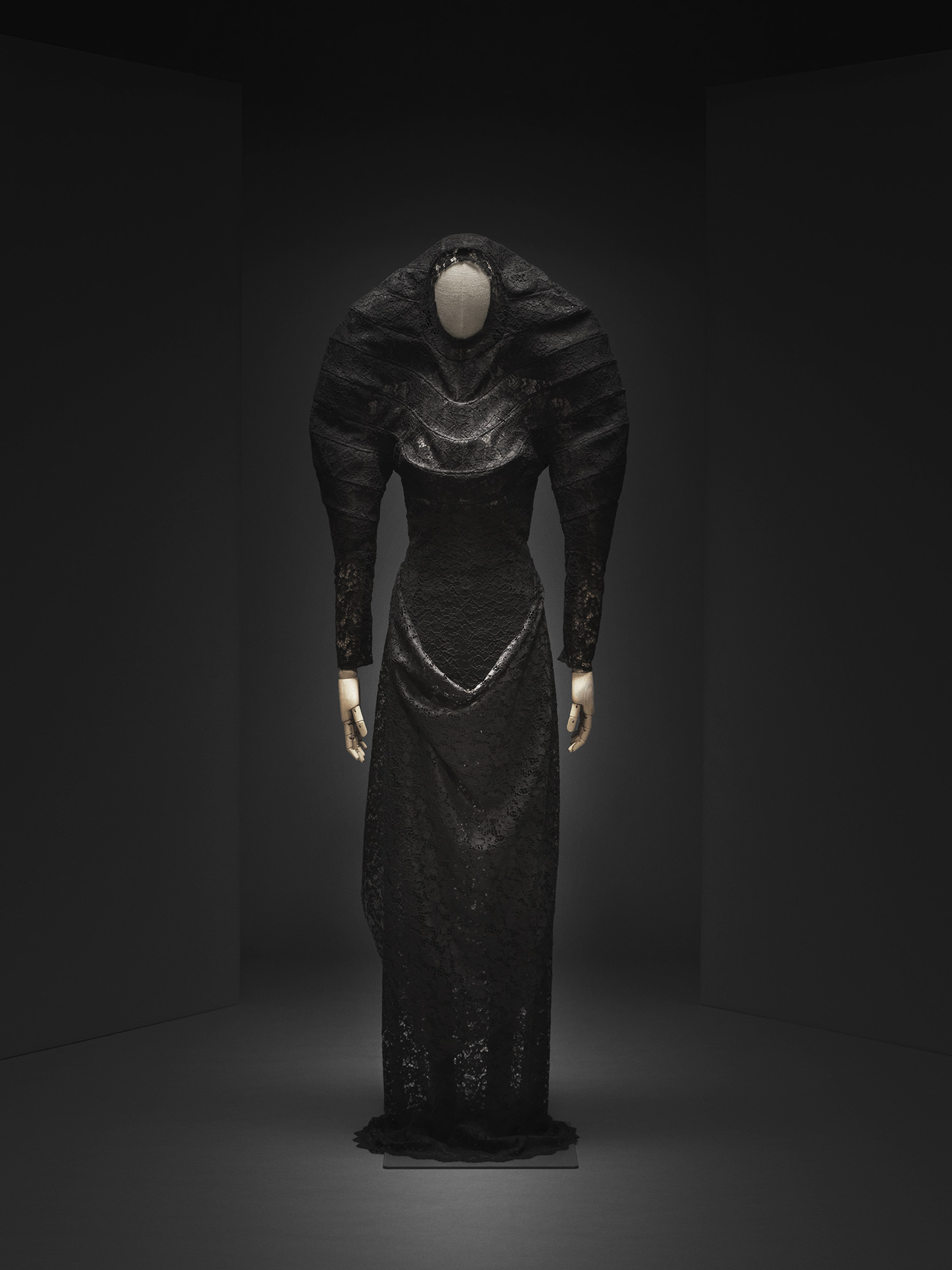
In his works, one can discern the precision of someone who has studied forces and structures, alongside the meticulousness of someone who, as a child, watched his father’s hands mold fabric. His garments often emerge from the intersection of fabric and metal, softness and structure. His technical expertise ensures that such complex forms are supported by just a few precise points, minimizing weight.
Looking back today, Aziz confesses that he wouldn’t ask his ten-year-younger self questions, but rather listen to himself, to understand more deeply. This statement speaks to the maturity of a designer who has learned to trust his own vision and has transformed his multifaceted heritage – artisanal, technical, visionary – into a unique language.
Aziz is just one of many examples of how ITS fosters an ecosystem where the most disparate legacies find ways to intertwine and become visible on the global stage. ITS is a network that doesn’t distinguish between those who have been discovered and those who will discover, because every participant, from this year’s finalists to established alumni, becomes an integral part of it, enriching it with their own journey. Notably, the special jury mention assigned to Chloë Reners, who is set to return as a juror in the next edition.

Why This Is Urgent
The implicit yet persistent question underlying the entire ITS project is: why is all this necessary today? Why dedicate resources, time, and attention to training young designers in an era where the fashion industry often seems reduced to a gigantic mechanism for reproducing what has already been seen?
The answer lies in the project’s very stance. ITS doesn’t merely select talent; it creates the conditions for designers to become critical thinkers, not just competent executors. It connects them with fashion history through archives and collections. It confronts them with the urgency of sustainability, not as a slogan, but as a technical problem to be solved. It immerses them in local artisanal knowledge to demonstrate that innovation doesn’t arise from nothing, but from a profound understanding of materials and techniques.
The ‘EXPOSURE’ exhibition, with its focus on styling and image construction, addresses these questions by shifting attention from what to how. It’s not just about what clothes icons wear, but how those clothes are constructed, who chooses them, how they are photographed, how they circulate, and how they become collective memory. It’s an operation that restores complexity to a field that fashion rhetoric tends to simplify: an image is not a given; it is a process. And like any process, it can be understood, deconstructed, and reimagined.
The Future as a Bet
«The stories they tell, in such a personal way, hold value,» says Barbara Franchin. «In this suspended time, more than ever, fashion and society need new voices. Creativity is not a bonus. It is necessary.»
“Necessary” is a powerful word. It implies that without creativity, there is no future, or that the future awaiting us without it would be less than human. In a historical moment marked by shrinking spaces for exchange and imagination, fashion must reclaim its role as a laboratory of possibilities, a space where alternative forms of life are envisioned.
There is a bet to be made: that this necessity is not just a wish, but a real condition. That the suspended time in which we live is not merely a crisis, but also an opportunity. For 24 years, ITS has been working on this wager. Not as an event, but as a process. Not as a showcase, but as a laboratory. Perhaps this is why, on the borders of Italy, in a city that has made the convergence of cultures its identity, this project continues to make sense. Because the future, if it is to exist, is built at the margins. In the borderlands.