William Kentridge's Latest Works at Lia Rumma Gallery, Milan
The art of William Kentridge (born in Johannesburg in 1955) has become an indispensable presence in the contemporary art scene. It narrates both the past and the present, deliberately avoiding direct didacticism about current events, yet fully engaging with their complexities. By recounting himself and his creative process, the artist offers a profound reflection on ourselves and on history. The crucial question is: how and in what form does this narrative manifest? It is precisely in this inquiry that the artist's greatness is revealed. The solo exhibition, titled Sharpen your philosophy, on display until March 28, 2026, at the Lia Rumma Gallery in Milan, showcases a selection of recent creations, including dioramas, drawings, and sculptures.
Employing a technique that captures and freezes an instant, or a series of instants within an image (and consequently a narrative), the artist transcends the purely evocative meaning, as it is already intrinsic in the gesture itself and in the sequence of its temporal unfolding. Everything originates from a screen: an element painted in shades of green and black, executed with speed and fluidity, foreshadowing the entire subsequent evolution. This visual journey invites the viewer to observe and meditate, drawing inspiration from the historic sea migration undertaken in 1941 from Marseille to the island of Martinique by intellectuals such as Wilfredo Lam, André Breton, and Claude Lévi-Strauss, fleeing war and Nazi persecution.
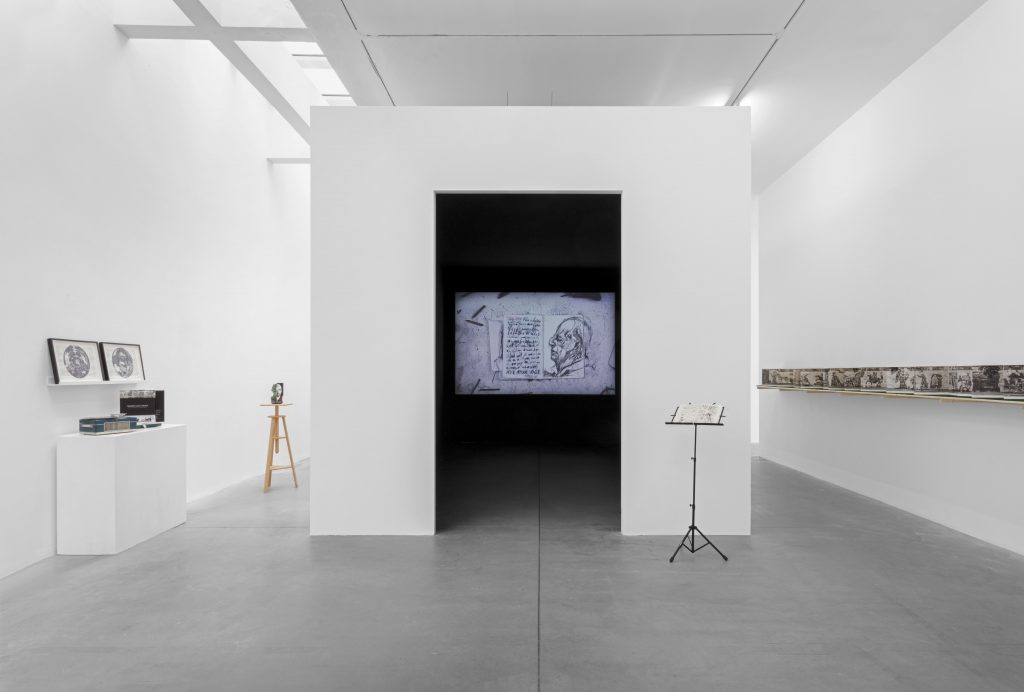
The exhibition's eponymous work thus suggests the only plausible direction: a manifest meaning, understood as a trajectory, like the losing and rediscovering of the mark that Kentridge has always masterfully made clear to us. Forms emerge from erasures, revisions, sometimes repetitions. A mark that is removed but not forgotten, from which another arises. This process ultimately embodies the opportunity, increasingly theoretical and less practiced today, of learning from mistakes. The title itself announces it, calling for a "sharpening" of our philosophy – of our thinking, our actions, and our awareness of the risk of losing and getting lost, or even worse, of repeating the errors that have characterized our past.
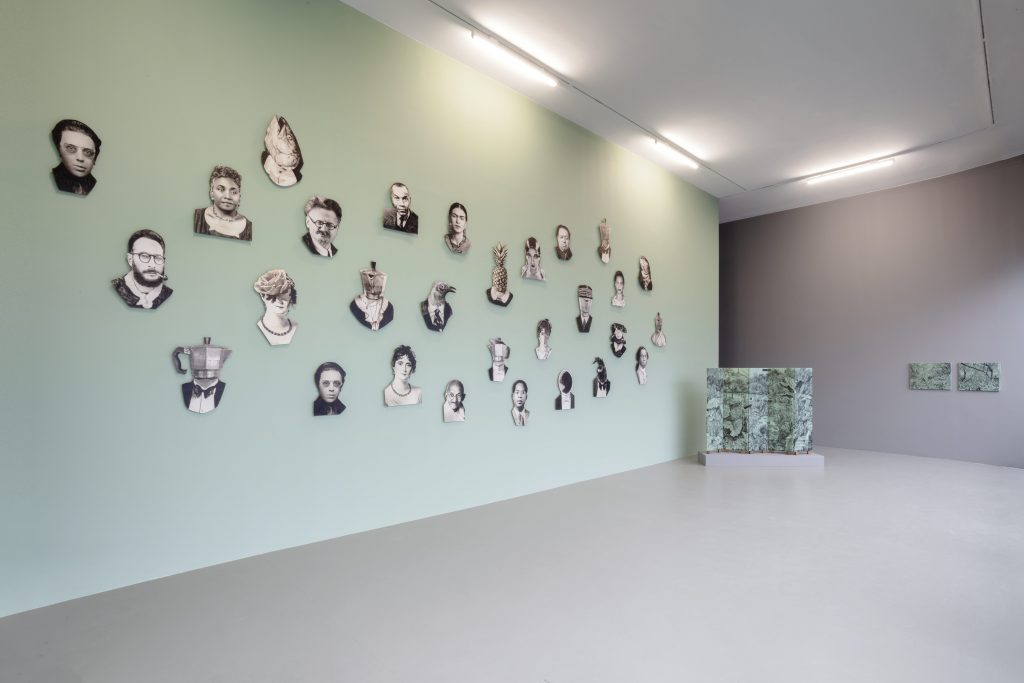
Error is not conceived as an endpoint, but rather as a persistent trace, a kind of "ghost" that serves as a catalyst for the birth of new forms and a narrative built upon previous ones. Consequently, the trajectory is perceived as an event to be carefully observed. Failure, while not a positive outcome, is undoubtedly a necessary element. Today, much is said about failure, but few are willing to accept it as an inherent risk of their actions. One can fail in artistic creation, just as one can fail in life's experiences. There is no distinction.
In Kentridge, this aspect is evident, emphasized, and active. Born in apartheid South Africa, the artist has never retreated into himself. Indeed, understanding one's identity and context, perceiving one's roots, means granting and receiving the possibility of recognizing oneself in the other. The other who narrates us. Difference no longer signifies estrangement. The three screens on which the video installation To Cross one more sea is projected illustrate the 1941 journey. Objects, as well as songs, figures, and images, sway, chase each other, resume, and generate from one another, much like his drawings.
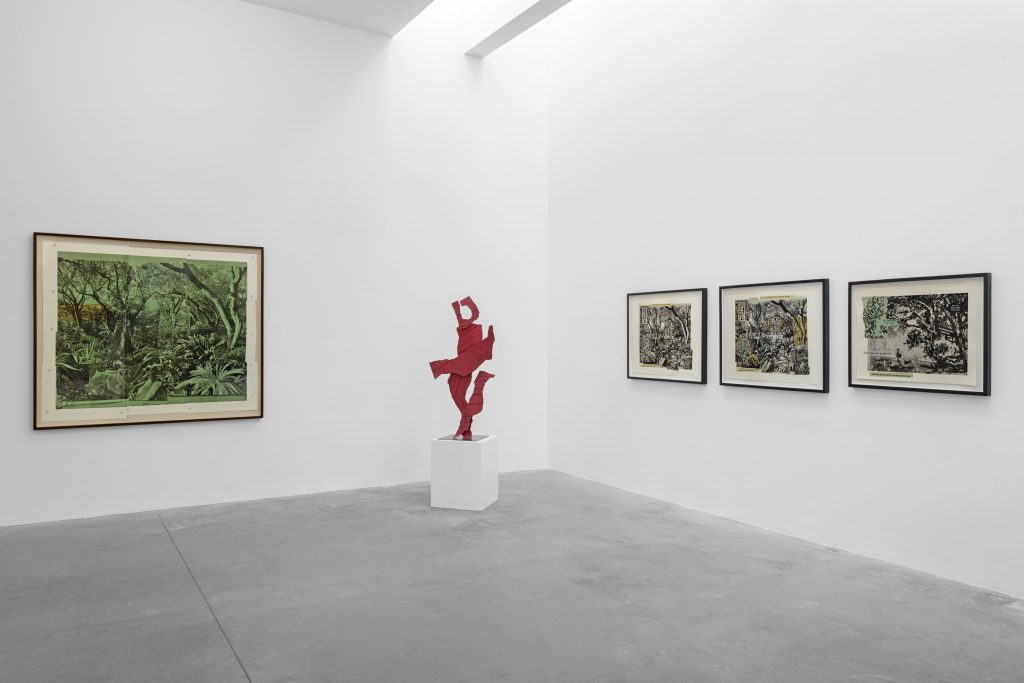
A journey that now manifests as "the journey" par excellence – that specific one of the aforementioned intellectuals – but also ours, and everyone else's. To migrate, then: to reach what destination? Towards what purpose? William Kentridge's animated drawing is primarily a physical movement, a dialogue between the rooted self and external circumstances, with the aim of finding a continuous direction (a meaning, a path) for one's condition and memory. It is not a particular vision of things, but rather an approach to remain connected to the truth of the world. Living and drawing: there is no separation between the two acts.
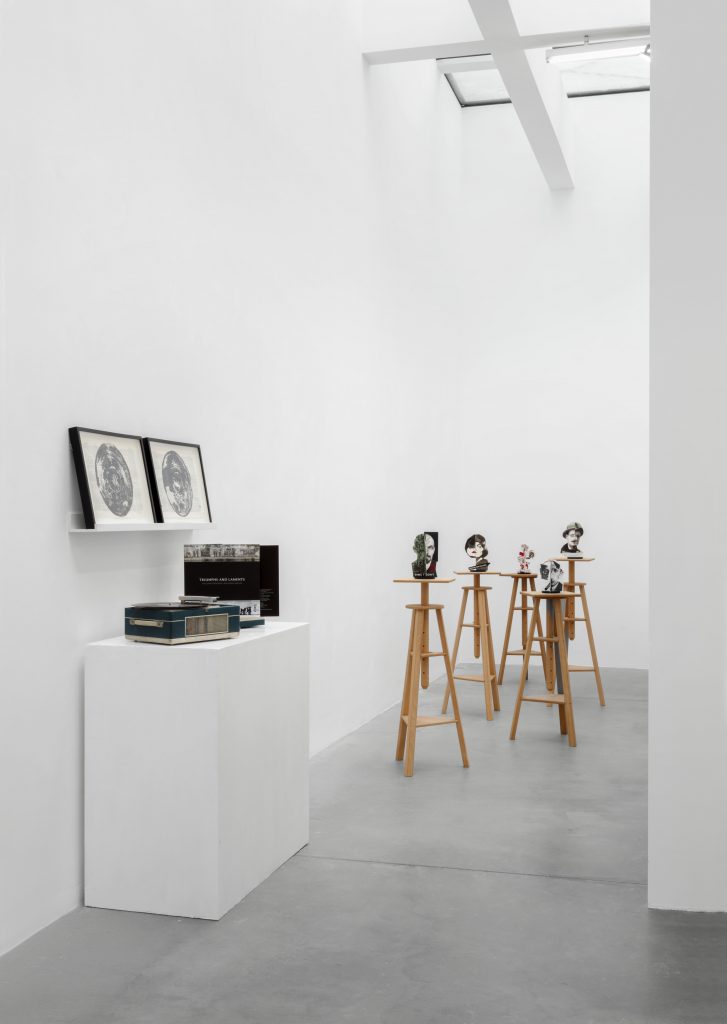
Drawing, defined as «the uncertain and imprecise way of constructing a drawing», represents the core, the key from which everything takes shape. In the animated video Fugitive Words (2024), we see the artist's hands turning the blank pages of one of his notebooks. Here, memory and transformation are evident, the harmony between methodology and experience, between the creative process that is already art and the metamorphosis of the image which, from a blank page, transforms into a tree, a coffee pot, a rhinoceros, a word, and a phrase. These are unfinished traces through which every element begins, everything is generated, realized as a work, and, in some way, inspires hope and unites.
Novedades — Society
La participación cultural: más allá de la mera asistencia, la necesidad de compartir el poder
```html La participación cultural: más allá de la mera asistencia, la necesidad de compartir el poder La participación se ha convertido en un término ubicuo, presente en convocatorias, proyectos europeos, programas culturales y planes de regeneración urbana. Se presenta como un
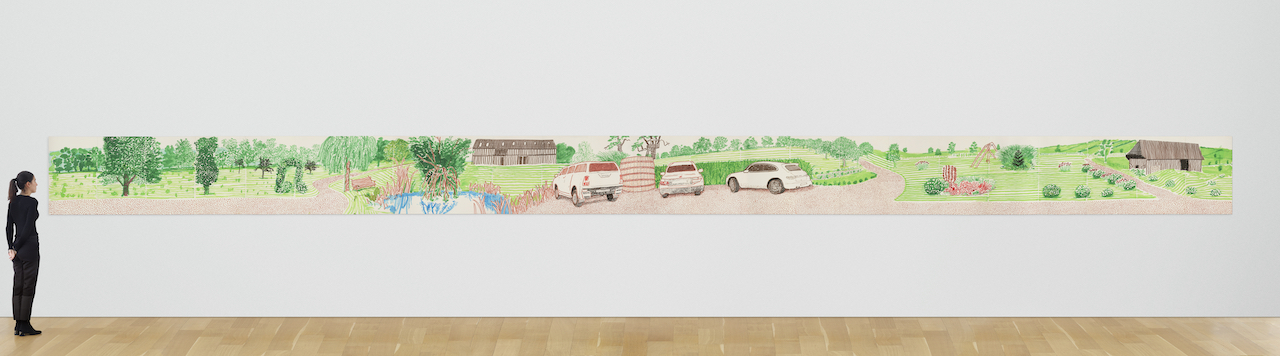
David Hockney's Monumental 12-Meter Print Heads to Christie's Auction
A truly unique lot is being offered by Christie's, available online from March 17 to 31, and on display at the major London galleries until March 31. This remarkable piece is one of David Hockney's largest creations, a staggering 12 meters long, printed on a single sheet of paper, and his most
El Greco Masterpiece Uncovered in Vatican: Hidden Under a Forgery
Art history is frequently punctuated by unexpected and serendipitous discoveries. Among these is the latest revelation from the Vatican Museums, where a routine conservation intervention has brought to light an authentic painting by El Greco, which had remained invisible for decades beneath a

Modena's Gate26A Hosts Aleksandr Nuss's Art: Where Matter Erodes and Light Reveals
Modena offers a serene escape from the vibrant chaos of nearby Bologna, presenting itself as an ordered and pristine city, a tranquil setting for everyday life. Within this calm environment, an independent space named Gate26A, founded by a collective of four individuals, injects a dynamic ener

Peggy Guggenheim's London Years: The Birth of a Collector in Venice Exhibition
Many are unaware of a crucial, often overlooked chapter in the life of Peggy Guggenheim, the visionary who transformed a palazzo on the Grand Canal into a bastion of modernism: her entrepreneurial venture with the Guggenheim Jeune gallery in London. The exhibition, Peggy Guggenheim in London: B
Selvatica 2026 in Biella: Art and Nature in Dialogue, Featuring Historical Authors and New Talents
The eleventh edition of Selvatica – Art and Nature in Festival, a biennial event held in Piazzo, Biella's historic district, has commenced and will run until July 19, 2026. The festival aims to foster a dialogue between artistic languages, scientific research, and educational practices to crea