Who Needs Banksy's Real Name? Anonymity, Power, and Five Key Works
It's profoundly telling that a major agency like Reuters has dedicated time, resources, and investigative methods to unmask Banksy. Is this simply biographical curiosity, or another chapter in the media spectacle surrounding the world's most famous street artist? The crux of the matter is more
It's profoundly telling that a major agency like Reuters has dedicated time, resources, and investigative methods to unmask Banksy. Is this simply biographical curiosity, or another chapter in the media spectacle surrounding the world's most famous street artist? The crux of the matter is more subtle: who truly needs to know Banksy's "real" name? And what, culturally and politically, is fractured when an identity is reduced to a birth record?
For over two decades, Banksy's anonymity has served as a significant defensive mechanism, with this very protection forming an essential part of his art. It has not only fueled one of contemporary art's most potent legends—whether one is an admirer or a detractor—but it has also shaped a unique reception dynamic: the artwork arrives, awaiting its signature; the image precedes its legitimization, generating anticipation. Banksy has functioned as a living paradox: a brand yet a "no-logo" figure. Crucially, he was everywhere and yet no one. Precisely because he was no one, he could symbolically represent everyone, or many.
In this regard, his anonymity also held civic value. It de-emphasized the figure of the "artist-genius," instead shifting focus back to the message, fostering a widespread sense of identification. Banksy wasn't perceived as an exceptional individual, but rather as a collective entity, a public mask behind which anger, irony, dissent, and grief could coalesce. His absent name functioned as a shared political canvas.
For this reason, the act of unmasking is never neutral. Publicly revealing the name of an individual who, for years, has addressed some of the most sensitive contemporary issues—immigration, Brexit, racial violence, the war in Ukraine, the suppression of pro-Palestinian dissent—while remaining invisible, fundamentally shifts the focus. It moves from the artwork to the individual, from the content to the identifiable person, from the conflict to the one who expresses it. In an era where public exposure often equates to vulnerability, this shift is far from insignificant. Identifying Banksy could render a figure more susceptible to blackmail, a figure who, precisely by withholding their identity—at least at certain levels of public discourse—has been able to speak from a place that is both symbolic and unassailable.
Of course, one might argue that every myth eventually gets reabsorbed into the documented order of reality. And that contemporary art thrives on these short circuits between clandestine creation and archival documentation, between disappearance and attribution. However, in Banksy's case, revealing his proper name risks undermining the very mechanism of his work. His anonymity was an aesthetic, political, and media strategy. His method of occupying public space without being entirely capturable now risks devolving into mere mannerism.
Will this be the end of Banksy? Certainly, the revelation of his identity will coincide with the end of a certain idea of Banksy. Yet, the opposite could also occur: that the unmasking, instead of concluding the myth, re-launches it. Perhaps the shedding of the mask will become a new chapter in his work, another ironic twist from an artist who has consistently leveraged the system's own mechanisms against itself. It might be an end. Or perhaps a new beginning, where the question is no longer "who is Banksy," but "what remains of Banksy when anonymity ceases to protect him and begins to transform into history."
Over the past five years, his work has clearly demonstrated that his practice has never been merely a sequence of viral images but a form of direct intervention in current affairs. Five specific episodes, spanning from 2020 to 2025, are sufficient to gauge the impact of this presence.
The Migrant Child Rescued in Venice
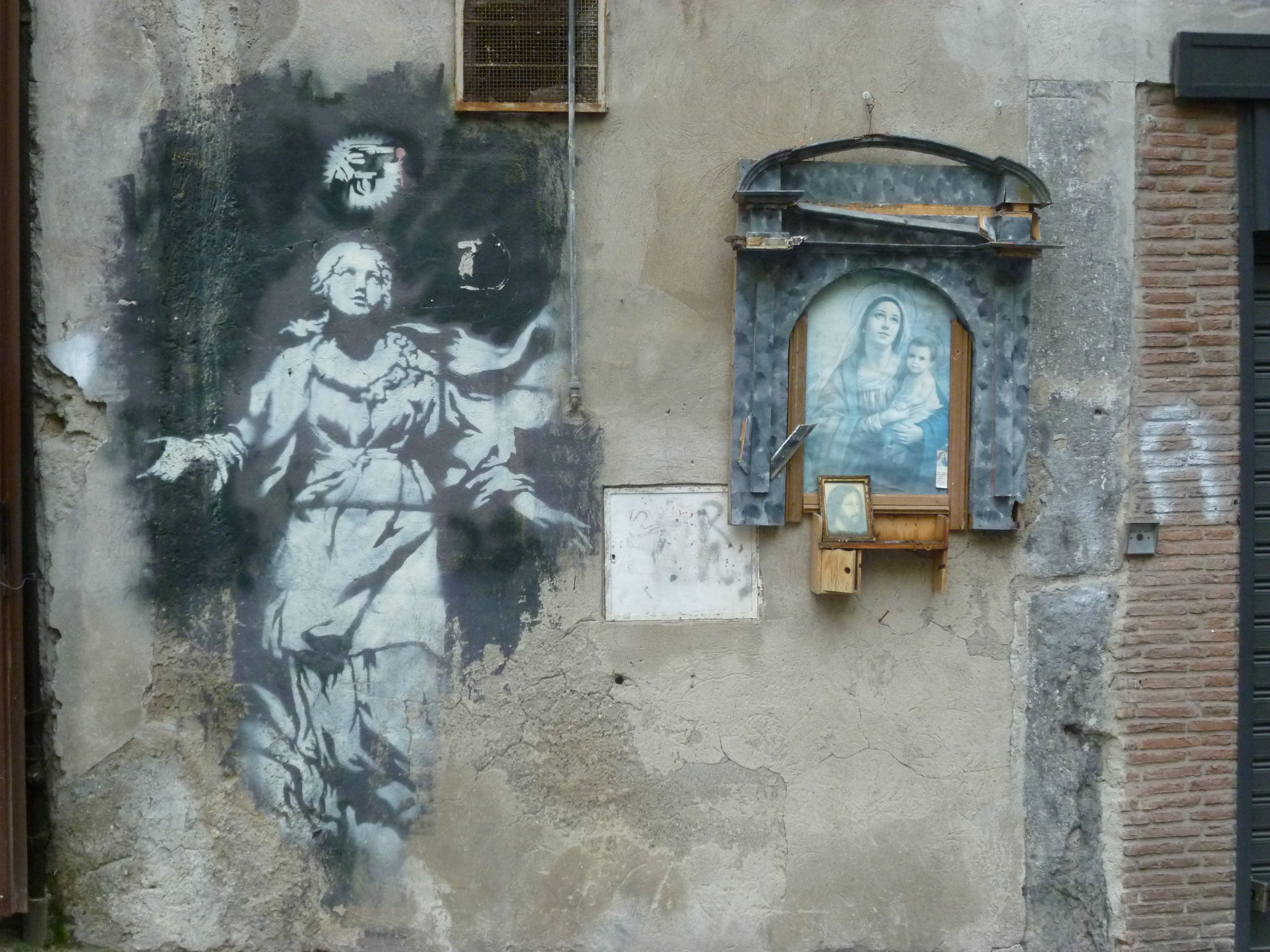
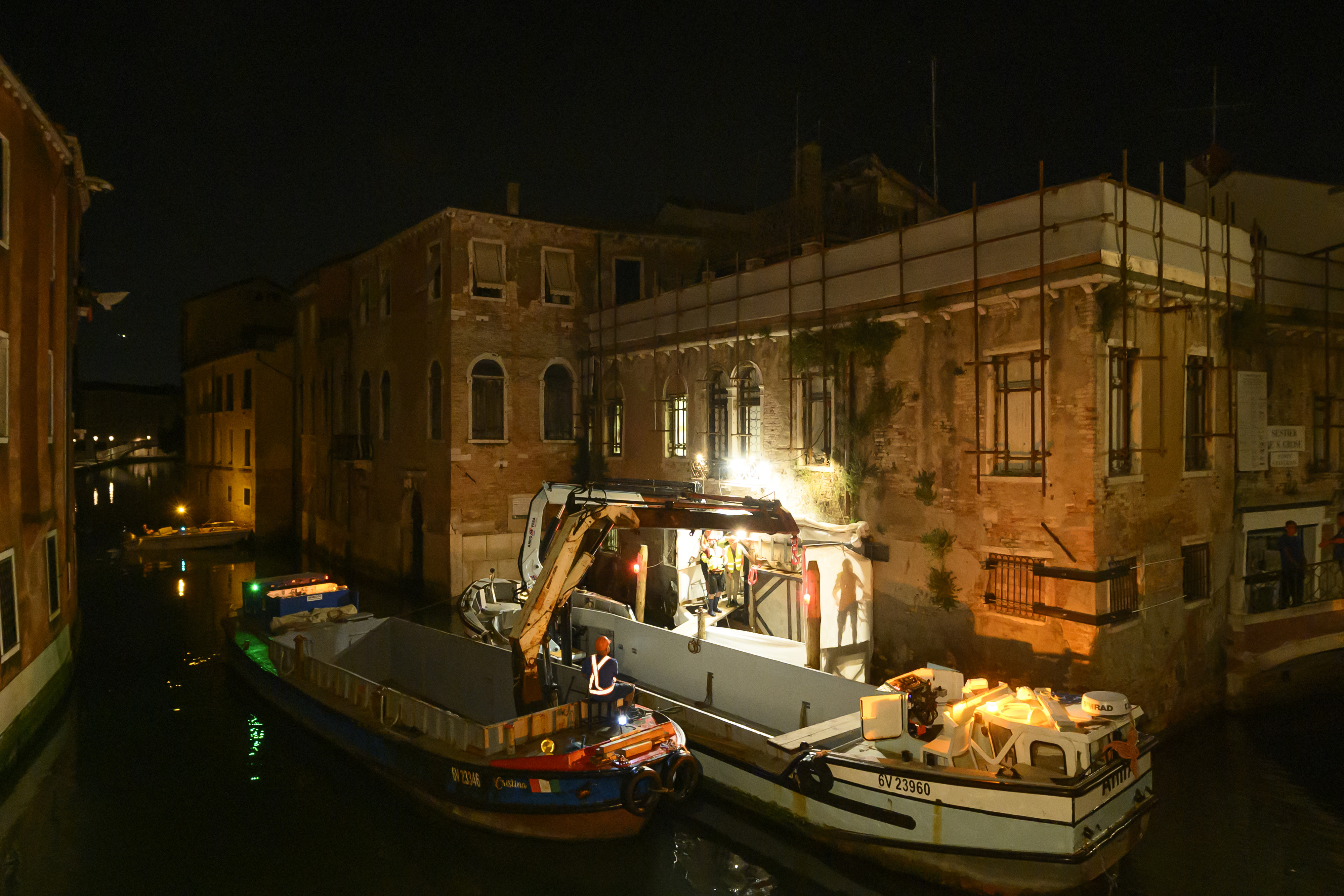
The first significant work is "The Migrant Child," which appeared in Venice on the night of May 8-9, 2019, and returned to public discourse in 2025 with a complex intervention for its preservation and restoration. Painted on the façade of Palazzo San Pantalon, "The Migrant Child" depicted a child with feet submerged in water, raising a fuchsia torch as if signaling for help. In a city built on water and transformed into a global art showcase, this figure created a poignant short-circuit: the sea as a theater of death. The subsequent deterioration of the artwork, leading to the loss of a substantial part of its original surface, ultimately deepened its meaning.
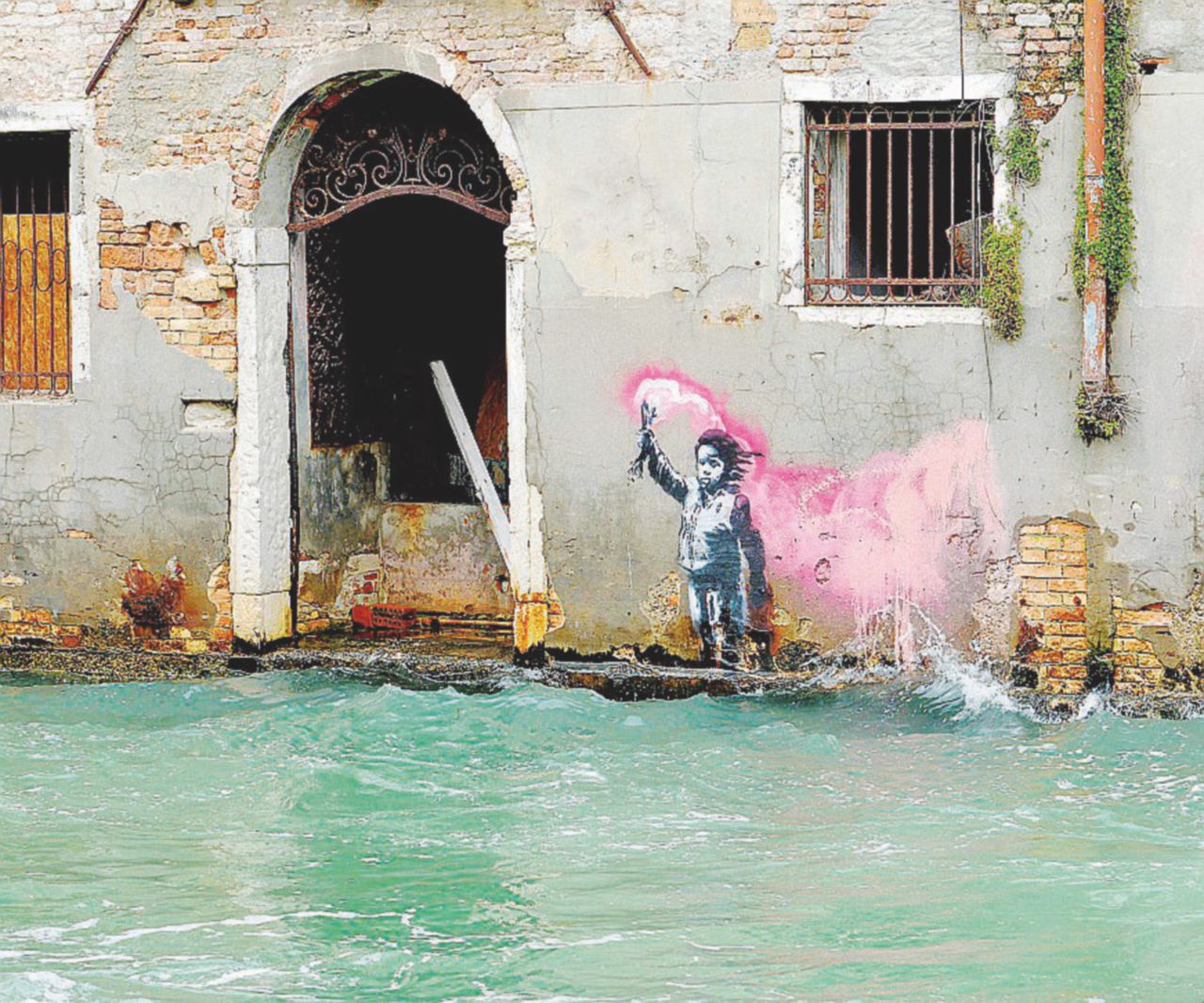
To salvage that mural—detaching it from the wall, transferring it to a laboratory, and integrating it into a conservation and regeneration project—means grappling not only with a Banksy icon but also with one of Europe's most powerful images addressing the migration tragedy. Inevitably, it also resonates powerfully today in the face of children and all those who continue to die under bombs.
George Floyd and the Burning Flag
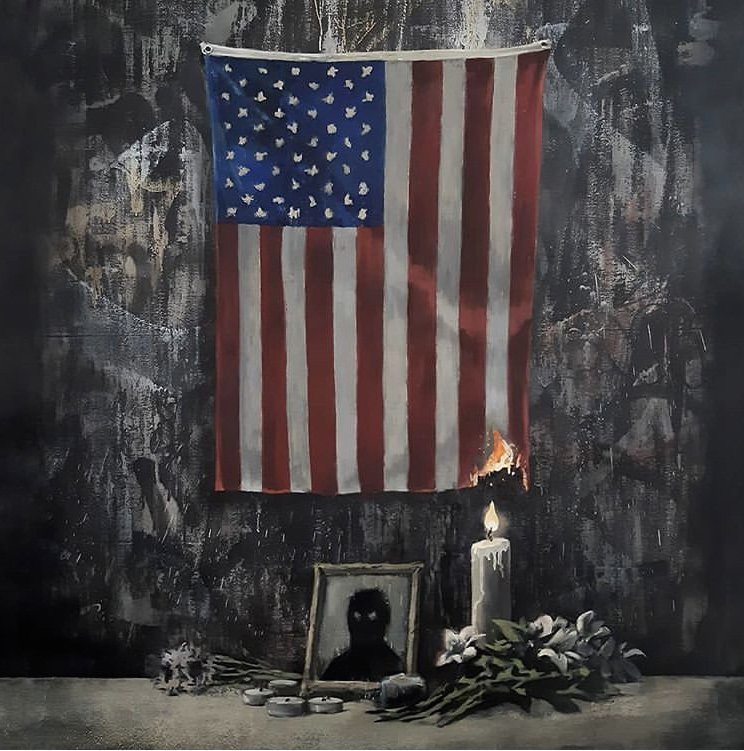
The second episode is the work dedicated to George Floyd in 2020, one of the rare instances where Banksy spoke out directly with a lengthy, unequivocal, almost programmatic text. The image itself was stark and somber: a framed photograph of a black silhouette, commemorative candles, and a flame transitioning from the vigil to ignite a corner of the American flag. Crucially, it was the accompanying written message where Banksy overturned the notion that systemic racism was "a Black problem," instead defining it as a white problem—a systemic flaw within white society.
Revisiting it today, in light of the radicalization of internal violence in the United States, ICE aggressions, widespread militarization, and the climate of latent civil war, that work takes on an almost prophetic tone. It might not be one of his most reproduced images, but it is arguably one of his most overtly political, precisely because it doesn't rely entirely on the ambiguity of allegory.
Seven Works in Ukraine
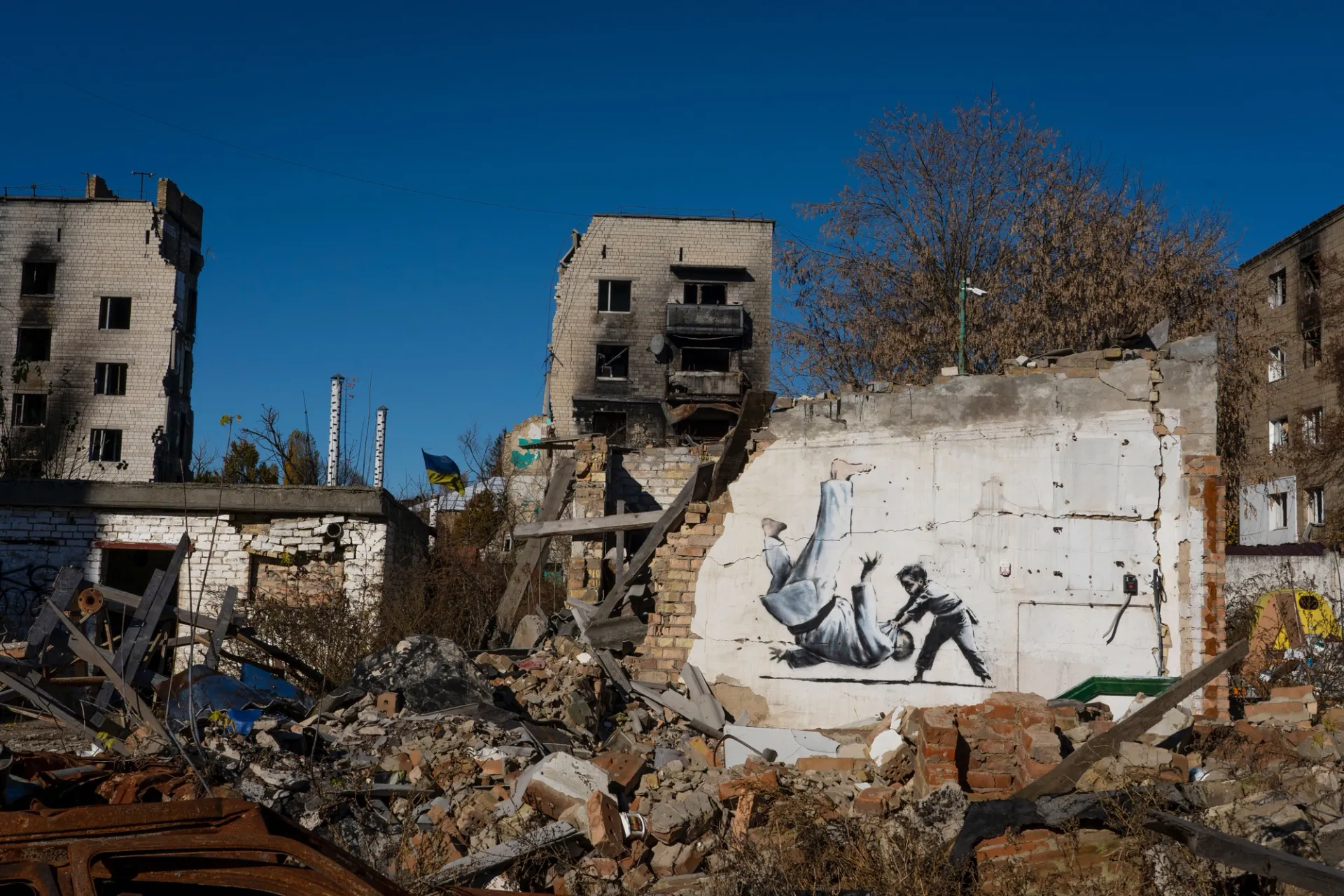
The third episode concerns Ukraine. In 2022, just months after the start of the full-scale Russian invasion, Banksy appeared in various locations across the Kyiv Oblast, from Borodyanka to Irpin, creating seven murals in areas scarred by bombardments. A gymnast balancing on a cracked wall, a dancer amidst rubble, a young boy judo-throwing a man resembling Putin: these were clear, immediate images, crafted with his usual symbolic precision.
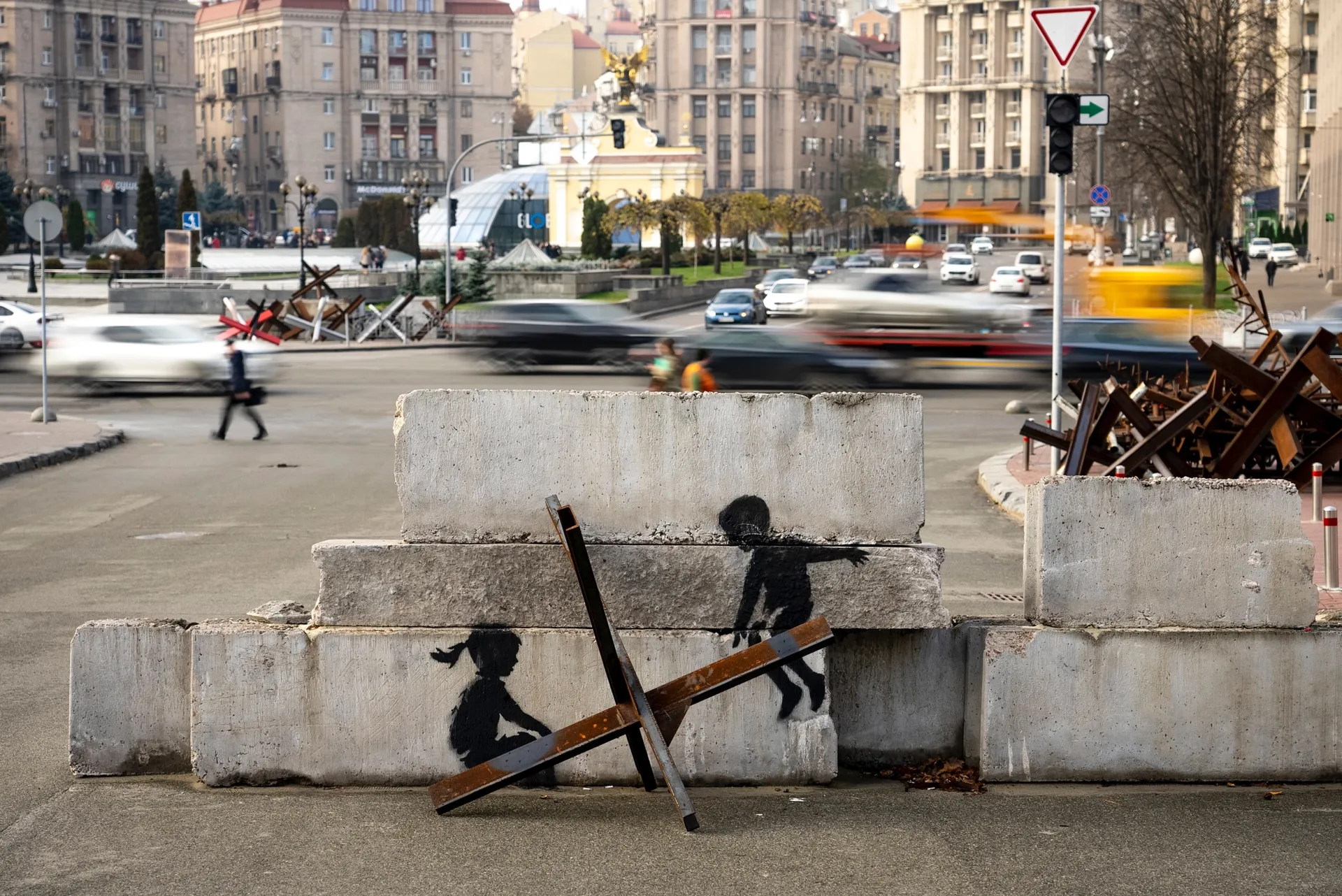
Their value, beyond their visual quality and conciseness, lay in the choice to intervene in an active war zone, working where images risk being overwhelmed by the reality they seek to represent. In this instance, Banksy reintroduced an age-old question: whether and how art can operate amidst destruction without aestheticizing it. He did so with his fastest and most fragile medium, the stencil, reaffirming that street art can, under certain circumstances, also serve as a form of testimony.
The Louise Michel, The Pink Ship
The fourth episode, from July 2024, once again concerns the Mediterranean. The rescue vessel Louise Michel, funded by Banksy since 2020, was again detained in Italy after rescuing several people at sea, including 17 unaccompanied minors. This incident intertwined with the appearance of a dinghy filled with migrant mannequins at Glastonbury during an Idles concert, an act that provoked outraged reactions from British conservative figures.
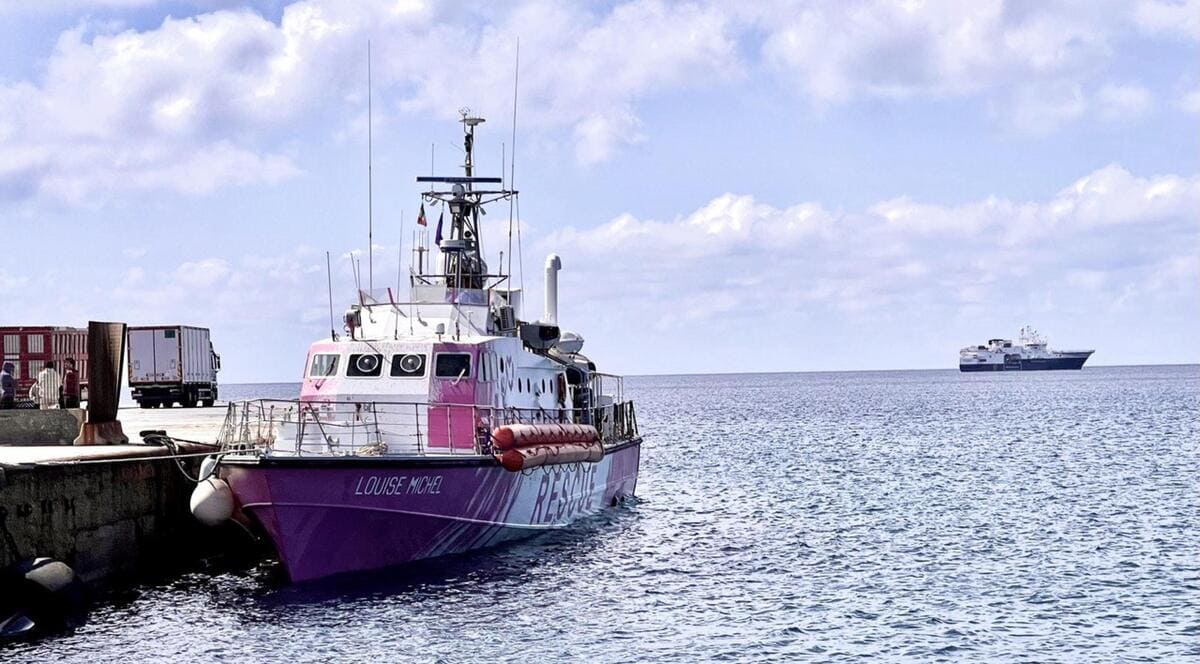
Banksy's response was sharp: "The real boat I fund saves lives and is punished for it." Here, the artist transcends the boundary of mere representation, intervening directly within the political and media infrastructure by tangibly supporting a humanitarian vessel and then using the spectacular platform of the festival to return the issue to public attention. This is a significant development, as it reveals a Banksy less concerned with the pure effectiveness of an image and more engaged in an activist practice, where the artwork, the public statement, and the material action all contribute to the same powerful stance.
A Day of Ordinary Justice in London
The fifth episode takes us to September 2025, when a mural appeared on the facade of the Queen’s Building at the Royal Courts of Justice in London. It depicted a judge striking down a demonstrator on the ground with a gavel, while blood stained the sign held in the protester's hand. The artwork, immediately interpreted as a response to the repression of pro-Palestinian protests and the arrest of hundreds of demonstrators, was covered within hours and slated for removal.
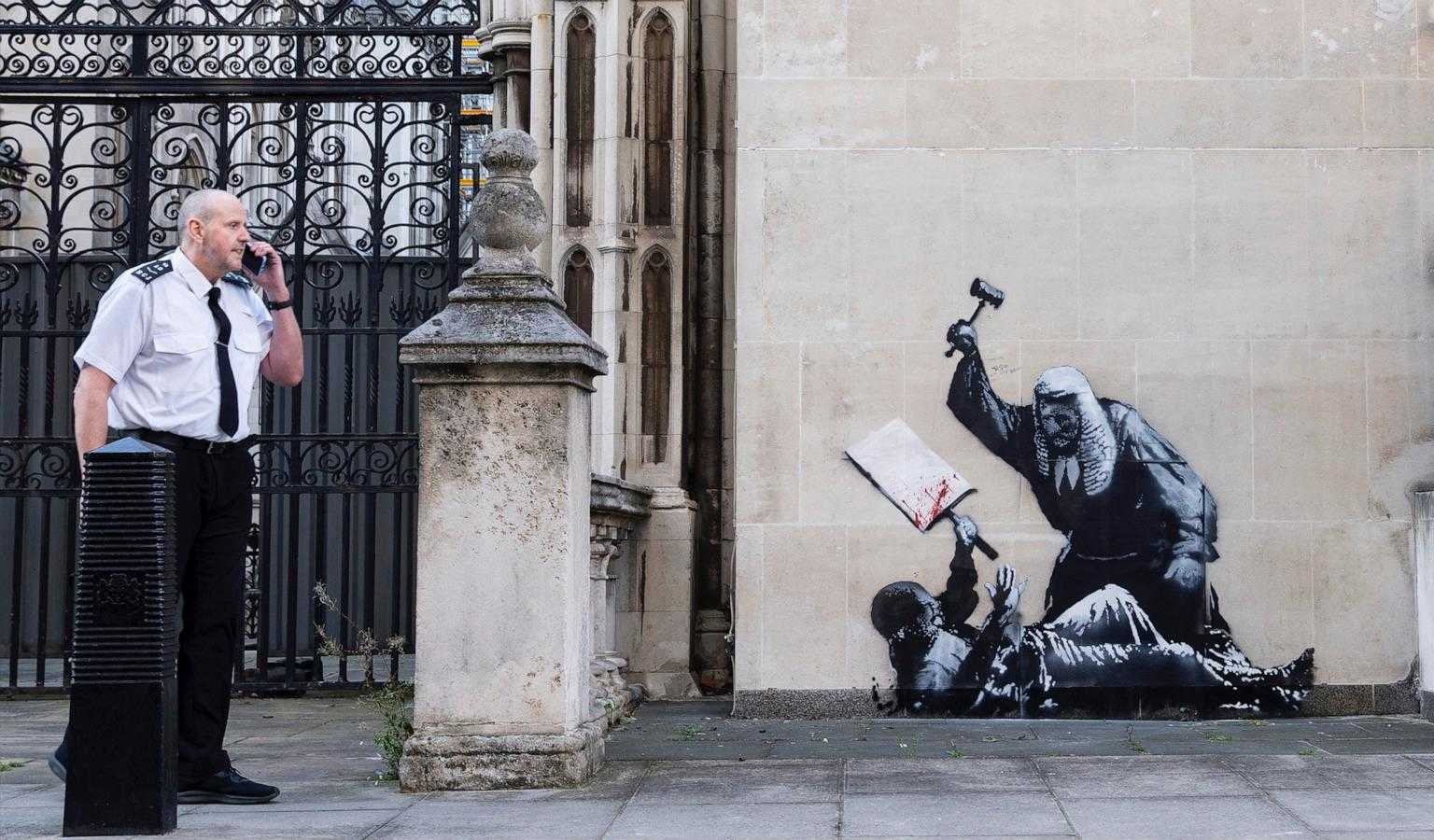
In that instance, the risk that Banksy's anonymity could be legally compelled became particularly evident. This is a crucial episode because it highlights the friction point between freedom of expression and the institutional apparatus. If the image's content challenged the violence of the law—when it becomes a tool for suppressing dissent—then the potential identification of the artist also entered the realm of the artwork, almost as an extension of its meaning through other means. If authority can both erase the mural and simultaneously attempt to name its creator, then the question of identity itself becomes part of the conflict.
Novedades — Society
La participación cultural: más allá de la mera asistencia, la necesidad de compartir el poder
```html La participación cultural: más allá de la mera asistencia, la necesidad de compartir el poder La participación se ha convertido en un término ubicuo, presente en convocatorias, proyectos europeos, programas culturales y planes de regeneración urbana. Se presenta como un
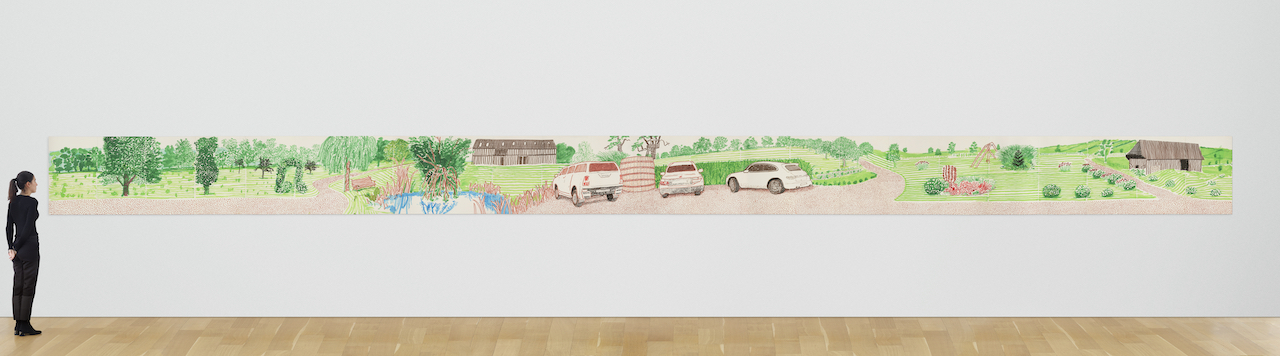
David Hockney's Monumental 12-Meter Print Heads to Christie's Auction
A truly unique lot is being offered by Christie's, available online from March 17 to 31, and on display at the major London galleries until March 31. This remarkable piece is one of David Hockney's largest creations, a staggering 12 meters long, printed on a single sheet of paper, and his most
El Greco Masterpiece Uncovered in Vatican: Hidden Under a Forgery
Art history is frequently punctuated by unexpected and serendipitous discoveries. Among these is the latest revelation from the Vatican Museums, where a routine conservation intervention has brought to light an authentic painting by El Greco, which had remained invisible for decades beneath a
Modena's Gate26A Hosts Aleksandr Nuss's Art: Where Matter Erodes and Light Reveals
Modena offers a serene escape from the vibrant chaos of nearby Bologna, presenting itself as an ordered and pristine city, a tranquil setting for everyday life. Within this calm environment, an independent space named Gate26A, founded by a collective of four individuals, injects a dynamic ener

Peggy Guggenheim's London Years: The Birth of a Collector in Venice Exhibition
Many are unaware of a crucial, often overlooked chapter in the life of Peggy Guggenheim, the visionary who transformed a palazzo on the Grand Canal into a bastion of modernism: her entrepreneurial venture with the Guggenheim Jeune gallery in London. The exhibition, Peggy Guggenheim in London: B
Selvatica 2026 in Biella: Art and Nature in Dialogue, Featuring Historical Authors and New Talents
The eleventh edition of Selvatica – Art and Nature in Festival, a biennial event held in Piazzo, Biella's historic district, has commenced and will run until July 19, 2026. The festival aims to foster a dialogue between artistic languages, scientific research, and educational practices to crea