Uruguay alla Biennale di Venezia 2026 con l'Arte Antifragile di Margaret Whyte
L'Uruguay sarà rappresentato alla 61ª Esposizione Internazionale d'Arte – La Biennale di Venezia del 2026 dall'artista Margaret Whyte. Il suo progetto, intitolato "ANTIFRAGIL", sarà curato da Patricia Bentancur, con Martin Craciun in qualità di commissario per l'Istituto Nazionale delle Arti Visive del Ministero dell'Istruzione e della Cultura dell'Uruguay.
Il titolo della mostra, "ANTIFRAGIL", trae ispirazione dal concetto di "antifragilità" elaborato dal saggista e matematico Nassim Nicholas Taleb. Questa espressione si riferisce a sistemi che non solo resistono agli shock e all'instabilità, ma che si rafforzano proprio attraverso il disordine. La pratica artistica di Whyte si allinea a questo principio: il suo lavoro nasce spesso da errori, tensioni e vulnerabilità, elementi che l'artista trasforma in opportunità formali e narrative. L'opera non mira a eliminare il caos, ma lo assume come parte integrante del processo creativo, convertendo l'incertezza in una forma di resistenza poetica e materiale.
"ANTIFRAGIL" si presenta come un'installazione costruita attraverso l'incontro di sistemi eterogenei. Tessuti e fibre convivono con oggetti tecnologici ormai obsoleti – come vecchi macchinari, caschi da motocicletta e frammenti di detriti – dando vita a una struttura in cui materiali e storie si contaminano. L'assemblaggio si sviluppa proprio grazie all'attrito tra le sue parti: componenti dissimili si incontrano, si trasformano e ridefiniscono reciprocamente la propria funzione all'interno dello spazio espositivo.
In questo processo, i materiali non sono trattati come elementi neutri. L'artista ne sottolinea la dimensione biografica e affettiva che li permea. "I materiali con cui lavoro sono carichi di storie di uso, affetto ed esaurimento. Quando entrano in dialogo con resti industriali e tecnologici, non illustrano la fragilità: rivelano un'altra forma di resistenza", afferma Whyte.
Per la curatrice, Patricia Bentancur, il progetto valorizza il gesto del tessere e dell'assemblare come pratiche intrinsecamente politiche. Intrecciare frammenti significa costruire relazioni, ma anche mettere in discussione narrazioni lineari e genealogie uniche. In quest'ottica, il Padiglione Uruguay utilizza l'installazione per riflettere su come prospettive critiche e geografie culturali alternative possano incidere sui repertori artistici e sulle modalità di produzione del sapere.
"La presenza di Margaret Whyte a Venezia conferma l'attualità duratura di una pratica sostenuta nel tempo, in cui la fragilità diventa linguaggio e l'esperienza diventa materia, proiettando dall'Uruguay una voce singolare sulla scena internazionale", ha dichiarato Maru Vidal, Direttrice Nazionale della Cultura del Ministero dell'Istruzione e della Cultura dell'Uruguay.
Con "ANTIFRAGIL", il Padiglione Uruguay propone una riflessione sulla trasformazione della fragilità in linguaggio e sull'idea che instabilità e frattura possano diventare strumenti per ripensare le relazioni tra materia e storia, errori e immaginazione artistica.
L'Artista
Nata e residente a Montevideo, Margaret Whyte ha sviluppato negli anni una pratica installativa che attraversa linguaggi e supporti diversi. Il suo lavoro affronta questioni sociali e di genere, mettendo spesso in discussione le gerarchie tradizionali tra artigianato e arte contemporanea. Attraverso installazioni site-specific costruite con residui e materiali provenienti dalla cultura ultra-capitalista, l'artista indaga la possibilità di creare spazi in cui forme di esistenza differenti possano coesistere. Attiva sulla scena internazionale, Whyte ha esposto in numerosi contesti tra Europa e America Latina ed è membro fondatore della Fundación de Arte Contemporáneo.
Uruguay at Venice Biennale 2026 with Margaret Whyte's Antifragile Art
Uruguay will be represented at the 61st International Art Exhibition – La Biennale di Venezia in 2026 by artist Margaret Whyte, with her project "ANTIFRAGIL." The exhibition is curated by Patricia Bentancur and commissioned by Martin Craciun, on behalf of Uruguay's National Institute of Visual Arts, part of the Ministry of Education and Culture.
The title of the exhibition, "ANTIFRAGIL," draws inspiration from Nassim Nicholas Taleb's concept of "antifragility," which describes systems that not only withstand shocks and instability but actually grow stronger through disorder. Whyte's artistic practice embodies this principle: her work often arises from errors, tensions, and vulnerabilities, elements that the artist transforms into formal and narrative possibilities. The artwork does not aim to eliminate chaos but embraces it as an active part of the creative process, converting uncertainty into a form of poetic and material resistance.
The "ANTIFRAGIL" installation takes shape as an assembly constructed through the encounter of diverse systems. Fabrics and fibers coexist with obsolete technological objects – such as old machinery, motorcycle helmets, and fragments of debris – giving rise to a structure where materials and histories intertwine. The assembly develops precisely through the friction between its parts: heterogeneous components meet, transform, and mutually redefine their function within the exhibition space.
In this process, materials are not treated as neutral elements. The artist emphasizes the biographical and emotional dimension that permeates them. "The materials I work with are charged with stories of use, affection, and exhaustion. When they engage in dialogue with industrial and technological remnants, they do not merely illustrate fragility; they reveal another form of resistance," states Whyte.
According to the curator, Patricia Bentancur, the project highlights weaving and assembling as inherently political practices. Intertwining fragments signifies building connections while also challenging linear narratives and singular genealogies. From this perspective, the Uruguay Pavilion uses the installation to reflect on how critical perspectives and alternative cultural geographies can influence artistic repertoires and the production of knowledge.
"Margaret Whyte's presence in Venice confirms the enduring relevance of a practice sustained over time, in which fragility becomes language and experience becomes material, projecting a singular voice from Uruguay onto the international stage," affirmed Maru Vidal, National Director of Culture for Uruguay's Ministry of Education and Culture.
With "ANTIFRAGIL," the Uruguay Pavilion thus proposes a reflection on the transformation of fragility into language and on the idea that instability and rupture can become tools for rethinking the relationships between matter and history, errors, and artistic imagination.
The Artist
Born and based in Montevideo, Margaret Whyte has developed a multidisciplinary installation practice over the years. Her work addresses social and gender issues, often questioning the traditional hierarchies between craftsmanship and contemporary art. Through site-specific installations built from residues and materials sourced from ultra-capitalist culture, the artist investigates the possibility of creating spaces where different forms of existence can coexist. Active on the international scene, Whyte has exhibited in numerous contexts across Europe and Latin America and is a founding member of the Fundación de Arte Contemporáneo.
Novedades — Society
La participación cultural: más allá de la mera asistencia, la necesidad de compartir el poder
```html La participación cultural: más allá de la mera asistencia, la necesidad de compartir el poder La participación se ha convertido en un término ubicuo, presente en convocatorias, proyectos europeos, programas culturales y planes de regeneración urbana. Se presenta como un
David Hockney's Monumental 12-Meter Print Heads to Christie's Auction
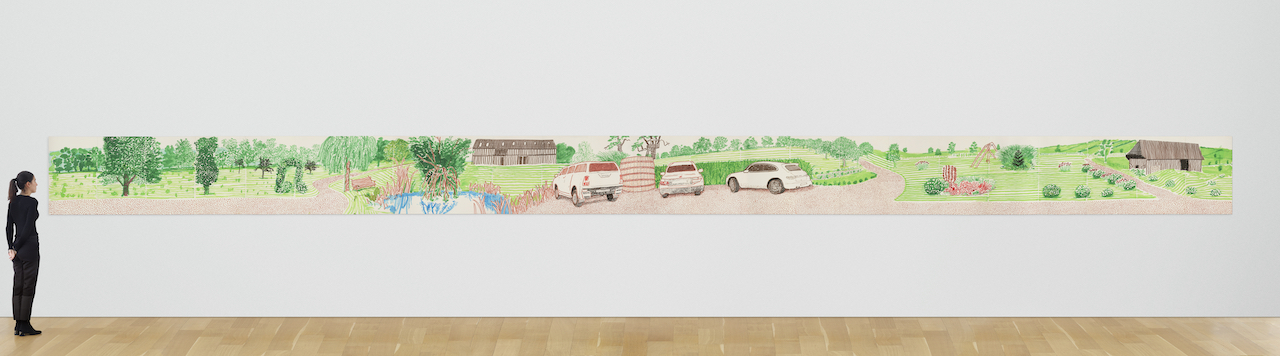
A truly unique lot is being offered by Christie's, available online from March 17 to 31, and on display at the major London galleries until March 31. This remarkable piece is one of David Hockney's largest creations, a staggering 12 meters long, printed on a single sheet of paper, and his most

El Greco Masterpiece Uncovered in Vatican: Hidden Under a Forgery
Art history is frequently punctuated by unexpected and serendipitous discoveries. Among these is the latest revelation from the Vatican Museums, where a routine conservation intervention has brought to light an authentic painting by El Greco, which had remained invisible for decades beneath a

Modena's Gate26A Hosts Aleksandr Nuss's Art: Where Matter Erodes and Light Reveals
Modena offers a serene escape from the vibrant chaos of nearby Bologna, presenting itself as an ordered and pristine city, a tranquil setting for everyday life. Within this calm environment, an independent space named Gate26A, founded by a collective of four individuals, injects a dynamic ener

Peggy Guggenheim's London Years: The Birth of a Collector in Venice Exhibition
Many are unaware of a crucial, often overlooked chapter in the life of Peggy Guggenheim, the visionary who transformed a palazzo on the Grand Canal into a bastion of modernism: her entrepreneurial venture with the Guggenheim Jeune gallery in London. The exhibition, Peggy Guggenheim in London: B
Selvatica 2026 in Biella: Art and Nature in Dialogue, Featuring Historical Authors and New Talents
The eleventh edition of Selvatica – Art and Nature in Festival, a biennial event held in Piazzo, Biella's historic district, has commenced and will run until July 19, 2026. The festival aims to foster a dialogue between artistic languages, scientific research, and educational practices to crea