“The Geometry of Grace”: Horst P. Horst's Architectural Precision and Timeless Glamour
The city currently hosting an exhibition dedicated to Horst P. Horst, Venice, holds a significant place in his personal history and artistic journey. His visit in 1947 resulted in a photographic series that, while retaining his characteristic style, also showcased a departure from his previous work. This particular collection is featured in the final room of "Le Stanze della Fotografia" exhibition, offering a compelling starting point to explore his illustrious career.
During his time in Venice, Horst captured the essence of the city's vibrant post-war era, creating portraits of aristocrats, artists, and celebrities who frequented the lagoon. Among the notable figures he photographed were Maria Callas, Jean Cocteau, and Marchesa Irene Strozzi. These images reveal a more documentary aspect of his photography; they are not merely meticulously composed icons but also serve as authentic records of the international elite's social environment in Venice. The architectures, settings, and portraits from this period already hint at many thematic and stylistic elements that would define his entire professional life, clearly visible throughout the exhibition.
Horst's exploration of high society portraiture, however, began much earlier, in the 1930s. With strong ties to European cultural circles, he established connections with leading figures in both fashion and art. In his portraits, the subject's gaze often becomes the central element of the image. Backgrounds are frequently minimalist, directing all attention to the face, as if the photograph aimed to unveil the subject's inner world.
A striking example is his portrait of Yves Saint Laurent, depicted leaning against a painting by Piet Mondrian – an artist who would later inspire one of the designer’s most famous collections. This photograph perfectly illustrates Horst’s guiding principle: a harmonious balance of lines, volumes, and light, where the geometric structure of the artwork dialogues seamlessly with the human presence and the photographer's distinctive approach.
His meticulous attention to form is a constant across all his creations, whether in architectural studies, fashion editorials, or still life compositions. Every photograph is characterized by a precise compositional structure, with elements fitting together with the exactitude of a finely engineered design. This isn't merely a decorative pursuit but rather a pursuit of harmonic vision, echoing the traditions of classical arts. For Horst, there was no real distinction between architectural photography and fashion photography; he consistently sought essential forms and balanced relationships. This philosophy is also evident in his "Patterns from Nature" series, where botanical details and organic shapes are examined as if they were intricate natural architectures.
The profound emotion conveyed in Horst’s images arises from the dynamic interplay between light, the human body, and space. These elements coalesce to produce an abstract beauty, where formal precision achieves an almost divine quality. This approach clearly demonstrates the influence of European modernism and the intellectual climate of the Bauhaus in the 1930s. The clean lines and organized spatial arrangements evoke the disciplined design principles that integrated art, architecture, and design. The human body frequently functions as the primary unit of measurement within his images, creating an ideal dialogue with the architectural vision of figures like Le Corbusier.
A pivotal moment in his career was his long-standing collaboration with Vogue, which played a crucial role in shaping a new visual language for fashion photography. His use of rigorous poses, carefully constructed environments, and masterful lighting to sculpt the body became foundational elements in contemporary fashion imagery.
However, the glamour emanating from Horst’s photographs is never purely ornamental. Instead, it is a meticulously constructed, almost architectural glamour, built upon the precise interplay of lines, volumes, and chiaroscuro. This unique fusion of rigor and grace ensures that his work remains exceptionally distinctive and impactful even today.
Novedades — Society
La participación cultural: más allá de la mera asistencia, la necesidad de compartir el poder
```html La participación cultural: más allá de la mera asistencia, la necesidad de compartir el poder La participación se ha convertido en un término ubicuo, presente en convocatorias, proyectos europeos, programas culturales y planes de regeneración urbana. Se presenta como un
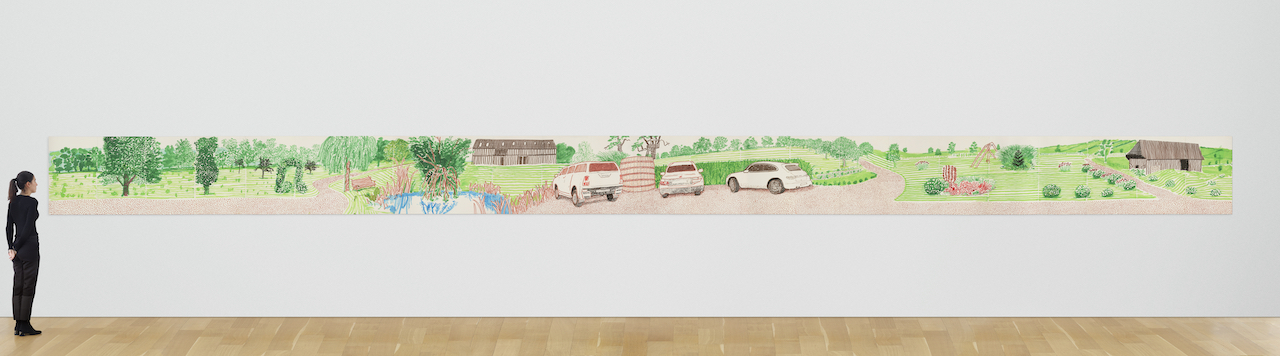
David Hockney's Monumental 12-Meter Print Heads to Christie's Auction
A truly unique lot is being offered by Christie's, available online from March 17 to 31, and on display at the major London galleries until March 31. This remarkable piece is one of David Hockney's largest creations, a staggering 12 meters long, printed on a single sheet of paper, and his most

El Greco Masterpiece Uncovered in Vatican: Hidden Under a Forgery
Art history is frequently punctuated by unexpected and serendipitous discoveries. Among these is the latest revelation from the Vatican Museums, where a routine conservation intervention has brought to light an authentic painting by El Greco, which had remained invisible for decades beneath a

Modena's Gate26A Hosts Aleksandr Nuss's Art: Where Matter Erodes and Light Reveals
Modena offers a serene escape from the vibrant chaos of nearby Bologna, presenting itself as an ordered and pristine city, a tranquil setting for everyday life. Within this calm environment, an independent space named Gate26A, founded by a collective of four individuals, injects a dynamic ener

Peggy Guggenheim's London Years: The Birth of a Collector in Venice Exhibition
Many are unaware of a crucial, often overlooked chapter in the life of Peggy Guggenheim, the visionary who transformed a palazzo on the Grand Canal into a bastion of modernism: her entrepreneurial venture with the Guggenheim Jeune gallery in London. The exhibition, Peggy Guggenheim in London: B
Selvatica 2026 in Biella: Art and Nature in Dialogue, Featuring Historical Authors and New Talents
The eleventh edition of Selvatica – Art and Nature in Festival, a biennial event held in Piazzo, Biella's historic district, has commenced and will run until July 19, 2026. The festival aims to foster a dialogue between artistic languages, scientific research, and educational practices to crea