Sodoma: A Traveling Painter from Spanzotti's Workshop to 16th Century Rome
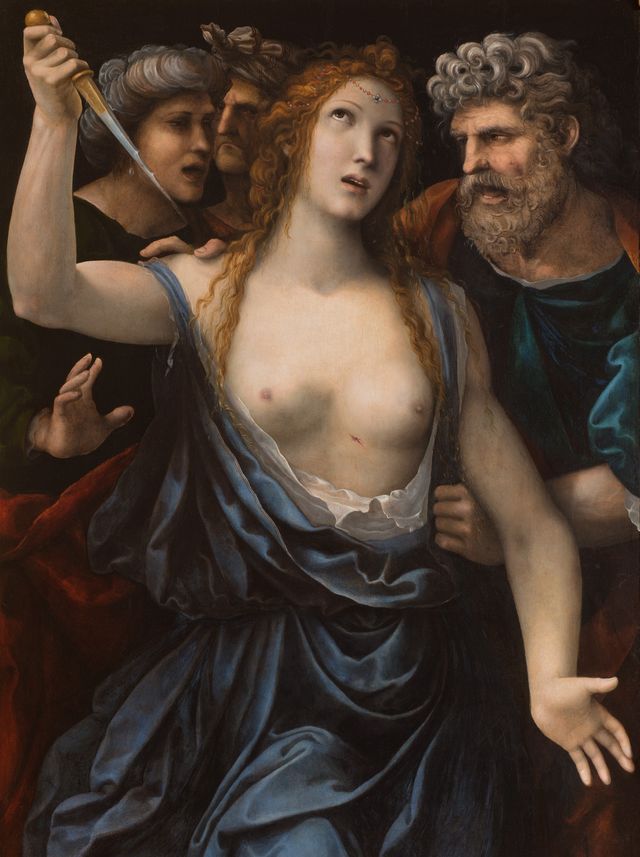
Curated by Serena D’Italia, Luca Mana, and Vittorio Natale, with a scientific committee comprising Roberto Bartalini, Francesco Frangi, and Edoardo Villata, the exhibition Giovanni Antonio Bazzi called Sodoma: Conquering the Renaissance offers a fresh retrospective on the painter's formative years, travels, and later works. Following the exhibition Private Renaissance. From Spanzotti to Defendente Ferrari in Piedmontese Collections (2022-2023), the curators were inspired to present a new in-depth look at the life of Giovanni Antonio Bazzi, known as Sodoma (Vercelli, 1477 – Siena, 1549). This comes nearly seventy years after the last major retrospective in Vercelli and Siena. For this occasion, new research focusing on the artist's first twenty years of artistic training, from his beginnings in his native Vercelli to his Roman success, has been undertaken.
The exhibition opens with Ecce Homo (Christ Mocked) from 1510. This painting depicts a suffering yet strong Christ, humbled but dignified, shielding himself with his bound arms and gazing at the crowd with courage. His face is marked by pain, and his eyes look beyond the visible frame. Sodoma's Ecce Homo is a mature work, placed at the midpoint of his career. The exhibition, inaugurated just before Easter, contextualizes the work appropriately, evoking the biblical narrative.
The exhibition continues with a significant original document from the late 15th century: Giovanni Antonio Bazzi's apprenticeship contract, signed in Spanzotti's workshop, located between Casale Monferrato and Vercelli. This document has allowed researchers to clarify crucial stages and movements in the artist's career since his debut in the Spanzotti studio.
Sodoma was a curious painter who adeptly absorbed the techniques and experiences of the masters he encountered, reinterpreting them independently and originally. His works demonstrate a remarkable ability to observe reality, an interest in portraiture, and a fascination with depicting animals, ranging from their ordinary forms to fantastical medieval grotesques.
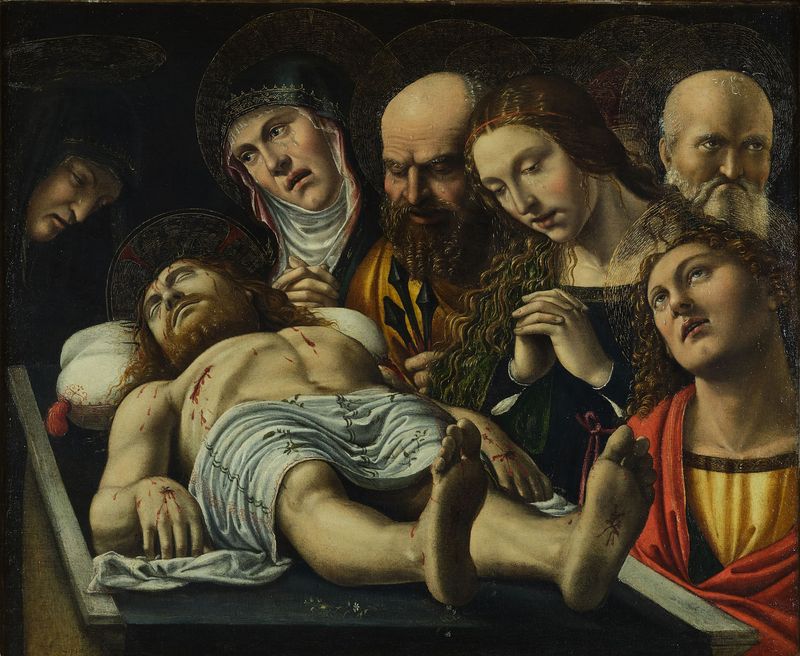
In 1496, shortly before his arrival in Rome, Sodoma created an important work now housed in a private Piedmontese collection. The Holy Family with Saint John the Baptist and an Angel (c. 1495-1496) is exhibited publicly for the first time, having previously remained in private ownership. The painting features a dark background, high contrasts, and finely detailed drapery folds. The figures have defined contours, yet an elegant and sacred aura pervades the composition. Another noteworthy work is Lamentation over the Dead Christ (c. 1500), which clearly shows the influence of Milanese Leonardesque culture and draws evident inspiration from Andrea Mantegna's celebrated Dead Christ (1431–1506).
The exhibition thus presents a journey through the Renaissance and early Mannerist sensibilities, featuring previously unseen works from private collections alongside religious scenes by Italian masters. Sodoma's life story is marked by his travels and his eventual decision to settle in Rome. The final room showcases masterpieces from Sodoma's mature period, extending beyond his initial twenty years and demonstrating the culmination of his artistic development.
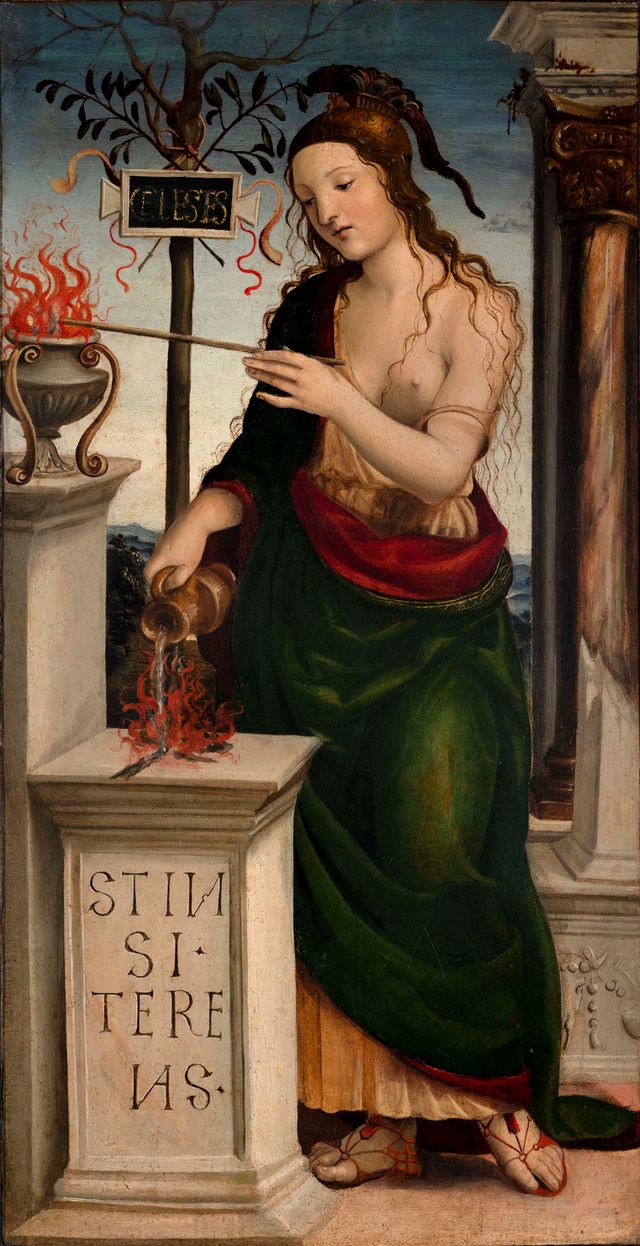
Among the most significant works of his artistic maturity is Allegory of Celestial Love (1503-1504), from the Chigi Saracini Collection in Siena, a true masterpiece. In this painting, spiritual love is personified by a beautiful and delicate female figure in ancient attire, with sandals and a helmet. Her body is partially revealed, exuding a soft sensuality, while her gaze is directed downwards, intent on extinguishing the fire of earthly passion with water from a pitcher. Behind her, an olive tree symbolizes the virtues of strength, rebirth, and wisdom, with a clear cartouche indicating the celestial path.
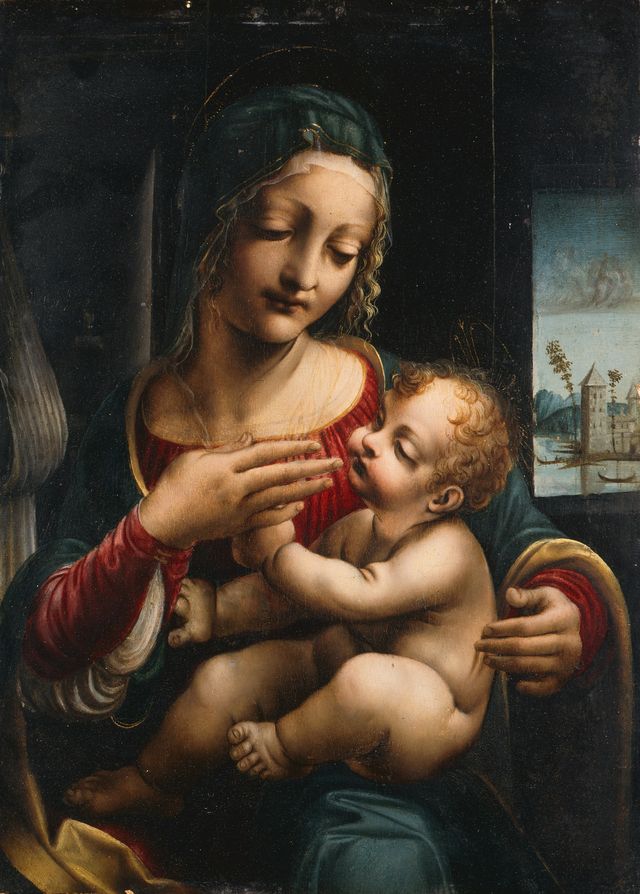
Sodoma's works are displayed in dialogue with those of his contemporaries, from whom he drew inspiration and instruction. These include artists such as Aimo and Balzarino Volpi, Giovanni Martino Spanzotti, the Maestro della Cappella di Santa Margherita a Crea (likely Francesco Spanzotti), Alvise Ludovico De Donati, Eleazaro Oldoni, Defendente Ferrari, Bernardo Zenale, Francesco Galli (known as Francesco Napolitano), Giovanni Antonio Boltraffio, Macrino d’Alba, Gaudenzio Ferrari, Eusebio Ferrari, Gerolamo Giovenone, and Bernardino di Betto (known as Pinturicchio). A focus is also dedicated to Pinturicchio, featuring a fragment of a 1492 mural depicting a marvelous Infant Jesus. This segment dedicated to Pinturicchio unveils a story filled with mystery and secrets, connected to Pope Alexander VI Borgia.
The artworks in the exhibition are loaned from various institutions, including the Accademia Carrara of Bergamo; the Civic Museum and Gipsoteca Bistolfi of Casale Monferrato (AL); the Pinacoteca di Brera of Milan; the Musée Jacquemart-André of Paris; the Civic Museums of Pavia; the Guglielmo Giordano Foundation of Perugia; the Archconfraternity of Santa Maria dell’Orto, the Borghese Gallery, the Vatican Museums, and the Capitoline Museums of Rome; the Chigi Saracini Collection, Banca Monte dei Paschi di Siena, and the National Art Gallery of Siena; the Parish of the Holy Spirit of Sommariva Perno (CN); the Royal Library, the Sabauda Gallery, the Royal Museums, Palazzo Madama, and the Albertina Academy Gallery of Turin; the Palazzo dei Musei – Pinacoteca of Varallo; and the Municipal Historical Archive and the Francesco Borgogna Museum of Vercelli.
This exhibition is merely the beginning of a journey to discover Sodoma's works. The itinerary, starting from Piedmont, invites the public to trace the artist's paintings and frescoes from his region of origin to Tuscany and Lazio. A specially produced video illustrates the fresco cycles at San Francesco in Subiaco, Sant’Anna in Camprena, and the cloister of Monteoliveto—fundamental works for understanding the artist. Sodoma, therefore, remains a painter in motion, inviting us to follow his artistic itinerary in search of his most significant representations.
Novedades — Society
La participación cultural: más allá de la mera asistencia, la necesidad de compartir el poder
```html La participación cultural: más allá de la mera asistencia, la necesidad de compartir el poder La participación se ha convertido en un término ubicuo, presente en convocatorias, proyectos europeos, programas culturales y planes de regeneración urbana. Se presenta como un
David Hockney's Monumental 12-Meter Print Heads to Christie's Auction
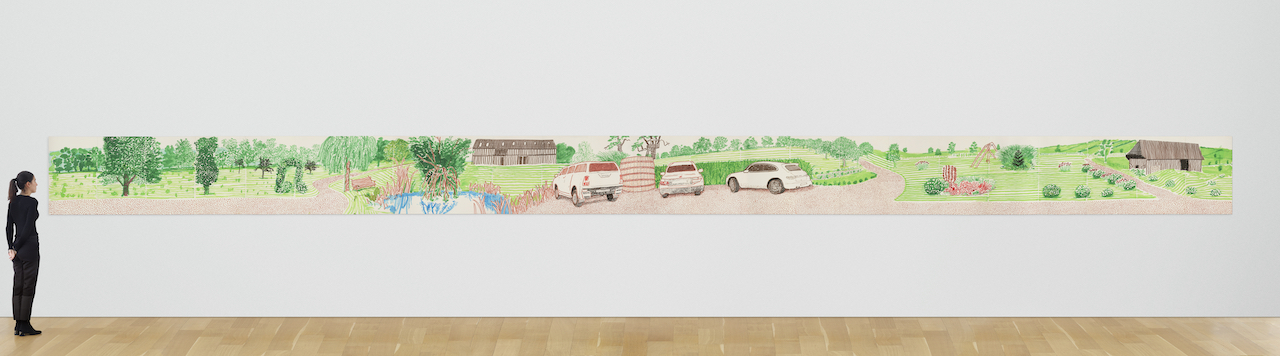
A truly unique lot is being offered by Christie's, available online from March 17 to 31, and on display at the major London galleries until March 31. This remarkable piece is one of David Hockney's largest creations, a staggering 12 meters long, printed on a single sheet of paper, and his most

El Greco Masterpiece Uncovered in Vatican: Hidden Under a Forgery
Art history is frequently punctuated by unexpected and serendipitous discoveries. Among these is the latest revelation from the Vatican Museums, where a routine conservation intervention has brought to light an authentic painting by El Greco, which had remained invisible for decades beneath a

Modena's Gate26A Hosts Aleksandr Nuss's Art: Where Matter Erodes and Light Reveals
Modena offers a serene escape from the vibrant chaos of nearby Bologna, presenting itself as an ordered and pristine city, a tranquil setting for everyday life. Within this calm environment, an independent space named Gate26A, founded by a collective of four individuals, injects a dynamic ener

Peggy Guggenheim's London Years: The Birth of a Collector in Venice Exhibition
Many are unaware of a crucial, often overlooked chapter in the life of Peggy Guggenheim, the visionary who transformed a palazzo on the Grand Canal into a bastion of modernism: her entrepreneurial venture with the Guggenheim Jeune gallery in London. The exhibition, Peggy Guggenheim in London: B
Selvatica 2026 in Biella: Art and Nature in Dialogue, Featuring Historical Authors and New Talents
The eleventh edition of Selvatica – Art and Nature in Festival, a biennial event held in Piazzo, Biella's historic district, has commenced and will run until July 19, 2026. The festival aims to foster a dialogue between artistic languages, scientific research, and educational practices to crea