Romero Paprocki Gallery Opens in Milan
Milan has re-emerged as a focal point for international galleries, partly due to a favorable 5% VAT rate. Following significant arrivals like Thaddaeus Ropac and French Place, and anticipating fairs such as Paris Internationale, the city's art scene is further enriched by Galerie Romero Paprocki. Since March 12, the gallery has unveiled a new space on Via Lazzaro Palazzi, nestled in the historic Porta Venezia district, renowned for its bourgeois palaces and charming courtyards. The approximately 320-square-meter venue, featuring five street-facing windows and exposed red bricks, cultivates an ambiance reminiscent more of Paris or London than traditional Milan.
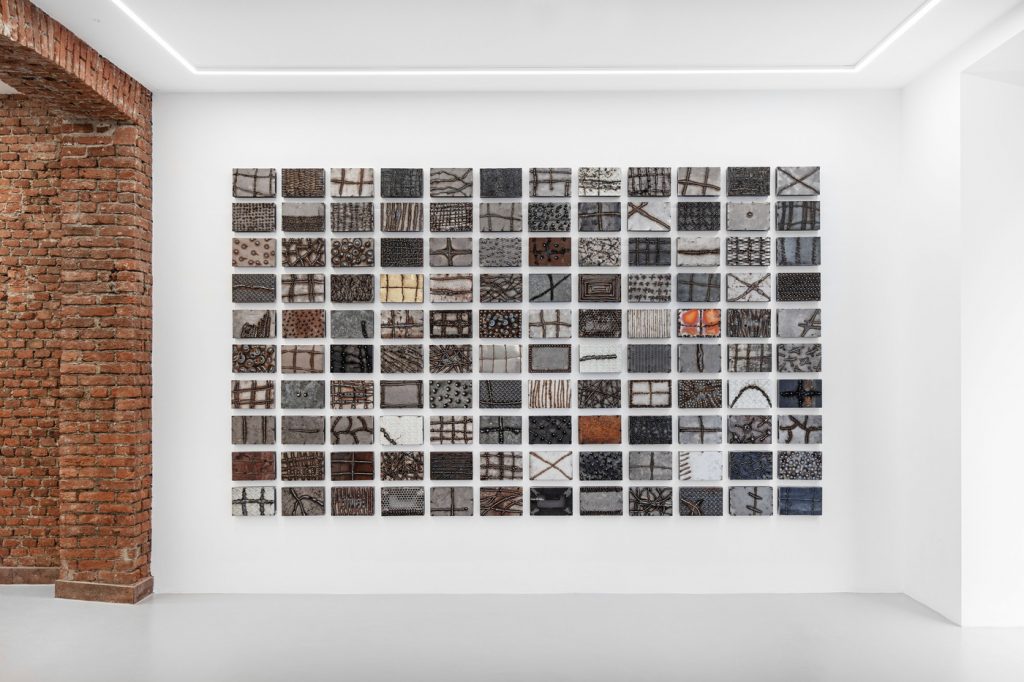
Founded in Paris in 2020 by Guido Romero Pierini and Tristan Paprocki, the gallery initially functioned as an itinerant exhibition platform. By 2022, it established its permanent home in the Marais district, on rue Saint-Claude, swiftly gaining recognition for its program dedicated to early-to-mid-career artists, frequently commissioned to produce unique and site-specific works.
The Milan opening marks the gallery's first venture outside France and coincides with a significant internal reorganization: Rossella Traverso joins as a partner, while Carolin Mittermair, previously with Viasaterna, assumes leadership. This new location explicitly solidifies a dialogue with the Lombard capital, a relationship already fostered through participations in art fairs such as Artissima, miart, and Artefiera Bologna, thereby promoting a continuous exchange between the two vibrant art scenes.
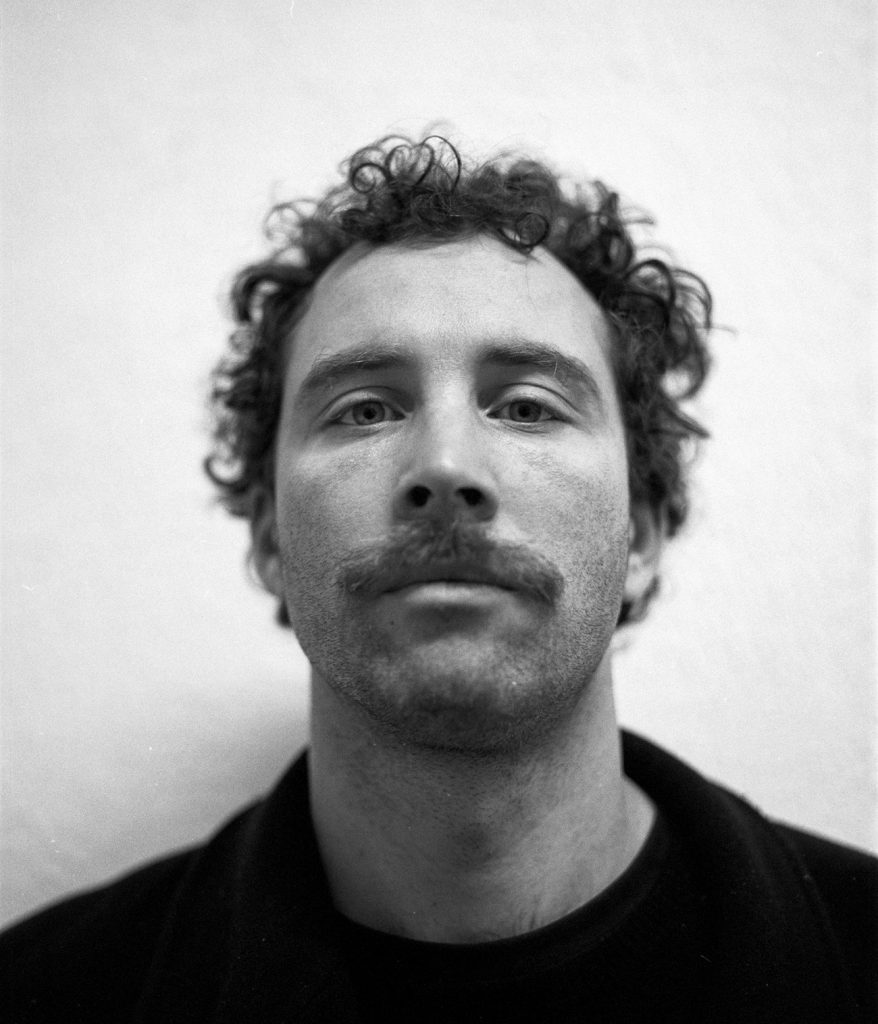
To inaugurate its space, the gallery is presenting the first solo exhibition in Italy by Matisse Mesnil (born Castiglion Fiorentino, 1989), an artist who perfectly embodies this fusion of cultural geographies. Having grown up between Tuscany and Umbria, Mesnil divides his practice between France and Italy and maintains a studio at POUSH, the renowned Parisian complex dedicated to studios for emerging generations. The artist, however, prefers to develop his works in situ, creating them directly in the spaces where they will be exhibited, a practice he followed for this occasion as well.
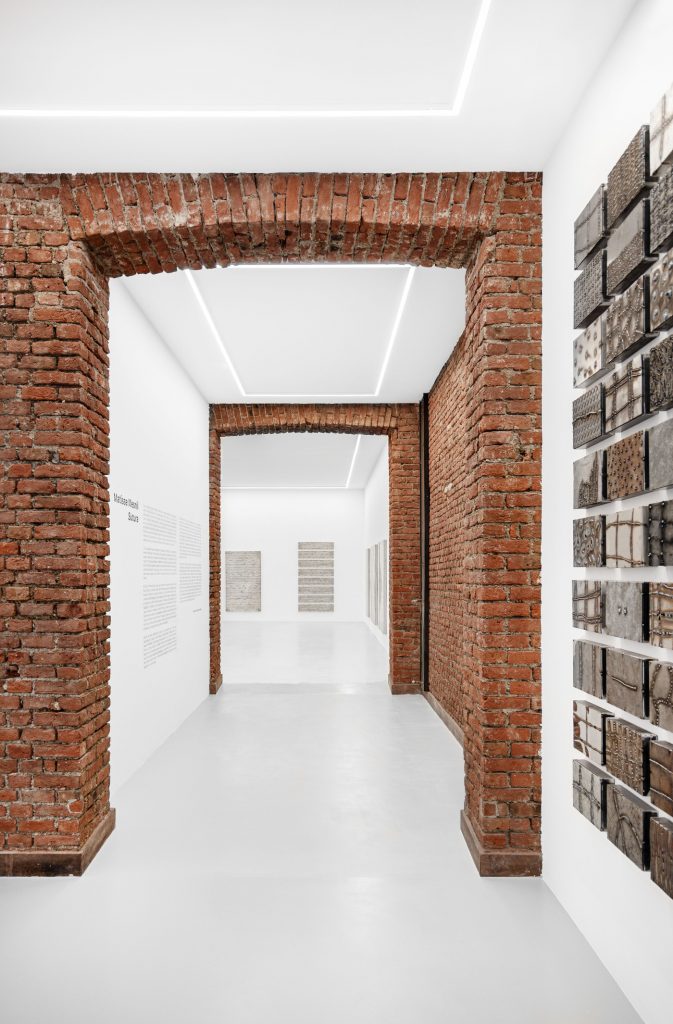
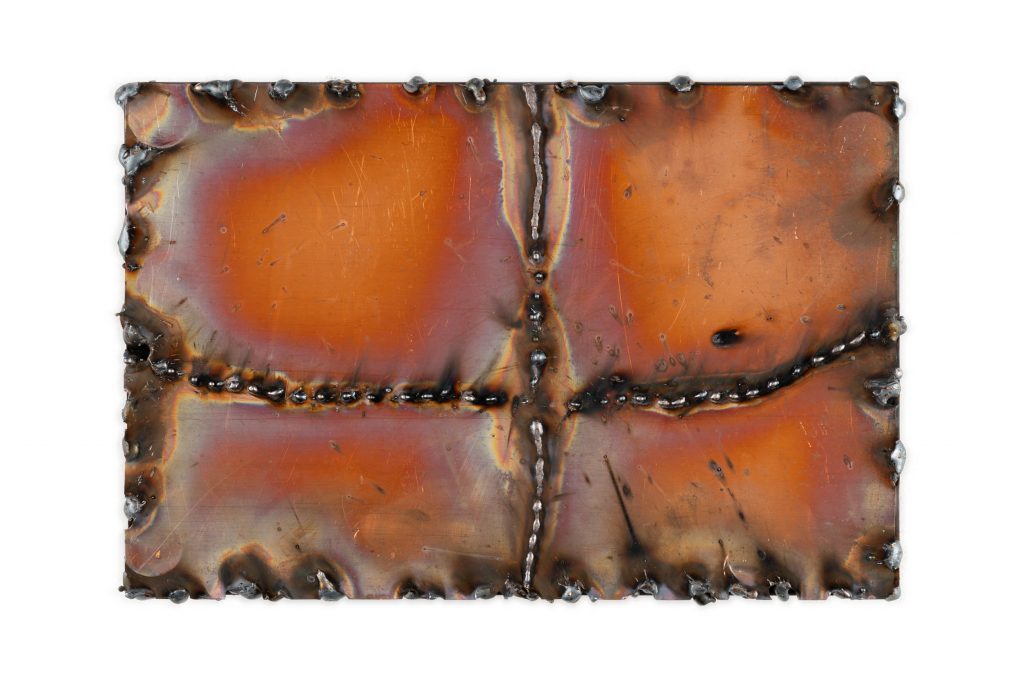
Mesnil, highly skilled in metalwork, reveals he turned to this material out of a certain dissatisfaction with painting. Through welding and etching, executed with almost ascetic discipline, the metal surface – sourced from various locations each time – transforms into a fabric of iridescent lines. The exhibition, titled Sutura, curated by Milovan Farronato and Chiara Spagnol and on view until May 9, features large-format pieces, works on paper, and a wall presented as a visual diary composed of small, richly detailed elements. An evocative sound installation is also included, recalling the loudspeakers from "Unità" festivals in the "red" rural areas between Tuscany and Umbria. Here, a greater emphasis on color, form, and a more liberated, experimental dimension emerges, almost an attempt to reintroduce warmth and chromatic variety beyond the dominant monochrome.
For his creations, Mesnil primarily utilizes TIG (Tungsten Inert Gas) and MIG (Metal Inert Gas) techniques, both based on electric arc welding, yielding distinct results: TIG allows for more controlled interventions and subtle lines, whereas MIG produces more fluid and textured beads.
His works reveal the legacy of Italian art from the 1960s and 70s, particularly Arte Povera, with echoes of masters like Jannis Kounellis (1936–2017) and Mario Merz (1925–2003), who brought sculpture back to engage with primary materials, essential structures, and the very concept of dwelling. Intriguingly, Mesnil worked for years unaware that he was near the studio of an artist he considered one of his ideal references. He discovered this only after the artist's death, a coincidence he recounts with irony, noting that its unconscious nature preserved the freedom of his creative process. The exhibition's centerpiece is L'Abri, a "livable" structure that serves as a personal interpretation of Swiss designer Willy Guhl's Niche à chien (Dog Niche, 1960), originally crafted from a single folded industrial fiber-cement element.
Mesnil reinterprets Guhl's solution, scaling it up to the human body and transforming the kennel into a piece that blurs the lines between sculpture and architecture. Inside, a bed of pointed, modular elements echoes the principle of "hostile architecture," urban devices designed to deter loitering or spontaneous use of public space. Another significant part of the exhibition features monotypes, a printing technique that yields unique, unrepeatable images. Mesnil works on a plate and transfers the mark onto paper using pressure. This process, built upon successive layers, creates visual fields traversed by horizontal lines and luminous vibrations, reminiscent of horizons, country nights, or sea surfaces. All these works also share a consistent vertical dimension of 170 centimeters, designed to almost immerse the viewer within them.
From this perspective, the "suture" alluded to in the exhibition's title becomes a metaphor for thresholds – that meeting point where inner and outer landscapes, architecture, and the body enter into profound relation. This line of inquiry is something Mesnil is progressively extending outdoors through his land art interventions.
Novedades — Society
La participación cultural: más allá de la mera asistencia, la necesidad de compartir el poder
```html La participación cultural: más allá de la mera asistencia, la necesidad de compartir el poder La participación se ha convertido en un término ubicuo, presente en convocatorias, proyectos europeos, programas culturales y planes de regeneración urbana. Se presenta como un
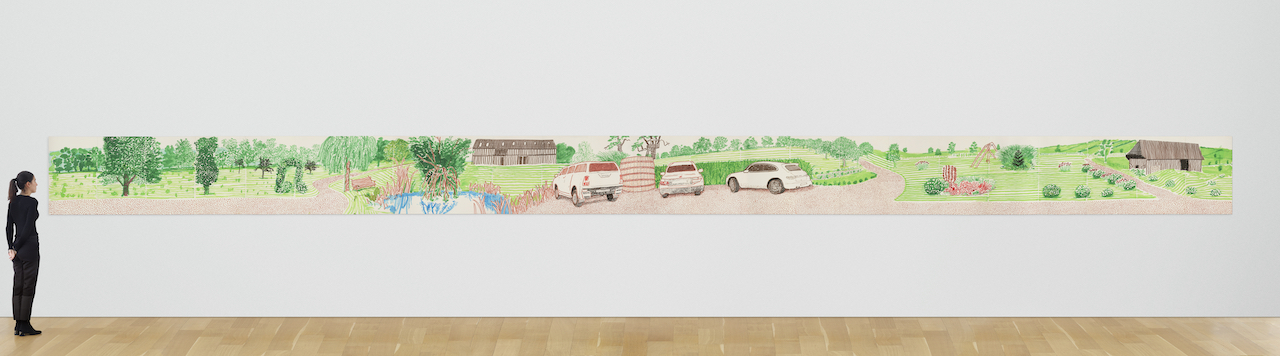
David Hockney's Monumental 12-Meter Print Heads to Christie's Auction
A truly unique lot is being offered by Christie's, available online from March 17 to 31, and on display at the major London galleries until March 31. This remarkable piece is one of David Hockney's largest creations, a staggering 12 meters long, printed on a single sheet of paper, and his most
El Greco Masterpiece Uncovered in Vatican: Hidden Under a Forgery
Art history is frequently punctuated by unexpected and serendipitous discoveries. Among these is the latest revelation from the Vatican Museums, where a routine conservation intervention has brought to light an authentic painting by El Greco, which had remained invisible for decades beneath a

Modena's Gate26A Hosts Aleksandr Nuss's Art: Where Matter Erodes and Light Reveals
Modena offers a serene escape from the vibrant chaos of nearby Bologna, presenting itself as an ordered and pristine city, a tranquil setting for everyday life. Within this calm environment, an independent space named Gate26A, founded by a collective of four individuals, injects a dynamic ener

Peggy Guggenheim's London Years: The Birth of a Collector in Venice Exhibition
Many are unaware of a crucial, often overlooked chapter in the life of Peggy Guggenheim, the visionary who transformed a palazzo on the Grand Canal into a bastion of modernism: her entrepreneurial venture with the Guggenheim Jeune gallery in London. The exhibition, Peggy Guggenheim in London: B
Selvatica 2026 in Biella: Art and Nature in Dialogue, Featuring Historical Authors and New Talents
The eleventh edition of Selvatica – Art and Nature in Festival, a biennial event held in Piazzo, Biella's historic district, has commenced and will run until July 19, 2026. The festival aims to foster a dialogue between artistic languages, scientific research, and educational practices to crea