Drawing the Crime Scene: An Interview with Salvatore Garzillo
Until March 28th, the Patricia Armocida Gallery in Milan is hosting "Human Cartographies – Notes from a Chronicler," a new solo exhibition by Salvatore Garzillo. The exhibition features approximately 50 small and medium-sized drawings created with ink and mixed media on paper.
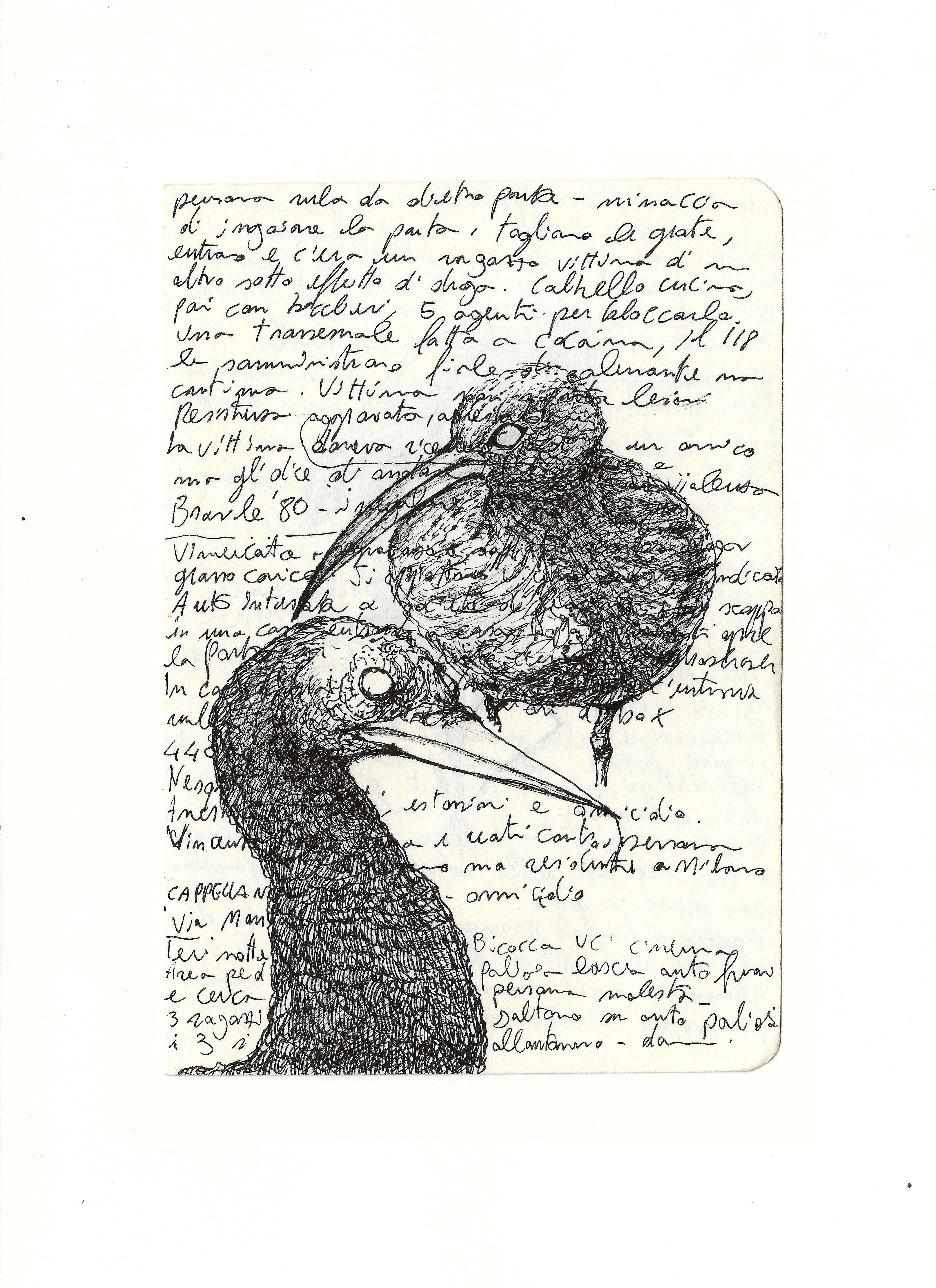
Salvatore Garzillo, who signs his work as Salgar, habitually carries two pens and draws everywhere, even on receipts. His most compelling drawings are found in the notebook he takes with him to police stations, crime scenes, and courtrooms, often sketched over the densely written notes from the daily news cases he covers.
On the occasion of his exhibition, we interviewed Salvatore Garzillo, a crime journalist for ANSA.
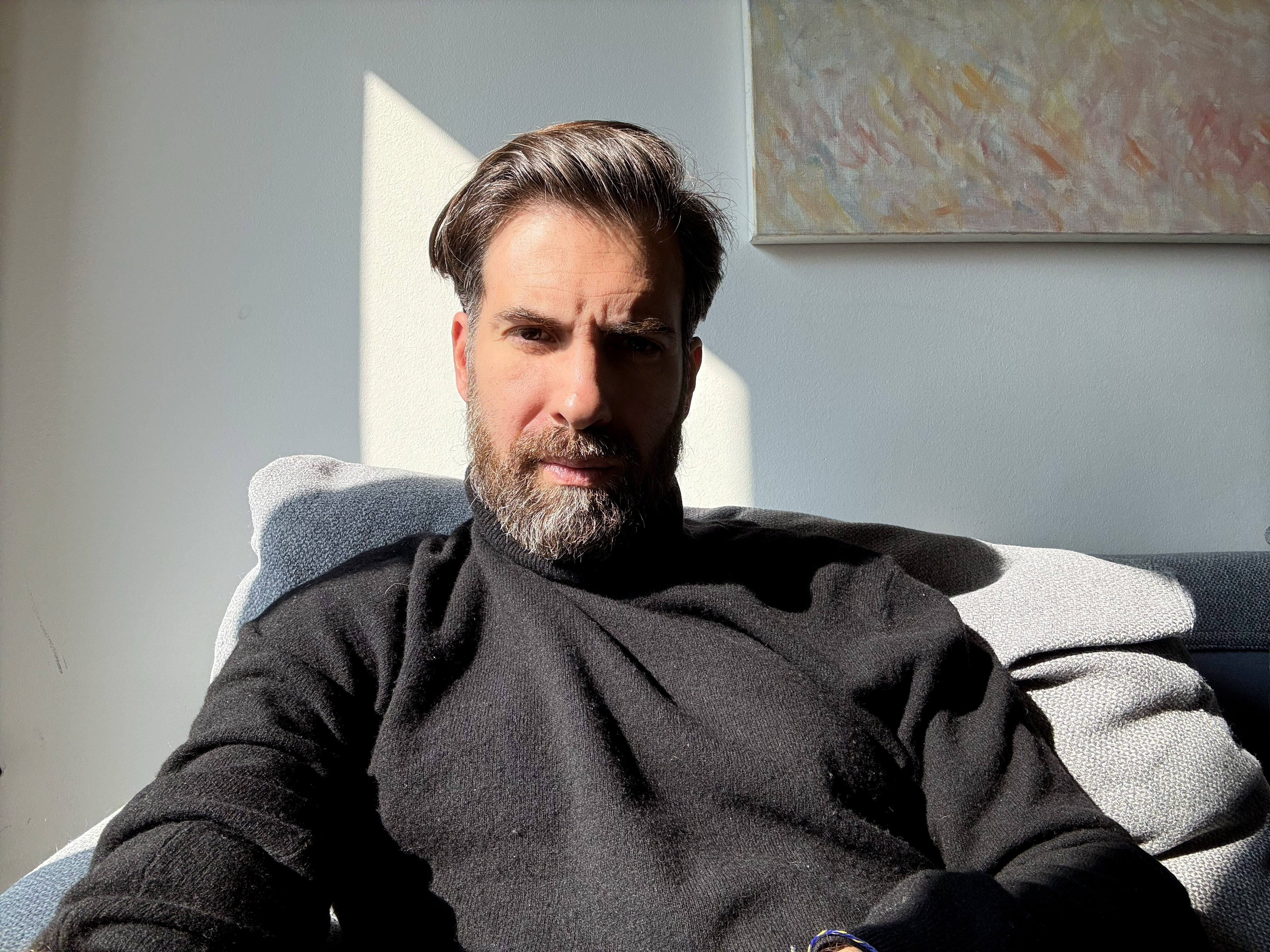
Salvatore, you've spent sleepless nights, wearing out the soles of your shoes amidst the blue glares of police cars and the asphalt still warm with blood in Milan's outskirts. Tell me, in that tumult of sirens and sorrow, when did you first feel the need not just to report, but to... portray the horror?
«I can tell you the exact day drawing transformed my life, but first, a brief preamble. I drew as a child, but then, like most people, I forgot this language as I grew up. In Naples, I covered the news but only used a pen to write. In 2010, I moved to Milan and started doing "the crime beat" for ANSA, the daily routine where reporters visit police headquarters and the Carabinieri to gather news and speak with sources.
One day, I witnessed a tragicomic scene in the police station where an officer was dramatically recounting a tragic story. The tone was informal and unhurried, so I sketched – very poorly – that little scene in my notebook. It felt natural and, above all, not purely descriptive. That day, I discovered I could draw not only what I saw but also my thoughts. So, on paper, a chair can represent a person you miss, a serial rapist can become a warty toad, and pain can take the form of a rag hanging on a line. From then on, I understood that I could narrate the horrors I covered as a journalist using drawing – a tool that, if honest, gets under your skin without frightening you. It's a bit subtle.
Symbolically, I carry two pens: one for writing and one for drawing. There's a need for documentation and a therapeutic need to decompress these dark stories. Drawing has become a necessity and an addiction; it's like smoking a cigarette, but you breathe better. Oh, I don't smoke or drink coffee; I'm the shame of crime reporters.»
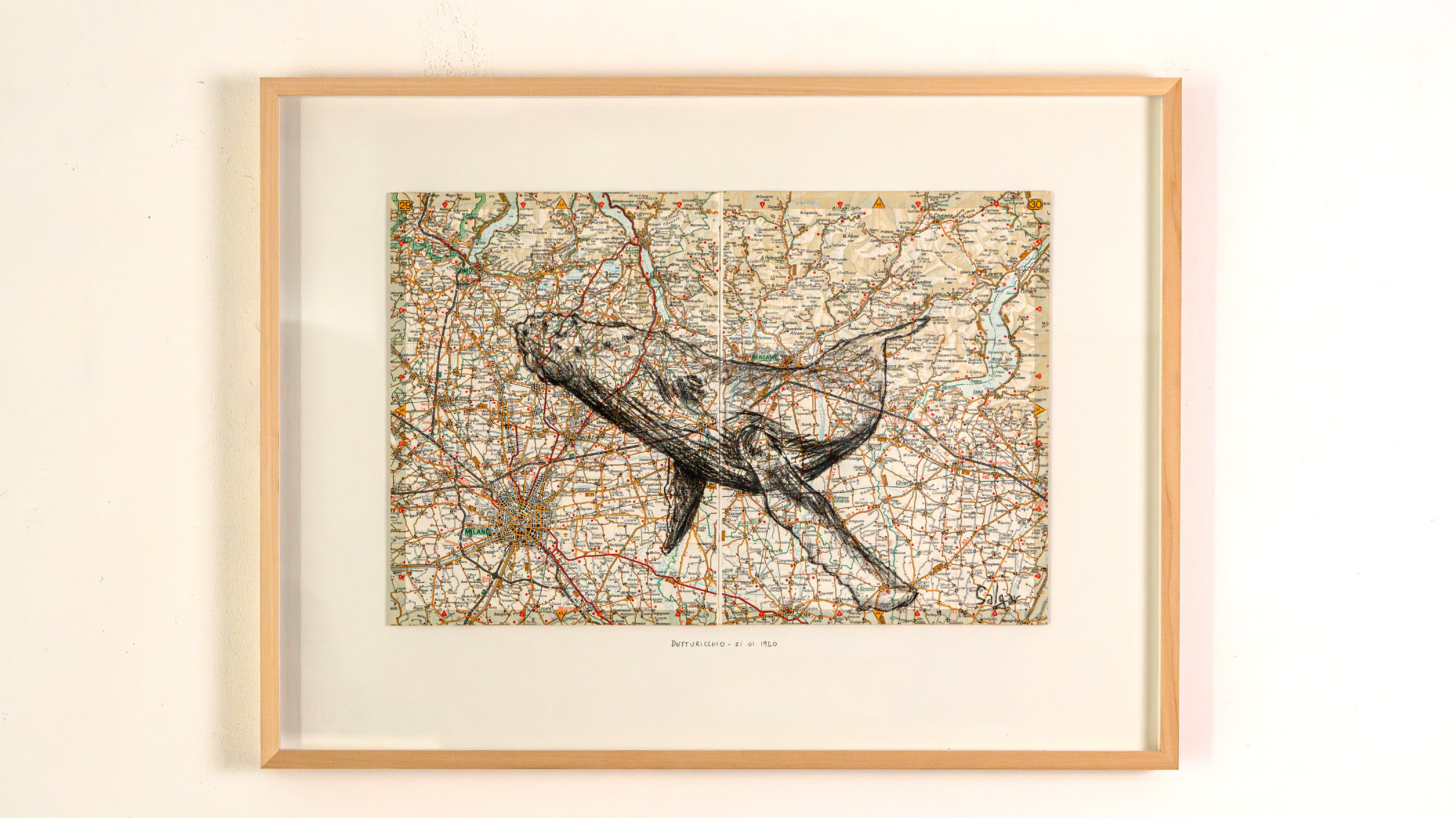
You wield your notebook with the same audacity to capture an often-unconfessable truth, and your marker to give a face to the suffering humanity that populates your stories. Don't you fear that your artist's soul might, in some way, "pollute" the aseptic objectivity of the chronicler?
«As a reporter, I must tell you what I see; as an artist, I can tell you what I feel. These are two distinct roles that adhere to precise rules of engagement: not to invade the other's space. As a journalist, I rigorously follow ethical principles (and common sense). I owe this primarily to the reader and to the protagonists of the dramatic stories I cover. With drawing, however, I have an obligation to explore, to consider alternative paths, to move beyond my usual alphabet. I owe that to myself.»
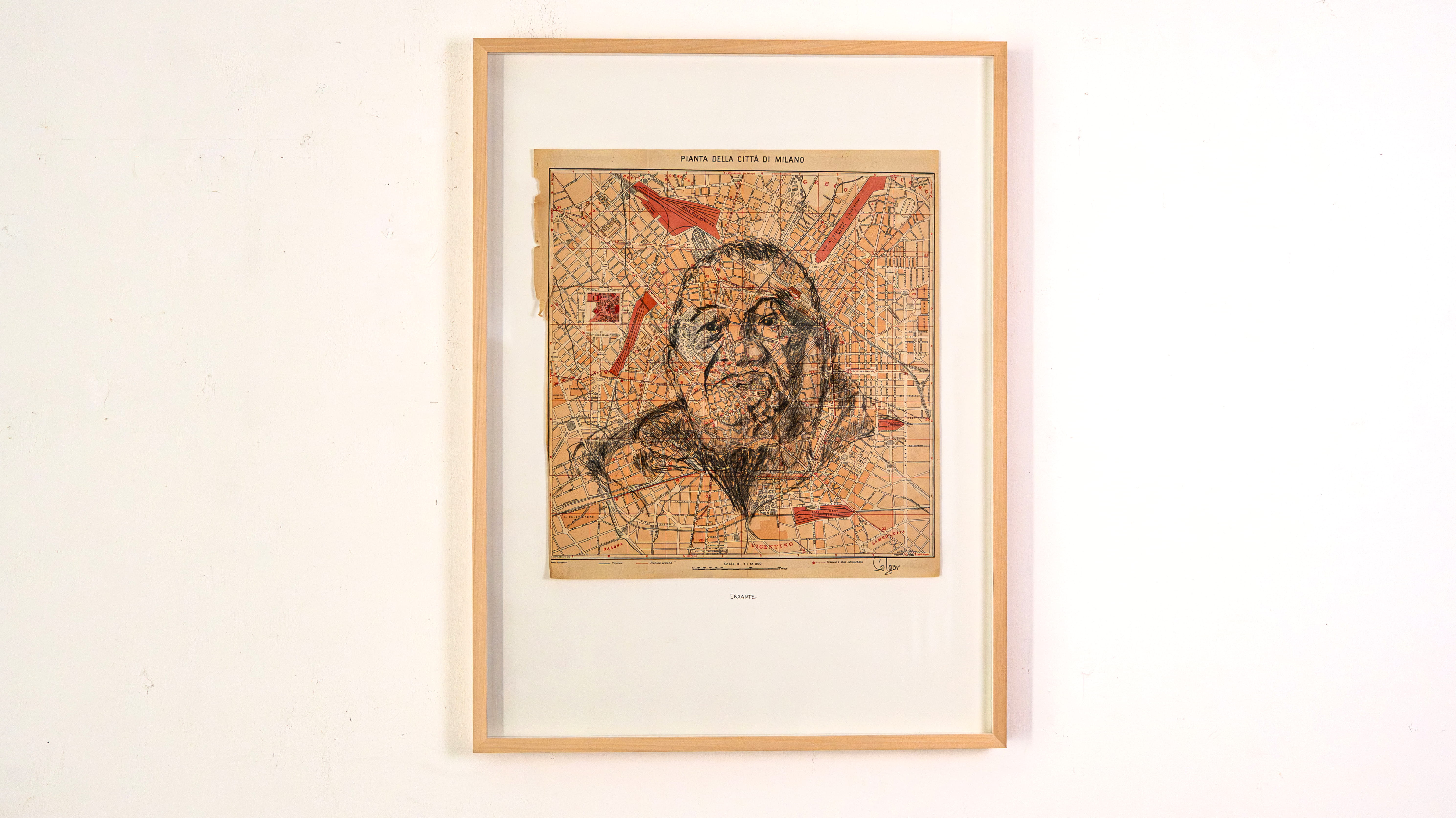
In your works, there's an essential quality I would describe as... almost stripped bare. You remove the superfluous to reach the core of the drama. Is this an attempt to bring order, a rational perimeter, to that seething chaos of passions and guilt that is crime?
«If my drawings convey anything, it's because I've listened extensively. Once, a friend from the Milan Homicide Squad taught me "the rule of three." He applies it to crime scenes when conducting murder investigations, but it's valid in any context. One: observe what is missing, but by common sense, should be there. Two: observe what is there, but shouldn't be. Three: observe what is there, and should be, but is out of place.
It's an exercise you can also apply when speaking with someone. The act of drawing, understood as a pen making a mark on paper, is the final part of this reasoning.»
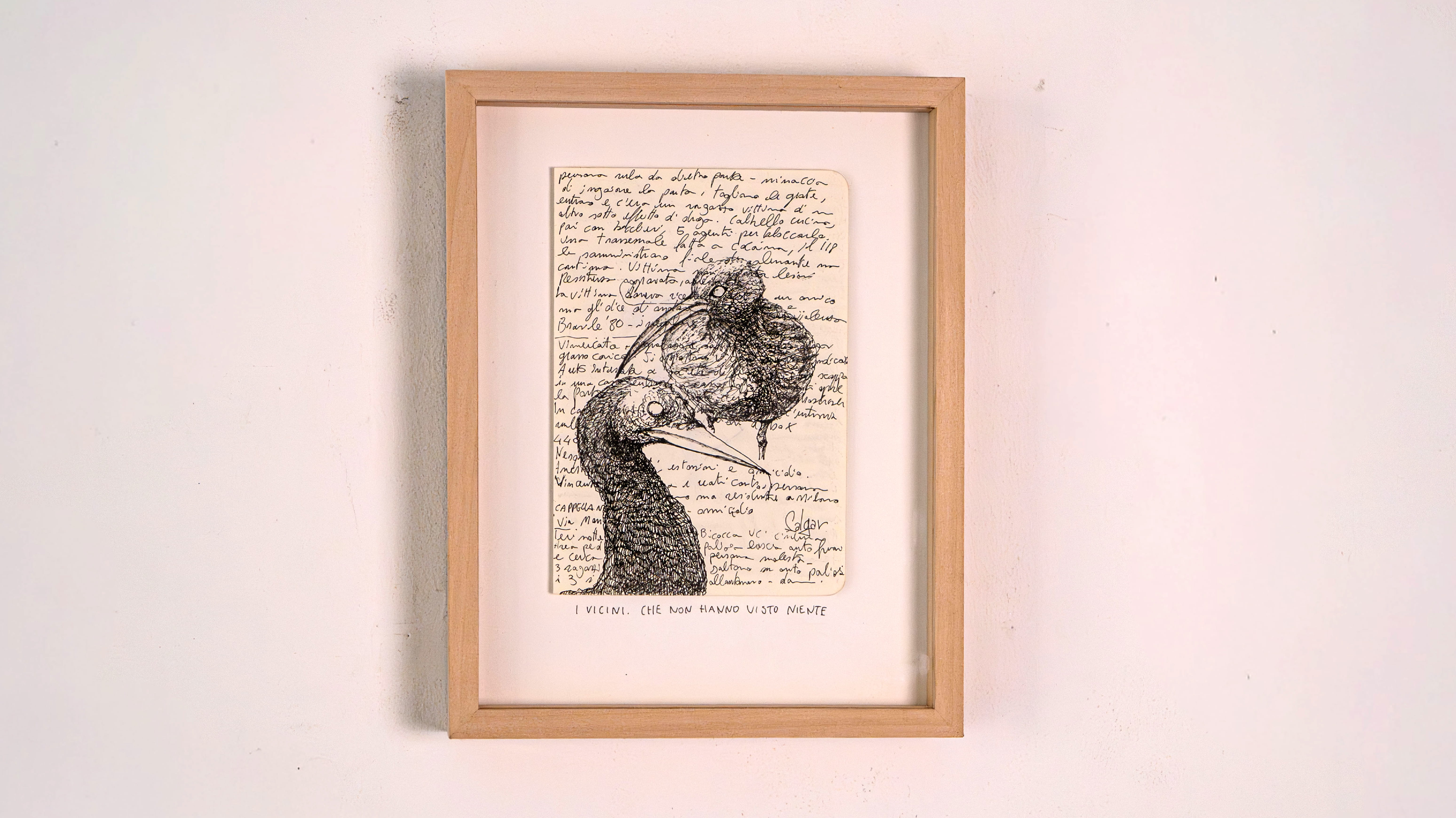
You look into the eyes of humanity that has lost its way – next-door murderers, derailed souls. When you draw them, are you trying to capture their shadow, or are you, perhaps, trying to glimpse that spark of light within them that official reports inevitably overlook?
«Someone who commits a crime, whether negligible or irremediable, is like you and me. At least until they decide to step from the sunny sidewalk onto the one in shadow. Sometimes, not always but it happens, they are compelled to do so. I'm very interested in the moment people cross that line and how they reconstruct their identity. It's easy to fit into a category – the bad guys, the victims – but how does one live within that enclosure?»
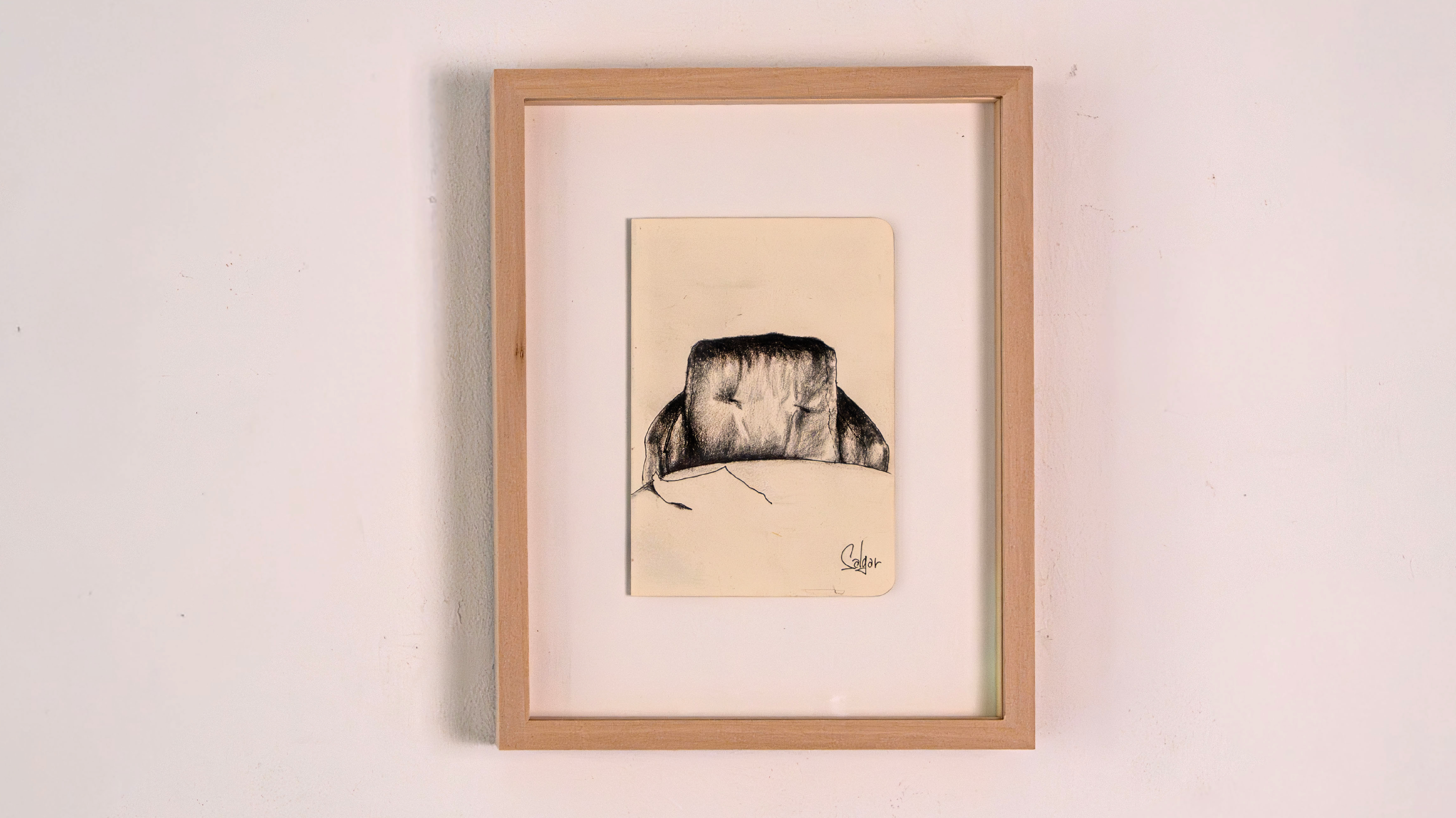
Your archive isn't just made of folders, but of faces. Explain to me, with your usual vibrant clarity: which face, even today, in the silence of your studio, most insistently demands to be drawn, almost as if wanting to cry out an innocence or, more likely, a torment that finds no peace?
«Years ago, I visited a judicial psychiatric hospital (OPG), now called residences for the execution of security measures (REMS). I met a 25-year-old girl (I was only slightly older than her) who had killed her grandmother by setting her on fire after an argument. She told me: "Look, I know I killed her; there's a video of me doing it, so I know it was me. But I don't remember it." If you talk about torment, her shattered expression at having erased that moment comes to mind. I couldn't draw her then, and I still can't today, even though my drawing skills have improved. But I often think of her because drawing is the black box of my years.»
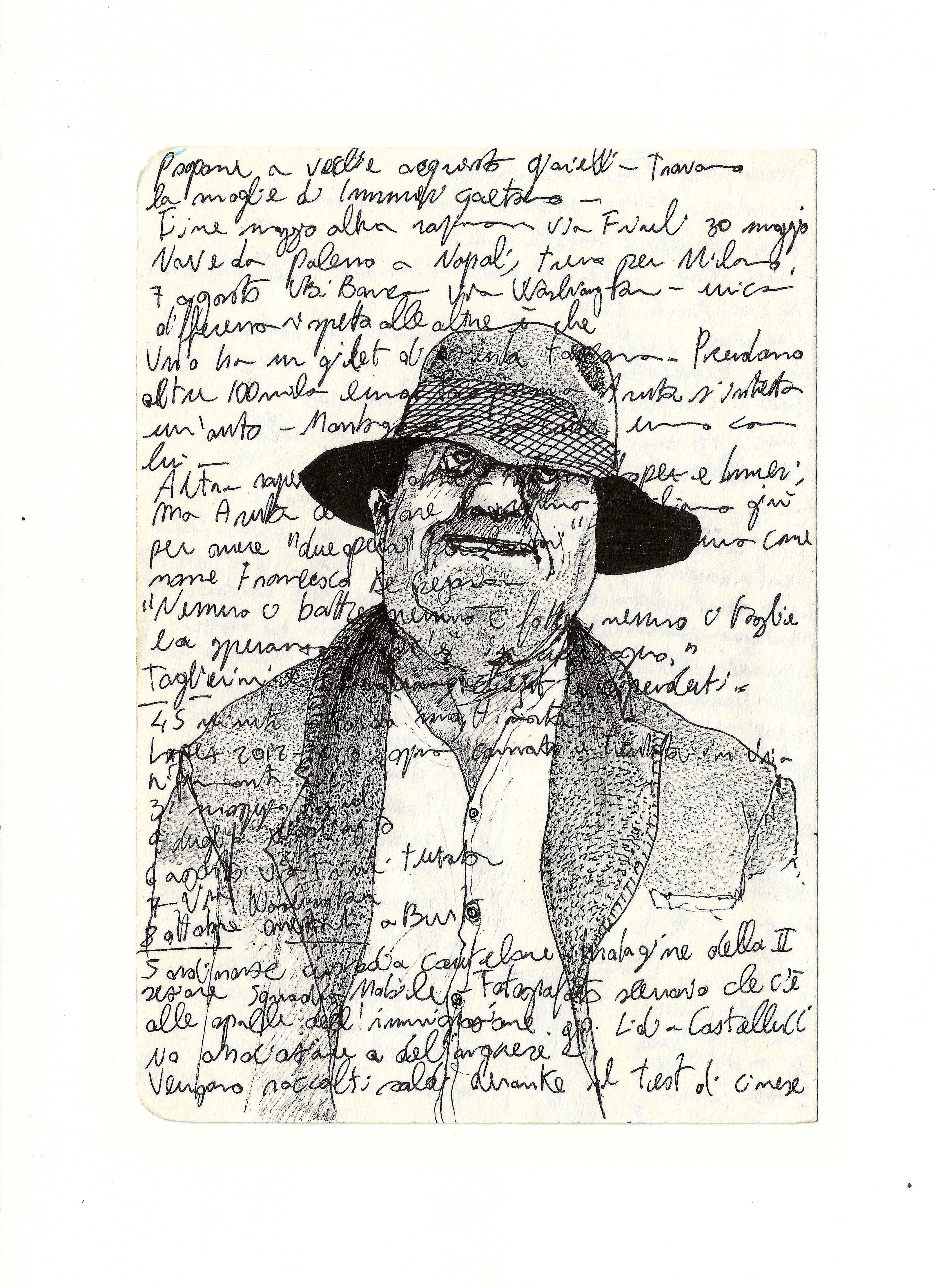
In your stories, as in your drawings, there's always something... particular. A shadow, a cigarette butt, a twisted expression. Is it true that to understand a murderer, a criminal, or a victim, you have to look where no one else looks?
«You cannot truly understand a murderer, a criminal, or a victim unless you are one. However, you can listen and observe carefully, which we often neglect to do because we hold onto a preconceived notion that we're fond of. Discarding it to accept a different version means questioning ourselves, and there's a part of us that says, "Are you crazy?!" And so, the murderer is forever evil, the criminal is forever despicable, and the victim is forever defeated. How boring if it were always like that. Since life is not boring, I assure you it's not always so.»
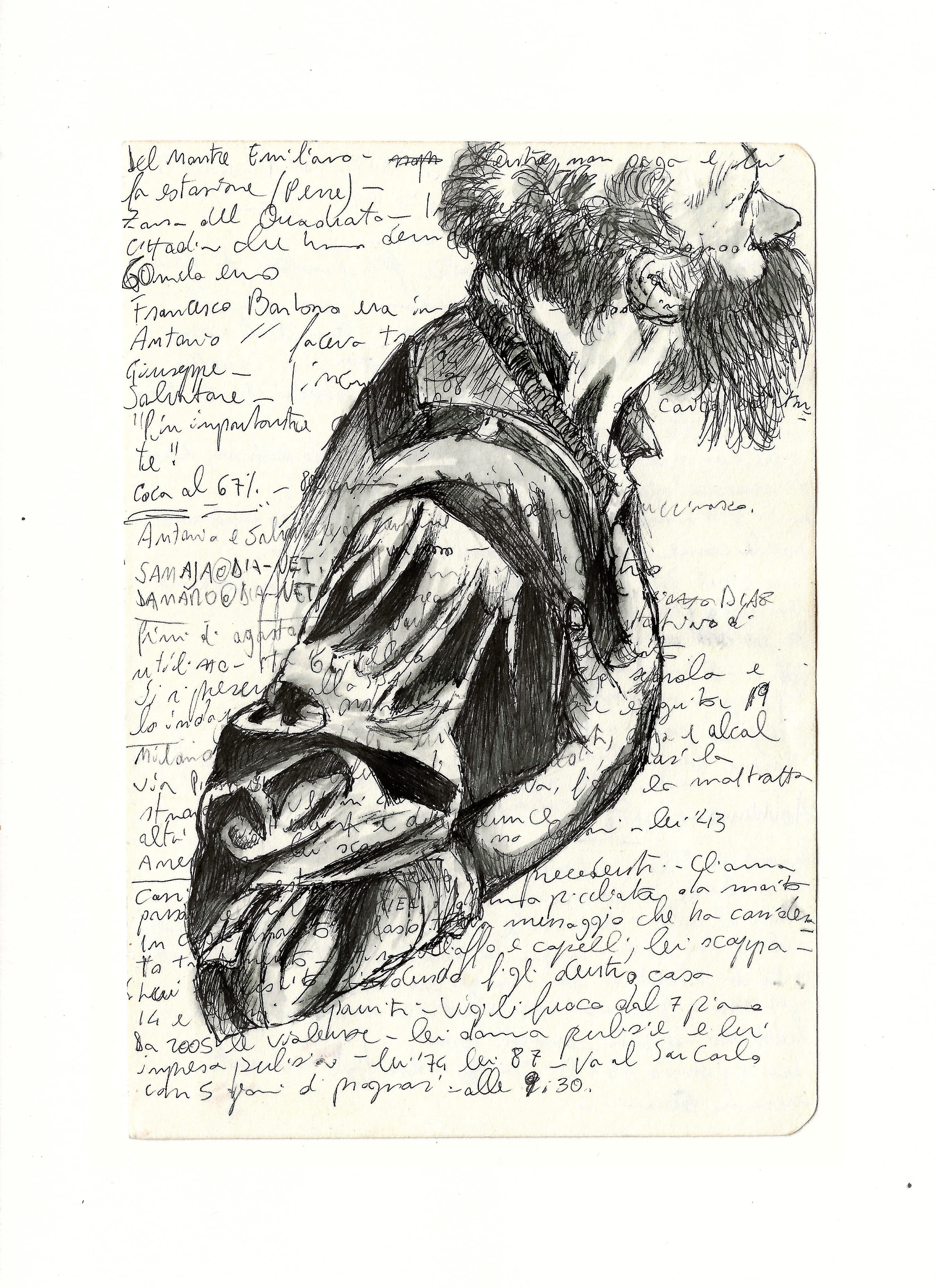
You mapped Milan through blood. But then you started mapping faces. Tired faces, fierce faces, faces that look like masks. When you draw a criminal, are you trying to capture the monster, or are you trying to understand how much that monster resembles us? Because isn't that what's truly frightening—that we could all be one step away from darkness?
«Monsters don't exist. There are bad, sick, perverse, careless human beings. But they are human beings. Calling them monsters, a truly harmful journalistic habit, is a foolish simplification that deprives us of the opportunity to understand. If I describe that rapist or murderer as a monster, as something that doesn't resemble you in appearance, I push you to hate him but not to investigate him. If, instead, I tell you his journey as a human being and his transformation, perhaps I can give you some tools to understand if there are potential threats around you. That said, after almost twenty years between crime reporting and war zone reportage, I can state without fear of contradiction that anyone – I repeat, anyone – given the right conditions, is capable of doing the best and the worst things. Anyone.»
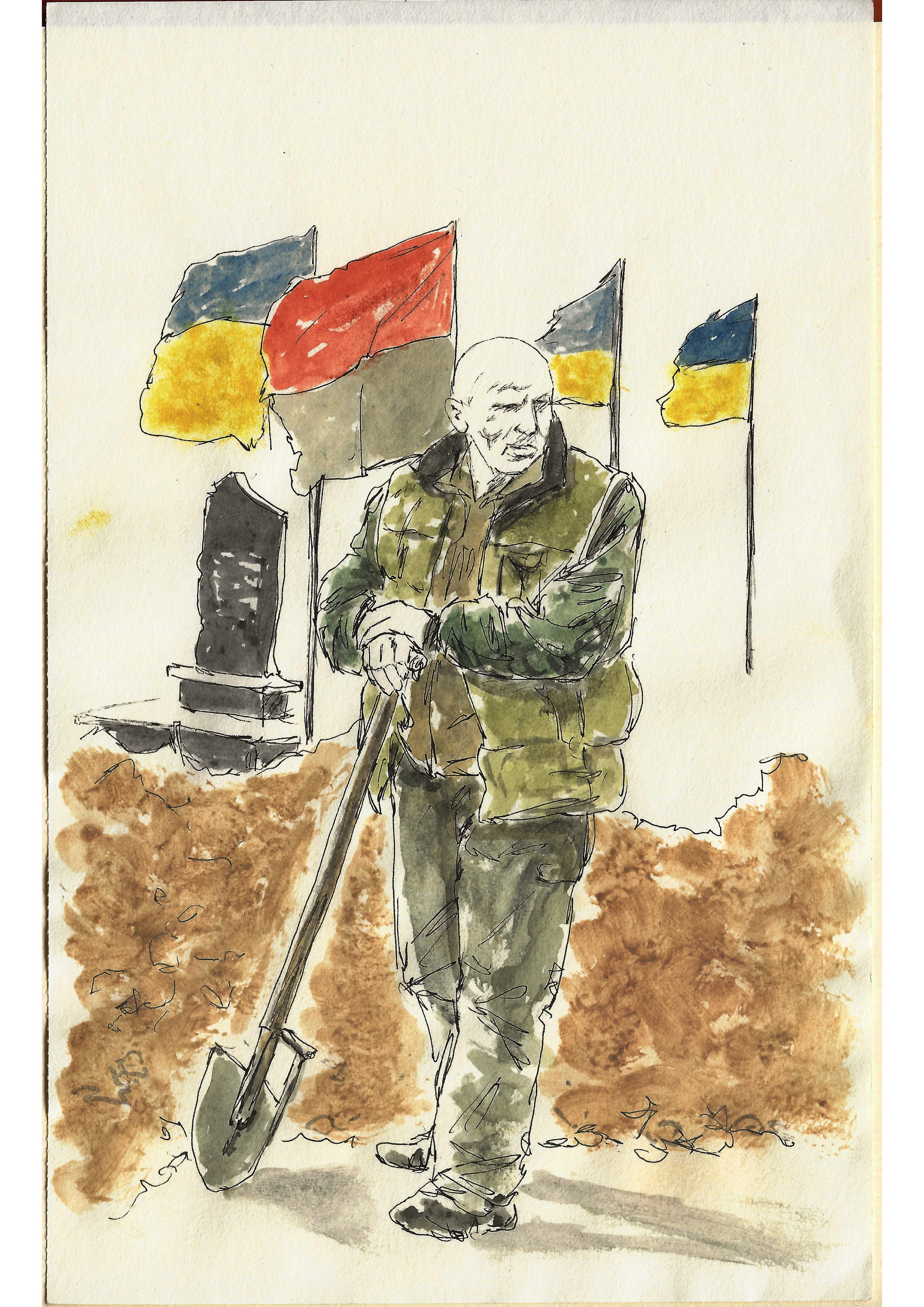
What is your definition of Salgar, the chronicler of the "darkness of the soul"? And that of Salgar, the artist?
«In both cases, my answer is "the trauma that interrupts you." If I consider the image you suggest, only interrupted people come to mind. I think of a click, like a light switch turning off. That click is almost always caused by trauma. I'm not just talking about victims.»
Every crime reporter has a secret room in their mind, an archive of cases that never had a culprit or an explanation. What is the image you drew and then decided not to show anyone, because it contained a truth too dangerous to be looked at?
«In February 2022, I left as a reporter to cover Russia's invasion of Ukraine. I've been going to Ukraine since 2014, since the beginning of the Maidan protests; it's a country I know well. After several months, I returned to Italy, and in February 2023, I went back to try and document the first year of the conflict. Immediately after crossing the border with Poland, in the middle of the night, Ukrainian soldiers boarded the train for passenger checks. It turned out I was on a blacklist of the SBU (Služba bezpeky Ukraïny), their secret service, as a potential spy. This had also happened on the Russian side; it's a common problem when reporting on an event (especially a war) while trying to remain objective between opposing fronts. They pulled me off the train and took me to a border office, convinced I was an enemy. Let's just say it wasn't a pleasant night. Some things about that night only I know, and some drawings from that night only I have seen. And so it will remain. I'm very good with secrets. Incidentally, after a parliamentary inquiry and a lot of commotion, the Ukrainian government acknowledged that I was not a spy but merely a reporter.»
Is there a single drawing you've made that you then looked at and said, "This is more frightening than reality"? Is there an image that keeps you awake at night?
«I'm afraid I'll disappoint you; I never have nightmares. I have my own technique to avoid or at least contain invasions from the unconscious. I'll tell you about it another time. And no, there's nothing more frightening than reality.»
Novedades — Society
La participación cultural: más allá de la mera asistencia, la necesidad de compartir el poder
```html La participación cultural: más allá de la mera asistencia, la necesidad de compartir el poder La participación se ha convertido en un término ubicuo, presente en convocatorias, proyectos europeos, programas culturales y planes de regeneración urbana. Se presenta como un
David Hockney's Monumental 12-Meter Print Heads to Christie's Auction
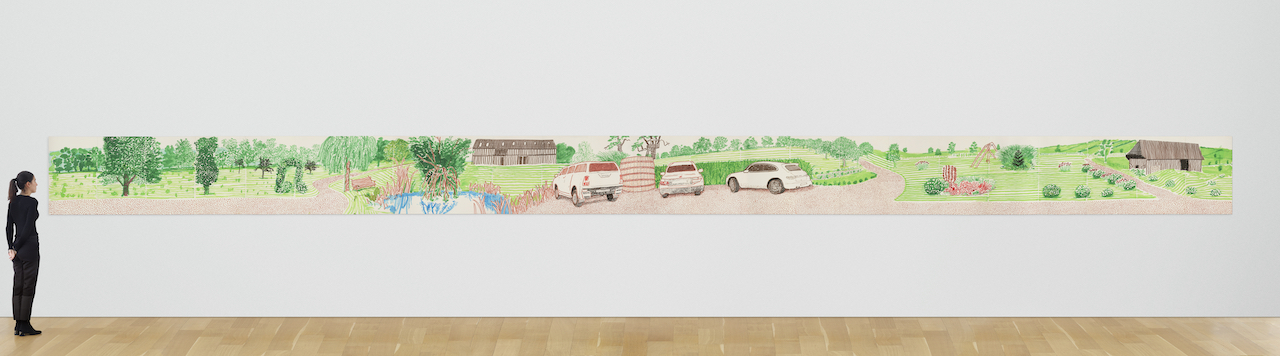
A truly unique lot is being offered by Christie's, available online from March 17 to 31, and on display at the major London galleries until March 31. This remarkable piece is one of David Hockney's largest creations, a staggering 12 meters long, printed on a single sheet of paper, and his most

El Greco Masterpiece Uncovered in Vatican: Hidden Under a Forgery
Art history is frequently punctuated by unexpected and serendipitous discoveries. Among these is the latest revelation from the Vatican Museums, where a routine conservation intervention has brought to light an authentic painting by El Greco, which had remained invisible for decades beneath a

Modena's Gate26A Hosts Aleksandr Nuss's Art: Where Matter Erodes and Light Reveals
Modena offers a serene escape from the vibrant chaos of nearby Bologna, presenting itself as an ordered and pristine city, a tranquil setting for everyday life. Within this calm environment, an independent space named Gate26A, founded by a collective of four individuals, injects a dynamic ener

Peggy Guggenheim's London Years: The Birth of a Collector in Venice Exhibition
Many are unaware of a crucial, often overlooked chapter in the life of Peggy Guggenheim, the visionary who transformed a palazzo on the Grand Canal into a bastion of modernism: her entrepreneurial venture with the Guggenheim Jeune gallery in London. The exhibition, Peggy Guggenheim in London: B
Selvatica 2026 in Biella: Art and Nature in Dialogue, Featuring Historical Authors and New Talents
The eleventh edition of Selvatica – Art and Nature in Festival, a biennial event held in Piazzo, Biella's historic district, has commenced and will run until July 19, 2026. The festival aims to foster a dialogue between artistic languages, scientific research, and educational practices to crea