Agnès Varda: Photographer, Filmmaker, Visual Artist – Her Three Creative Lives
“They aren't interested in us because we already have Cartier-Bresson.” This was the response Agnès Varda received in 1957 when, returning from an extensive journey through China, she presented the photographs documenting daily life in the villages she had visited during her months of intense wandering. Yet, despite this initial rejection, Agnès Varda (Ixelles, 1928 – Paris, 2019), in one of her three remarkable lives, was always a photographer. Her professional photographer's card, issued in 1950 by the Confédération Française de la Photographie, stands as proof. Her decade-long tenure as a photographer for the Théâtre National Popular, then directed by Jean Vilar, from 1949 to 1959, further attests to this. In her second life, she became an immensely influential filmmaker.
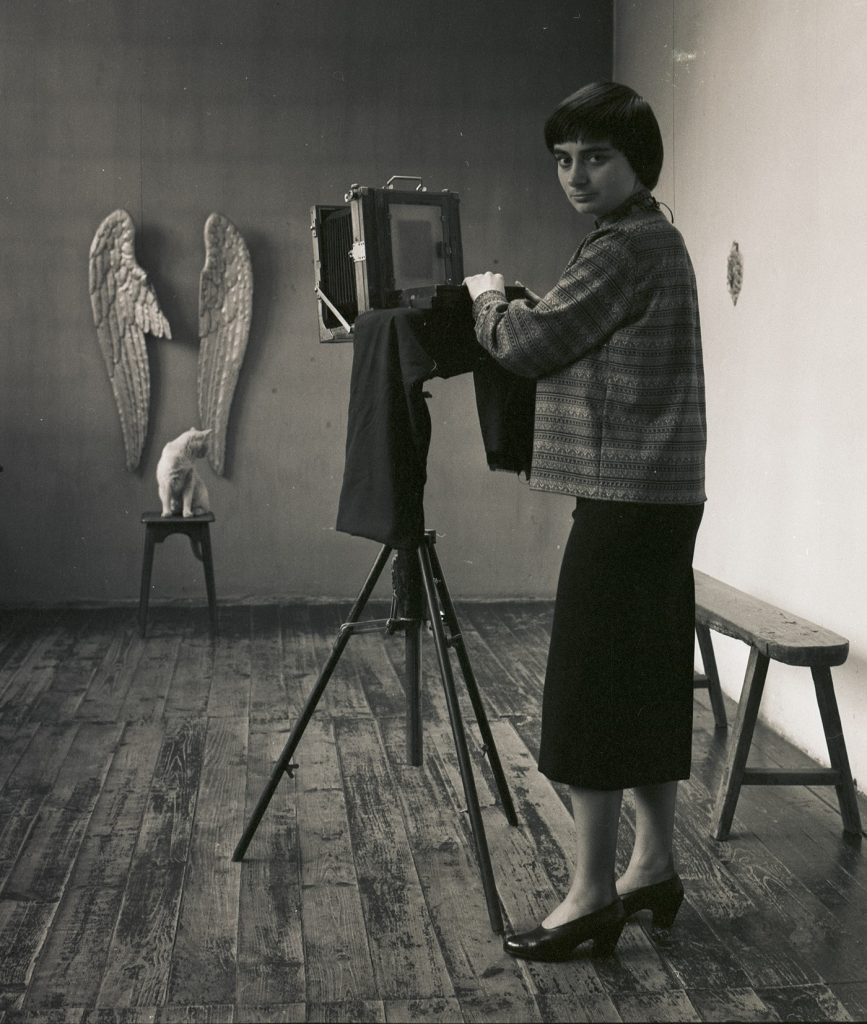
Such was her dedication that in 1954, she founded her own production company, Tamaris Film, releasing her first film, La Pointe Courte, in 1955. Starring Philippe Noiret and Silvia Monfort, the film was shot in the small fishing village near Sète, from which it took its title, and where Agnès Varda had moved with her family in 1940. This marked the beginning of her prolific career as a director, establishing her as a pioneer of the French New Wave and a prominent figure of the Rive Gauche. She was also among the signatories of the 1971 "Manifesto of the 343" advocating for the legalization of abortion, a feminist commitment openly declared in her film One Sings, the Other Doesn't. “In my films, I always wanted people to see things in their depth,” she once said. “I'm not interested in just showing something, but in conveying to people the desire to see.” In her third life, she emerged as a visual artist.
A notable example of her visual artistry is her series Les Cabanes de Cinéma (Cinema Huts), minimalist structures whose walls and roof slopes are constructed from entire reels of her films (most famously, La Cabane de Bonheur, or "The Hut of Happiness"). These huts physically invite one to "walk through cinema." It's no coincidence that she once declared, “I feel like I inhabit cinema, cinema is my home.” These small houses seem to be a natural transformation of Carla Accardi's abstract signs into distinct, decipherable images.
Above all, her performance at the age of 75 at the 50th Venice Biennale in 2003, directed by Francesco Bonami, served as her official artistic debut. Invited by Molly Nesbit, Rirkrit Tiravanija, and Hans-Ulrich Obrist to participate in Utopia Station, she presented Patatutopia, explaining, “I have the utopia of thinking that one can see the beauty of the world in a sprouted potato.” This involved a video triptych showcasing sprouted tubers, accompanied by an installation of seven hundred kilograms of potatoes, and her performance where, dressed as a potato, with loudspeakers listing the names of various tubers, she wandered through the Arsenal spaces. However, across all three of her lives, she never abandoned photography. The storyboards for her films and the images accompanying her art installations unequivocally confirm this, demonstrating how she constantly cross-pollinated one art form with another. Regardless of the medium she employed, Agnès Varda always observed the world around her, fully immersed in her present, staging everything that others overlooked or deemed unimportant, because, as she put it, “others intrigue me, they motivate me.”
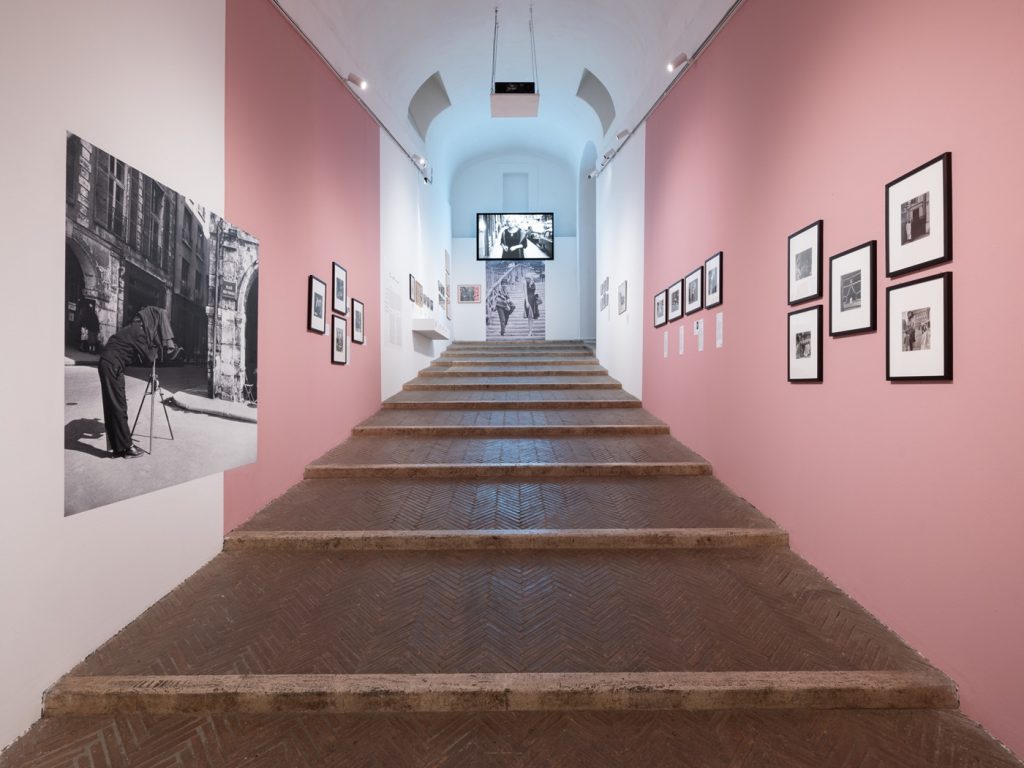
Indeed, as Fabio Ferzetti wrote, “her work lies entirely in the tension between these two poles: fidelity to herself and curiosity for the world, meaning people.” Yet, she never confused her private life with her work; save for very rare exceptions, there are no photographs of her children or family. All these aspects are honored in the first major retrospective in Italy, Agnès Varda | De-çi de-là, Paris-Rome, an exhibition held at Villa Medici, the seat of the French Academy in Rome, curated by Anne de Mondenard and Carole Sandrin. This tribute extends to Bologna, where screenings of her films have been organized at the Galleria Modernissimo. These two complementary events paint a faithful portrait of the director "with the bob haircut," who, born Arlette to a Greek father and French mother, legally changed her name to Agnès at 18. At 89, she embarked with JR on a journey across rural France in a van converted into a photographic studio for approximately two years, resulting in the documentary Faces Places (Visages, Villages), which concludes with Godard, the friend who cruelly refused to receive her in Switzerland at the film's end.
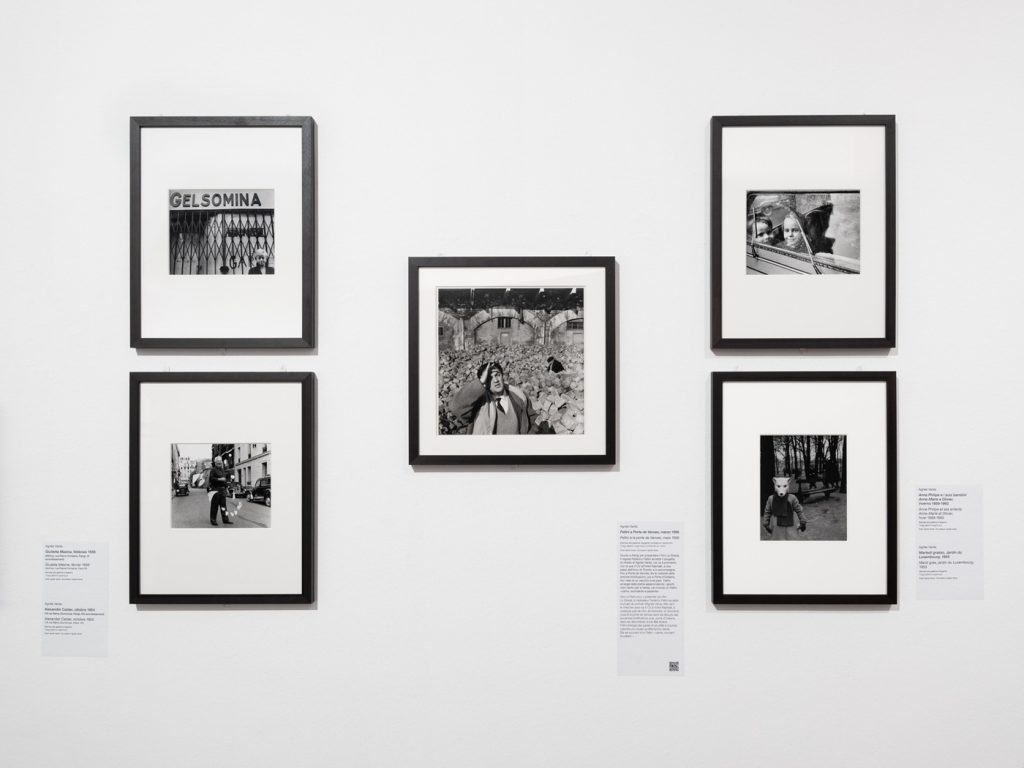
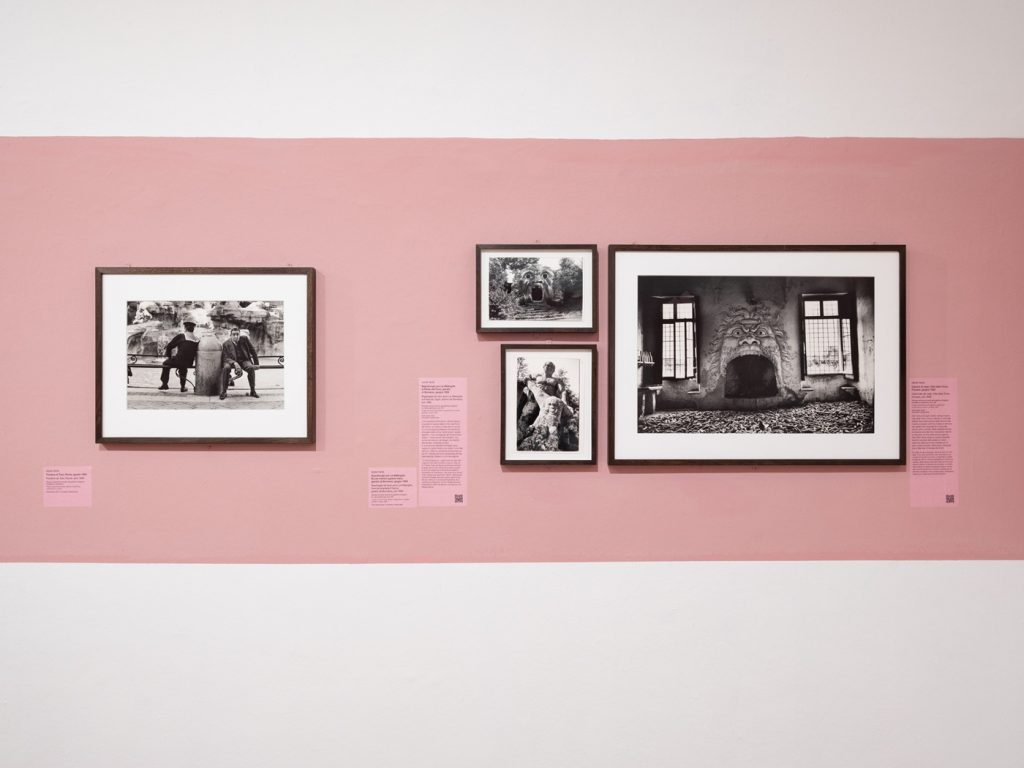
Also at 89, she received an honorary Oscar, becoming the first female director to win one (at 57, she had won the Golden Lion at the Venice Film Festival for her film Vagabond (Sans toit ni loi), whose music pays homage to Jim Morrison, whom she had met during her stay in Los Angeles). At 91, she presented her last film, Varda by Agnès: a self-portrait in the form of a masterclass, filmed during public lectures in theaters and cinemas, but also, and most importantly, a kind of artistic testament. With it, she aimed to “provide the keys to my work. I give my keys, my thoughts, nothing pretentious, just the keys,” revealing that among the secrets of her films, editing was the most important. The film recounts both the analog part of the 20th century and the digital part of the 21st century, demonstrating her constant curiosity for anything new. Thus, through 130 original prints, film excerpts, publications, documents, posters, and personal objects, one journeys through her life, her art, her travels, her chosen city, her encounters, her interests, her friends (among whom her beloved Linou/L’inoubliable Valentine Schlegel stands out, preceding her future husband, director Jacques Demy), and her world. Beginning with her home-refuge on Rue Daguerre. This universe is deconstructed through various sections that focus on distinct moments: Before Rue Daguerre; The Courtyard-Studio on Rue Daguerre (where she moved in 1951, and from which she also drew the film Daguerréotypes); A Strange Paris; Photo-Writing; The City in Echo; Women, People (including a beautiful digitized reproduction of L’Opéra-MouffeI, 1967, through which she portrayed and interviewed the people animating the Rue Mouffetard market); The Courtyard-Garden; Agnès Varda's Italy. And before Rue Daguerre, in some of her early shots, surrealist and Dada reminiscences are easily identifiable.
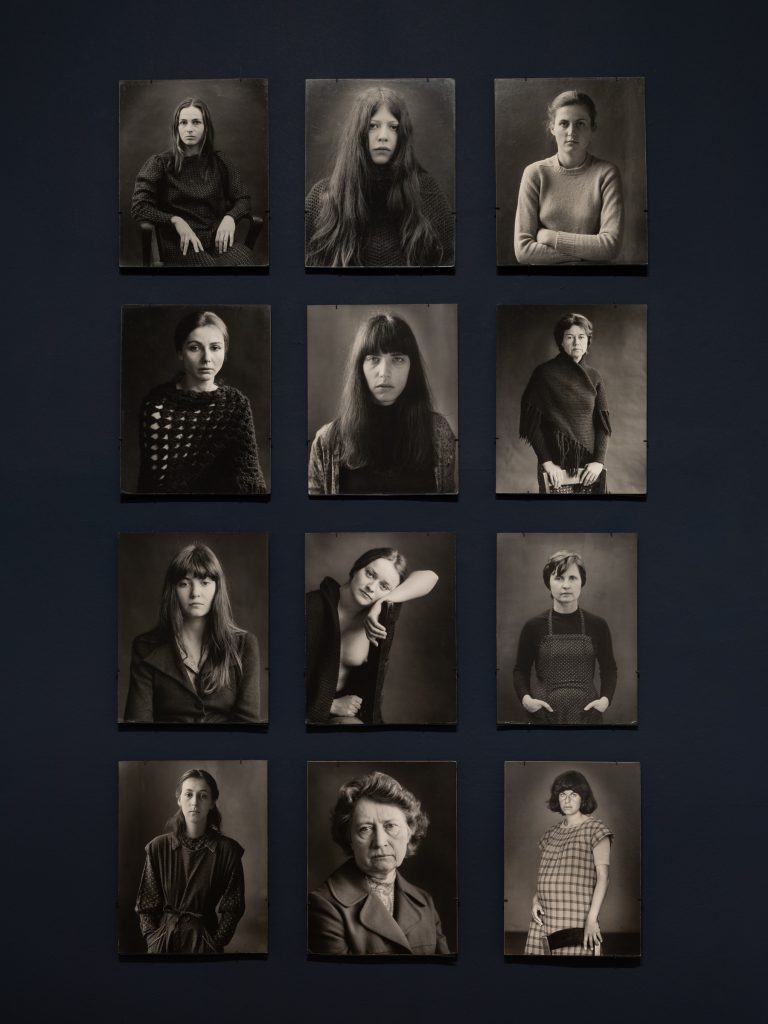
One only needs to observe Noyé (1950), Drôles de gueules (1952), Portraits aux ailes d’ange (1955), and Un ange passe (1955). Her connections with Italy, beyond the photos taken in Paris of Fellini and Masina, also include shots taken in Venice, Florence, and Rome during location scouting for the never-realized film La Mélangite (1959), and for the monthly magazine Réalités (1963), which commissioned her to photograph Luchino Visconti in his Roman villa – an opportunity that also allowed her to meet Godard during the filming of Contempt. All this is interspersed with curious videos and documents, such as the Japanese poster for the film Cleo from 5 to 7, and correspondence related to the ring worn by Cleo/Corinne Marchand in the same film. But it is also, and above all, a deep dive into those years, that Paris, those private and collective moments, observed through the eyes of an artist who, throughout her life, consistently defied conventions.
Novedades — Society
La participación cultural: más allá de la mera asistencia, la necesidad de compartir el poder
```html La participación cultural: más allá de la mera asistencia, la necesidad de compartir el poder La participación se ha convertido en un término ubicuo, presente en convocatorias, proyectos europeos, programas culturales y planes de regeneración urbana. Se presenta como un
David Hockney's Monumental 12-Meter Print Heads to Christie's Auction
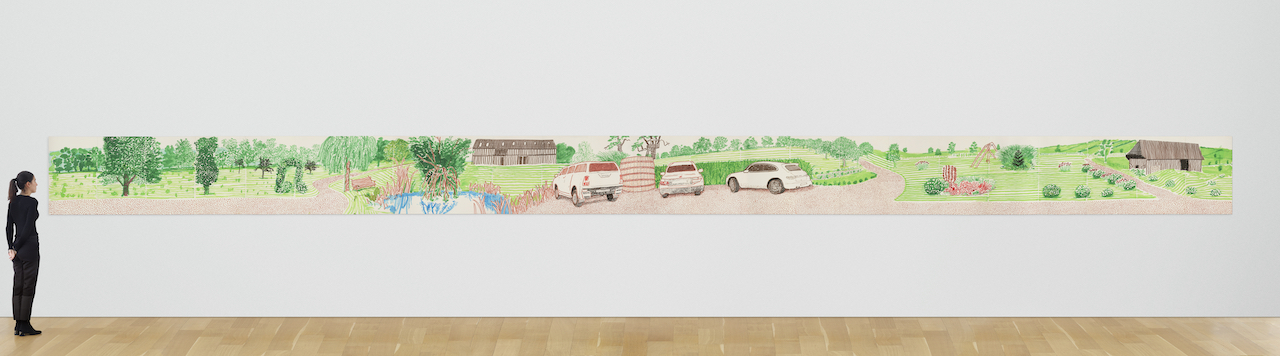
A truly unique lot is being offered by Christie's, available online from March 17 to 31, and on display at the major London galleries until March 31. This remarkable piece is one of David Hockney's largest creations, a staggering 12 meters long, printed on a single sheet of paper, and his most

El Greco Masterpiece Uncovered in Vatican: Hidden Under a Forgery
Art history is frequently punctuated by unexpected and serendipitous discoveries. Among these is the latest revelation from the Vatican Museums, where a routine conservation intervention has brought to light an authentic painting by El Greco, which had remained invisible for decades beneath a

Modena's Gate26A Hosts Aleksandr Nuss's Art: Where Matter Erodes and Light Reveals
Modena offers a serene escape from the vibrant chaos of nearby Bologna, presenting itself as an ordered and pristine city, a tranquil setting for everyday life. Within this calm environment, an independent space named Gate26A, founded by a collective of four individuals, injects a dynamic ener

Peggy Guggenheim's London Years: The Birth of a Collector in Venice Exhibition
Many are unaware of a crucial, often overlooked chapter in the life of Peggy Guggenheim, the visionary who transformed a palazzo on the Grand Canal into a bastion of modernism: her entrepreneurial venture with the Guggenheim Jeune gallery in London. The exhibition, Peggy Guggenheim in London: B
Selvatica 2026 in Biella: Art and Nature in Dialogue, Featuring Historical Authors and New Talents
The eleventh edition of Selvatica – Art and Nature in Festival, a biennial event held in Piazzo, Biella's historic district, has commenced and will run until July 19, 2026. The festival aims to foster a dialogue between artistic languages, scientific research, and educational practices to crea