

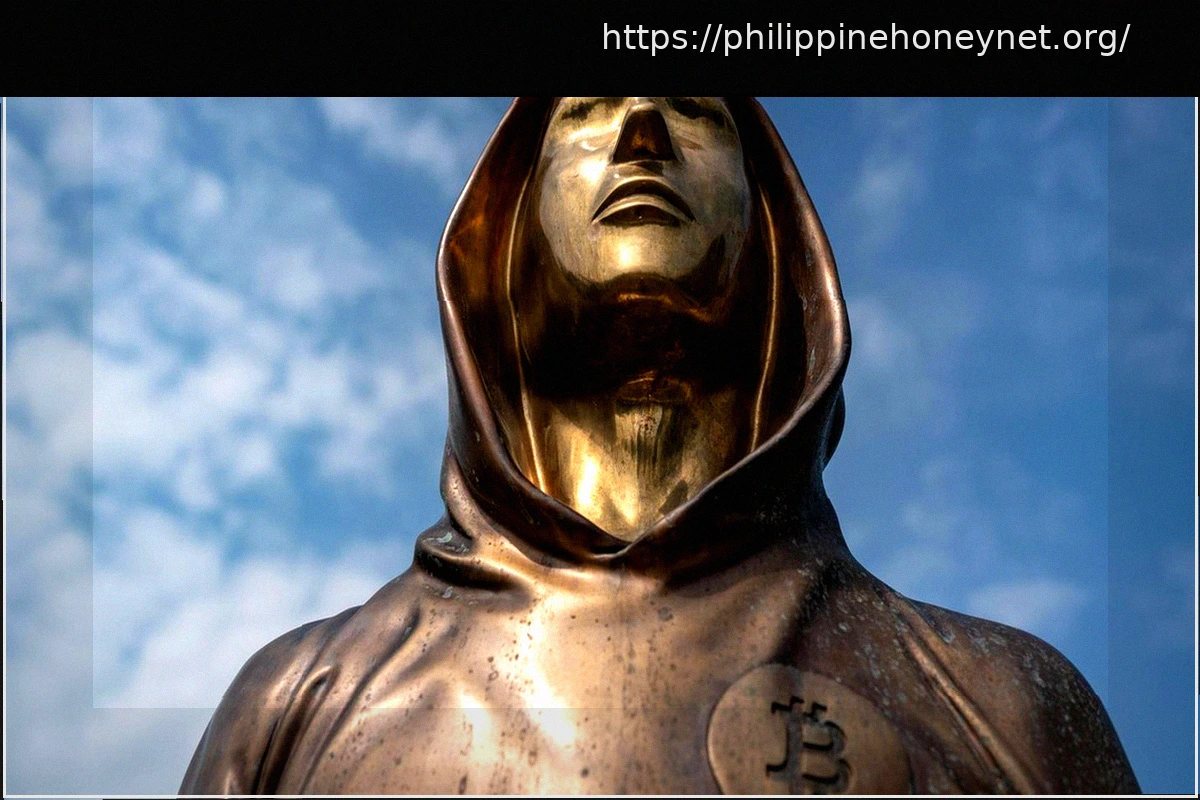
Bitcoin founder Satoshi Nakamoto is a legend. Now, the “New York Times” claims to have unmasked the true identity of the phantom. But he denies it.
Could it have been a few apostrophes and hyphens that revealed one of the best-kept secrets of internet culture? That’s the impression at least given by John Carreyrou, a reporter for the “New York Times.” For over a year, he pursued the phantom Satoshi Nakamoto, the inventor of Bitcoin. In an epic over 10,000 words long, enriched with many screenshots, anecdotes, and ample speculation, Carreyrou explains that there can only be one behind the pseudonym: British computer scientist Adam Back.
The true identity of Bitcoin founder Satoshi Nakamoto is one of the great myths of the internet. This is not the first time investigative reporters and amateur detectives have attempted to unmask the phantom. 13 different possible identities are listed on Wikipedia alone.
On several occasions, a newspaper was certain: In 2014, “Newsweek” claimed that Californian Dorian Nakamoto was the Bitcoin founder. Craig Steven Wright claimed to be Nakamoto but was exposed as a fraud. Other potential candidates included the late IT forensic expert Dave Kleinmann or software developer Hal Finney. An HBO documentary claimed to have found former Bitcoin developer Peter Todd as Satoshi Nakamoto. Adam Back has also appeared in speculation before. However, all alleged revelations have so far lacked conclusive proof.
Back is at least a spiritual father of Bitcoin
It is undisputed that Adam Back is one of the spiritual fathers of Bitcoin. Born in 1970, the Brit studied computer science at the University of Exeter and was very active in cryptography mailing lists in the 1990s. There, he advocated for a libertarian government and began sending out T-shirts with the code for email encryption. In 1997, he invented Hashcash, a type of spam filter that, like Bitcoin, is based on a “Proof-of-Work” principle.
Indeed, Satoshi Nakamoto cites Adam Back in his 2008 whitepaper, in which he described Bitcoin. There are also emails between Back and Nakamoto – the “New York Times” suspects Back sent these to himself to deflect suspicion.
In any case, Back was an early participant in the Bitcoin community. He proposed improvements in an online forum and founded the blockchain company Blockstream in 2014. Today, Back lives in Malta and regularly speaks at industry conferences.
Carreyrou presents a series of evidence as to why Adam Back might be behind the phantom. For this, he delved deep into the archives of the “Cypherpunks” mailing lists, where both Back and Nakamoto appear. Strikingly: Nakamoto and Back repeatedly use similar phrasing and comparisons – for example, “I am better with code than with words” (this sentence will become important). Furthermore, as early as 1999, Back conceived an idea that suspiciously resembles Bitcoin – about ten years before the official invention of the cryptocurrency.
However, one of the most important pieces of evidence is the writing style. The “New York Times” compared writings by Nakamoto and possible candidates with AI software. It was noted: Nakamoto repeatedly made mistakes with apostrophes and hyphens. Of the 562 suspects, only one made almost the same mistakes: Adam Back.
Did the alleged Satoshi Nakamoto slip up?
According to Carreyrou, Back finally let slip in a personal interview. When questioned about the phrase “I am better with code than with words,” Back continued speaking in the first person. “In other words, for a few seconds, Mr. Back let down his guard and became Satoshi,” Carreyrou writes in his article.
If true, Adam Back would be one of the richest people in the world. Approximately 1.1 million Bitcoins are said to be in Satoshi Nakamoto’s wallets – at the current exchange rate, almost 70 billion Euros. Back would likely not benefit much from this, at least if he wanted to maintain his secret. Almost any withdrawal would be interpreted as a clue to his true identity, especially now.
Some in the community remain skeptical and accuse Carreyrou of “confirmation bias” – that he is only looking for evidence that supports his thesis. Comedian Dominic Frisby, for example, argues that Back coded in a different programming language than Satoshi Nakamoto. Furthermore, Back himself understood little about Bitcoin when he first appeared on the forum in 2013.
Adam Back himself also continues to deny being Satoshi Nakamoto. He attributes the many similarities in writing style and argumentation to a combination of “coincidences and similar phrases” from people with similar experiences and interests. “I also don’t know who Satoshi is, and I think it’s good for Bitcoin that it’s that way (…).”
On the other hand: That is exactly what Satoshi Nakamoto would likely say.