


The third edition of Red Lab Gallery’s artistic residency program in Casamassella, Salento, concluded on March 14th with a public presentation and the opening of an exhibition, on view until April 19th, 2026. Curated by Leonardo Regano and titled “Chiedete al vento, all’onda, alla stella, all’uccello” (Ask the wind, the wave, the star, the bird), the project featured artists Agata Ferrari Bravo and Thomas Michael Saccuman, with a special intervention by Flavio Favelli.
Held between March 6th and 14th, the residency is part of Casamassella’s broader commitment to promoting contemporary art as a hub for production and dialogue between artistic practices and the local context.
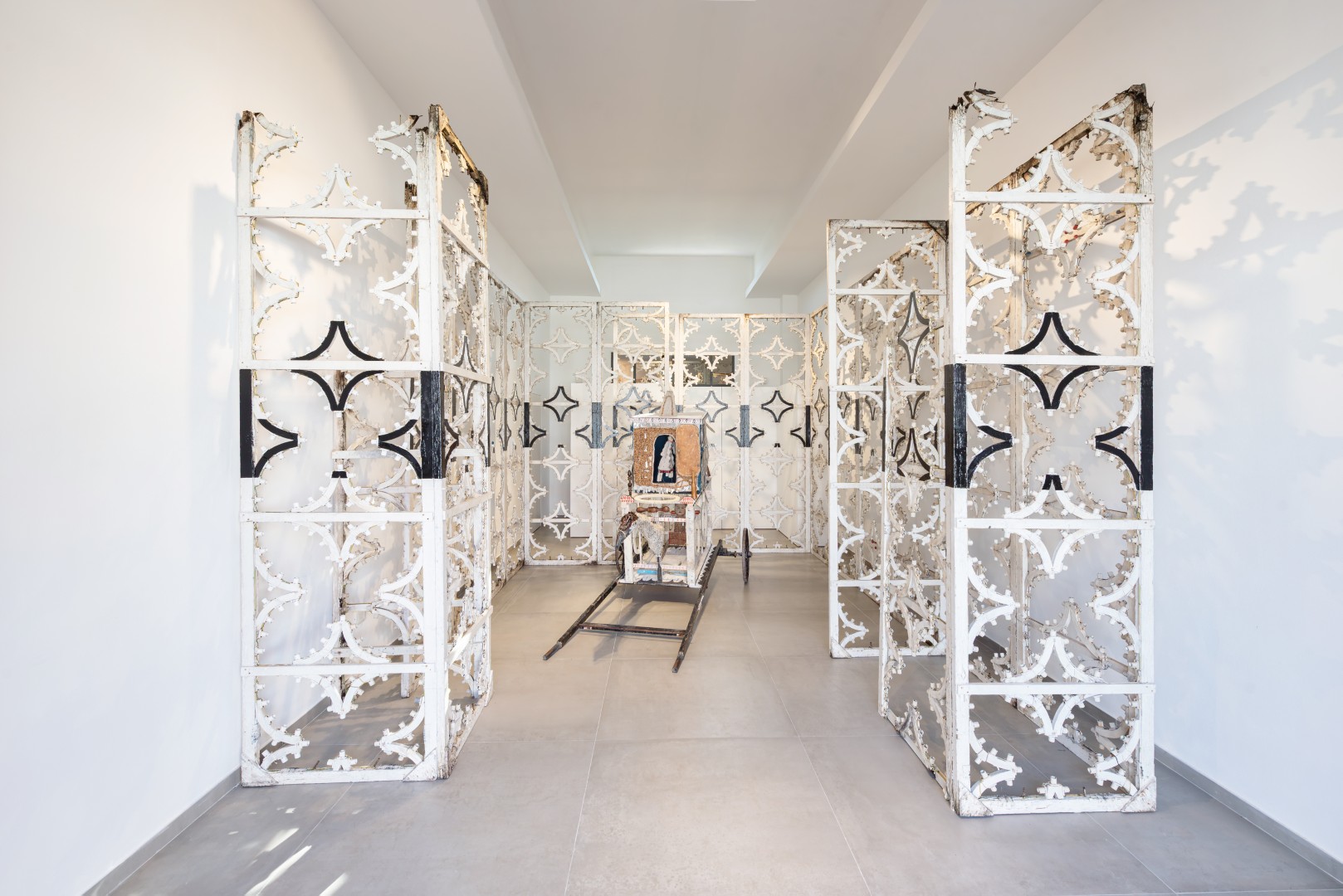
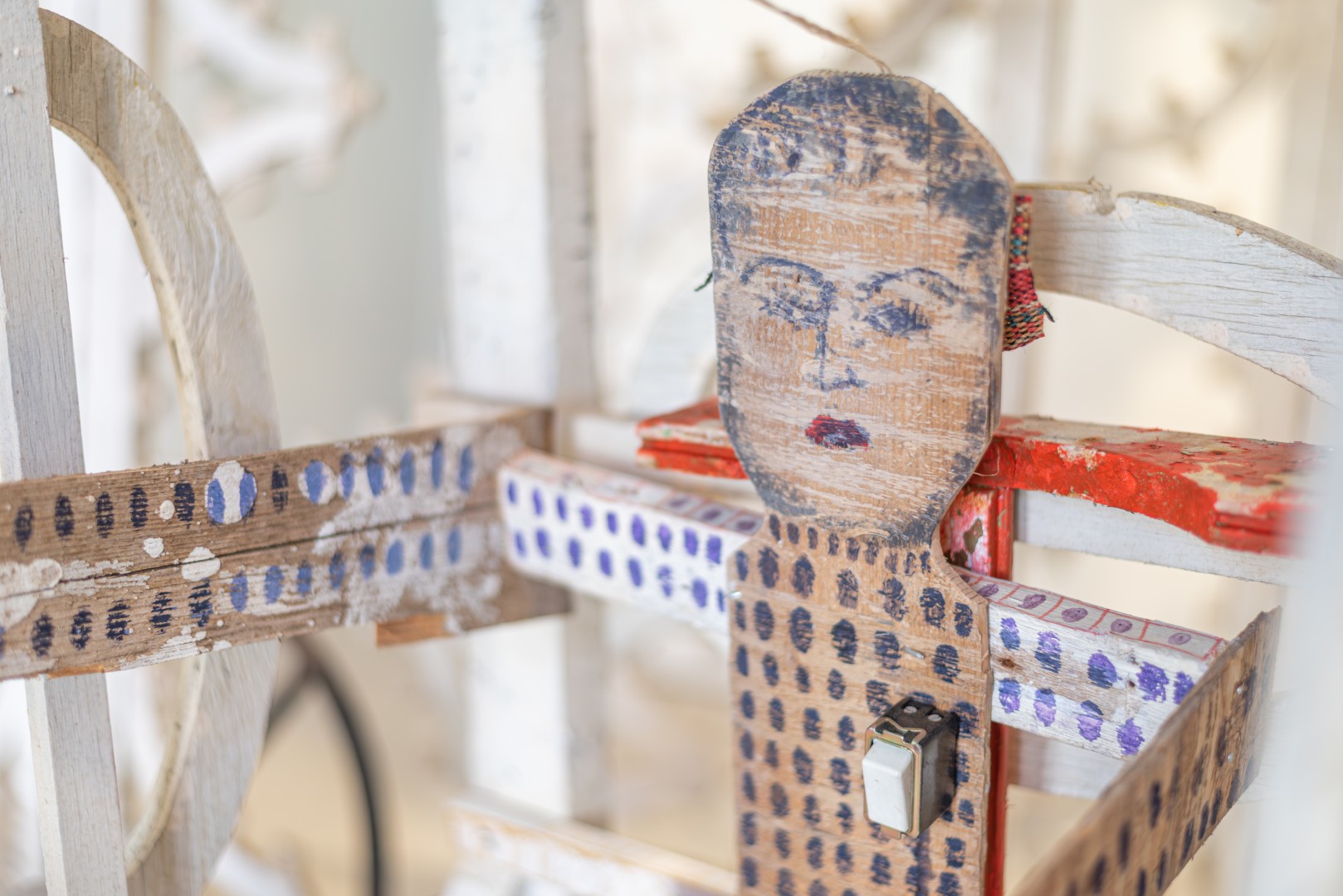
At the core of Ferrari Bravo and Saccuman’s work is a hybrid device that merges sculpture, performance, and narrative: a nomadic cart animated by a large migratory bird figure. This cart incorporates the structure of a traditional local wagon and hosts a small theater on its back, presenting itself as a mobile and transformative organism that evokes both vernacular imagery and fantastic visions, reminiscent of works like Luigi Serafini’s *Codex Seraphinianus*.
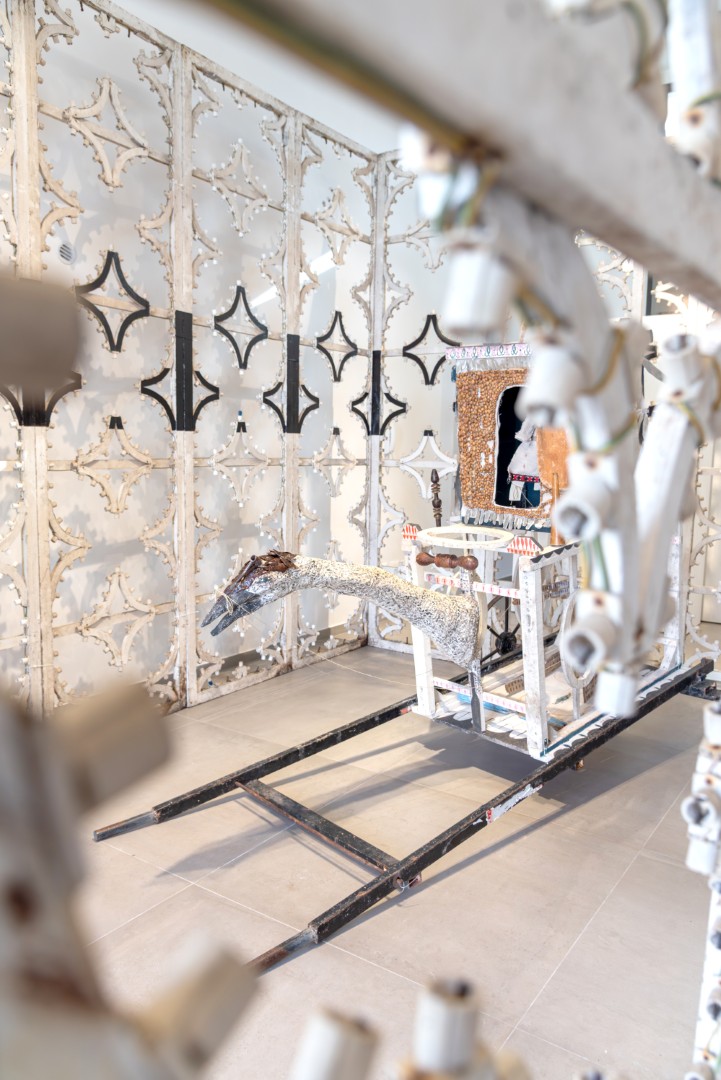
The theme of nomadism permeates the entire artwork. The cart is conceived as an entity that activates and moves only through human presence, creating a symbiotic relationship between the artwork and the performer. Its wandering nature suggests multiple interpretations, from environmental transformation to a metaphor for continuous migration.
The project is deeply rooted in the Salento context through the use of papier-mâché and the reference to the traditional cart. However, the artists invert this relationship, with the animal being transported and the human serving as the driving force. Locally collected materials, such as shells, seeds, and plastic fragments, are reintegrated into the structure, becoming decorative and narrative elements imbued with history.
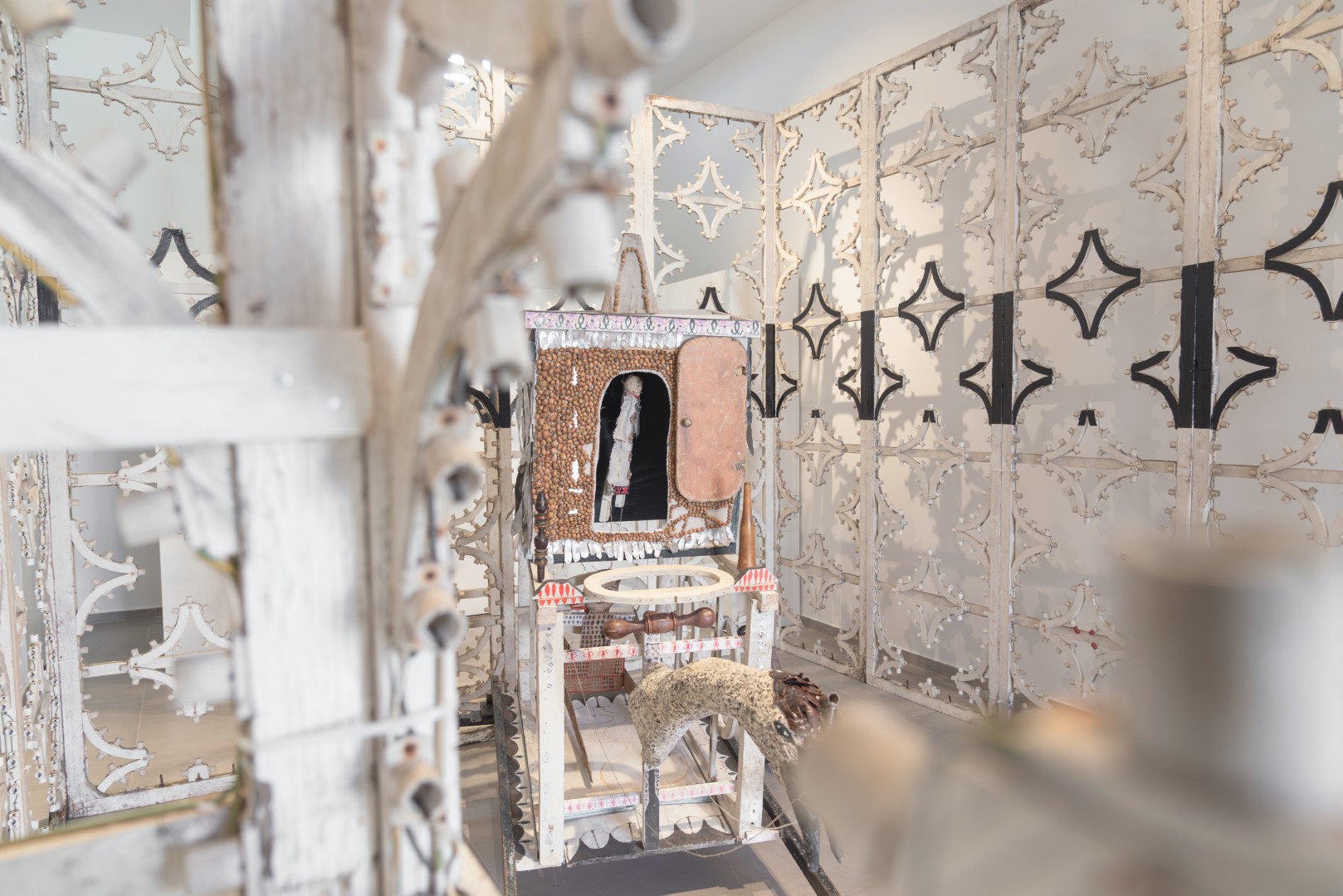
The preliminary phase in February saw the artists intensely explore the Salento territory, visiting luminarie workshops, artisan depots, and coastal stretches. The use of recycled materials was not merely an aesthetic choice but a programmatic decision to work with objects already marked by time.
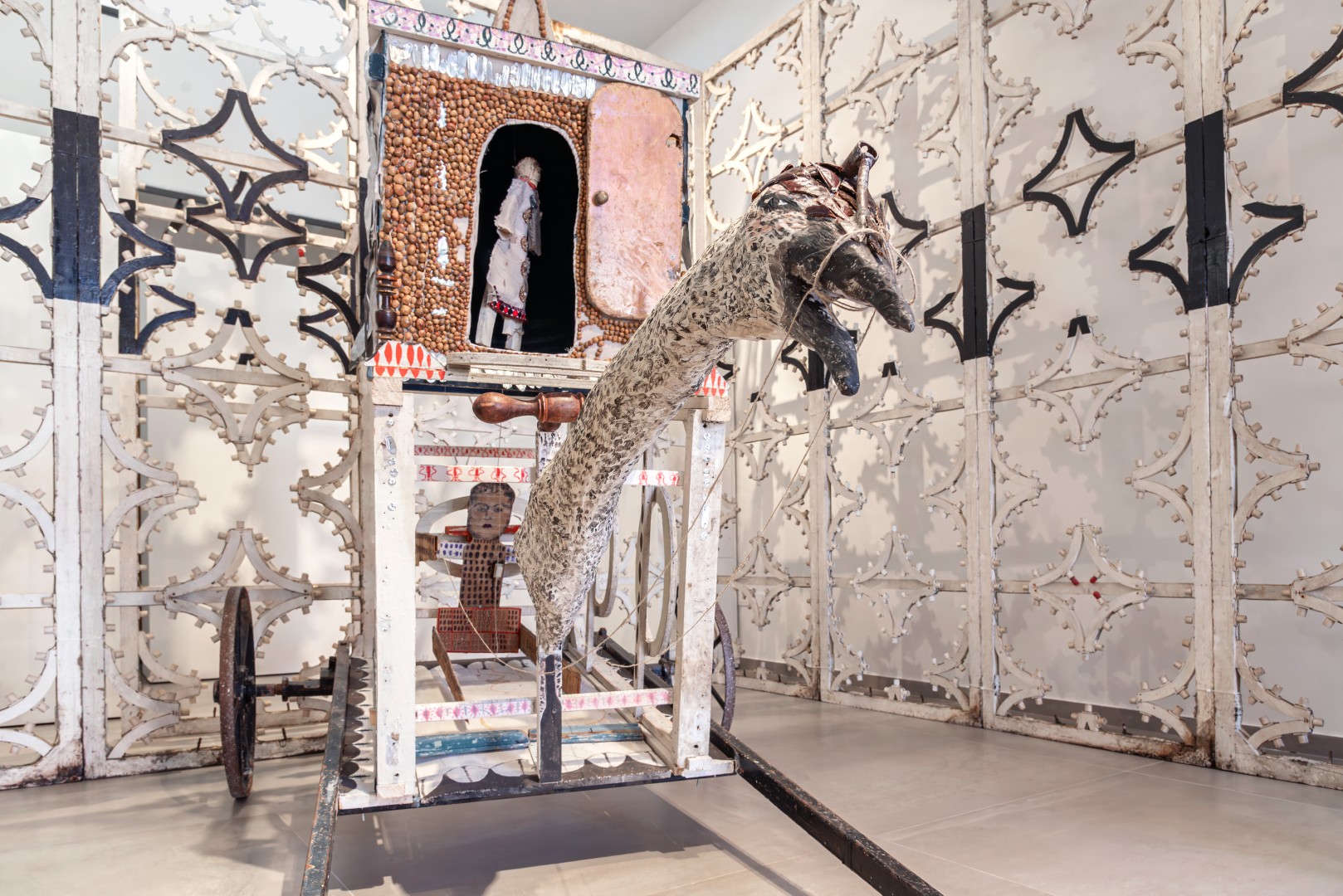
Leonardo Regano highlighted the “magical object quality” that the cart acquired during its creation. Describing the process as a “fever” or “very fast and obsessive” work, the artists created a “seal”: an object charged with thought that continues to live even after its construction, transcending its nature as a sculpture to become an autonomous entity.
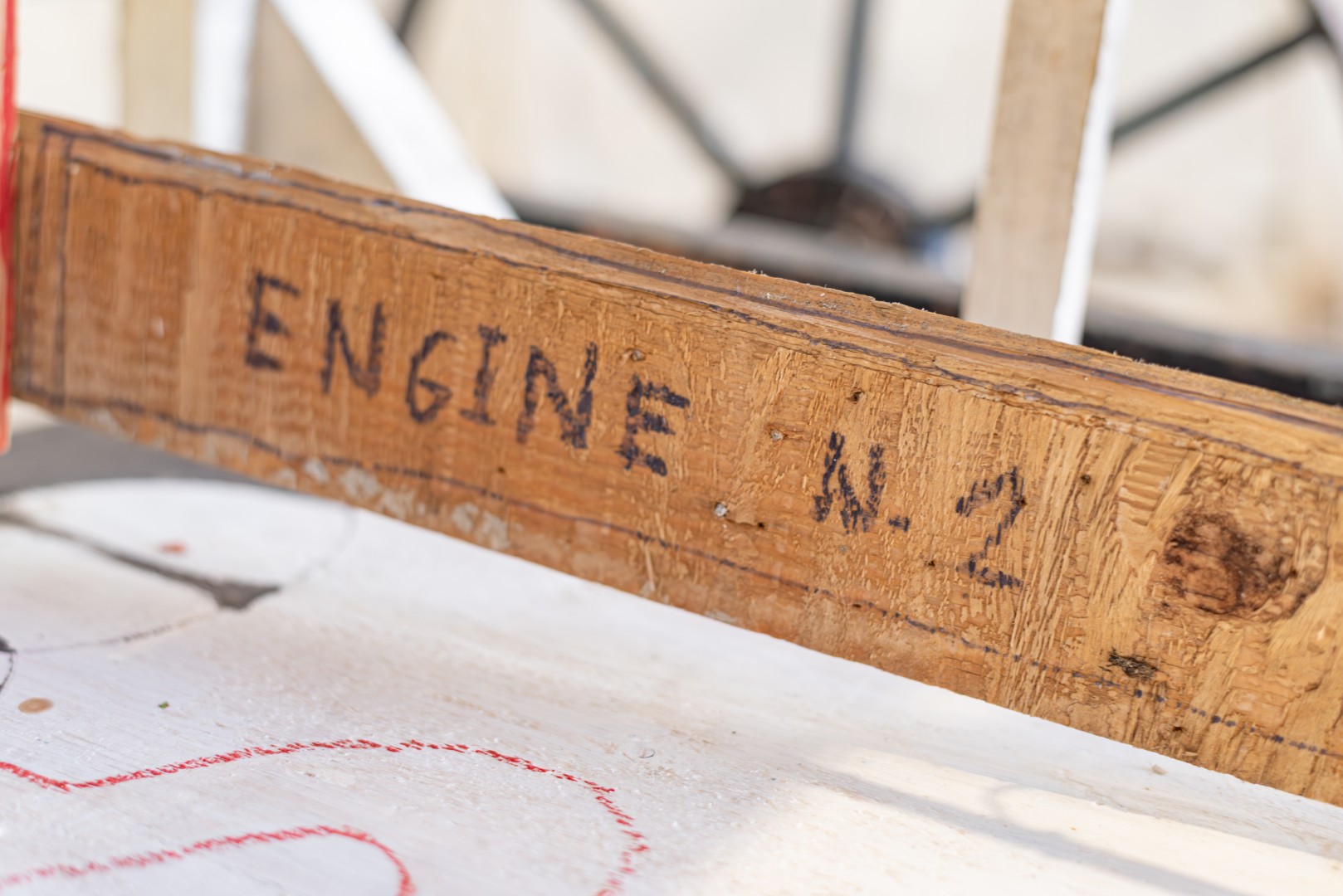
Flavio Favelli’s intervention enriched the project, introducing an environmental dimension that dialogues with the presence of the bird-cart. Using similar materials, such as fragments of luminarie, Favelli created a space that moves away from festive imagery to focus on residual layers, generating a dialectical relationship between interior and exterior.
Favelli introduced a black stripe painted at face height along the structures, a color unusual for luminarie’s traditional chromatic palette. This black stripe serves as a chromatic threshold, separating the festive register from something darker, resonating with the enigmatic nature of the cart it embraces.
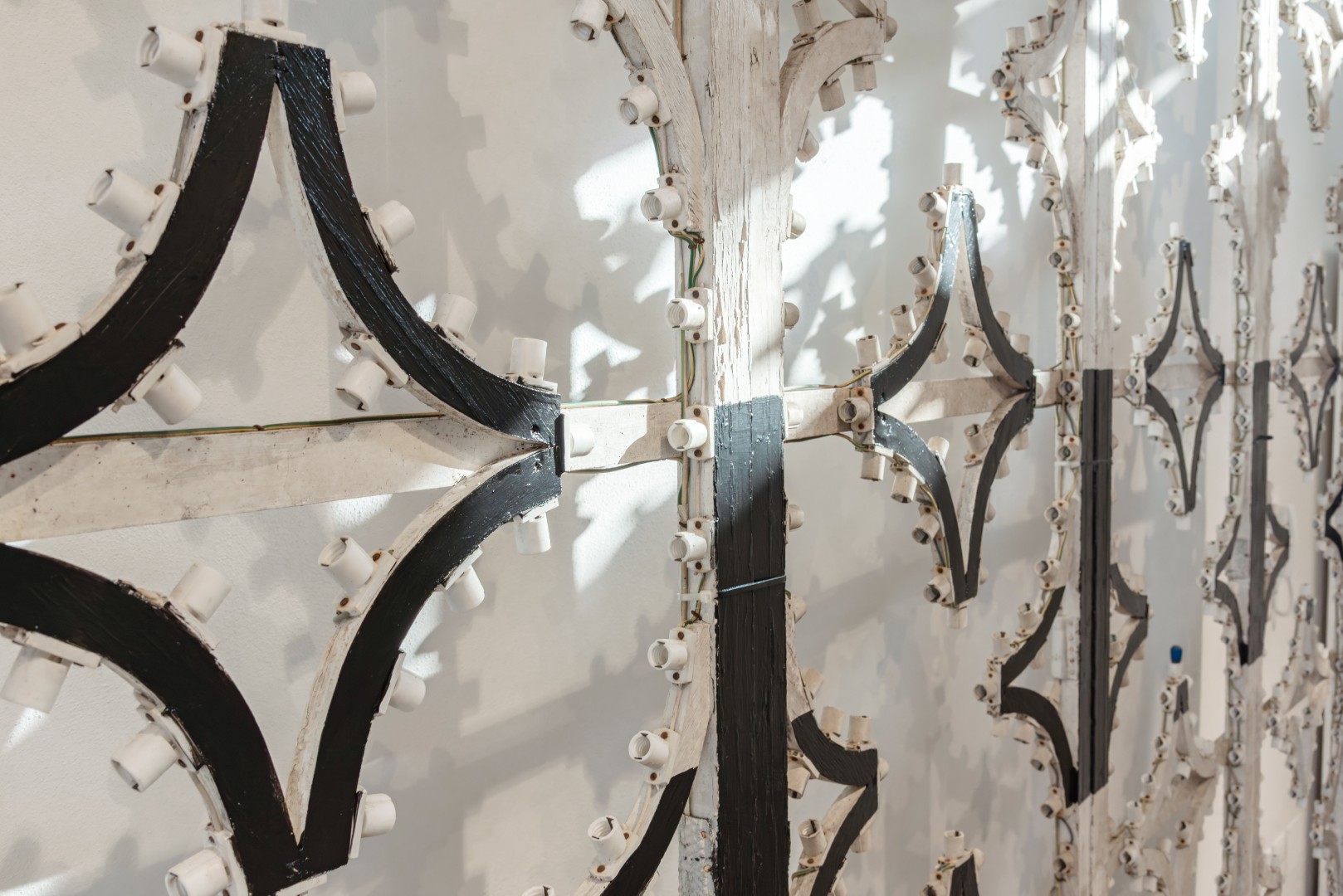
The dialogue between Favelli’s works and the bird-cart by Ferrari Bravo and Saccuman produces a significant shift: ornament becomes anatomy, light transforms into shadow, and the collective becomes singular. The luminarie reinterpreted by Favelli and the body assembled by Ferrari Bravo and Saccuman mirror each other, illuminating different perspectives starting from the same material.