
Скульптура больше не ограничивается объемом, весом или формой, занимающей пространство. Она расширяется, смешивается, включает процессы, звуки, органические материалы, образы, ритуалы и территориальные воспоминания. Именно в этом переосмыслении заключается выставка Dancing at the Edge of the World, коллективная экспозиция, с которой Fondazione Arnaldo Pomodoro и Fondazione ICA Milano представляют работы Bronwyn Katz, Dan Lie, Yu Ji, Trương Công Tùng и Luana Vitra – пяти финалистов восьмой премии Arnaldo Pomodoro. Выставка исследует самые актуальные аспекты скульптурной практики, демонстрируя ее способность адаптироваться в условиях современных кризисов.
Премия, учрежденная в 2006 году по инициативе Arnaldo Pomodoro, остается одним из немногих в Италии и мире признаний, специально посвященных скульптуре. Ежегодно отбираются художники в возрасте от 25 до 45 лет, чьи исследования вносят значительный вклад в переосмысление этой области. В этом году денежный приз увеличился с 10 000 до 30 000 евро благодаря поддержке Venini. Художники выбираются жюри под председательством Anne Reeve, куратора Hirshhorn Museum and Sculpture Garden в Вашингтоне, и в составе которого входят Federico Giani, куратор Fondazione Arnaldo Pomodoro, Sohrab Mohebbi, директор Sculpture Center в Нью-Йорке и член научного комитета Fondazione Arnaldo Pomodoro, Julia Morandeira Arrizabalaga, руководитель отдела исследований Национального центра искусств королевы Софии, и Chiara Nuzzi, куратор и редактор Fondazione ICA Milano.
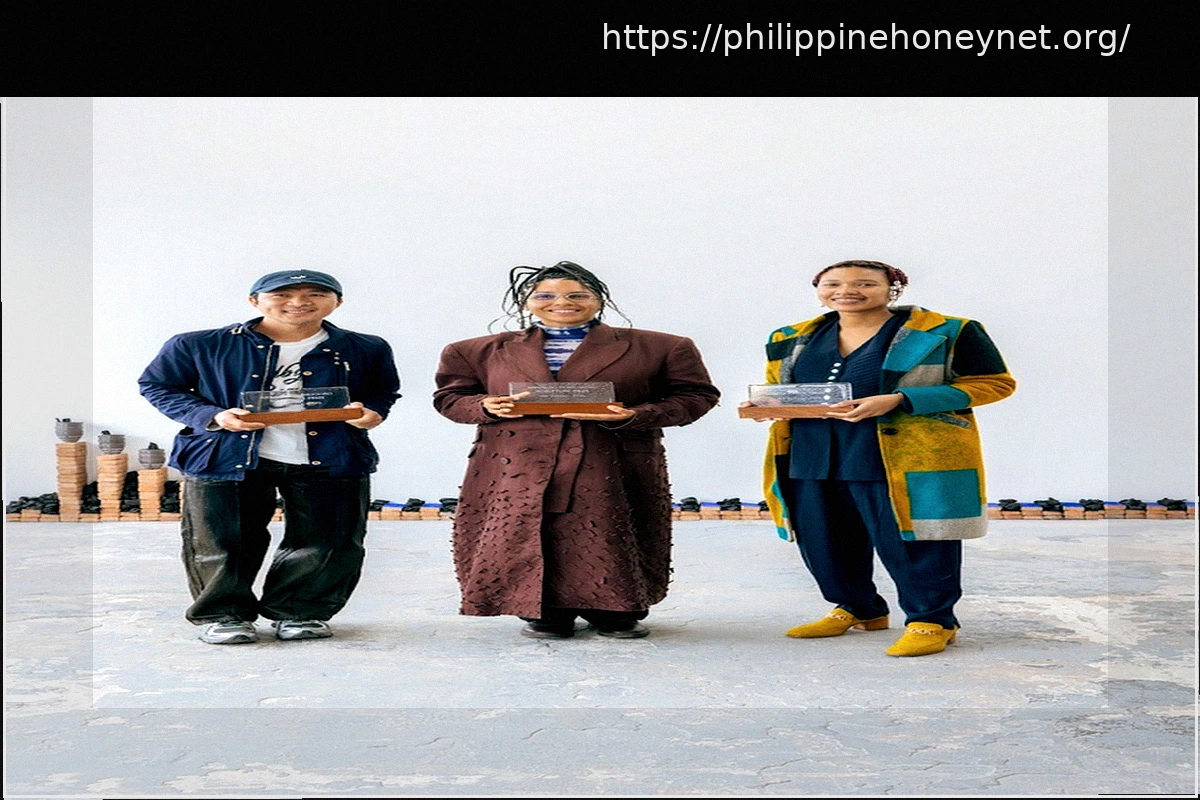
Восьмая премия также отмечена символическим жестом: после кончины Арнальдо Помодоро 22 июня 2025 года финалисты попросили разделить премию ex aequo в его память. Эта просьба была единогласно одобрена жюри и обеими фондами.
Название выставки отсылает к одноименному сборнику эссе Ursula K. Le Guin и сразу вводит политическое измерение в творческое воображение. Скульптура здесь понимается как практика переосмысления восприятия и мышления, ставящая под сомнение оппозиции между естественным и искусственным, человеческим и нечеловеческим, материей и духом, сохраняющая воспоминания, поглощающая социальные и политические напряжения. Несмотря на почти полное отсутствие, человеческая фигура остается центральной как след, как воплощенная мера опыта, как трансформированное или рассеянное в других системах отношений тело.
Экспозиция открывается работой The secret code Trương Công Tùng, инсталляцией, переплетающей природные и искусственные элементы – поддельные голубиные яйца, промышленный инкубатор, крылья термитов, черную воду – создавая среду, где время и пространство распадаются. В этой работе вьетнамский художник, родившийся в 1986 году, представляет процессы жизни и изменения, исследуя, как люди проектируют, манипулируют и пересекают биологические системы.
С работой Forager – Lunch (2020-2026) Yu Ji, художница из Шанхая, родившаяся в 1985 году, привносит в пространство рассеянную хореографию объектов, образов и движения. Две скульптуры, черно-белые фотографии с рисованными элементами и видео, транслируемое со старого телевизора, формируют прерывистое повествование, почти партитуру о том, как мы обитаем мир. Скульптура здесь не навязывается как компактное присутствие, а распределяется, расширяется, кажется, действует через трение и осаждение.
Южноафриканская художница Bronwyn Katz, родившаяся в 1993 году, работает на стыке геологии и тела. В работе kx’ũi domma (2026) материалы, такие как песок, земля, медь, шпагат, пчелиный воск, фрагменты ракушек и местные растения, активируются как элементы возможного языка или воображаемой музыкальной нотации. Звук голоса прадеда художницы сопровождает инсталляцию, превращая материю в живой архив, в место схождения личной и коллективной истории.
Luana Vitra, бразильская художница, родившаяся в 1995 году, также начинает с глубокой связи с родной землей, Минас-Жерайс, и символической плотностью материалов. В работе Birth Calculation – Variation 2 (2026) преобладает почти алхимическое измерение: трансформация материи становится ритуалом, а синий порошок ваги, доминирующий визуально, приобретает духовное значение, как если бы скульптура могла стать порогом в невидимое измерение.
Наконец, с Dan Lie нечеловеческое перестает быть простым референтом и становится активным участником. Работа Regarding Yellow Thoughts 3 (2026), состоящая из тканей, окрашенных куркумой, и букетов цветов, возникла также из повторного использования предыдущих инсталляций и строится как открытый организм, находящийся в постоянной связи с публикой и окружающей средой. К этой инсталляции художница, родившаяся в Бразилии индонезийского происхождения в 1998 году, добавляет серию рисунков The Reek Testimonial, где ферментация, рост и распад трансформируются в непосредственный и тактильный визуальный язык.
English Translation:
Pomodoro Prize Explores Contemporary Forms of Sculpture
Sculpture is no longer solely defined by volume, weight, or a form that occupies space. It expands, contaminates, absorbs processes, sounds, organic materials, images, rituals, and territorial memories. It is precisely within this redefinition that Dancing at the Edge of the World is situated, the group exhibition with which Fondazione Arnaldo Pomodoro and Fondazione ICA Milano present the works of Bronwyn Katz, Dan Lie, Yu Ji, Trương Công Tùng, and Luana Vitra, the five finalists of the eighth edition of the Arnaldo Pomodoro Prize for Sculpture, an exploration into the most current interpretations of sculptural practice, to convey its adaptability amidst present-day crises.
Established in 2006 by the will of Arnaldo Pomodoro, the prize remains one of the few recognitions, in Italy and internationally, specifically dedicated to sculpture. For each edition, artists between the ages of 25 and 45 whose research has significantly contributed to redefining the field are selected. This year, moreover, the prize money has increased from 10,000 to 30,000 euros thanks to the support of Venini. The artists are selected by a jury chaired by Anne Reeve, curator at the Hirshhorn Museum and Sculpture Garden in Washington, and composed of Federico Giani, curator at Fondazione Arnaldo Pomodoro, Sohrab Mohebbi, director of the Sculpture Center in New York and member of the scientific committee of Fondazione Arnaldo Pomodoro, Julia Morandeira Arrizabalaga, director of studies at the Museo Nacional Centro de Arte Reina Sofía, and Chiara Nuzzi, curator and editorial manager at Fondazione ICA Milano.
The eighth edition is also marked by a symbolic gesture: following Pomodoro’s passing on June 22, 2025, the finalists have requested to share the prize ex aequo in his memory. This request was unanimously accepted by the jury and both foundations.
The exhibition’s title, referencing Ursula K. Le Guin’s collection of essays of the same name, immediately introduces a political dimension to imagination. Sculpture here is understood as a practice of redefining perception and thought, questioning the oppositions between natural and artificial, human and non-human, matter and spirit, retaining memories, and absorbing social and political tensions. Although almost explicitly absent, the human figure remains central as a trace, as an embodied measure of experience, as a transformed body dispersed into other relational systems.
The exhibition opens with Trương Công Tùng’s The secret code, an installation weaving together natural and artificial elements – fake pigeon eggs, an industrial incubator, termite wings, black water – constructing an environment where time and space disintegrate. In this work, the Vietnamese artist, born in 1986, stages processes of life and alteration, questioning how humans design, manipulate, and navigate biological systems.
With Forager – Lunch (2020-2026), Yu Ji, an artist born in Shanghai in 1985, brings a dispersed choreography of objects, images, and movement into space. Two sculptures, black-and-white photographs with drawn interventions, and a video broadcast from an old television form a discontinuous narrative, almost a score on how we inhabit the world. Sculpture here does not impose itself as a compact presence but distributes itself, dilates, and seems to act through friction and sedimentation.
South African artist Bronwyn Katz, born in 1993, works on ground where geology and the body intertwine. In kx’ũi domma (2026), materials such as sand, soil, copper, twine, beeswax, shell fragments, and local plant species are activated as elements of a possible language or an imaginary musical notation. The voice of the artist’s great-grandfather accompanies the installation, transforming matter into a living archive, a convergence point between personal and collective history.
Luana Vitra, a Brazilian artist born in 1995, also begins with a profound relationship with her region of origin, Minas Gerais, and the symbolic density of materials. In Birth Calculation – Variation 2 (2026), an almost alchemical dimension prevails: the transformation of matter becomes ritual, and the blue Wagi powder, which visually dominates the work, takes on spiritual value, as if sculpture could still become a threshold to an invisible dimension.
Finally, with Dan Lie, the non-human ceases to be a mere reference and becomes an active protagonist. Regarding Yellow Thoughts 3 (2026), composed of turmeric-dyed fabrics and bouquets of flowers, also arises from the reuse of previous installations and is constructed as an open organism, in continuous relation with the public and the environment. Alongside this installation, the artist, born in Brazil of Indonesian descent in 1998, presents the drawing series The Reek Testimonial, where fermentation, growth, and decay translate into an immediate and tactile visual language.