
The ‘Palpita’ exhibition by Pedro Torres, curated by Carolina Ciuti, has opened at AlbumArte, an independent center in Rome dedicated to contemporary art production and research. Ciuti, a curator and researcher in contemporary visual arts, explores the concept of time through cultural, political, economic, and social lenses. This shared interest with Torres has led to several collaborations, including ‘Clathratus’ (Spazio Volta, Bergamo) and projects within the LOOP Barcelona Festival, where Ciuti served as director until 2022.
Brazilian artist Pedro Torres (b. 1982, Gloria de Dourados) explores the intersections of scientific realms and poetic sensibility, particularly focusing on time as a complex and fluid dimension. This thematic thread is evident in previous works, such as ‘Fisura,’ presented in 2024 at the Real Academia de España en Roma, which examined light perception and its relationship with matter. Torres has exhibited extensively in solo and group shows, as well as biennials across Spain, France, Italy, Ecuador, Colombia, Argentina, Mexico, Turkey, and China. The ‘Palpita’ project, on view until May 13th, was realized with support from the Institut Ramon Llull and the European Gravitational Observatory (EGO), in collaboration with the Real Academia de España en Roma and AlbumArte.
The exhibition delves into the concept of time as a vibrating material, drawing inspiration from studies of gravitational waves—infinitesimal ripples in spacetime caused by massive and distant cosmic events. The project stems from Torres’s interest in interferometry, a tool that makes phenomena otherwise invisible to human experience accessible. This was developed through a dialogue with researchers at the Cascina Observatory near Pisa, home to the Virgo experiment, one of only three gravitational wave detectors on Earth.
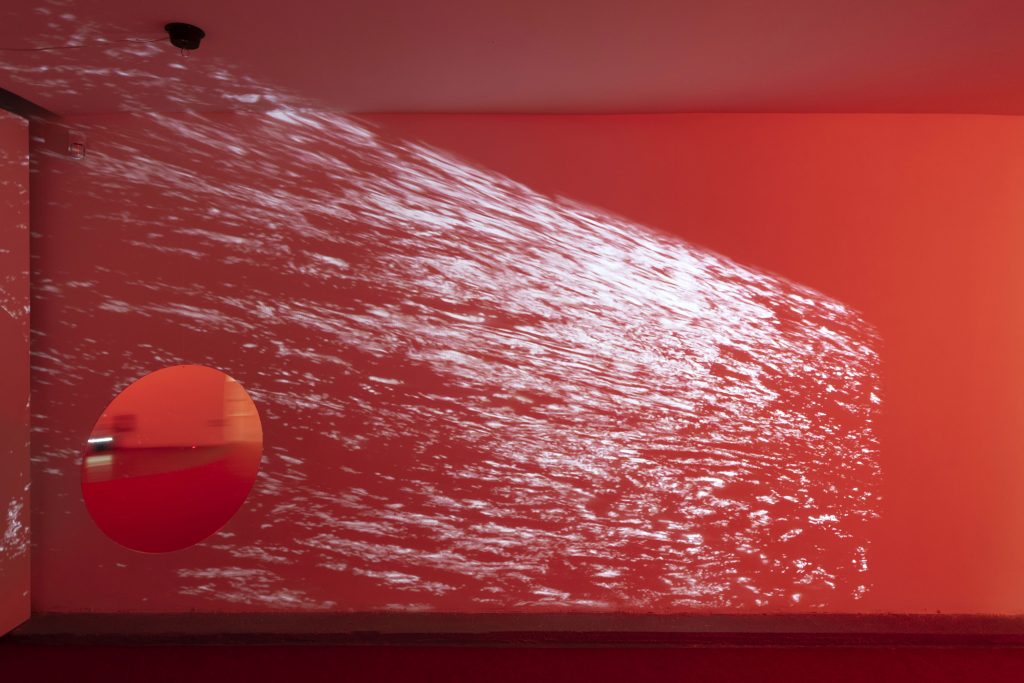
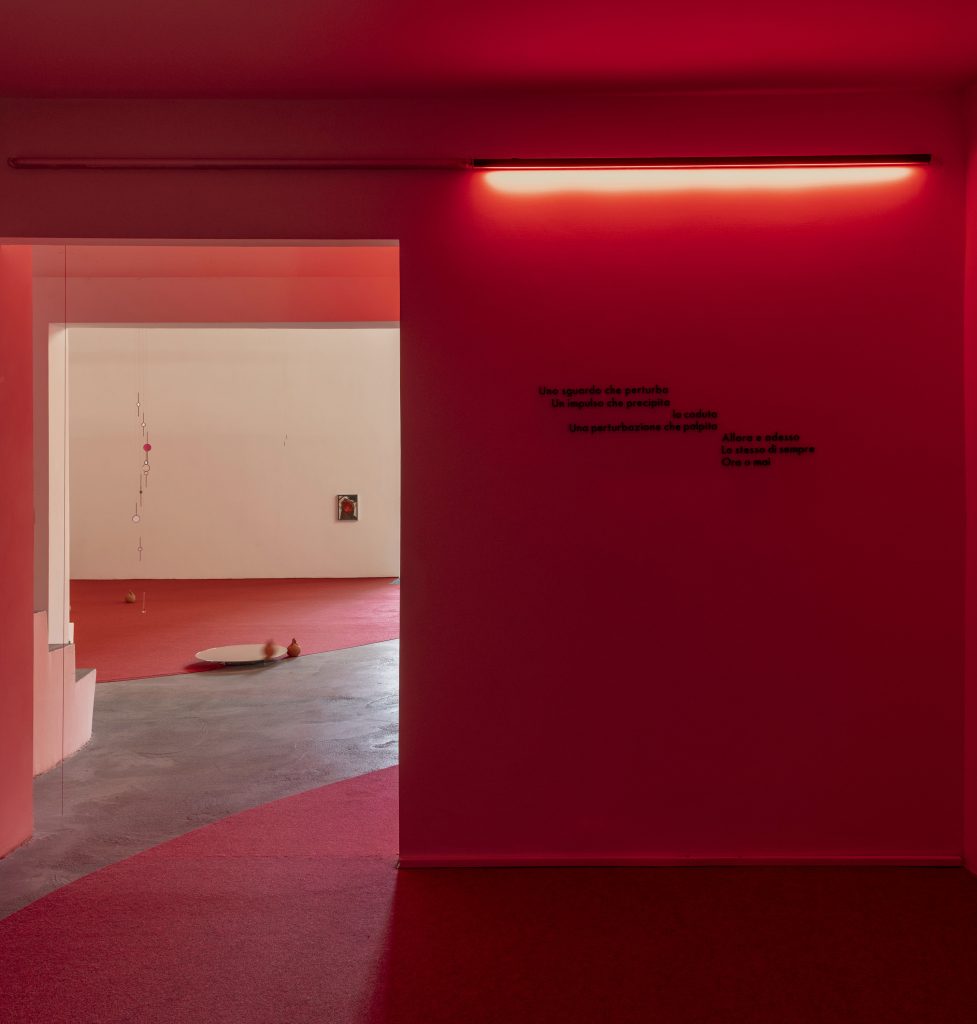
Within AlbumArte, ‘Palpita’ manifests as a site-specific environment where light, sound, material, and image converge to create an experience of resonances and perceptual shifts. Arranged like a decentralized constellation, the artworks challenge the boundaries of perception, guiding the audience toward a heightened awareness of their own bodies in space. This unfolds in a dimension suspended between the visible and invisible, where experience is shaped through pauses and continuous adjustments of sight and hearing. Torres employs various media—installation, video, sound, sculpture, and collage—as tools to engage with science and explore the ineffability of time, which, as physicist Carlo Rovelli argues in ‘The Order of Time,’ is a perceptual illusion.
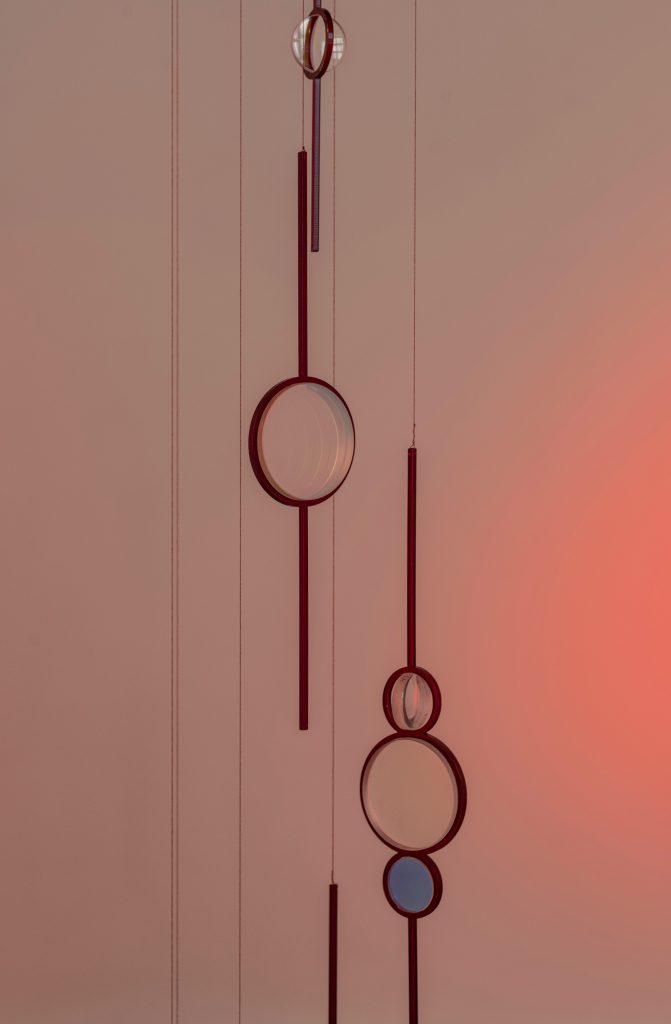
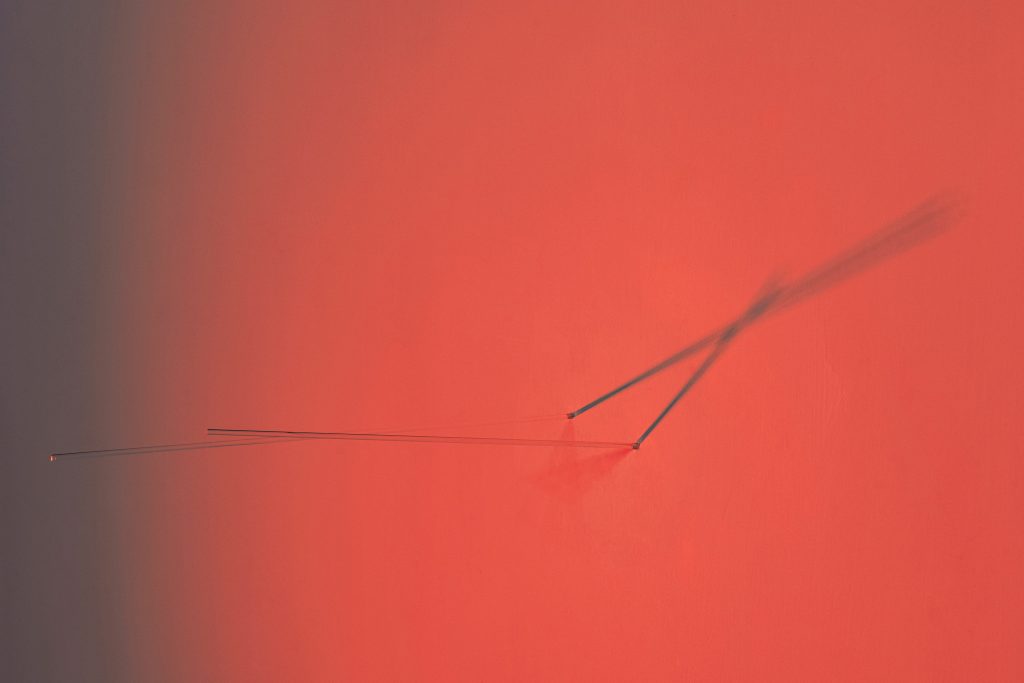
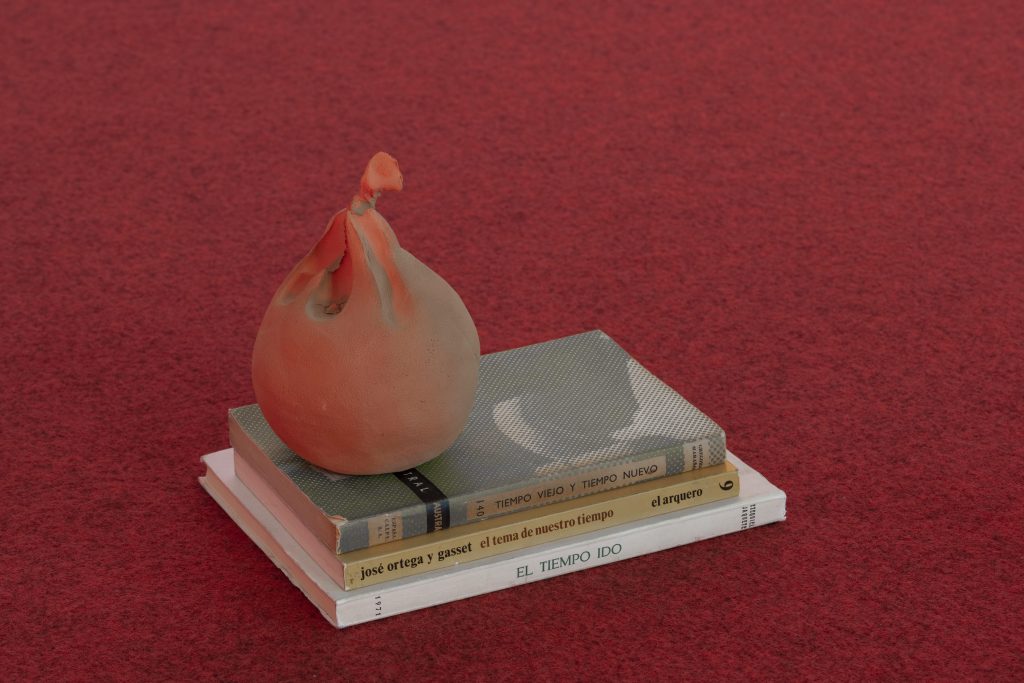
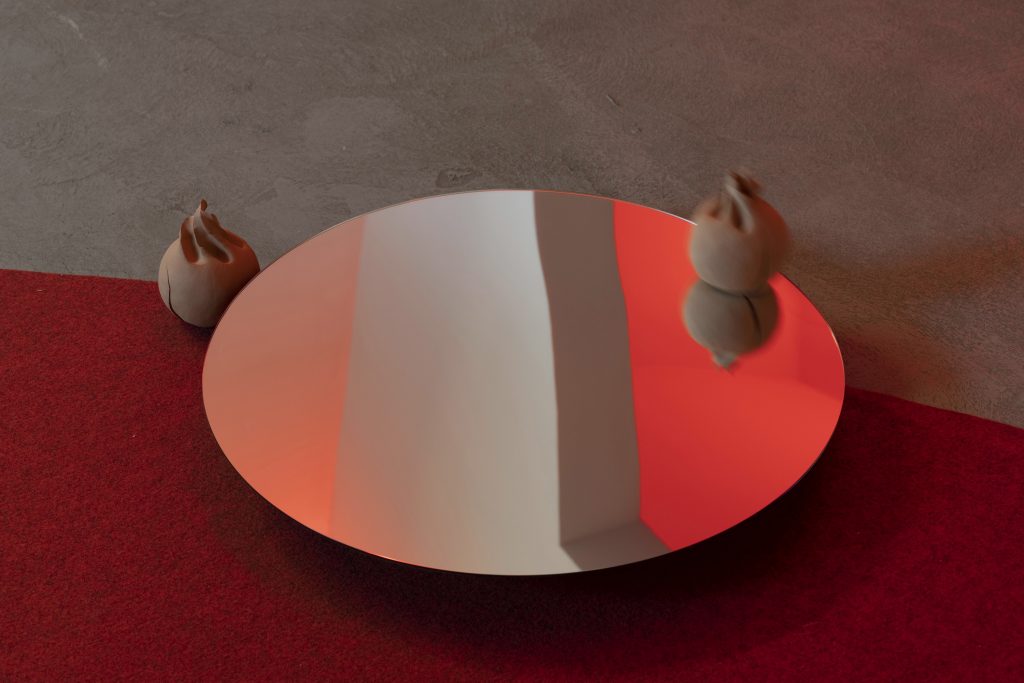
The titular site-specific installation, ‘Palpita,’ spreads rhizomatically across various zones of the exhibition. It incorporates technical materials such as fiberglass from the gravitational observatory, lasers, tensioned wires stretching from ceiling to floor, and mirrors. These ultra-sensitive supports, typically used in interferometry to detect gravitational waves, create a space that focuses attention on the invisible. Another significant work, ‘La imposibilidad de la forma: el presente’ (The Impossibility of Form: The Present), features a series of spherical clay sculptures arranged on the floor. Their final forms, shaped by atmospheric conditions, exhibit fractures that symbolize the volatility of the present moment. This artistic exploration engages with the historical landscape of Rome, adding a layer of depth where cosmic time intersects with the city’s archaeological past. Ruins, traces, and remnants emerge, suggesting that fragility is not exclusive to the past, and within these clay spheres, the present unfolds to reveal potential developments.
Pedro Torres views quantum physics not merely as a subject of study, but as a poetic opportunity—a means to render the invisible tangible and to experience time as a trace of events already occurred yet still propagating. In this context, ‘Palpita’ evokes a pulse, an imperceptible yet vital beat that traverses space and continues to propagate into the present, revealing the emergence of form and the reaction of matter.