
On Stage is our weekly feature highlighting live performances across Italy. Here’s our selection for the week of March 30 to April 5.
Theatre and Dance
Cinderella Ballet of the Croatian National Theatre
The Teatro Regio di Parma, as part of Parma Danza, presents the Croatian National Theatre Ivan Zajc of Rijeka with their production of Cinderella. This version, choreographed by Serbian artist Leo Mujić, offers a fresh perspective on the classic ballet. Mujić, whose academic training in Belgrade was enriched by modern influences at Béjart’s École Rudra and a successful career as a dancer and choreographer across Europe, reimagines Cinderella as an abstract, minimalist contemporary ballet. While adhering to the original storyline, the choreography is essential and dynamic, built on neoclassical foundations with adagio pas de deux, virtuosic variations for the lead roles, and vibrant ensemble work, all while preserving grotesque expressiveness and incorporating contemporary gestures.
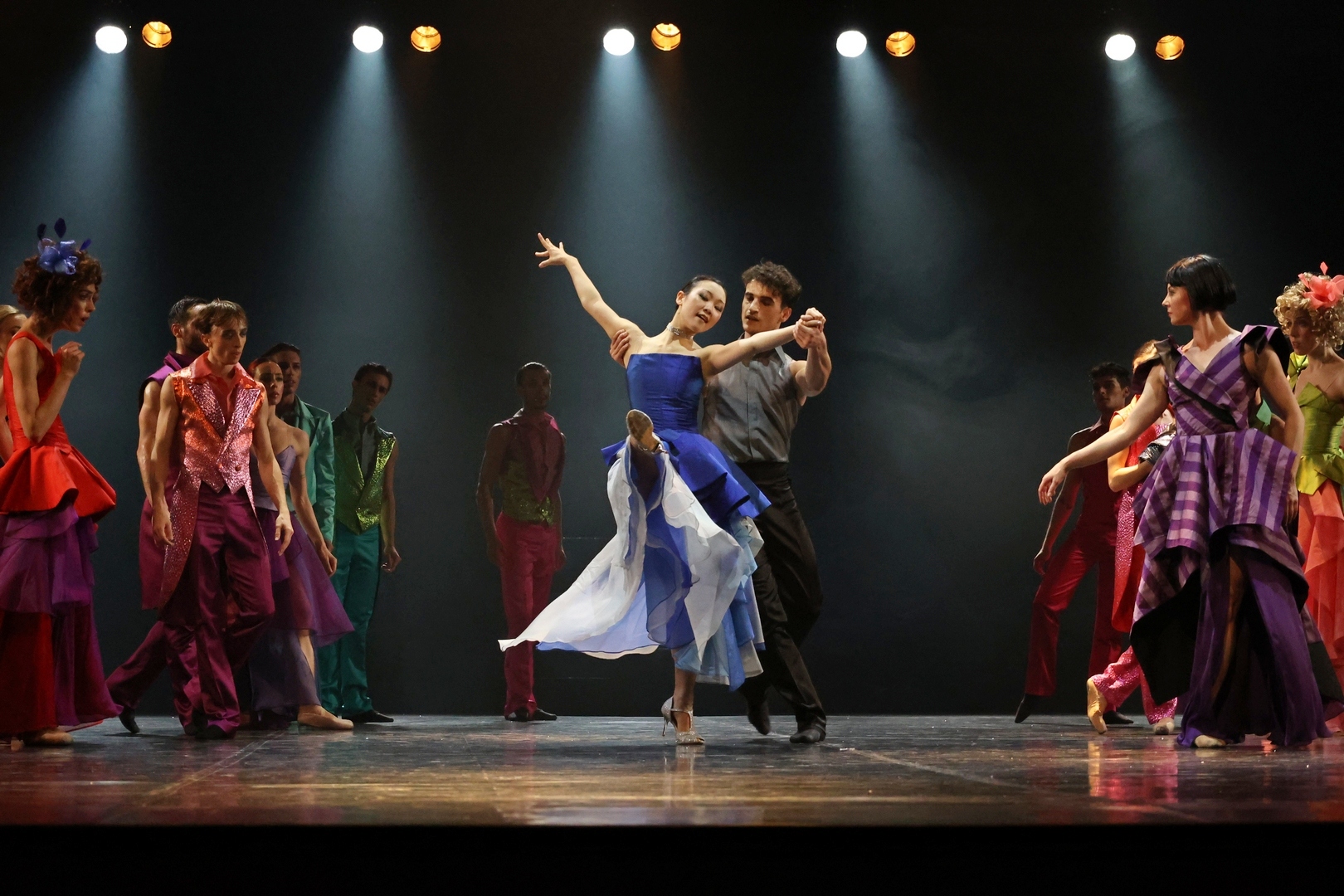
Cinderella, choreography by Leo Mujić, music by Sergei Prokofiev, dramaturgy by Bálint Rauscher, sets by Stefano Katunar, costumes by Manuela Paladin Šabanović, lighting by Aleksandar Čavlek. At Teatro Regio, Parma, on April 2.
Romeo and Juliet Survived
What if Romeo and Juliet had survived to truly live their love story? Imagine them in a mid-life crisis, constantly mocked by their adolescent selves and burdened by the pressure of being the iconic symbol of romantic love. Despite their analyst’s disapproval, they decide to confront their challenges by staging a show about themselves. Ben Duke, a visionary talent in the British theatre scene, explores our cultural obsession with youth and the complexities of longevity. This subtle journey blends laughter and melancholy, as the myth of perfect love clashes with the disarming reality of everyday life. Juliet & Romeo is a dance performance for all, where contemporary dance explores the archetype of star-crossed love.
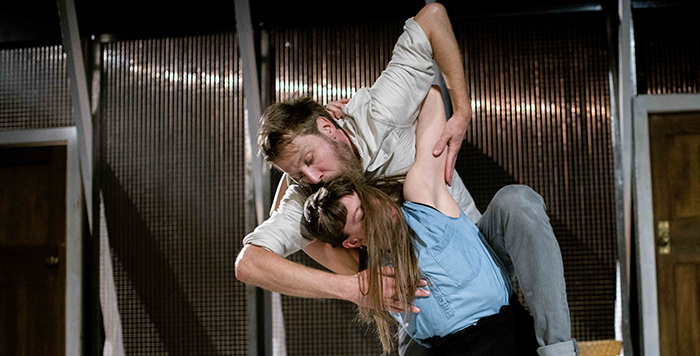
Juliet & Romeo, inspired by William Shakespeare, conceived and directed by Ben Duke, developed by Ben Duke and Solène Weinachter, performed by Emily Terndrup, John Kendall; lighting by Jackie Shemesh, set and costume design by James Perkins. At Teatro Gobetti, Turin, for Torinodanza Extra, from March 31 to April 2.
Four Short Texts by Samuel Beckett
This project unites four short texts by Samuel Beckett, presenting them as four breaths completing a single movement. Quattro Quarti (Four Quarters), directed by Alessandro Averone, explores, as always with Beckett, the arduous journey of human existence in the world, the sense of being cast into the universe in search of meaning, and the daily struggle to achieve a delicate balance – our ‘craft of living.’ The director explains, ‘The journey unfolds as a process of identity dismantling. We start with the physical body enduring destiny (Act Without Words), move to the judged body (Play Two), arrive at the body exposed as a technological fetish (Catastrophe), and conclude with the pure organic remains, the naked word (Not I). The protagonist is man who, failing to find meaning or solace, becomes the ‘probable suicide’ observed by the bureaucrats in Play Two. His end, however, is not death, but transformation into an object.’
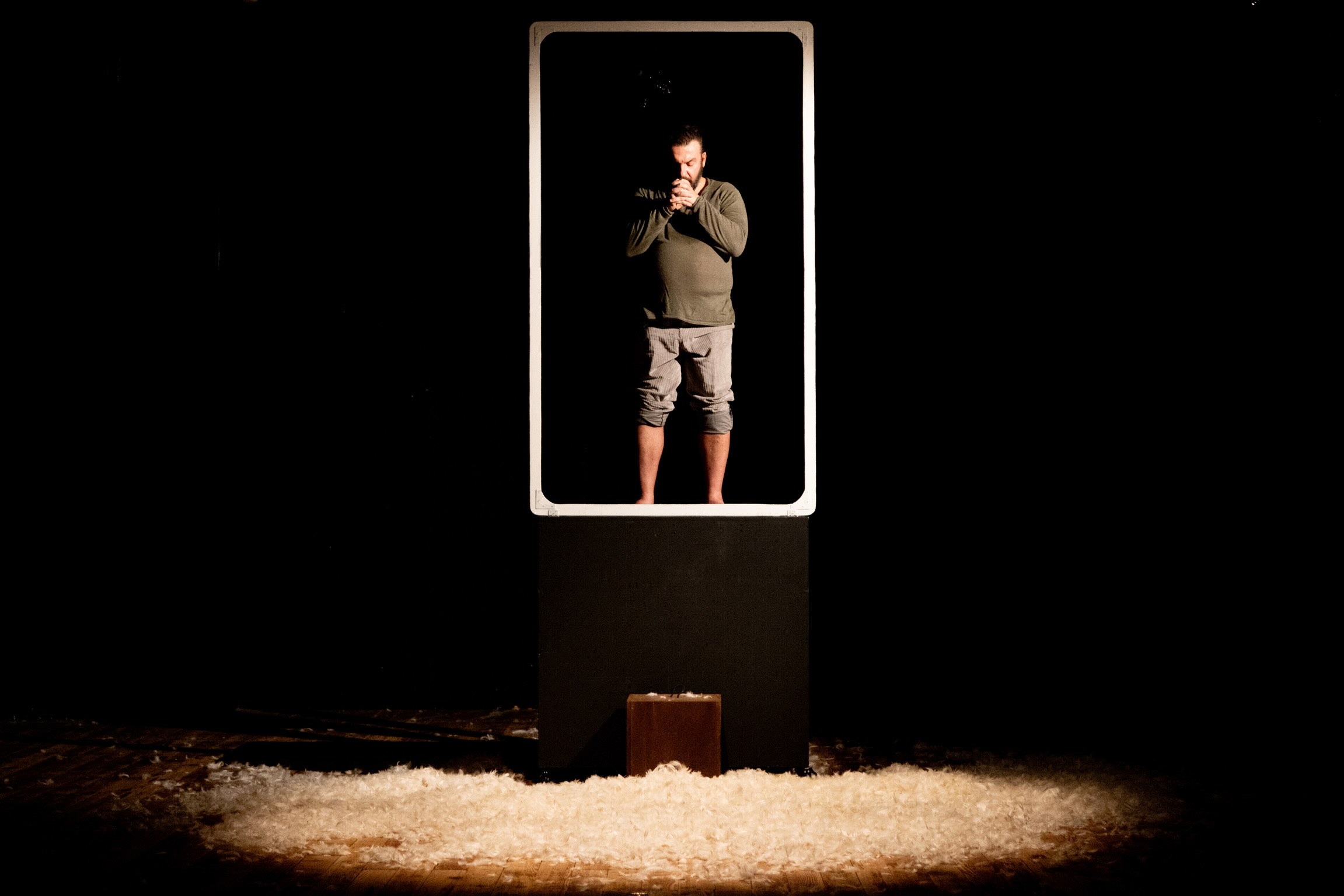
Quattro Quarti, directed by Alessandro Averone, featuring Alessia Giangiuliani, Marco Quaglia, Gabriele Sabatini, Mauro Santopietro, Antonio Tintis, sets by Paola Castrignanò, costumes by Marzia Paparini, lighting by Luca Bronzo. Produced by Altra Scena. At Teatro Cantiere Florida, Florence, for Materia Prima Festival, on March 31.
Pablo Girolami: Dancing in the Voids of Fear
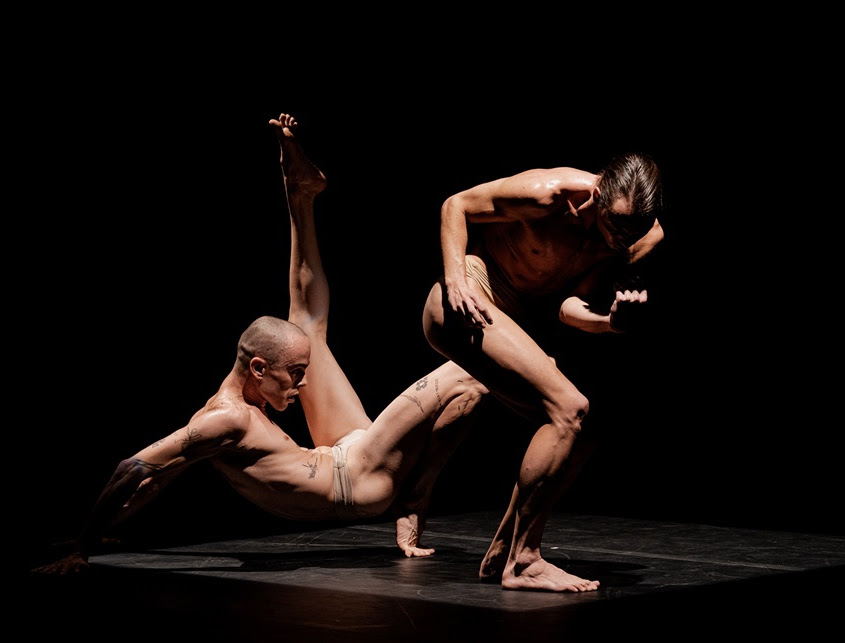
Choreographer Pablo Girolami brings T.R.I.P.O.F.O.B.I.A – The End to La Fonderia in Reggio Emilia, a piece exploring the fear of holes, or rather, the small geometric patterns that, when combined, create clusters of tiny cavities (open rehearsal on March 30, debut on March 31). This visual spectacle uses three-dimensional repeating patterns to evoke disgust and repulsion, triggering an intrinsic alarm system developed over centuries by our ancestors to protect against parasitic infections or venomous animals. Anxiety, dread, fear—hundreds of names for a single existential dimension: the fear of losing control over the world, our bodies, or others. Geometry forms the skeletal structure of trypophobia, yet, through the imaginative contribution of the human mind, it transforms into an active gateway for fear, reflecting human insecurities and paranoia.
José Martínez’s Don Quixote
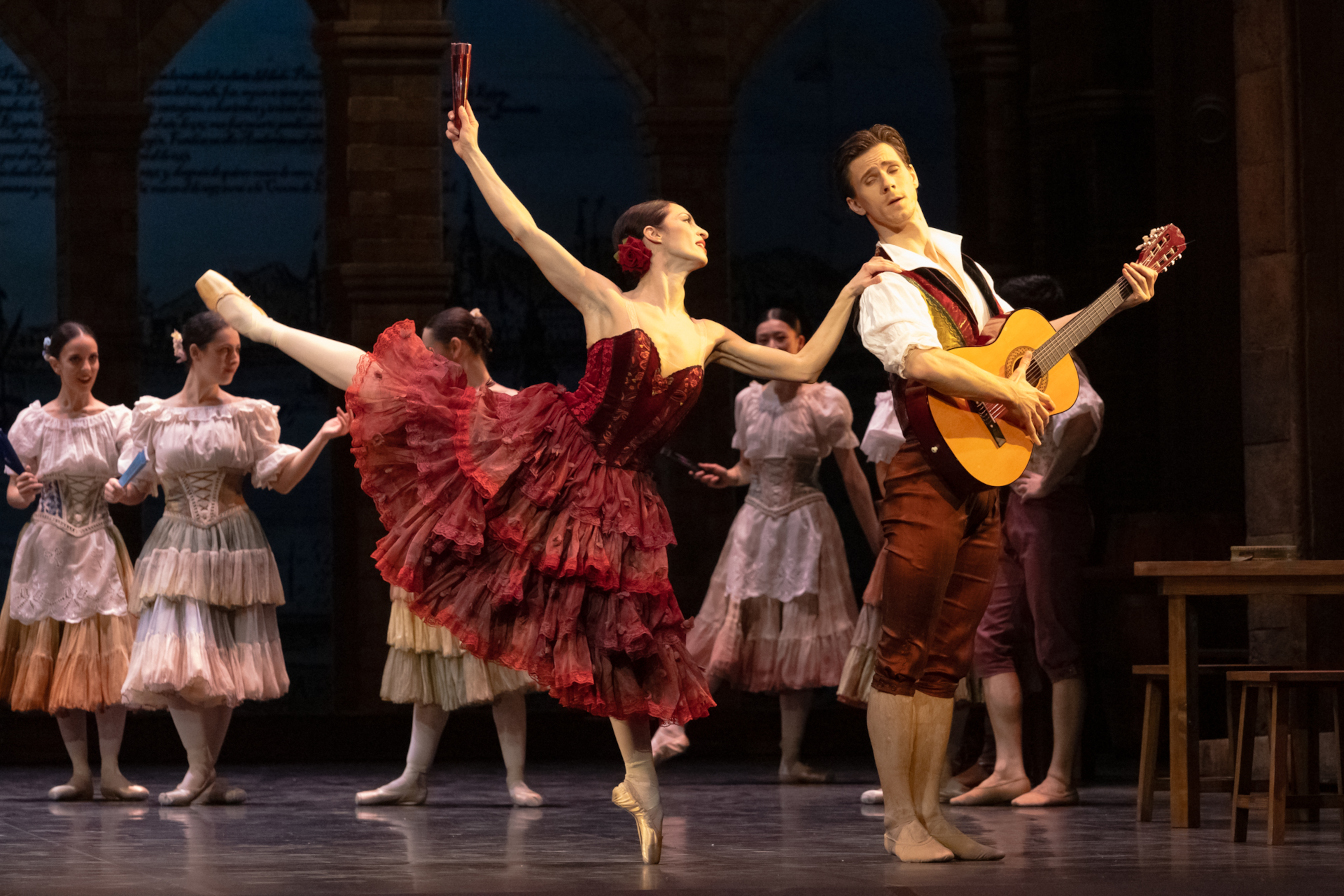
Choreographer José Martínez, director of the Ballet de l’Opéra de Paris, presents a faithful yet dynamic reinterpretation of Marius Petipa’s classic Don Quixote for the Corps de Ballet of Teatro Massimo in Palermo, set to the music of Aloisius Ludwig Minkus. The libretto, based on an episode from Cervantes’ Don Quixote, focuses more on the tumultuous romance of Kitri and Basilio than on the adventures of Don Quixote and Sancho. Drawing on the original choreography and the various versions Martínez himself has danced (Nureyev, Baryshnikov, Gorski), he preserves the ballet’s choreographic structure while infusing Don Quixote’s character and his quest for perfect love, embodied by Dulcinea, with a more poetic nuance. Concurrently, Martínez aimed to capture the authentic essence of Spanish dance, culture, and tradition. Conductor Mojca Lavrenčič leads the orchestra. This new production, running until April 4, is an international co-production with the Opéra National de Bordeaux.
Choreographic Explosion at Triennale di Milano
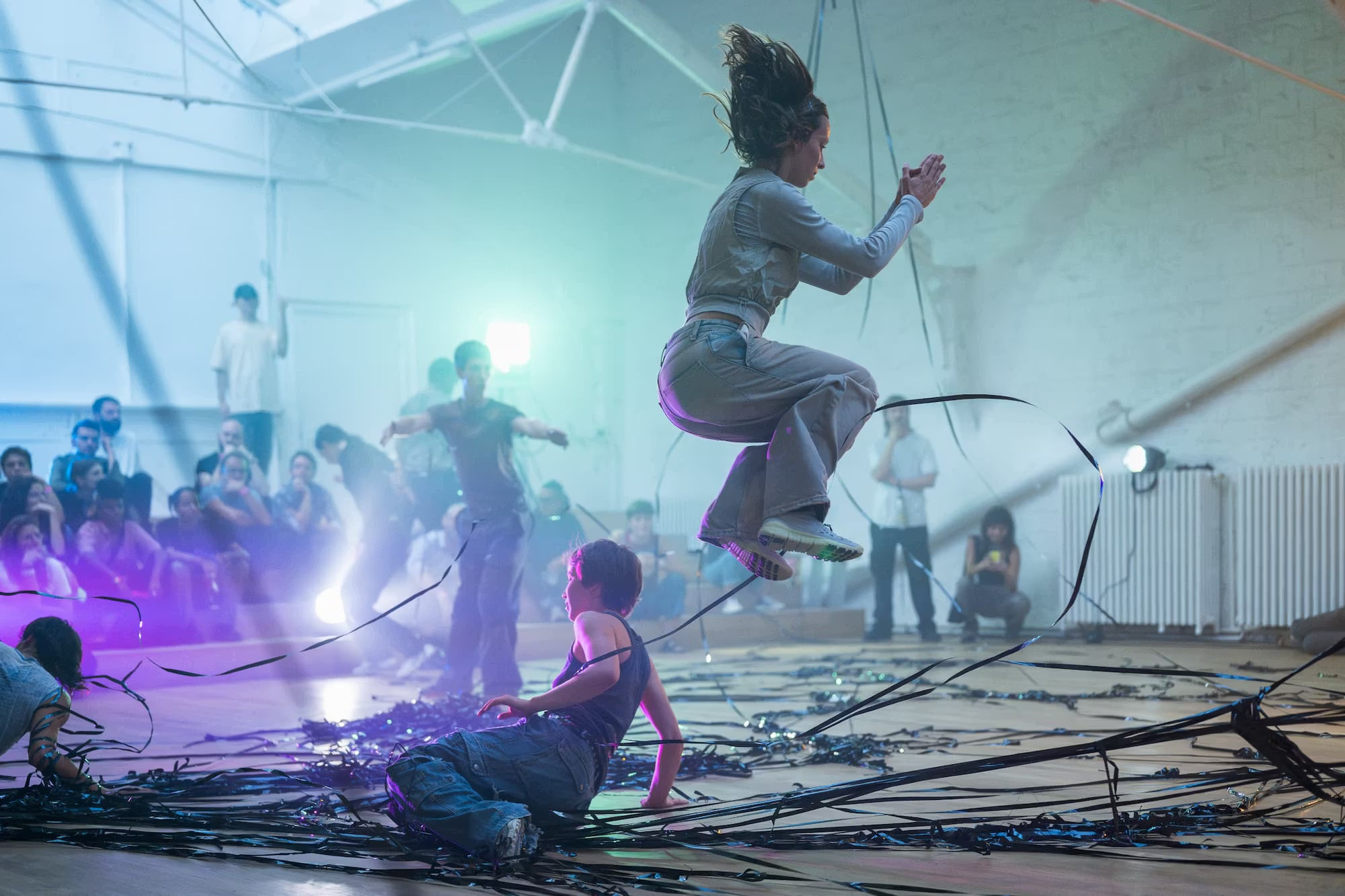
On March 31, the Triennale di Milano’s FOG Performing Arts Festival will host the world premiere of 900 Satellites. This performative extension of the collective work 900 Something Days Spent in the XXth Century by French choreographer and performer Némo Flouret, known for his work in hybrid spaces and participation in the European project PIT (Perform Inform Transform: Participatory Performance in Art Museums), of which Triennale Milano Teatro is a partner. Conceived as a site-specific ‘deviation’ from the original project, this version allows choreographic fragments to evolve and renew in relation to their host spaces. For this occasion, dancers will occupy the Triennale Milano premises, creating an essential and spontaneous score relying solely on movement: perpetually evolving ideas transform into a surprising choreographic explosion, resonating with the architecture and the timing of the action.
Pasolini: Under Everyone’s Eyes
Inspired by the life, poetry, and cinema of Pier Paolo Pasolini, the performance Pasolini. Under Everyone’s Eyes centers on a suspended wooden platform, held aloft by human arms. Within this same space, Pasolini moves, solitary and visionary, in eternal dialogue and conflict with the structures of his era. The show uses physical-poetic theatre to analyze the tense and conflicting relationship between the poet and the society he inhabits. On stage, seven actors—five men and two women—perform. Pasolini’s character is portrayed by a single actor, while the others transform into various roles. The wooden platform symbolizes Italian society of the 1960s, suspended in the air like Italy itself suspended in the sea. It overshadows and crushes the writer, just as civil society and his cruel death crushed him, leaving him isolated, unable to enter the perpetual mechanism of the bourgeoisie, alone in life as in death.
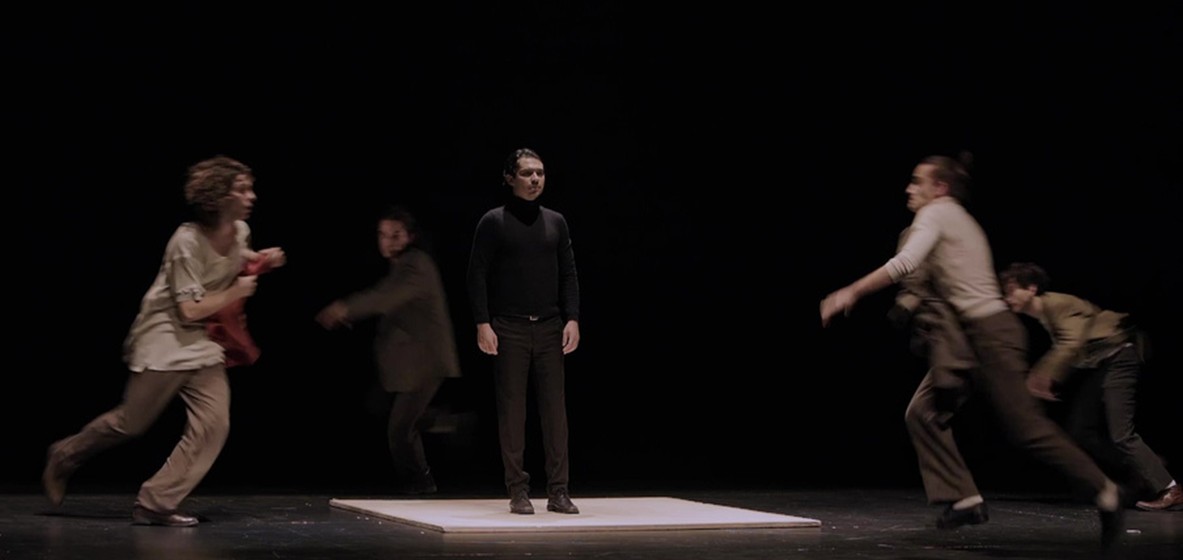
Pasolini. Under Everyone’s Eyes, directed by Valentina Cognatti, featuring Serena Borelli, Andrea Carpiceci, Gabriel Durastanti, Luca Morciano, Alessandro Pisanti, Michelangelo Raponi, Alice Staccioli, costumes by Fiorella Mezzetti. Produced by Margot Theatre Company. At Spazio Diamante, Rome, April 1 and 2.
Eleonora Duse: A Hymn to Women
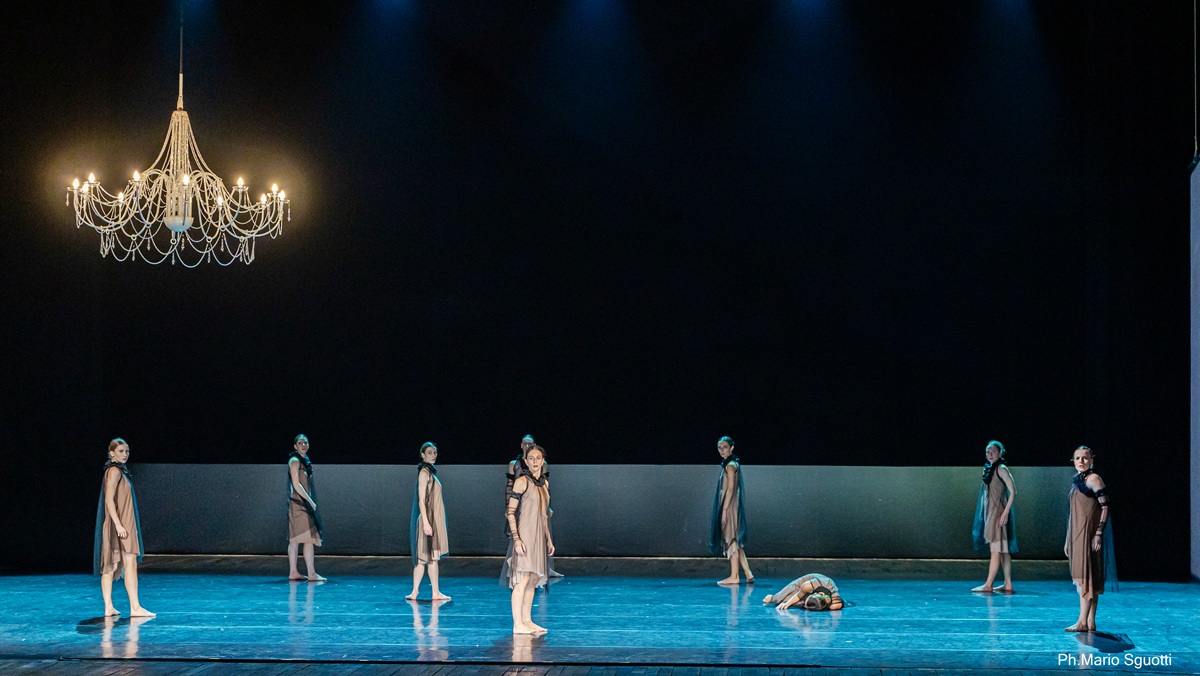
Signed by Adriano Bolognino and Rosaria Di Maro for COB Compagnia Opus Ballet, La Duse will be staged at Teatro Del Monaco in Treviso on April 1. This choreography won the Danza&Danza award for Best Italian Production – Middle Scale in 2024. The performance portrays ‘The Divine’ Eleonora Duse in her complexity as an artist and marks choreographer Bolognino’s third collaboration with Compagnia Opus Ballet. Drawing from Mirella Schino’s text, Eleonora Duse – Stories and Images of a Theatrical Revolution, the project is conceptually divided into two parts, following Duse’s progression towards increasingly conscious art. An initial ‘exquisitely artificial’ phase leads to a later Duse, now elderly, ‘all immaculate light,’ both capable of transcending the male influences that blurred her traces and freeing her from clichés. Ultimately, it is a non-opera, a hymn to women.
The Multilingualism of Palestinian Choreographer Marah Haj Hussein
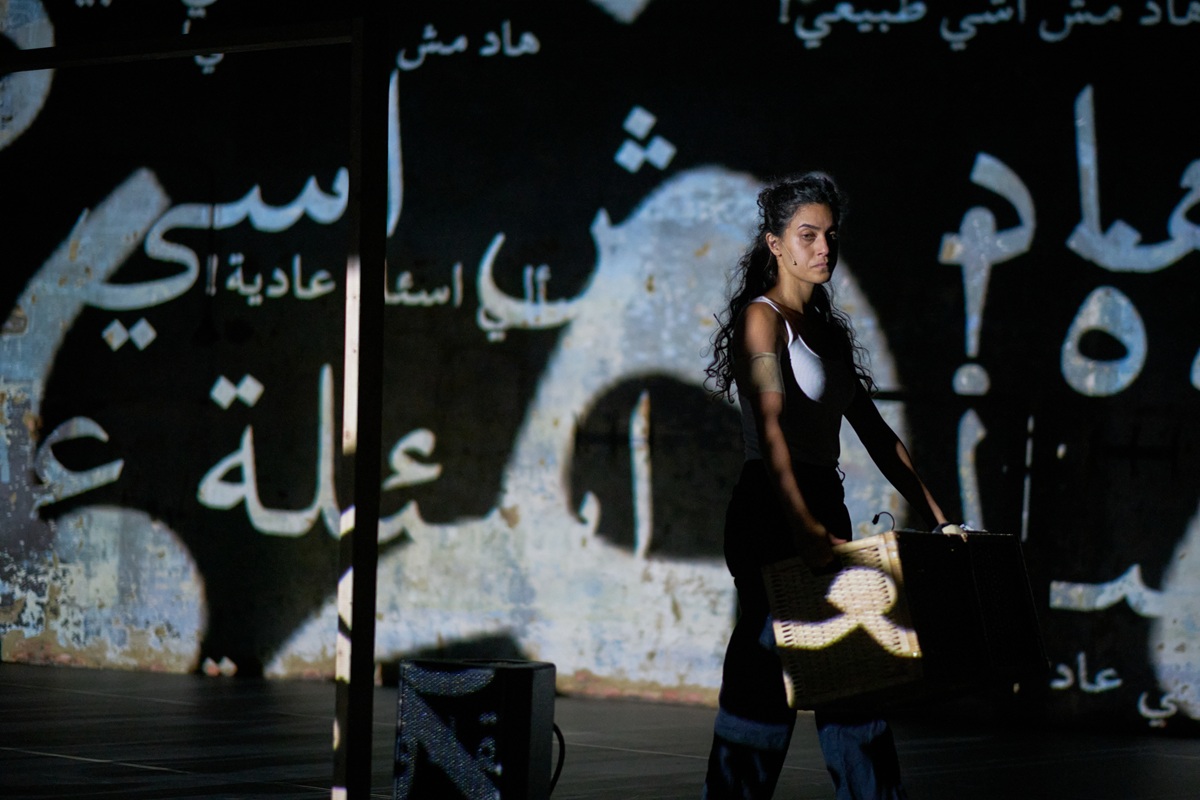
From April 1 to 8, the ninth edition of FOG presents three events at Triennale Milano Teatro and Voce Triennale, including Language: no problem by Palestinian choreographer Marah Haj Hussein, on April 1 and 2. ‘There’s a proverb that says: If you want to destroy a nation, destroy its language.’ This proverb serves as the starting point for Hussein’s narrative. Originally from Kofor Yassif in occupied Palestine and currently based in Antwerp, Hussein’s performance navigates geographies, voices, and imaginaries, exploring multilingualism as a condition of identity and resistance. Blending dance and dramaturgy, Hussein interweaves the story of a train journey in Belgium, where the protagonist experiences intriguing encounters, with tales of her family in Palestine, living under occupation.
Focus on Latin American Dramaturgy
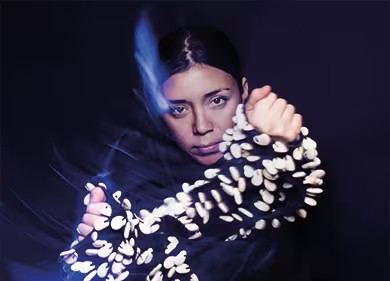
As part of the Nuovo Teatro Ateneo season at Sapienza University of Rome, a special focus is dedicated to Latin American dramaturgy, including UPROAR: Nuovi Formati (New Formats), a performative project by the Peruvian duo Rieckhof–Silva Collective, on stage on March 31. Through a layered performative language, UPROAR addresses urgent themes such as institutional violence, structural inequalities, and the legacies of colonialism, transforming collective pain into a scenic gesture. The work is inspired by Taki Onkoy, an ancient Andean ritual practice of resistance against colonial domination. On stage, alongside the artists, are violinist Camila Alva and guest performer Laura Esposito, in a dramaturgy that interweaves sound, body, and space.
Luna Cenere and Giovanni Insaudo at Next Generation
Two choreographies will be featured at the latest Intersezioni & Next Generation event, a dance and performing arts festival curated by Artemis Danza, at Teatro al Parco in Parma on March 31. Luna Cenere’s Shoes On develops a rigorous and sensitive poetics where the body becomes a pliable medium and a space for exploration. Interpreted by Vittorio Pagani and Michele Scappa, Shoes On is notable for its formal essentiality and precise gestures, creating a refined choreography suspended between stage presence and physical tension. Giovanni Insaudo’s Vespri, for COB Compagnia Opus Ballet, draws inspiration from Southern Italian folklore, reinterpreting tradition with a contemporary lens. Here, dance becomes an architecture of movement and a dialogue with memory: a choreography that intertwines past and present, imbuing folklore with a vibrant and current force.
In the White of Piergiorgio Milano
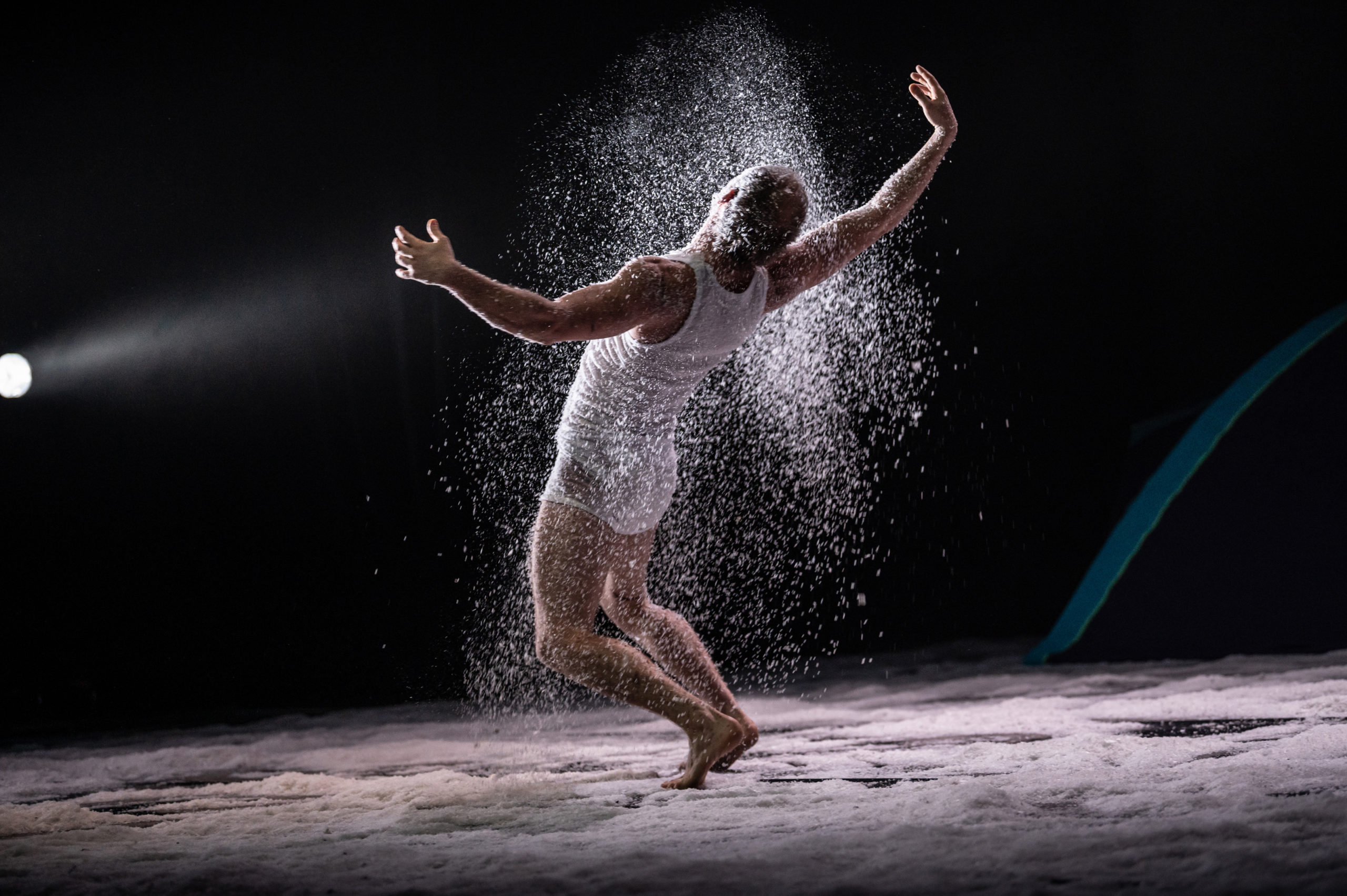
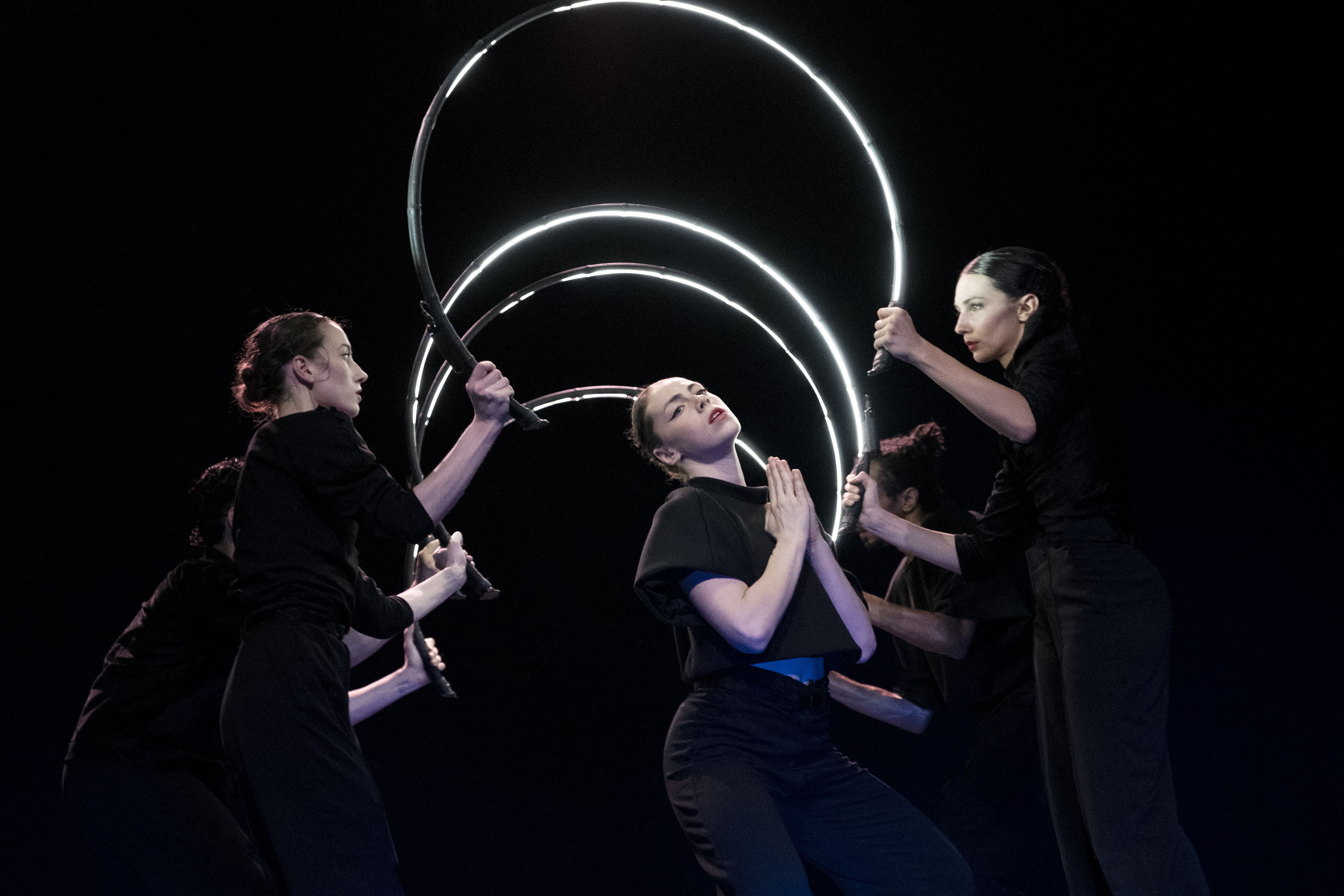
In alpinism, ‘White out’ describes the total loss of visibility when the uniform whiteness of cloud cover meets snow-covered terrain, absorbing and reflecting all light, making it impossible to advance or retreat. On stage, three performers ‘ski’ through a cinematic narrative that unfolds with flashbacks, dizzying acrobatics, and a powerful visionary charge tinged with humor. It’s a world suspended between reality and imagination, contemporary dance and circus arts, verticality and suspension in the void, balanced on the ridge between sky and earth. Piergiorgio Milano’s White out (at Teatro Elfo Puccini in Milan on March 31, as part of Corpi in Gioco, a multidisciplinary project by MILANoLTRE) is an immersive experience that delves into the audience’s imagination, a tribute to all alpinists lost or at risk of being lost in the endless white of the heights: the conquerors of the useless.