

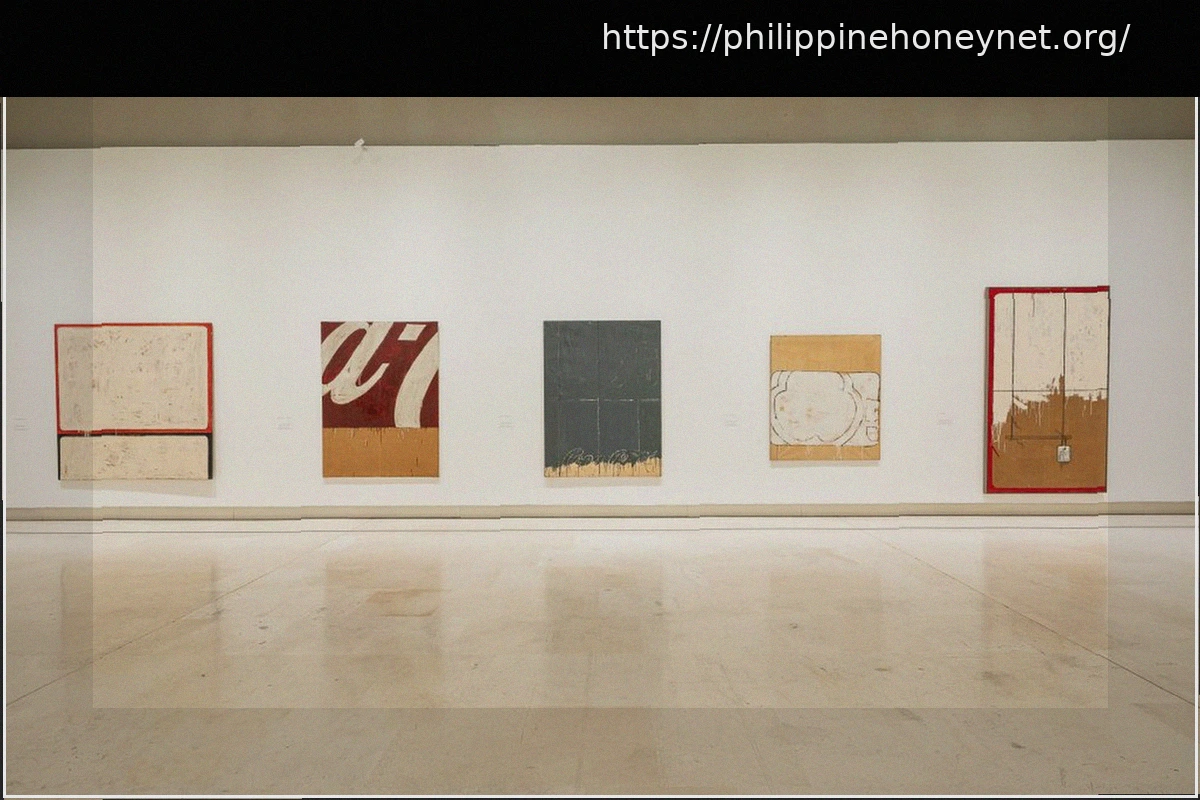
The Palazzo delle Esposizioni in Rome is currently hosting a major retrospective dedicated to Mario Schifano, alongside a solo exhibition by Marco Tirelli, both running until July 12th. The Schifano exhibition, curated by Daniela Lancioni, presents itself with a straightforward title, Mario Schifano, mirroring the curator’s clear and unambiguous approach seen in her recent Carla Accardi retrospective. This extensive anthology features over one hundred works from public and private collections, adhering to a well-established format designed for broad accessibility.
Mario Schifano at the Palazzo delle Esposizioni
Born in 1934 in Homs, Libya, and raised in Rome, Schifano emerged in the early 1960s as a pivotal figure in the Roman art scene and the so-called Scuola di Piazza del Popolo. He distinguished himself through a diverse practice spanning various languages and media, quickly establishing his public persona. From his early days, Schifano’s work developed in cycles and “families,” moving from material painting to screen printing, and incorporating photographs and television footage transferred onto canvas. He also experimented with Plexiglas and ventured into cinema and music.
The exhibition begins with an extensive biographical wall, an informative threshold presenting data, images, and timelines, before moving into a strictly chronological display of works. This results in a remarkably clear exhibition, guiding visitors through the key moments of his artistic journey: from the monochrome paintings of the early 1960s to his TV Landscapes, created by translating television stills into paintings, and later cycles featuring text, signs, and direct references to political and social issues.
The exhibition clearly articulates the logic of his “families” of works. The monochrome pieces from the first half of the 1960s, where painting merges with the surface, give way in the following decade to works based on the manipulation of existing images. In the Futurism Revisited cycle, developed from the early 1970s to the end of the decade, Schifano intervened on photographs of the Futurist group, reducing them to a series of repetitive, depersonalized silhouettes. In works like Suono del flauto nel boschetto (1984) (Sound of the flute in the grove), the “shouted” painting abandons all containment, spilling beyond the canvas edge and invading the frame, transforming the artwork into an expansive field.
Without seeking novel juxtapositions or spectacular devices, the exhibition’s strength lies in its precise organization. The curatorial work is meticulous, clearly conveying the complexity of an artist who traversed diverse media and languages while maintaining a consistent focus on the image as a surface to be manipulated, reproduced, and transformed. The exhibition remains consistently legible, guiding the visitor without forcing interpretations or oversimplifying.
The project is further enriched by the Electa catalog, filled with essays and critical apparatus, and a particularly comprehensive public program featuring speakers like Achille Bonito Oliva and Salvatore Settis. Among the most insightful contributions, Chiara Perin’s essay on the relationship between Schifano and Renato Guttuso offers a vivid snapshot of the 1960s Roman art scene. Stefano Chiodi’s contribution and the sessions dedicated to cinema bring the experimental dimension of the artist’s practice back to the forefront.
Marco Tirelli. Anni Luce
The exhibition Marco Tirelli. Anni Luce (Light Years), curated by Mario Codognato, unfolds in the subsequent rooms as an independent journey, comprising forty-one works created specifically for the occasion. The project is conceived as a single, continuous pictorial cycle, a visual “ribbon” that flows through the rooms, constructing what the press release describes as a “theater of memory.”
Born in Rome in 1956, active since the late 1970s, and already president of the Accademia Nazionale di San Luca, Tirelli is associated with the so-called Nuova Scuola Romana, a label more conventional than contemporary. His work focuses on the relationship between image, memory, and perception.
The transition is stark. Following Schifano’s chromatic and iconographic density, Tirelli presents a rarefied environment, built on a limited palette, almost entirely playing on the interplay of light and darkness. This creates a visual pause, a quieter, more concentrated space where the viewer’s gaze is invited to slow down.
The exhibition proceeds through a sequence of suspended images, like vanitas that emerge from darkness only to recede back into it. The forty-one works, all of the same height, create a visual continuum where each figure appears as an unstable and ethereal presence. Rather than representing, these images seem to surface as remnants of memory, belonging to a potential mental atlas of forms, architectures, and objects that re-emerge—as the artist himself states—like “stars that die in their physical bodies but of which we continue to receive their light.”
The introductory wall text inevitably references Aby Warburg’s Atlas Mnemosyne, a simplified interpretive synthesis that feels like a forced connection to frame Tirelli’s work. In the catalog, the discourse expands and becomes more complex, building a dense and articulated theoretical framework that overlays the artist’s work with copious theoretical structures. However, this density ultimately exceeds the exhibited work, where the complexity of the discourse seems to partially overlap with the more essential measure of the pieces.
Anni Luce rigorously constructs its own space and rhythm. But, after Schifano, the distance evoked by the title seems to become almost tangible.
This article was originally published on exibart.com.