


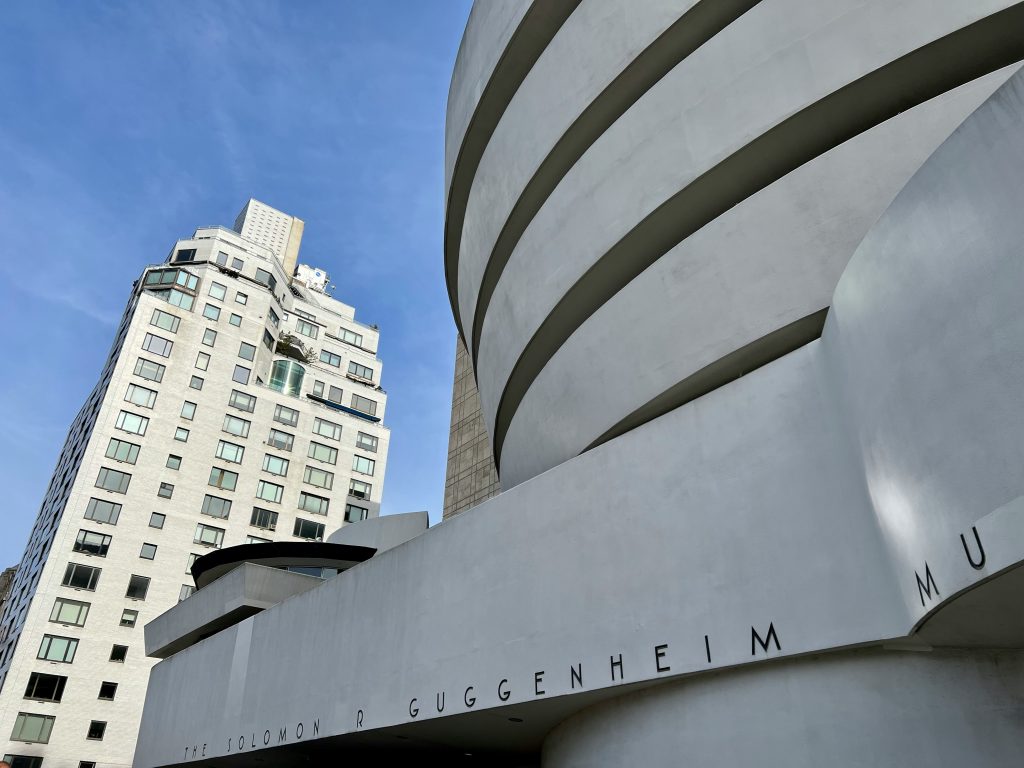
Il Guggenheim Museum di New York si prepara a inaugurare, dal 5 giugno 2026 al 10 gennaio 2027, “Guggenheim Pop: 1960 to Now”. Questa ambiziosa mostra mira a rivitalizzare la storica collezione di Pop Art del museo, ponendola in un fertile dialogo con le espressioni artistiche contemporanee. L’iniziativa nasce da una riflessione interna all’istituzione, desiderosa di far luce su un capitolo meno esplorato del proprio passato, ripartendo dal fondamentale lavoro del curatore Lawrence Alloway, figura chiave degli anni Sessanta e promotore, nel 1963, di “Six Painters and the Object”, una delle prime esposizioni museali newyorkesi dedicate alla Pop Art.
«Molti visitatori riconosceranno le celebri opere e gli artisti legati alla Pop Art, ma questa esposizione li invita a una nuova prospettiva», ha affermato Lauren Hinkson, curatrice della mostra. «Affiancando capolavori storici della collezione a recenti acquisizioni di artisti d’oggi, “Guggenheim Pop: 1960 to Now” dimostrerà come la Pop Art, intesa come strategia creativa, continui a ispirare, sfidare e evolvere nel tempo».
Il percorso espositivo si snoderà attraverso un’alternanza di segmenti cronologici e nuclei tematici, distribuiti nelle quattro gallerie su tre piani del museo. Opere iconiche di maestri come Andy Warhol, Roy Lichtenstein, Richard Hamilton e Claes Oldenburg saranno accostate a creazioni più recenti della collezione, in un confronto che evidenzia la costante riattivazione del linguaggio pop. La mostra guiderà i visitatori attraverso la nascita della Pop Art, che ridefinì i confini dell’arte nei primi anni Sessanta, per poi esplorare nella Tower 7 gli Happenings sperimentali di New York di quel decennio: una dimensione meno incentrata sull’oggetto e più performativa, con eventi effimeri, ibridi e spesso ironici, che già allora mettevano in discussione le logiche di produzione e consumo culturale.
Un momento culminante dell’esposizione è dedicato a Yayoi Kusama e alla sua coinvolgente installazione immersiva “INFINITY MIRRORED ROOM – DANCING LIGHTS THAT FLEW UP TO THE UNIVERSE” del 2019. La ricerca dell’artista si interseca con movimenti quali la Pop Art, il Minimalismo e gli Happenings, pur non essendo interamente riconducibile a nessuno di essi, anche considerando la sua posizione di artista giapponese operante in un contesto prevalentemente maschile. Dalla prima opera della serie “Infinity Net”, custodita al Guggenheim, fino alle sue installazioni immersive più recenti, la presenza di Kusama sottolinea la continuità di una pratica che ha saputo lasciare un’impronta indelebile sull’arte e sull’immaginario contemporaneo.
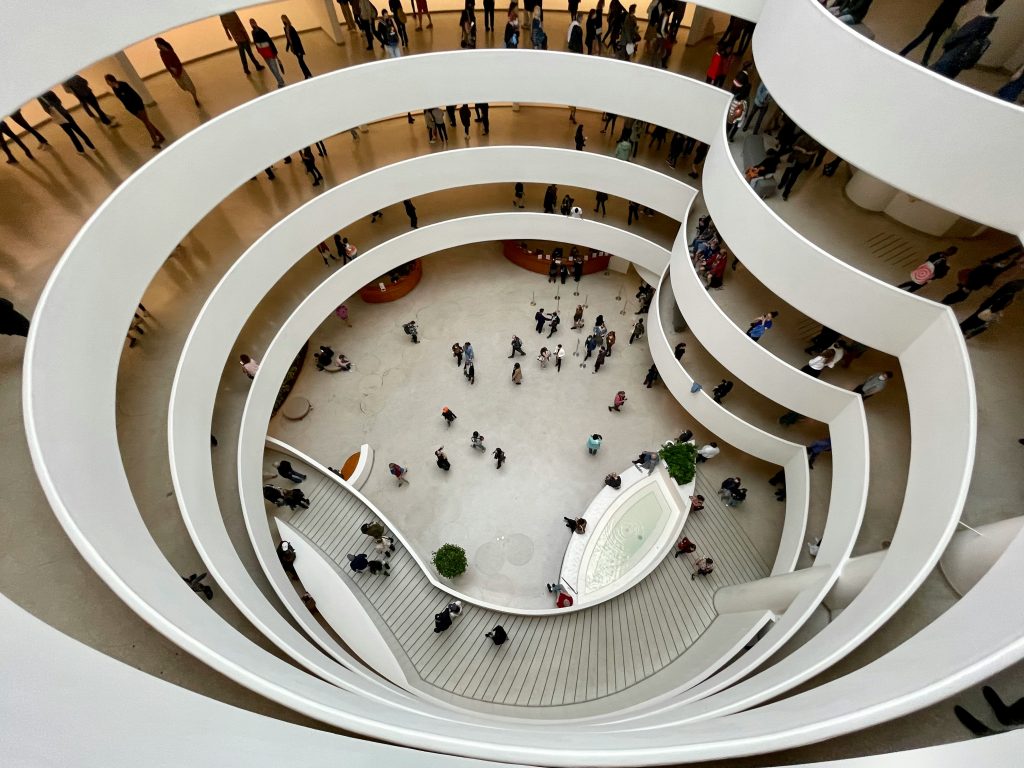
L’imponente “Soft Shuttlecock”, opera di Claes Oldenburg e Coosje van Bruggen, creata per la celebre rotonda del Guggenheim progettata da Frank Lloyd Wright in occasione della retrospettiva di Oldenburg del 1995, farà il suo atteso ritorno a New York dopo 25 anni, con le sue nove piume lunghe oltre 7 metri ciascuna.
La seconda fase della mostra, che si aprirà dal 26 giugno nelle gallerie Tower 4 e Thannhauser 4, sposterà il focus su artisti contemporanei e acquisizioni più recenti, presentando nomi come Maurizio Cattelan, Alex Da Corte e Martine Gutierrez. Le loro pratiche si inseriscono in un dialogo con il vocabolario pop, spesso rielaborandolo in chiave critica. L’inclusione di “Comedian” (2019) di Cattelan, acquisito dal museo tramite un accordo di donazione, esemplifica come la discussione sul valore e sull’autorialità delle immagini sia oggi indissolubilmente legata alla dimensione mediatica. Tra le altre acquisizioni recenti figurano fotografie di Farah Al Qasimi e Liu Shiyuan, sculture di Mohammed Ahmed Ibrahim e Lucia Hierro, una videoinstallazione di Alex Da Corte e l’arte tessile di Yee I-Lann, solo per citarne alcuni.
“Guggenheim Pop: 1960 to Now” si configurerà quindi come una sorta di mappa, seppur parziale, che, attraverso la lente della storia del Guggenheim, indicherà i nodi cruciali della Pop Art fino al suo dialogo con l’arte contemporanea. Non si tratta tanto di una cronistoria del movimento in sé, quanto piuttosto del modo in cui l’istituzione continua a interpretarlo, rileggerlo, assimilarlo e proiettarlo nel futuro.
Pop Art is Always Contemporary: A Major Exhibition at the Guggenheim New York
From June 5, 2026, to January 10, 2027, the Guggenheim Museum in New York is set to open “Guggenheim Pop: 1960 to Now.” This ambitious exhibition aims to revitalize the museum’s historical Pop Art collection, placing it in a fertile dialogue with contemporary artistic expressions. The initiative stems from an internal reflection within the institution, eager to shed light on a less explored chapter of its past, starting from the fundamental work of curator Lawrence Alloway, a key figure in the 1960s and promoter, in 1963, of “Six Painters and the Object,” one of the first museum exhibitions in New York dedicated to Pop Art.
“Many visitors will recognize the celebrated works and artists associated with Pop Art, but this exhibition invites them to a new perspective,” stated Lauren Hinkson, the exhibition’s curator. “By juxtaposing historical masterpieces from the collection with recent acquisitions by contemporary artists, ‘Guggenheim Pop: 1960 to Now’ will demonstrate how Pop Art, understood as a creative strategy, continues to inspire, challenge, and evolve over time.”
The exhibition’s journey will unfold through an alternation of chronological segments and thematic clusters, spread across four galleries on three floors of the museum. Iconic works by masters such as Andy Warhol, Roy Lichtenstein, Richard Hamilton, and Claes Oldenburg will be placed alongside more recent creations from the collection, in a comparison that highlights the constant reactivation of the pop lexicon. The exhibition will guide visitors through the birth of Pop Art, which redefined the boundaries of art in the early 1960s, then explore in Tower 7 the experimental Happenings in New York from that decade: a dimension less focused on the object and more performative, with ephemeral, hybrid, and often ironic events that already then questioned the logics of cultural production and consumption.
A culminating moment of the exhibition is dedicated to Yayoi Kusama and her immersive installation “INFINITY MIRRORED ROOM – DANCING LIGHTS THAT FLEW UP TO THE UNIVERSE” from 2019. The artist’s work intersects with movements such as Pop Art, Minimalism, and Happenings, yet it cannot be entirely reduced to any of them, especially considering her position as a Japanese artist operating in a predominantly male context. From the first work in the “Infinity Net” series, housed at the Guggenheim, to her most recent immersive installations, Kusama’s presence underscores the continuity of a practice that has left an indelible mark on contemporary art and imagination.
The impressive “Soft Shuttlecock,” a work by Claes Oldenburg and Coosje van Bruggen, originally created for the Guggenheim’s famous rotunda designed by Frank Lloyd Wright for Oldenburg’s 1995 retrospective, will make its eagerly awaited return to New York after 25 years, with its nine feathers each over 7 meters long.
The second phase of the exhibition, opening from June 26 in Tower 4 and Thannhauser 4 galleries, will shift focus to contemporary artists and recent acquisitions, featuring names such as Maurizio Cattelan, Alex Da Corte, and Martine Gutierrez. Their practices engage in a dialogue with the pop vocabulary, often reinterpreting it critically. The inclusion of Cattelan’s “Comedian” (2019), acquired by the museum through a donation agreement, exemplifies how the discussion on the value and authorship of images is now inextricably linked to the media dimension. Other recent acquisitions include photographs by Farah Al Qasimi and Liu Shiyuan, sculptures by Mohammed Ahmed Ibrahim and Lucia Hierro, a video installation by Alex Da Corte, and textile art by Yee I-Lann, among others.
“Guggenheim Pop: 1960 to Now” will thus serve as a kind of map, albeit partial, that, through the lens of the Guggenheim’s history, will pinpoint the crucial nodes of Pop Art up to its dialogue with contemporary art. It is not so much a chronology of the movement itself, but rather the way the institution continues to interpret, reread, assimilate, and project it into the future.