

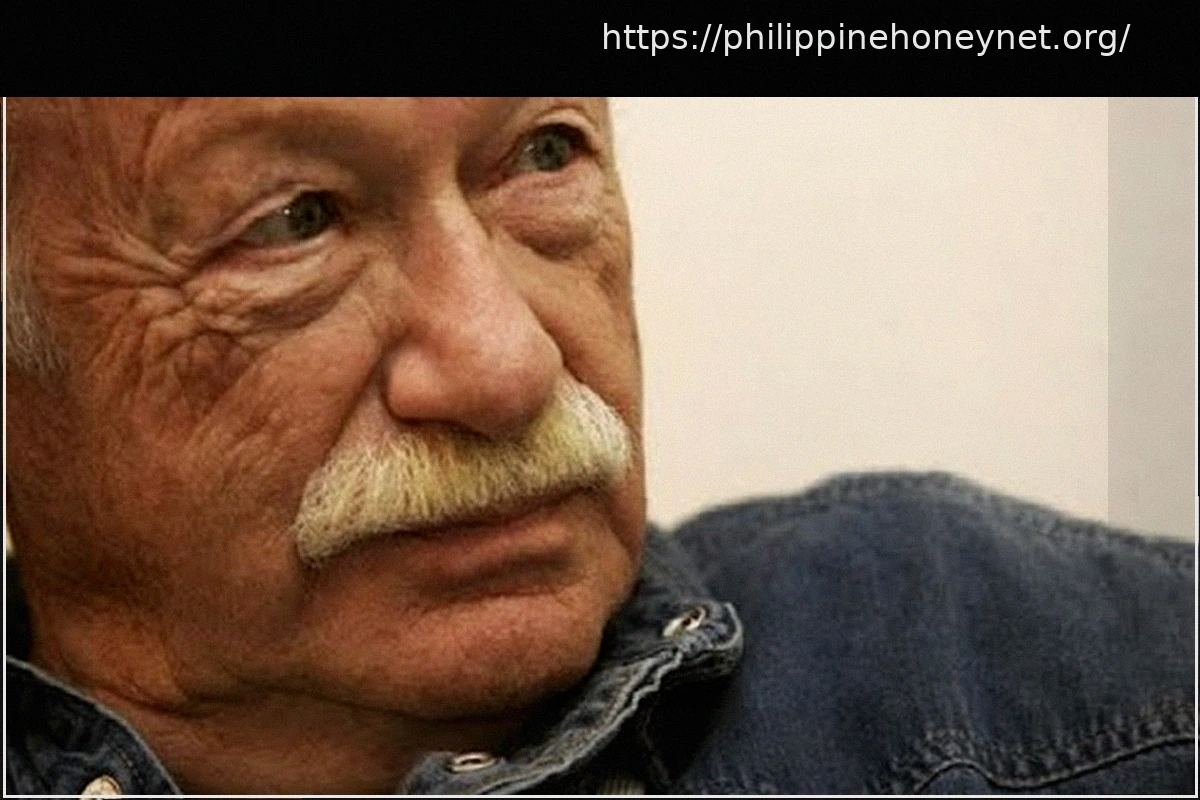
Gino Paoli, one of the most distinctive figures in 20th-century Italian singer-songwriting, has passed away at the age of 91. His family announced his peaceful passing, stating it occurred “in serenity and surrounded by the affection of his loved ones.” His death marks the end of an artistic journey that spanned over six decades, deeply influencing Italian culture through music, writing, and visual arts. Beyond composing some of Italy’s most beloved songs, Paoli was also a prolific visual artist, whose works featured in several exhibitions.
Born in Monfalcone in 1934 and raised in Genoa, Paoli’s artistic path began with visual arts before he fully embraced music. After an unconventional schooling, he worked as a mechanical draftsman and later as a graphic designer, which cultivated his early connection with imagery and painting. During this time, he immersed himself in the “Genoese school” alongside talents like Luigi Tenco, Fabrizio De André, Umberto Bindi, and Bruno Lauzi, collectively ushering in a new era for Italian song, characterized by an unprecedented focus on lyrical depth and autobiographical narratives.
His rise to prominence came in the early 1960s with “Il cielo in una stanza” (The Sky in a Room), famously performed by Mina, followed by enduring hits such as “Sapore di sale” (Taste of Salt), “Senza fine” (Endless), and “Che cosa c’è” (What Is There), all of which became staples of Italian music. Paoli’s songwriting, both essential and deeply evocative, masterfully balanced traditional melodic structures with international influences, from jazz to French chanson.
Alongside his musical career, Paoli maintained a steadfast engagement with the visual arts. He learned painting from Rocco Borella and frequently engaged in discussions with painter Attilio Carreri. Through these influences, he grasped the fundamentals of pictorial language, initially focusing on a figurative style that rendered reality and, more significantly, explored the intimate dimensions of an image.
His earliest documented exhibitions in the early 1960s took place amidst a postwar cultural climate balancing realist legacies with informal art explorations. In 1963, a pivotal year for his career, he presented a painting exhibition in Genoa, revealing a continuous, albeit less public, artistic practice parallel to his music. This visual dimension resurfaced on various occasions, including a 2013 exhibition at Palazzo Tocco di Montemiletto in Naples, where he displayed a selection of his paintings, reigniting his ties to his past as a graphic designer and draftsman.
Paoli’s paintings often highlight everyday details and situations, imbued with a narrative sensitivity that anticipated themes later explored in his music. A prime example is the recurring presence of domestic and affectionate elements, such as the figure of the cat, which also became central imagery in his beloved songs.
“I was a painter, and I also worked as a graphic designer for a company. My life was already settled; in fact, I was doing what I loved, which was painting. Then a friend asked me to record some songs for him, they asked me to sing them, and offered me money, so I said: ‘Alright.’ Initially, I did it as a kind of game that would end as soon as possible, but instead, it lasted 50, 60 years,” he once recounted in an interview.
Throughout his career, Paoli navigated periods of immense popularity and more private phases, yet he consistently recorded albums, wrote for other artists, and collaborated with musicians across generations. From the 1980s, with “Una lunga storia d’amore” (A Long Love Story), to his more recent jazz-infused projects, his presence remained constant, through both new works and fresh interpretations of his extensive repertoire.
His body of work also garnered significant attention in contemporary art circles. For instance, in 2020, the title “Il cielo in una stanza” inspired Icelandic artist Ragnar Kjartansson’s exhibition “The Sky in a Room,” presented by the Fondazione Trussardi in Milan, further cementing the transversal appeal and enduring relevance of Paoli’s art.