


Art history is frequently punctuated by unexpected and serendipitous discoveries. Among these is the latest revelation from the Vatican Museums, where a routine conservation intervention has brought to light an authentic painting by El Greco, which had remained invisible for decades beneath a repainting by a forger.
The artwork, The Redeemer, is a small oil on panel dating between 1590 and 1595. It entered the Holy See’s collections in 1967, donated to Pope Paul VI, and had since been displayed in the papal apartments without ever being subjected to in-depth investigations, as conservator Alessandra Zarelli recently recounted.
However, the routine cleaning to which the painting had just been subjected soon revealed a significant surprise: beneath the visible surface lay El Greco’s original composition, covered by a subsequent intervention that completely altered its image. The restoration was carried out in the laboratories of the Vatican Museums and allowed for the recovery of the original brushstrokes and the confirmation, through scientific analyses and stylistic comparisons, of the work’s authorship.
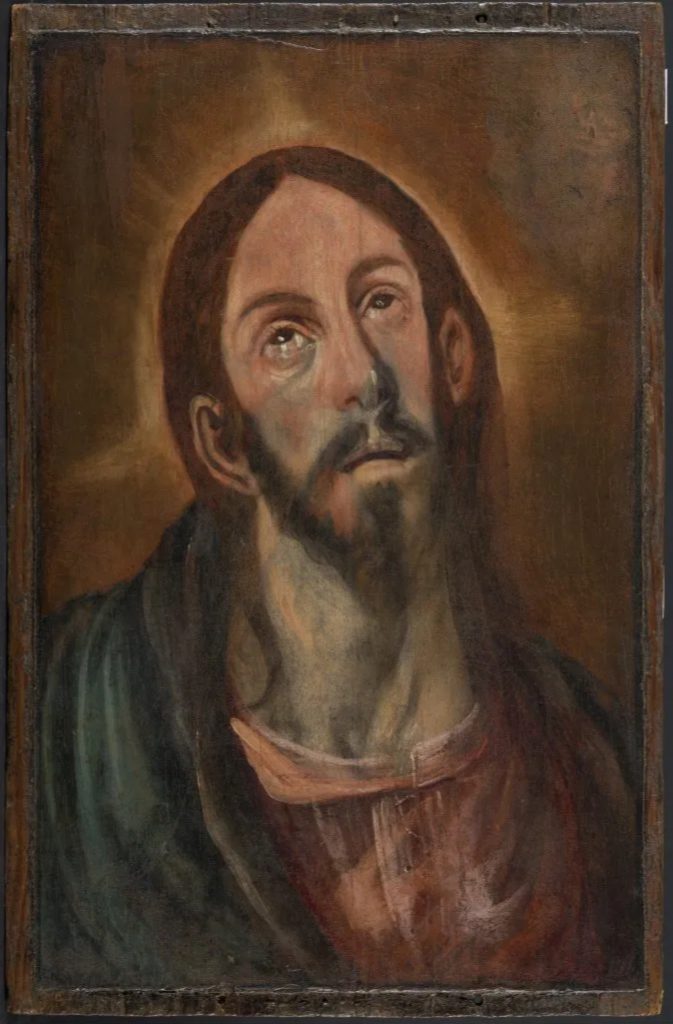
But there’s more: investigations highlighted the presence of further underlying images, a kind of “pictorial palimpsest” with sketches of other compositions attributable to the same artist. This detail offers a rare insight into El Greco’s creative process and the internal transformations within his practice.
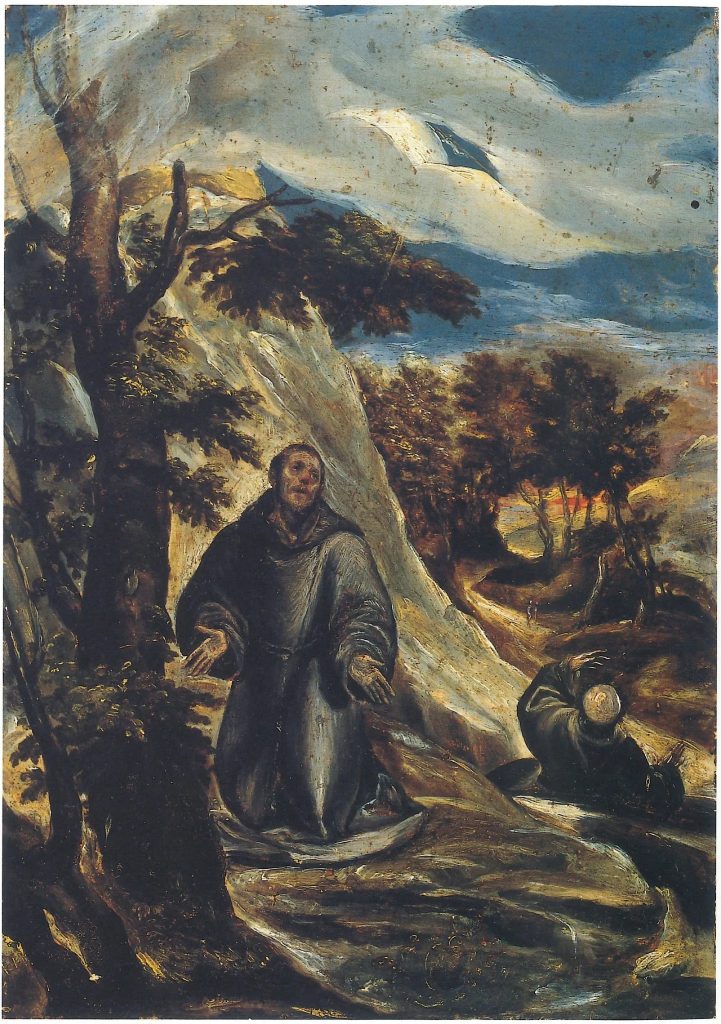
The restored painting is now exhibited in the show El Greco in the Mirror: Two Paintings Compared, set up at the Apostolic Palace of Castel Gandolfo until June 30, 2026. Here, The Redeemer dialogues with a youthful Saint Francis, created around 1570 when the artist was still active between Rome and Venice. The comparison between the two works allows one to traverse almost 30 years of artistic exploration, bringing to light the stylistic evolution of one of the most eccentric protagonists of European Mannerism.
According to the curators, the Vatican painting should also be related to other versions of the same subject preserved in Europe and the United States, suggesting a serial practice.
This case fits into an increasingly evident trend: restoration is no longer just conservation but also a tool for research and rewriting art history. In recent years, precisely in the Vatican, analogous interventions have indeed brought to light unprecedented techniques (as in Raphael’s cycles) or conservation problems linked to mass tourism, as demonstrated by recent works on Michelangelo’s Last Judgment.
In this context, the “re-emergence” of an El Greco hidden under a fake becomes an emblematic case: a work that for over half a century was under everyone’s eyes, without truly being seen, and which today returns to redefine, at least in part, the catalog of one of the most influential artists between the Renaissance and modernity.