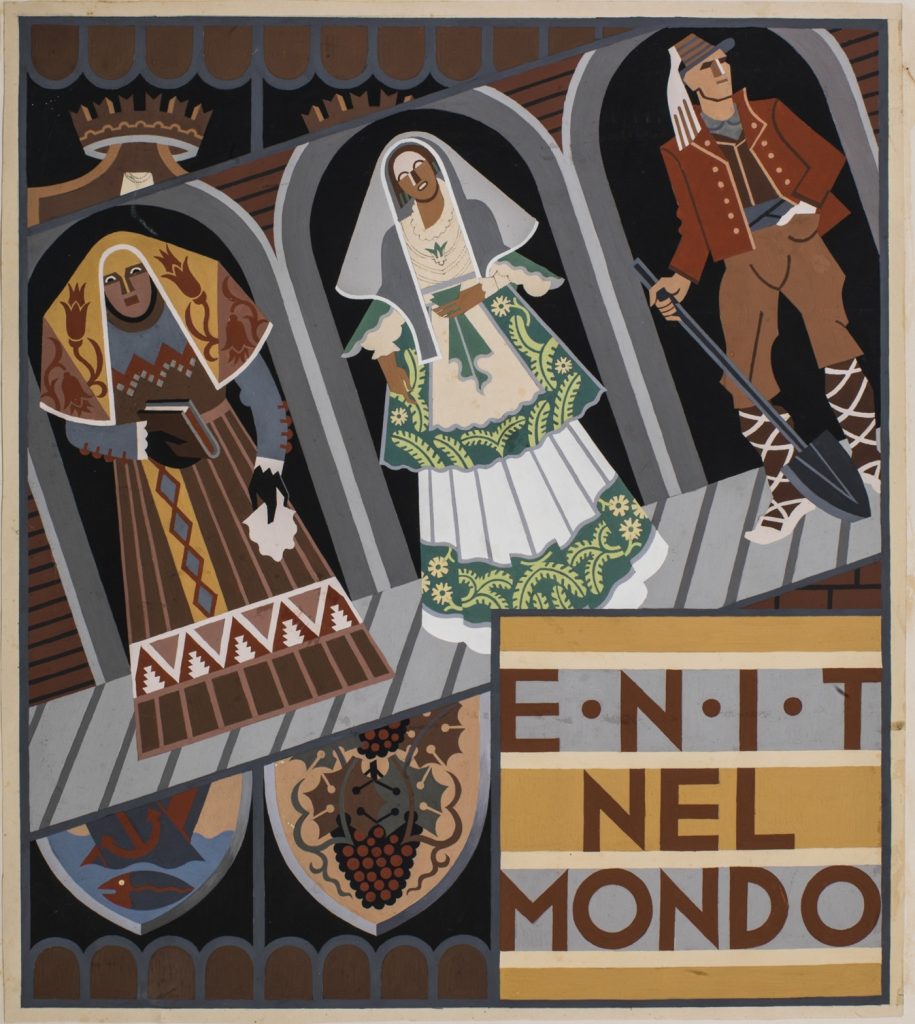


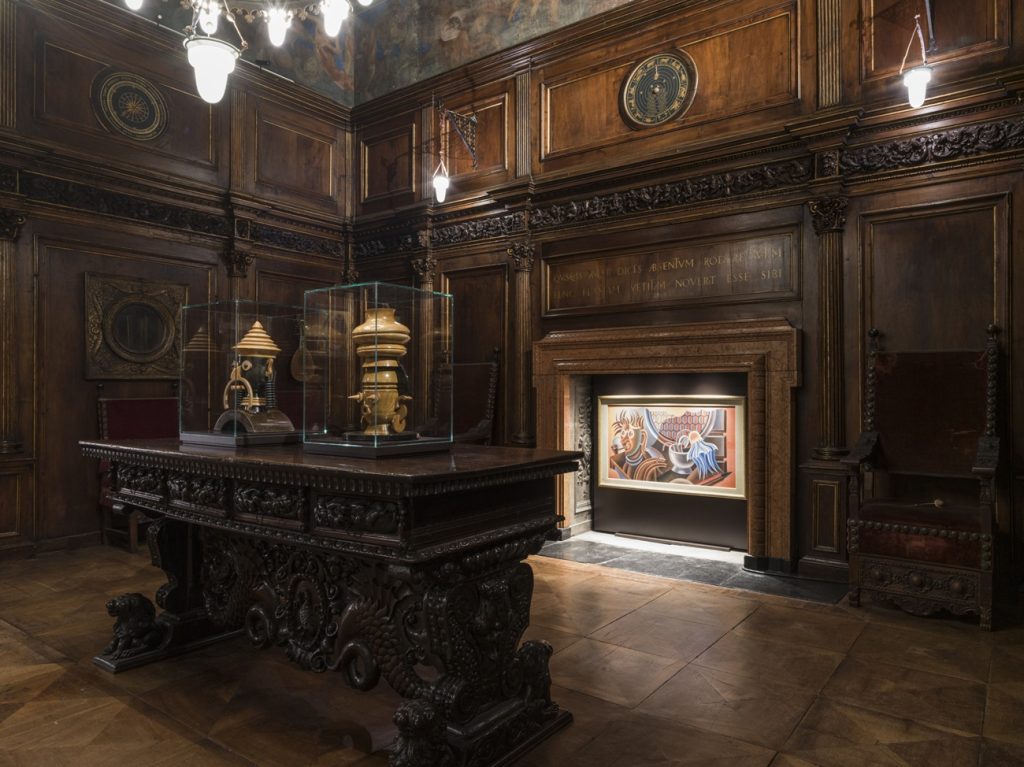
The very essence of Futurism, Italy’s only pre-World War I avant-garde movement, was its radical rejection of the past. Its expressions relentlessly battled history, even to the point of glorifying war as the “sole hygiene of the world.” Imagine then, the reaction of a resurrected Fortunato Depero upon seeing his own works displayed within a profoundly classical Milanese palazzo, nestled among ancient armors, majolicas, and bas-reliefs. This surprising juxtaposition is precisely what the Museo Bagatti Valsecchi, in collaboration with the Mart (Museum of Modern and Contemporary Art of Trento and Rovereto), presents in the exhibition Depero Space to Space: The Creation of Memory. Curators Nicoletta Boschiero and Antonio D’Amico conceived this cultural initiative to highlight a striking parallelism, a temporal shift that connects the original inhabitants of the palace with the artist from Trentino, both sharing a common vision of inhabiting spaces suspended between the ancient and the contemporary.
This exhibition of Fortunato Depero, marking his return to the Milanese scene after 35 years, unfolds as an unprecedented journey. It emphasizes the dynamic interaction between the permanent collection and the architectural grandeur of the Museo Bagatti Valsecchi and the artist’s creations. Within this magical tension bridging the Quattrocento and the Twentieth Century, an almost alchemical process emerges, transcending any mere resemblances between the figures involved in the project. Featuring over forty works from the 1930s to the 1950s, sourced from the Casa D’Arte Futurista Depero and the Mart, this former patrician residence is far more than a simple backdrop. Its neo-Renaissance identity, a direct legacy of late nineteenth-century historicist eclecticism, transforms into a truly unique creative canvas. Throughout the palace rooms, accentuated by careful lighting and sound design, a compelling confrontation—far from harmonious or dialectical—unfurls between two distinct mannerisms: on one side, the pervasive replication of fifteenth-century stylistic elements, on the cusp of significant shifts in taste (like the advent of Art Nouveau), embodying a deeply traditional spirit; on the other, works by an artist who, during the period selected by the curators, was largely reiterating his own established style.
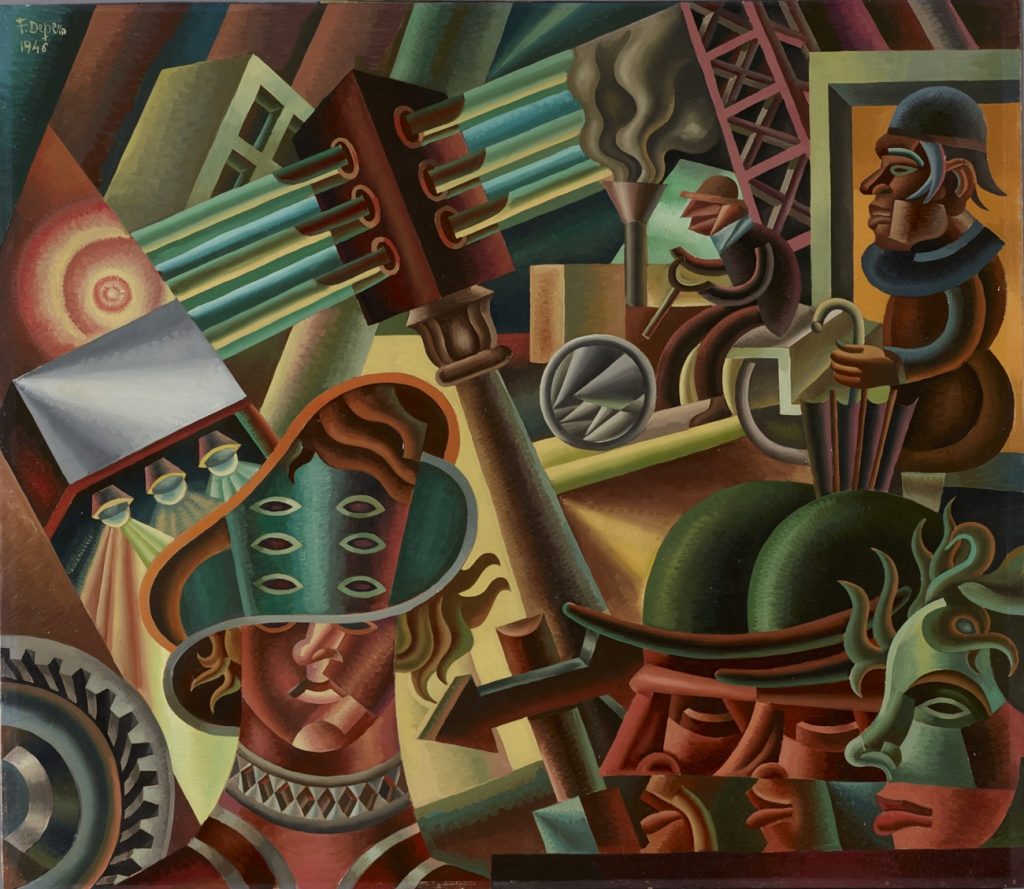
In the post-war era, Depero’s artistic output struggled to adapt to evolving times, partly due to his self-imposed isolation in Rovereto starting in the 1930s, away from the vibrant artistic hubs. His production from this period often exhibits a perpetuation of his own Futurist clichés, now somewhat devoid of the brilliant, innovative momentum seen in earlier decades, when he excelled as a designer, decorator, stage designer, and notably, a graphic artist. Today, a Fortunato Depero exhibition at the Museo Bagatti Valsecchi not only rekindles his spirited connection with Milan but also sparks a genuine “contamination” between two opposing artistic languages, both nonetheless dedicated to preserving memory. By confronting two realities oriented towards the past—the Renaissance for the palace, and Depero’s own progressive past for his art—this formula reflects an approach that is both innovative and perhaps even more provocative than the curators initially anticipated. The late-Futurist paintings infiltrate the existing decorative schemes with a certain playful mischief and even a touch of surrealism, creating a truly unique dialogue.