


Over the past two decades, South Korea has developed one of the most effective cultural production mechanisms of our time. Commonly known as “Hallyu,” or the Korean Wave, this phenomenon is a complex symbolic redefinition: an aesthetic soft power that permeates cinema, music, television, beauty, art, and fashion, transforming Seoul into one of the most dynamic hubs of the global imagination. From the international recognition of Korean cinema with works like Parasite to the global pervasiveness of K-pop, embodied by groups such as BTS and BLACKPINK, and the viral success of serial narratives like Squid Game, Korea has progressively shaped its culture into an exportable and highly recognizable language.
Within this ecosystem, fashion holds an ambiguous and particularly interesting position. While Seoul has become one of the most accelerated and competitive urban environments in the global image industry, many Korean designers are developing practices that question this very logic of speed and hyperproduction. Contemporary Korean fashion, therefore, appears to function more as a space for negotiation between global visibility and aesthetic autonomy, between participation in the international system and the construction of a unique, situated language, rather than merely reflecting the Korean Wave.
It is within this tension that the work of Cho Sungmin, founder of the Jaden Cho brand, is situated. He builds his project as a kind of counter-rhythm to the speed of the fashion system: emphasizing limited productions, made-to-order models, and a strong focus on the materiality of the garment as an object imbued with time. Rather than pursuing typical industry growth, the designer prioritizes a process where construction, memory, and emotional dimension become integral parts of the garment’s language. In a context like Seoul, characterized by rapid consumption and continuous image production, his work introduces a form of quiet resistance, where slowness becomes both an aesthetic and a political gesture.
During the presentation of his work in Milan, we had the opportunity to speak with him about alternative production systems, the position of Korean designers within European fashion hierarchies, and the tension between romanticism, discipline, and structure that runs through his collections.
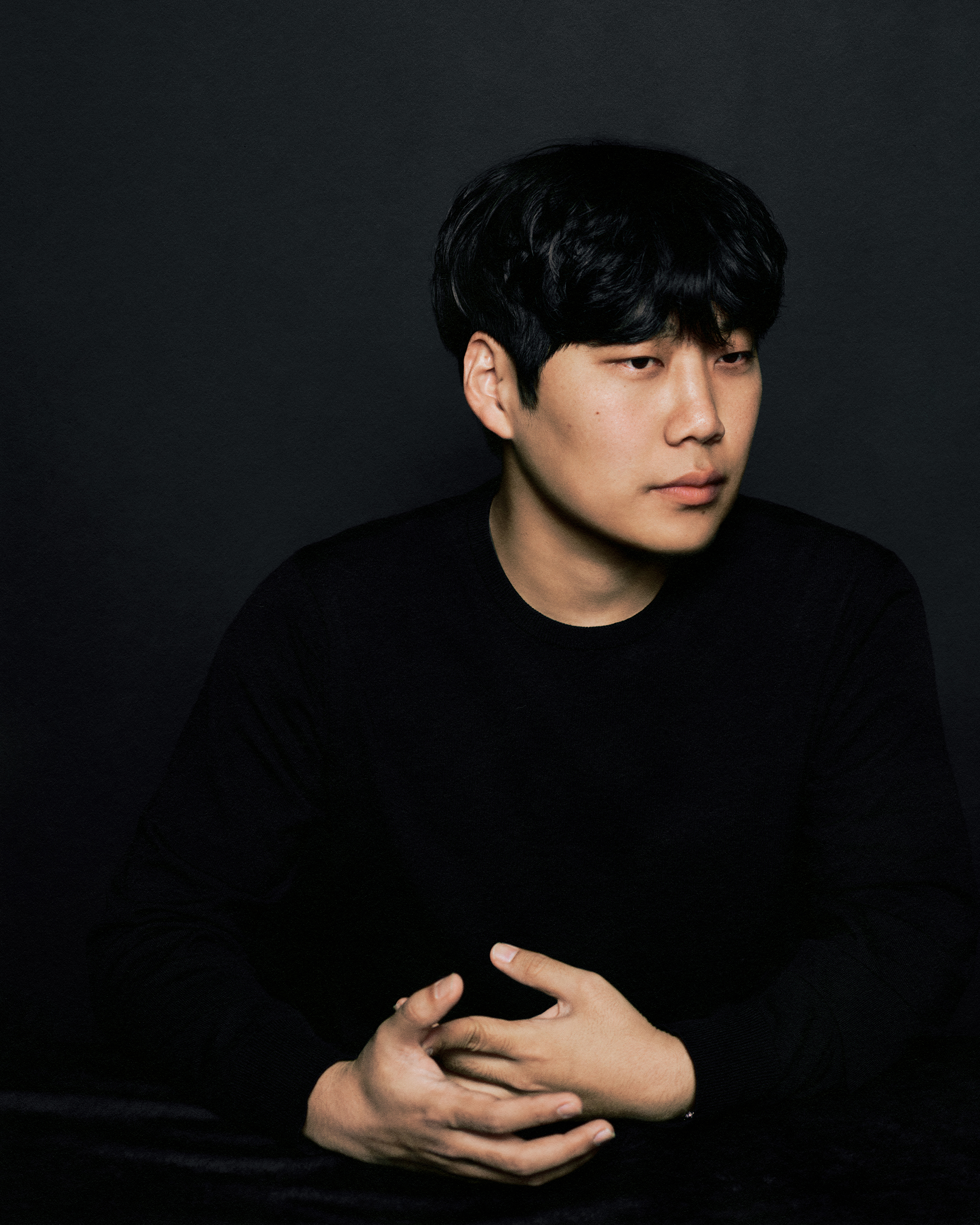
As a founder, you are building a system around your aesthetic. What aspects, such as growth, visibility, or control, have you had to limit to preserve the coherence of your brand?
«Initially, I had to accept that the brand couldn’t grow according to the typical logics of the fashion system. Instead, I chose to work with a made-to-order model or with very limited productions. This wasn’t just a philosophical choice; in the early days, it was also a survival strategy. Over time, however, this decision became an integral part of JADEN CHO’s identity. When you produce less, you can dedicate greater attention to materials, artisanal quality, and the construction of the garment. I like to think that each piece of clothing is made for a specific person and does not exist as excess inventory.»
Seoul’s fashion ecosystem is extremely competitive and accelerated. How do you protect depth in a context that rewards immediacy?
«Seoul moves at an extraordinary speed. There’s a strong culture of immediacy and rapid consumption, especially in fashion. For me, depth emerges when the garment becomes an object that contains time. I’m interested in pieces that carry work, memory, and emotion through the way they are constructed. When something takes weeks or months to be made, it naturally offers resistance to the system’s speed.»
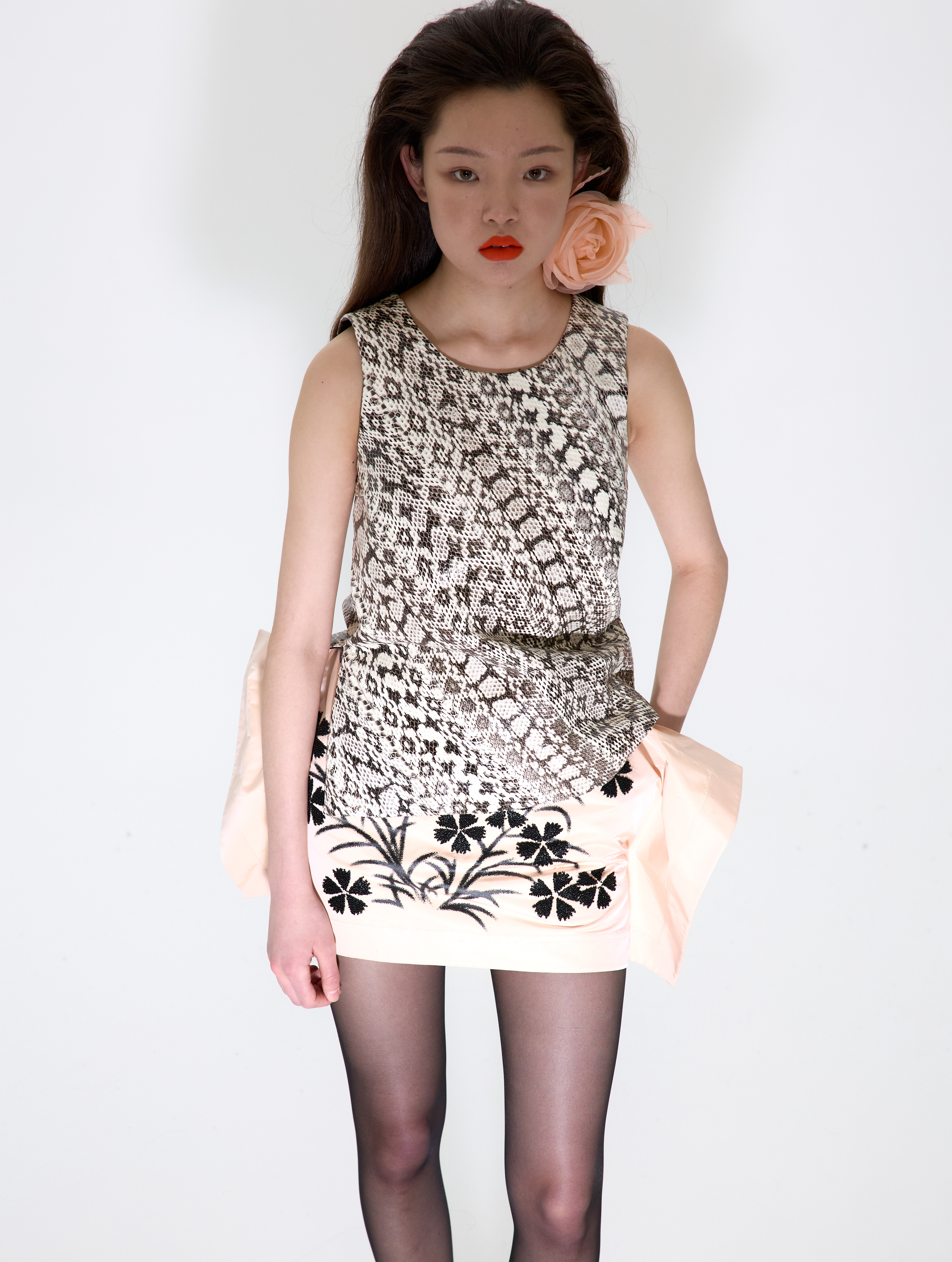
Soul Threads places Korean designers within a curatorial narrative. Do you ever feel that this collective framing simplifies individual complexity? What does it mean for you to be positioned within a shared narrative about Seoul?
«Collective presentations are always a matter of balance. On one hand, each designer possesses a very specific voice and process. On the other hand, being presented together helps build a broader narrative about Seoul and contemporary Korean fashion. If a project allows the international audience to grasp this complexity through different perspectives, then it becomes truly significant.»
By presenting in Milan, your work enters a European fashion hierarchy with a long history of power and legitimation. Does this influence how you perceive your position?
«My years of study in London made me very aware of the structures of the European fashion system. Initially, I felt strong pressure to align myself with that tradition. Over time, however, I realized that trying to imitate that context isn’t particularly productive. There are already many designers who naturally belong to that history. My position becomes clearer when I accept that my point of view originates from Seoul. Presenting in Milan is interesting precisely because it brings these different stories into dialogue. It’s not about competing within the same hierarchy, but about introducing another perspective.»
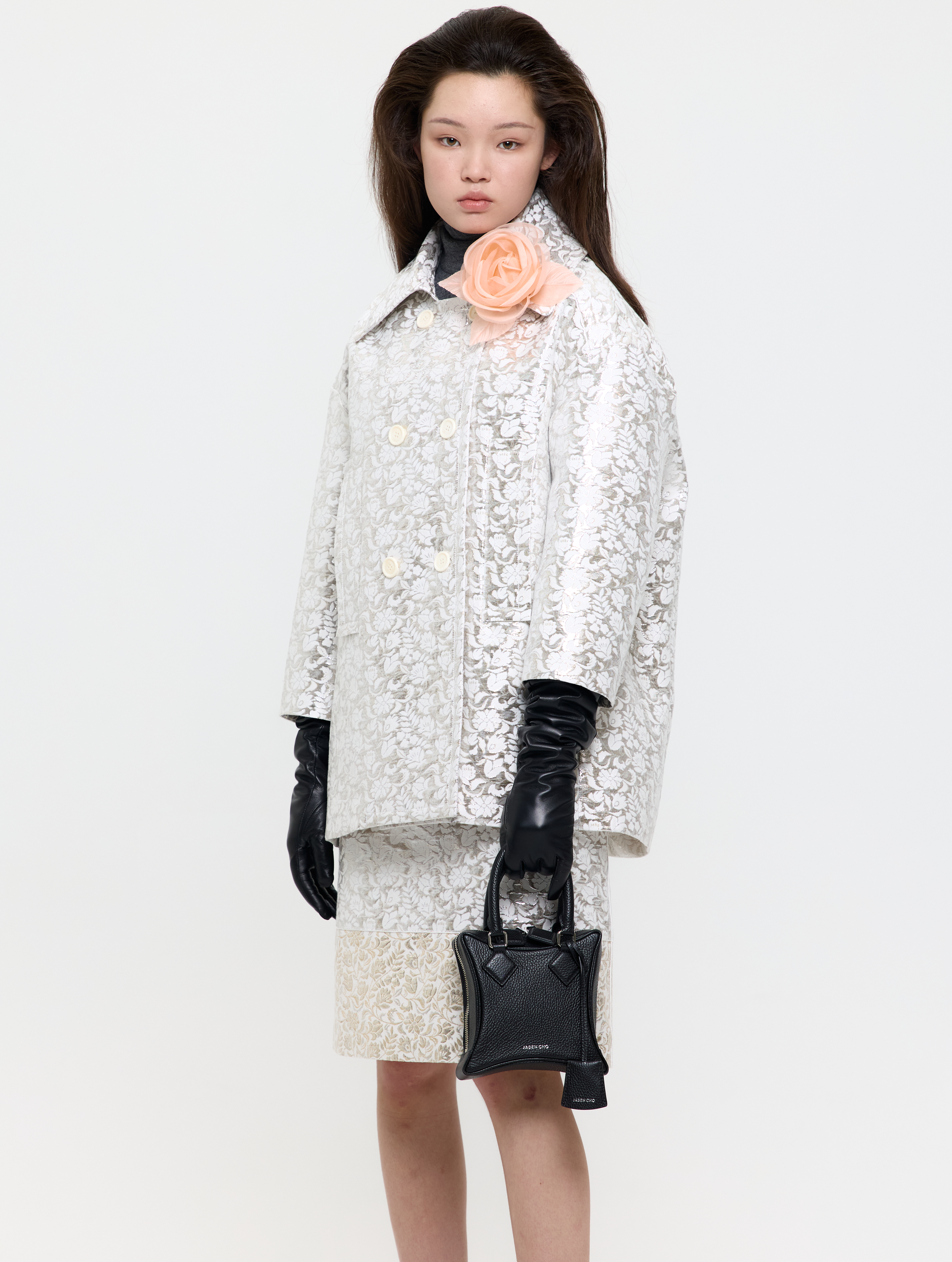
Your work appears disciplined and restrained. Is this an extension of your temperament or a strategy to create stability in an unstable industry?
«Probably both. Personally, I am quite introspective and nostalgic, and my work often reflects this sense of measuredness. At the same time, the fashion industry is extremely unstable—financially, emotionally, and structurally. Having a disciplined visual language helps create a form of stability within this context. The brand revolves around ideas like romanticism, happiness, and time. In daily life, especially in a city like Seoul, these dimensions are often lacking. Perhaps clothes become a way to imagine or construct those ideals.»
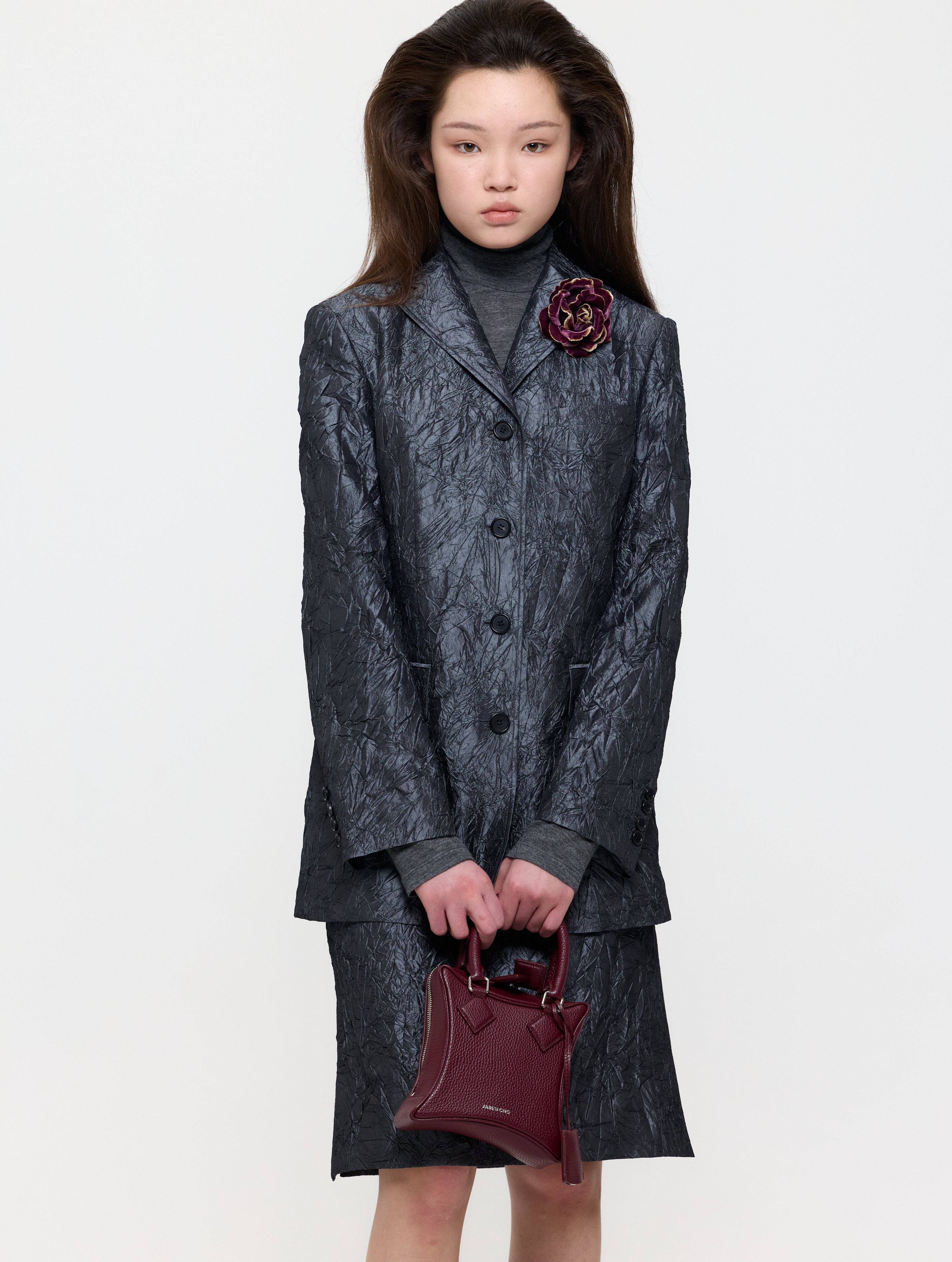
Your latest collection seems to further define your visual language. How does it connect to your previous work, and where does it introduce a shift?
«For me, each collection doesn’t represent a sharp break, but rather a gradual evolution of the same language. I am constantly interested in the relationship between material, ornament, and silhouette. Floral motifs, quilting, and sculptural constructions often reappear because they allow me to explore texture and structure simultaneously. What changes, season after season, is primarily the emotional tone. Some collections are more restrained, while others allow for greater luminosity or playfulness. In my most recent work, I wanted to investigate the tension between delicacy and structure: soft and romantic surfaces juxtaposed with more defined silhouettes and constructions. This contrast reflects something of Seoul itself, a city where elegance and intensity constantly coexist.»