

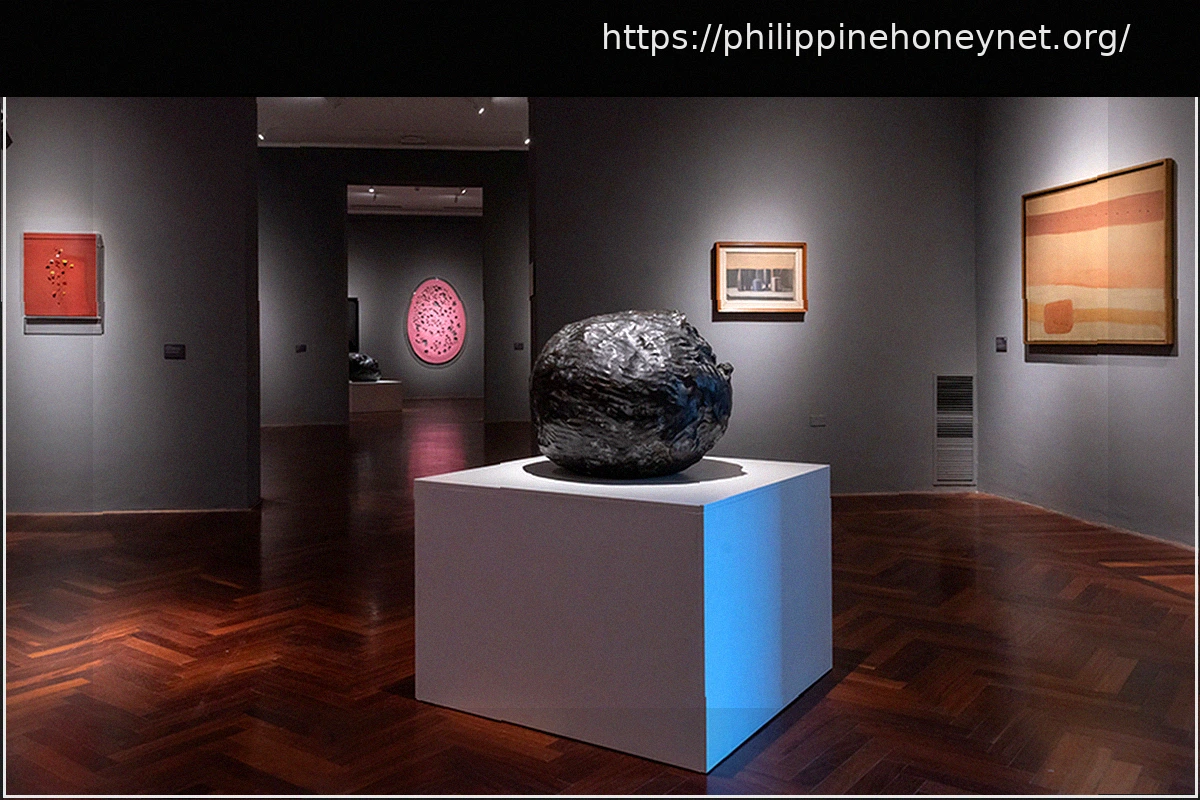
A year and a half after its reopening with a refreshed structure, CAMeC – the Center for Modern and Contemporary Art in La Spezia – announces a significant step in its consolidation journey with the appointment of a new Scientific Committee. This institution, which recently underwent a revitalization backed by a collaboration between the Municipality of La Spezia and the Carispezia Foundation, will now entrust its cultural direction to a distinguished group of experts from diverse fields including research, curatorship, collecting, and museum management.
The establishment of this Committee coincides with a period of intense activity for the museum. It follows closely on the heels of the successful exhibition Fotosintesi. Fotografie dalla Collezione di Carla Sozzani, which attracted over 6,000 visitors, and precedes the upcoming opening of Ripensando il Romanticismo nell’arte contemporanea, curated by Elena Volpato, scheduled from April 11 to September 13, 2026.
The Scientific Committee will be chaired by Gerhard Wolf, director of the Kunsthistorisches Institut in Florenz – Max Planck Institut, who previously oversaw the recent reinstallation of CAMeC’s permanent collection. This new exhibition design, featuring over 200 works from the civic collections, introduced a non-linear, open interpretation, organized by thematic clusters and cross-cutting relationships between various artistic languages and periods.
Joining Wolf on the committee are prominent figures: Arturo Galansino, general director of the Fondazione Palazzo Strozzi; Francesco Guzzetti, associate professor at the University of Florence; Giuseppe Iannacone, a lawyer, collector, and founder of his namesake foundation; Giulia Lecchini, an architect, coordinator of the Committee, and founder of the Friends of CAMeC; Mirjam Varadinis, an international curator involved in both institutional and independent projects; and Elena Volpato herself, conservator and curator at GAM Torino.
In his remarks, La Spezia’s Mayor, Pierluigi Peracchini, expressed gratitude to former director Antonio Grulli for his collaboration and voiced his aspiration for “an increasingly dynamic and attractive institution, capable of engaging the public and enhancing contemporary artistic heritage.” Andrea Corradino, President of Fondazione Carispezia, emphasized that the committee’s appointment is part of a broader strategy to strengthen the museum’s profile. Giacomo Bei, president of the technical committee, views this new body as an opportunity for critical guidance in future cultural decisions.
The formation of the new Scientific Committee is deeply rooted in CAMeC’s history, an institution whose building itself tells a story of transformation. Constructed in 1879 as a girls’ elementary school during a period of urban expansion linked to the Military Arsenal’s development, the building later became home to the civil and criminal court in 1923. It suffered damage during the 1943 bombings and was subsequently rebuilt in the post-war era.
It wasn’t until the late 1990s that the space was reconverted into a museum through a renovation project by Chiara Bramanti, which seamlessly integrated contemporary elements—such as a glass elevator and a fan-shaped staircase—with the historical structure. Its inauguration in 2004 marked the official launch of CAMeC as a center dedicated to 20th and 21st-century arts, featuring both a permanent collection and temporary programming.
The museum’s collection has grown over time through significant donations, including those from Giorgio Cozzani and Ilda Goretti, and through the Premio del Golfo, an award active since 1949, which has helped build a rich collection representative of Italian art from the second half of the 20th century. Beyond its exhibition function, CAMeC has also progressively embraced roles in education and cultural production.
The current new direction began in 2024 with a restyling and reopening project, collaboratively supported by the Municipality and the Carispezia Foundation. Today, the museum stands as a vital cultural infrastructure, aiming to solidify its national and international standing, also leveraging its unique territorial location as a key cultural gateway to the Ligurian coast and the Cinque Terre.