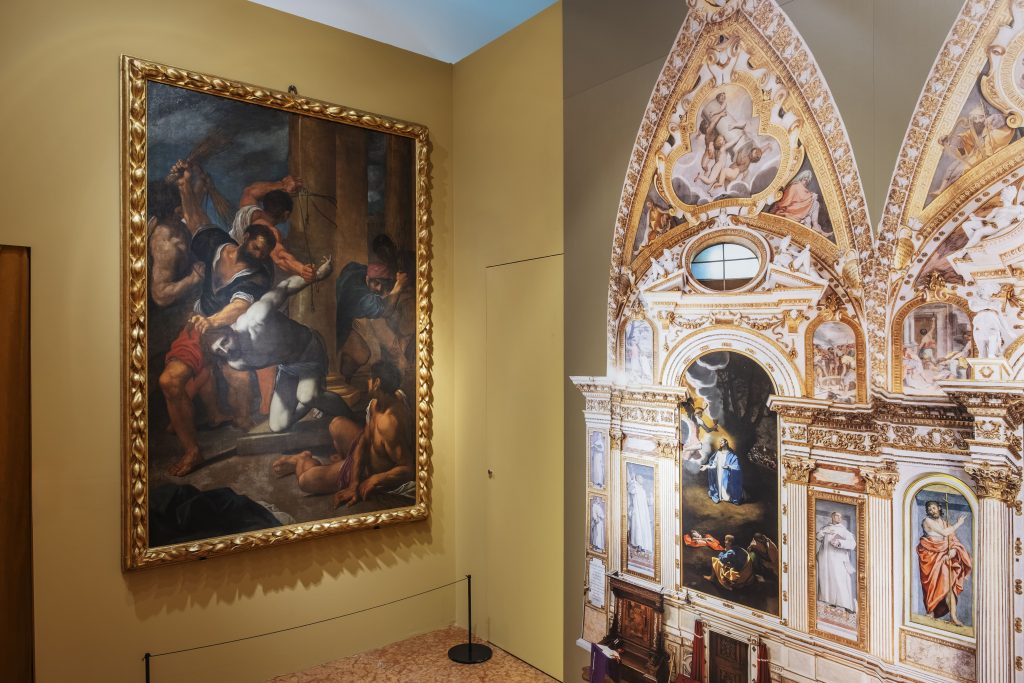


There exists a style of painting that does not shout for attention, nor does it strive for forced awe or theatrical gestures. Instead, it is an art that demands time and quiet contemplation. This approach forms the core of the exhibition dedicated to Bartolomeo Cesi, curated by Vera Fortunati, extended until April 6, 2026, at the Museo Civico Medievale in Bologna. Cesi’s work is characterized by its introspection, progressively shedding the exaggerated emphasis of Mannerism: contorted forms soften, and colors become more subdued and controlled. Even the spatial composition forsakes dizzying effects in favor of a new, more intimate sense of balance.
Featuring 36 works, including paintings, altarpieces, and drawings, the exhibition provides a clear portrait of this painter who was active in Bologna between the late 16th and early 17th centuries. This period was a vibrant artistic hub where the Carracci brothers were poised to revolutionize art with their direct, tangible, and groundbreaking naturalism, paving the way for a dominant new style.
Cesi navigated this dynamic landscape by blending the legacy of Mannerism with the “living and true” approach of the Carracci. His painting evolved into a regulated act, almost a spiritual exercise mirroring that of his patrons. What Graziani described as “the pearly vibration of the surfaces,” which even earned the admiration of Guido Reni, comes alive within the museum’s halls. The exhibition’s design, subtle yet distinct, guides visitors not only to discover Cesi himself but also the historical and artistic context that surrounded him.
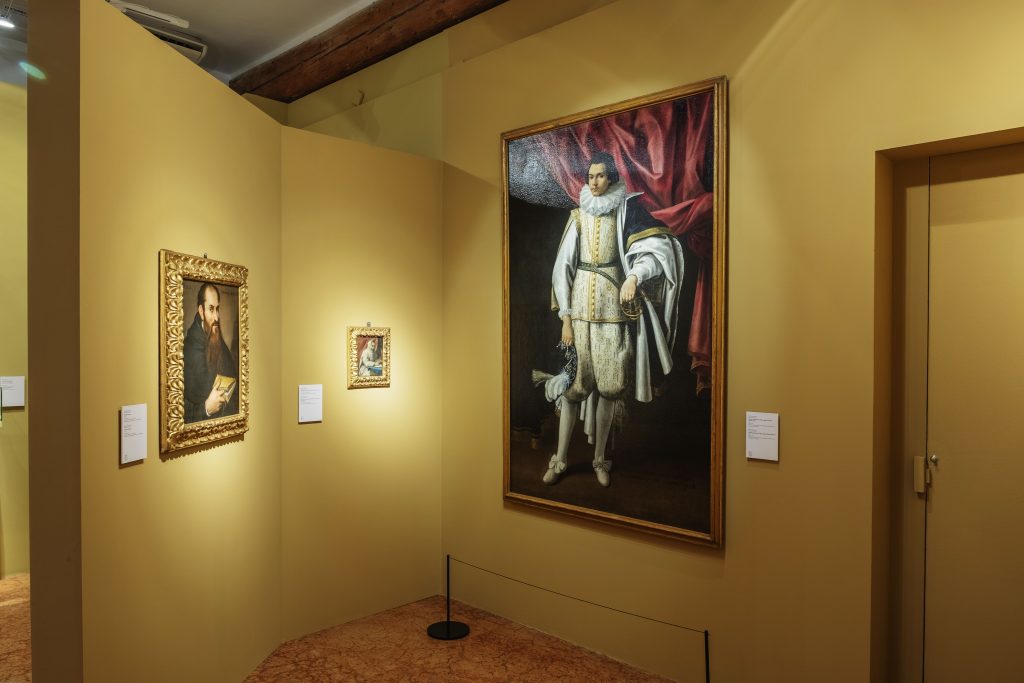
Crucially, the exhibition’s major achievement is dispelling the long-standing misconception surrounding Bartolomeo Cesi: that of being merely a “transitional” artist, caught between Mannerism and the Carracci, or between old traditions and the culture shaped by the Council of Trent. This Bologna exhibition, meticulously researched and narratively clear, strives to overturn this historiographical inertia, repositioning the painter with a less subordinate and more complex role within the post-Tridentine artistic environment.
This was Bologna, a city particularly receptive to the mandates of the Council of Trent. Here, painting was not merely an exercise in style or an arena for formal competition; it transformed into a pedagogical tool and a moral instrument. While Mannerism often theatricalized the sacred, Cesi seemingly aimed to restore a nearly severe frontality to his scenes, ensuring narratives were legible and gestures restrained.
In an era still resonating with the echoes of Parmigianino and the allure of artifice, Cesi’s painting stands apart, characterized by restraint. His figures are still, composed, often isolated within landscapes that halt the narrative flow. Color does not explode but rather subtly vibrates, remaining disciplined. Crucially, each scene unfolds in a distinct, slowed-down time, inviting the viewer to deeply engage with the image. This perspective perfectly illuminates the exhibition’s aptly descriptive title: Painting of Silence.
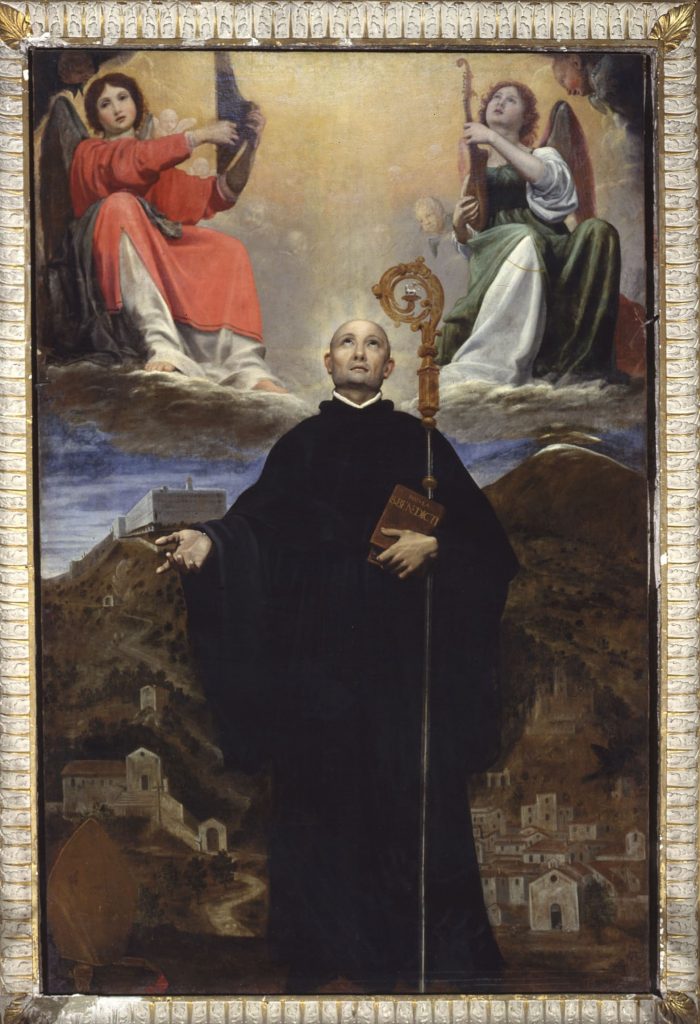
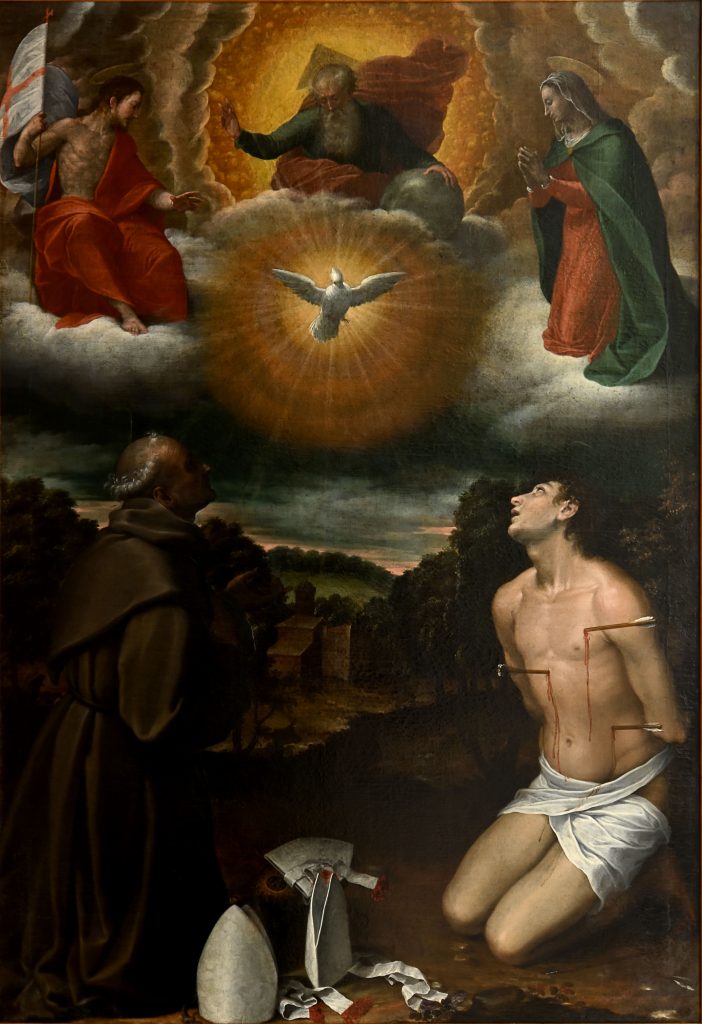
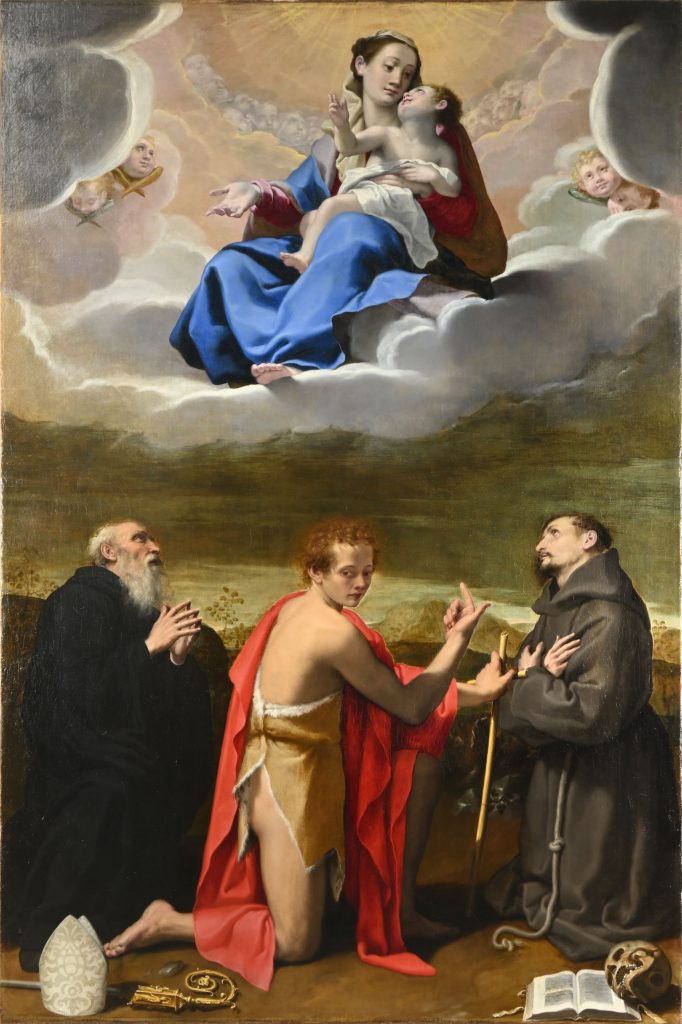
Beyond offering a comprehensive critical re-evaluation of the artist, the exhibition also champions the city’s artistic heritage through significant investment from the Municipality of Bologna. This includes restoration and maintenance efforts on four paintings previously difficult for the public to view due to their locations: The Trinity and the Virgin Adored by Saints Bernardino of Siena and Sebastian, owned by the IRCCS Azienda Ospedaliero-Universitaria di Bologna – Policlinico Sant’Orsola; the altarpiece Madonna with Child in Glory and Saints Benedict, John the Baptist, and Francis from the church of San Giacomo Maggiore; Saint Benedict Seated belonging to the Metropolitan City of Bologna; and Saint Francis in Prayer from the Capuchin Friars Minor of Emilia-Romagna.
As the curator emphasizes, Cesi was an “artist steadfast in sacred themes: his painting, oscillating between fidelity to Mannerist tradition, adherence to Tridentine precepts, and an encounter with the Carracci’s ‘living and true’ style, delves into the unfathomable and silent space of the mystical Absolute.” Cesi thus forged a language that did not compete on the grounds of spectacular verisimilitude but rather leaned towards an alternate dimension, where narrative clarity coexists with an almost absolute emotional suspension.
The exhibition’s progression clearly traces this artistic tension, structured into thematic sections that allow for understanding Cesi’s evolution without forced interpretations. It begins with his formative years in Bologna, a city influenced by the Counter-Reformation and the ideas of Gabriele Paleotti, leading to his more mature periods where Cesi’s artistic language achieved striking coherence. Models like Raphael, Correggio, the Carracci, as well as Scipione Pulzone, Zuccari, and Barocci, emerge to varying degrees in the displayed works. They offer valuable insight into how Cesi was not merely a “transitional” artist between Mannerism and naturalism, but rather a fully conscious figure, discerning in his choices of what to embrace and what to reject.
Fortunati writes: “Cesi’s art creates tangible realities through an ascent to the highest degrees of mystical contemplation: silent landscapes, imbued with ‘the steadfast value of light’ (Arcangeli), and the subtle interplay of silvery light and shadow mediated by Correggio and Barocci, artists dear to the Carracci and Camillo Procaccini.”
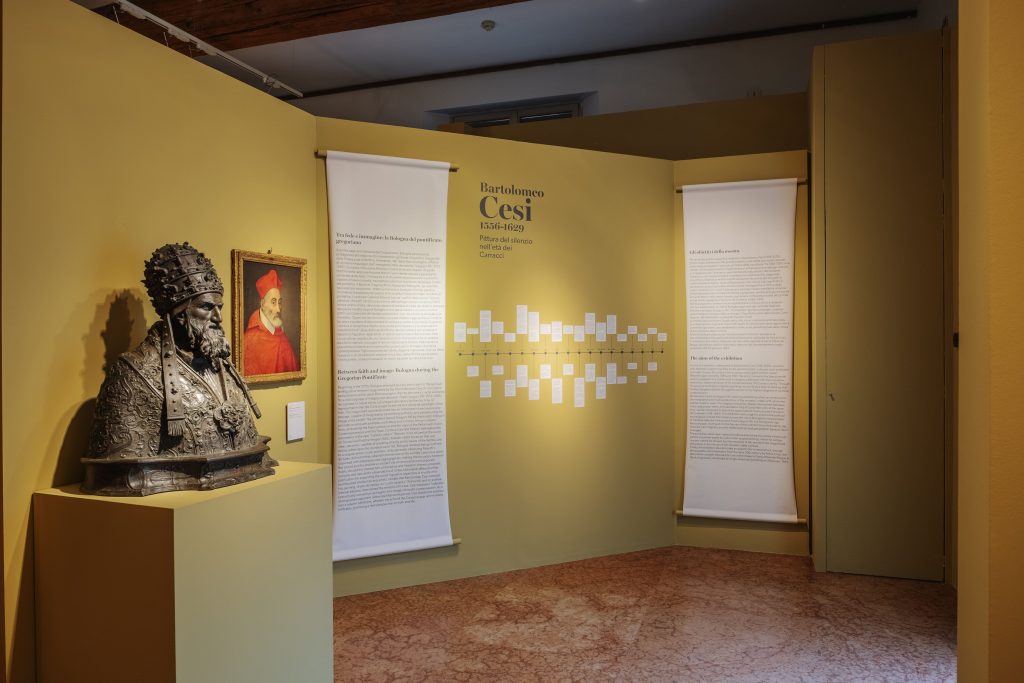
The setting is Bologna during the time of Cardinal Gabriele Paleotti, the city’s bishop from 1556. The first gallery introduces this Bolognese ecclesiastic and the crucial role images played in the redefinition of preaching during those years. The Cardinal himself, who published his Discourse on Sacred and Profane Images in 1582, emphasized the effectiveness of images. Unlike preaching, which requires longer engagement, images are immediate, understood “in a single breath,” like a “unfurled banner,” a “perpetual trumpet,” compared to any other form of communication.
Paleotti penned his Discourse driven by his role as a pastoral bishop, and in laying out guidelines for artists on how to create legitimate images, Cesi, above all others, seems to have perfectly translated the ultimate goals of art – to teach (docere), to delight (delectare), and to move (movere) – into his works.
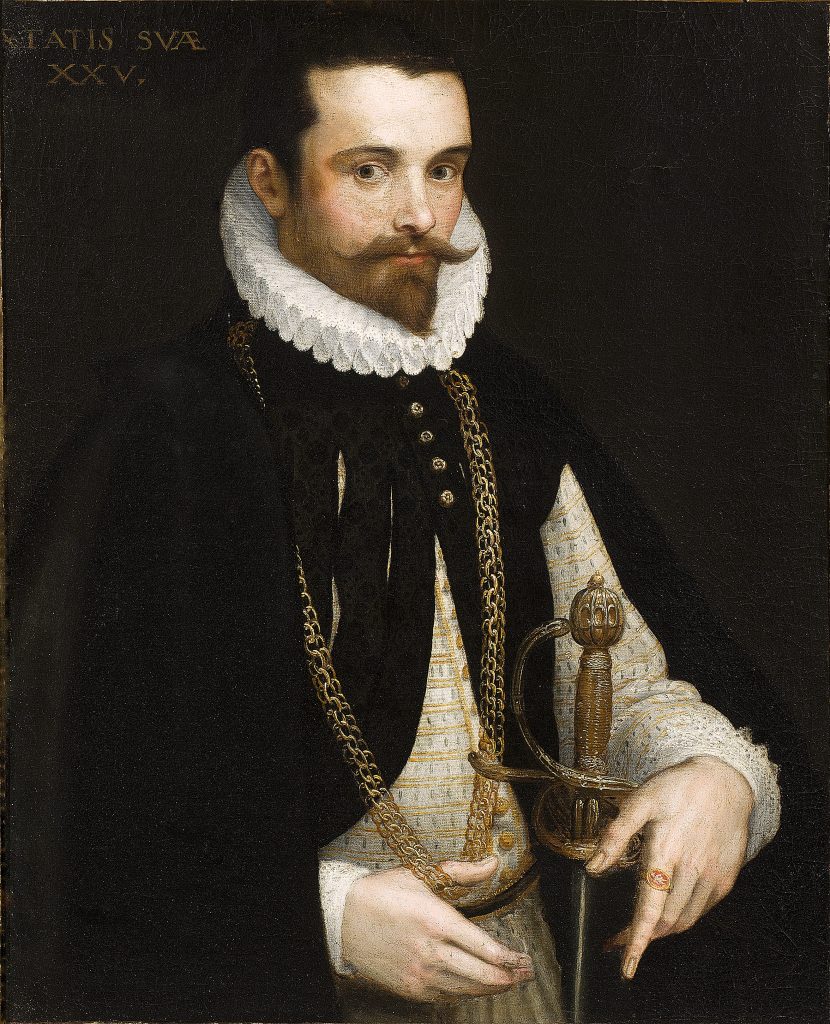
In Cesi’s portraits, though few, a rare quality emerges: an inward focus not to be interpreted as modern psychological introspection, but rather as a form of restrained presence. Consider, for instance, the Portrait of a Friar, which seeks no complicity with the viewer. The face is close yet inaccessible, with a gaze that remains withdrawn, as if directed elsewhere. Even more radical is the Portrait of a Carthusian Monk as Dionysius Cartusianus – long attributed to Reni – a small, almost secluded work where the figure seems to already slip into another, entirely mental, dimension.
Significantly, Abbot Luigi Lanzi wrote about Cesi in his History of Painting in Italy, echoing the earlier assessment by Malvasia in Felsina Pittrice: Lives of the Bolognese Painters: «Bartolommeo Cesi is also one of the leading figures who paved the way for the Carracci to adopt a sound method. From him, Tiarini learned the art of fresco painting, and his works provided Guido with the initial impetus to invent his gentle and suave manner. One who observes a work by Cesi sometimes doubts whether it is a work by a young Guido. He dares little, draws everything from nature, selects beautiful forms at every age, and sparingly aids them with ideas; rare folds, measured attitudes, hues more graceful than strong. […] What Malvasia writes in praise of this painter is most noteworthy: that he possesses a style that satisfies, pleases, and captivates; truly clean and suave as any style of the best Tuscan fresco painters. He was esteemed by the Carracci and generally loved by professionals for the honesty of his character and his love for art.»
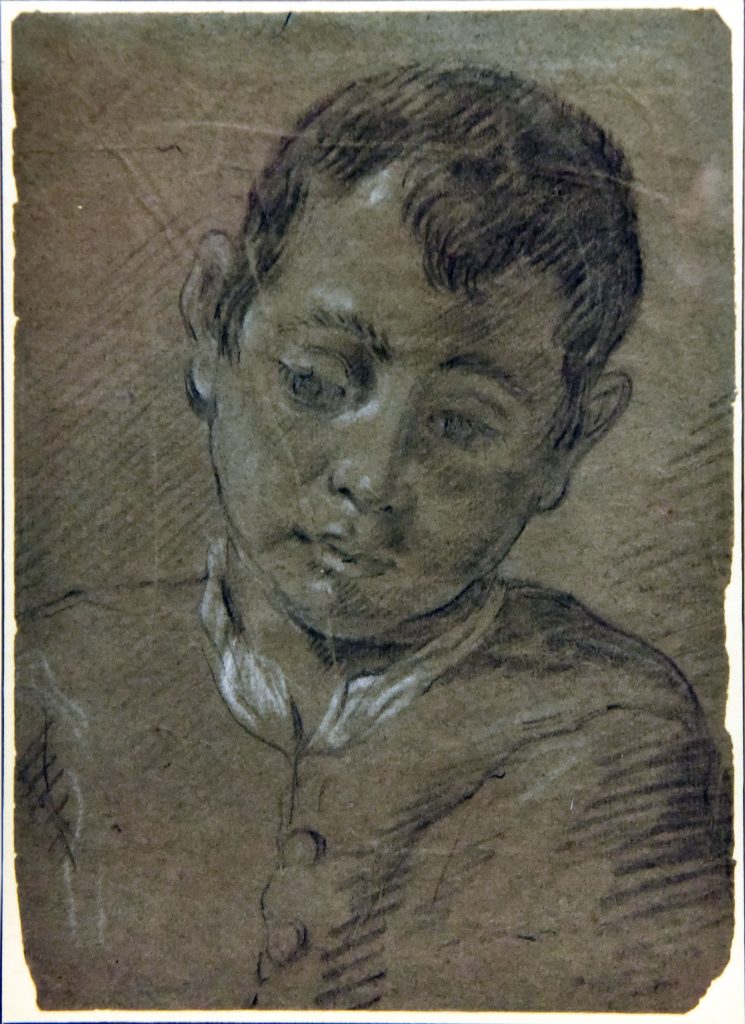
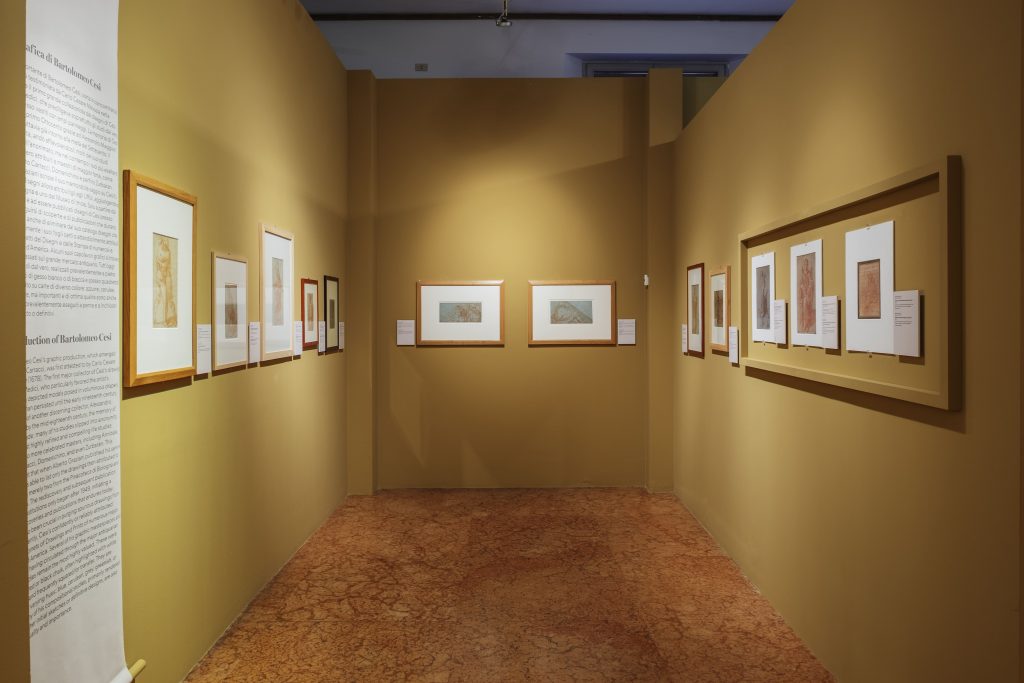
This characteristic is even more evident in his drawings. Here, one can truly see how Cesi observed nature, yet without ever fully surrendering to it. One might describe his naturalism not as seeking absolute truth, but rather as a means, a tool.
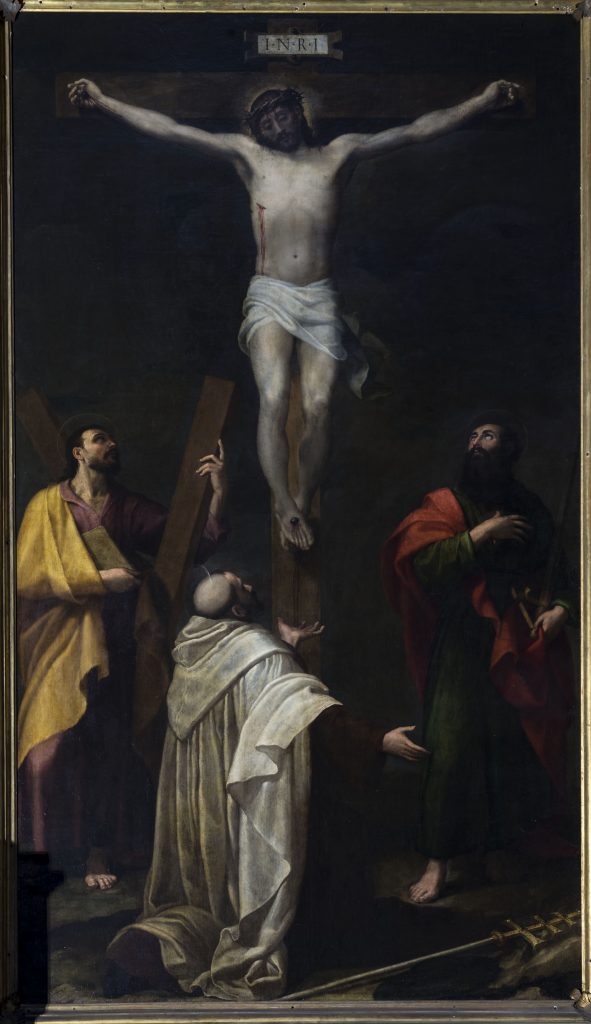
The implicit comparison with the Carracci runs through the entire exhibition like an underlying tension, never escalating into overt opposition. This dialogue is powerfully felt, even when examining his Crucifixion scenes.
As early as 1939, Alberto Graziani described Cesi as a Counter-Reformation artist in the strictest sense, capable of adhering to principles of clarity and decorum without succumbing to direct emotional involvement. This is particularly evident in his altarpieces, where his sacred language finds its most refined expression. In the Madonna with Child in Glory and Saints Benedict, John the Baptist, and Francis, one of the exhibition’s highlights, everything appears designed to avoid excess: clear but not dazzling light, solemn but not monumental figures, and a landscape that silently accompanies without interfering.
Equally significant, though different, is the tension in Saint Benedict Seated: the figure is frontal, almost motionless, rendered with a simplicity that borders on abstraction. Yet, the face, marked by age, introduces a note of reality that prevents the image from becoming purely idealized. It is in this delicate balance that Cesi finds his unique artistic measure.
Perhaps it is in his works connected to the Carthusian world that this vision reaches its zenith. The exhibition—which concludes emphatically with reproductions of frescoes housed in the Church of San Girolamo at the Certosa di Bologna—strongly emphasizes this connection, interpreting Cesi’s relationship with the order as a profound spiritual consonance. His images indeed appear designed to accompany and engage with meditation, as if resonating on the same contemplative frequency. The pictorial space transforms into a mental space, a place of quiet reflection. Cesi, in fact, addressed a specific need for comprehensible, orthodox images capable of guiding devotion without ambiguity.
However, reducing his art solely to its function would be a mistake. In some works, a more subtle tension is palpable, almost a suppressed vibration beneath the surface of decorum. The gazes of the saints, the depiction of hands, the use of color, and certain pauses between figures reveal a psychological depth that transcends mere dogmatic illustration.
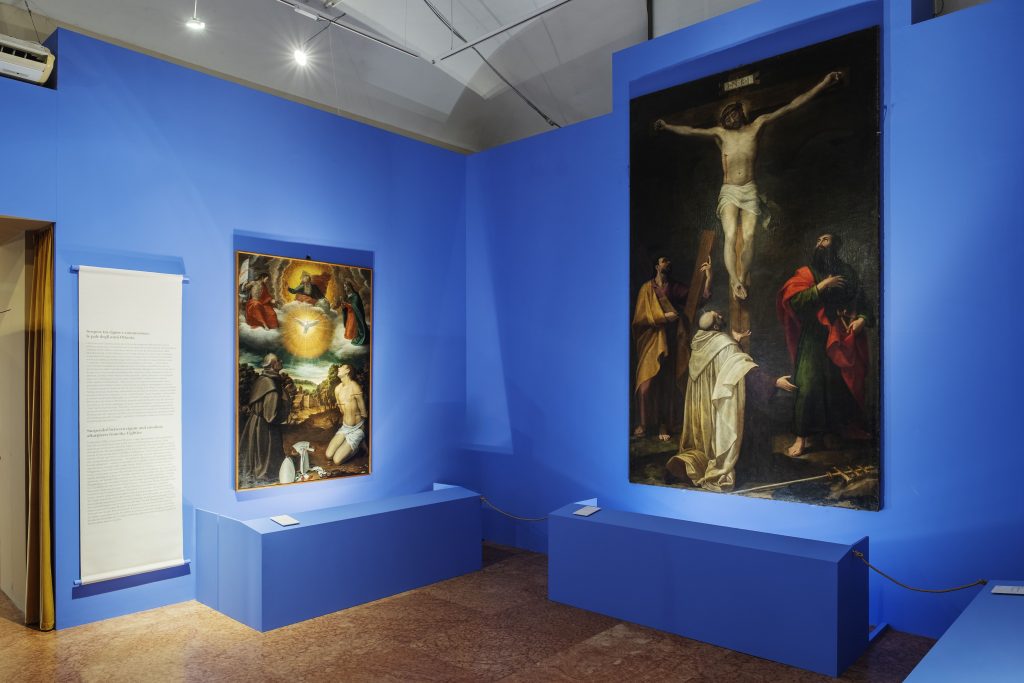
The exhibition’s understated and un-spectacular installation effectively supports this interpretation. It avoids superfluous theatricality and forced contemporary relevance, choosing instead to let the works speak for themselves in their historical richness, respecting the very nature of Cesi’s painting, characterized by balance and control.
The exhibition successfully restores depth to an artist of conscience even more than of style—one who did not simply endure the Counter-Reformation but interpreted it profoundly, transforming painting into a realm of meditation. And his apparent sobriety, when observed closely, reveals itself to us as a form of silent radicalism.