


After over a decade of hearings, thousands of legal documents, and one of the largest journalistic leaks in recent history, the Nahmad family’s house of cards has finally collapsed. A definitive ruling mandates the return of Amedeo Modigliani’s masterpiece, Man Sitting with a Cane (1918), to Philippe Maestracci, grandson and heir of the Jewish art dealer Oscar Stettiner. This decision closes a dark chapter in the contemporary art market, exposing the ongoing struggle for justice regarding WWII art looting, with one of the world’s most influential gallerists, David Nahmad, at its center.
David Nahmad’s Shell Company and Oscar Stettiner’s Tragedy
The saga is more than just a case of restitution; it’s a financial thriller. At its heart is David Nahmad, patriarch of one of the world’s most influential and wealthy art dealing dynasties, known for his ability to sway international art prices. For years, the Nahmads vehemently denied ownership of the painting, asserting that the legitimate owner was the International Art Center (IAC), a mysterious Panamanian company.
This facade remained impenetrable until 2016, when the Panama Papers scandal tore it down. Documents from the Mossack Fonseca law firm confirmed that IAC was nothing more than a shell company, entirely controlled by the Nahmad family. What had been presented for years as a legitimate auction purchase (made in 1996 at Christie’s for $3.2 million) was exposed as an attempt to conceal an asset with an undeniably complex history.
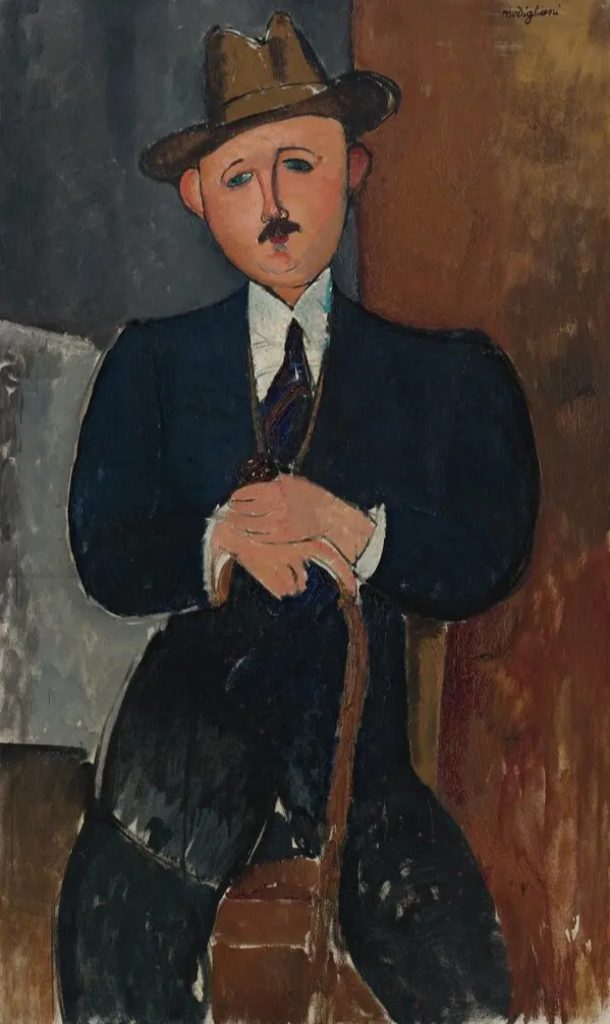
The painting’s provenance, moreover, left little room for doubt. This portrait—an elegant man with the melancholic gaze characteristic of Modigliani’s style—was confiscated by the Nazis in Paris in 1939, shortly after Oscar Stettiner fled the French capital. While Stettiner desperately sought to save his family, his assets were liquidated in “sham auctions” organized by the occupying forces.
After the war, Stettiner attempted to recover the painting, but its trail vanished into the labyrinth of the European black market, only to resurface decades later in the Nahmads’ Geneva vault. The billionaire’s defense tried until the very end to invoke statutes of limitations and the “good faith” of the acquisition. However, the clear evidence of looting and the subsequent concealment strategy through offshore entities rendered his position indefensible before the courts.
Not Only Modigliani: Other Notable Art Restitution Cases
The Modigliani case is far from isolated. It’s impossible not to mention the now-famous case of Maria Altmann, who, after years of legal battles with the Austrian government, successfully secured the restitution of Gustav Klimt’s Portrait of Adele Bloch-Bauer I, also seized by the Nazis.
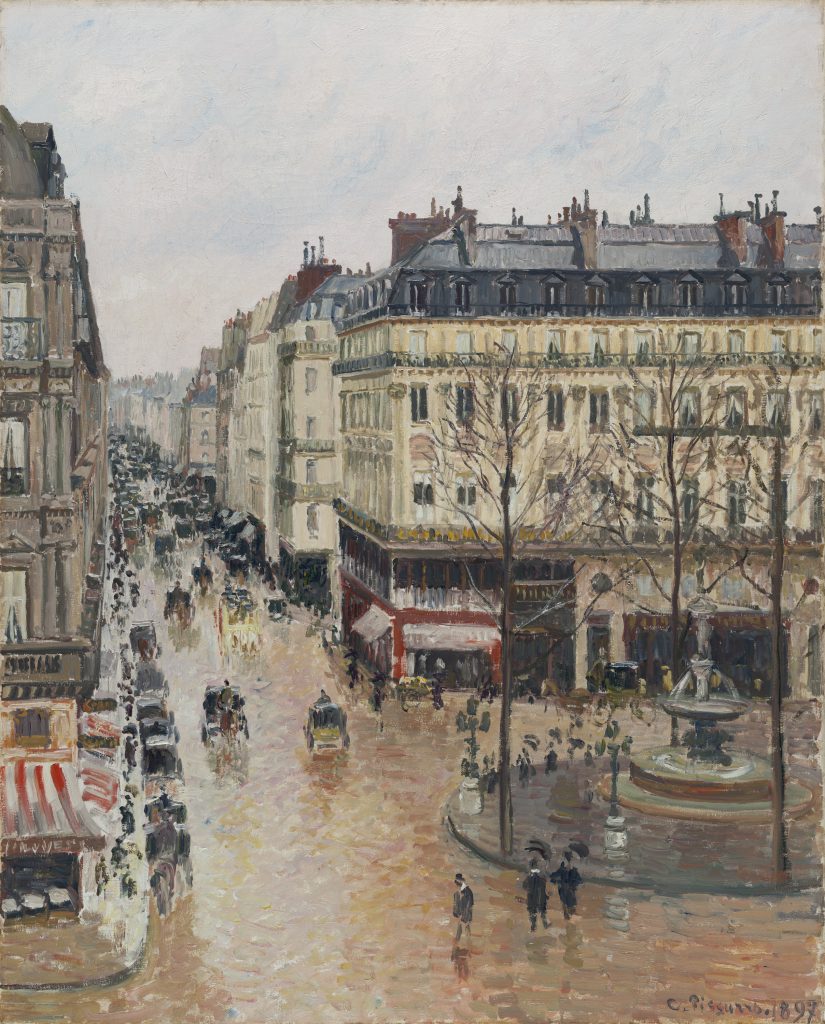
By contrast, the saga surrounding Rue Saint-Honoré in the Afternoon, Rain Effect, a masterpiece by Camille Pissarro, has been significantly more controversial. For years, it was at the center of a dispute between the Cassirer family and the Thyssen-Bornemisza Museum in Madrid. In that instance, unlike the Nahmad case, both Spanish and U.S. courts repeatedly protected the painting’s stay in the museum, citing legal technicalities related to local “good faith” acquisition laws, drawing sharp criticism from the international community.
The Nahmad case, however, demonstrates that due diligence and provenance have become sharpened legal tools, capable of penetrating even the most sophisticated corporate shields. The painting’s current estimated value of around $25 million is almost secondary to the symbolic importance of this ruling.
For years, Man Sitting with a Cane remained confined to the obscurity of Geneva’s free port. Now, finally free from the constraints of a decade-long dispute, the ‘rediscovered’ Modigliani can once again be seen. It remains to be seen whether the heirs will choose to entrust it to a museum or if the artwork will return to the market, this time with a story of justice finally etched into its history.