


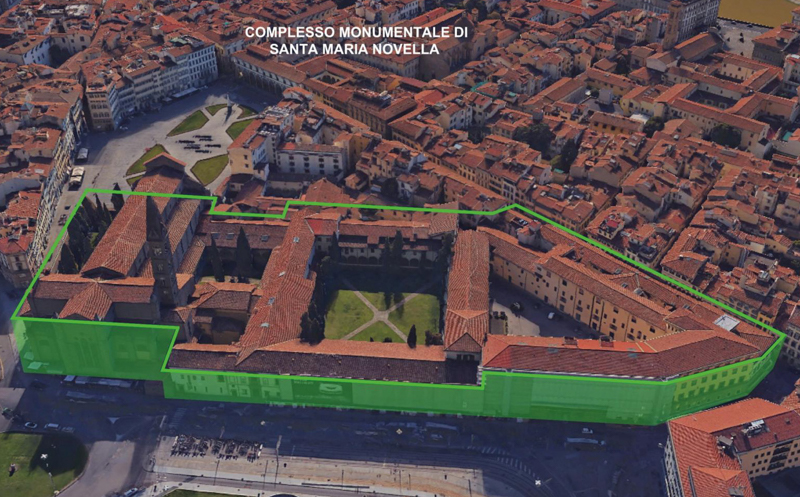
Five years after its establishment, the Alinari Foundation for Photography has unveiled plans for a new Alinari Museum in Florence. This initiative aims to provide a stable and structured home for its extensive archive, which has operated in a decentralized manner in recent years. The forthcoming museum will be situated within the former Marescialli School, part of the monumental Santa Maria Novella complex. This move is integrated into a broader urban redevelopment project that will also introduce social housing and co-working spaces to the area. Giorgio van Straten has been reconfirmed as president and Claudia Baroncini as director of the Foundation, which was originally established by the Tuscany Region, to steer the institution through this significant new phase of development.
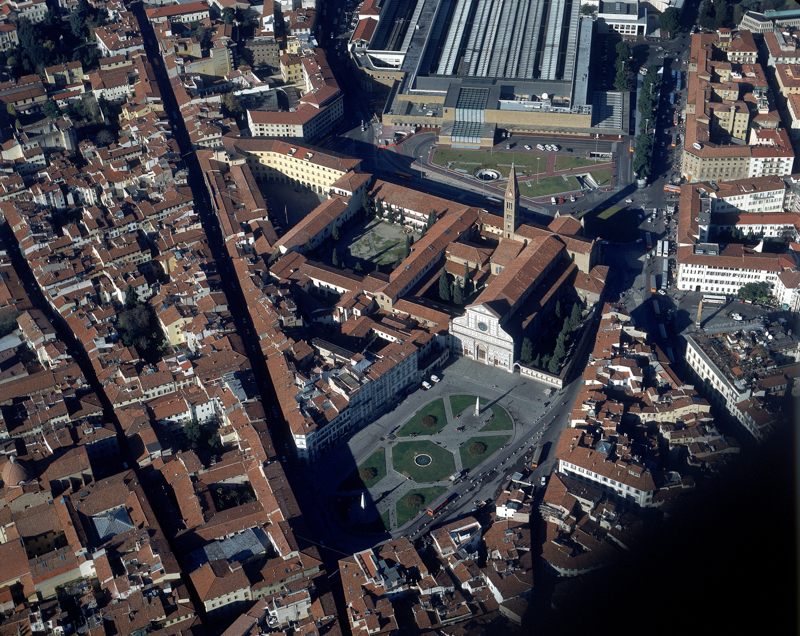
The approximately 1,800 square meters allocated to the Foundation will host exhibition areas, a substantial part of the photographic archive, a comprehensive library (including the Photo Library Albums), consultation rooms, research facilities, educational spaces, and public services. The project timeline estimates architectural design completion by 2026, construction finished by 2028, and a grand public opening in 2029. The initial overall cost for this undertaking is projected to be around 6.5 million euros, with funding primarily from the Tuscany Region, complemented by support from Fondazione CR Firenze.
This announcement marks a significant return for Florence, which previously housed Italy’s first museum exclusively dedicated to photography, the Museo Nazionale Alinari della Fotografia. Active between 2006 and 2014 in the former Leopoldine Schools, following a history of relocations that began in the 1980s, this museum safeguarded hundreds of thousands of original prints and materials, including daguerreotypes, calotypes, and albumen prints, along with works by leading 19th and 20th-century photographers. Its closure had left unresolved structural issues concerning the preservation and promotion of one of the world’s most vital photographic heritages.
The Foundation’s newly outlined strategy revolves around two complementary centers. In addition to the Florence site, which is designated for museum display and public engagement, the Tuscany Region is developing the future House of Photography in Montecatini Terme, specifically at the Terme Excelsior. This facility will be dedicated to the meticulous preservation of delicate materials, particularly negatives, alongside restoration, digitization, and advanced training activities. This dual model effectively separates yet integrates exhibition and archival functions, expertly addressing the complex technical requirements of this vast and invaluable photographic collection.
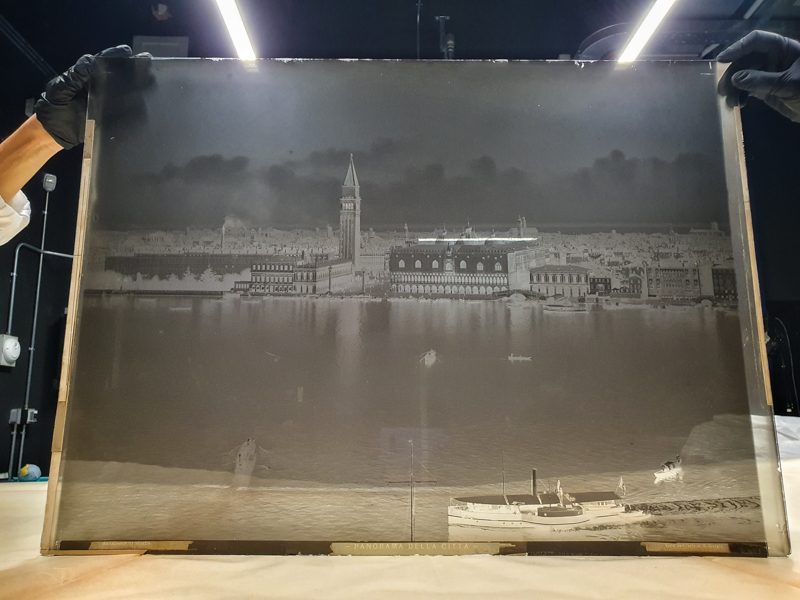
This new phase builds upon five years of robust activity by the Foundation. Key achievements include a vast digitization project of the historic plate collection, with approximately 80,000 plates acquired in high definition. This notably includes the so-called “Glass Giants” – 170 large-format collodion and gelatin glass plate negatives, often exceeding one meter in size.
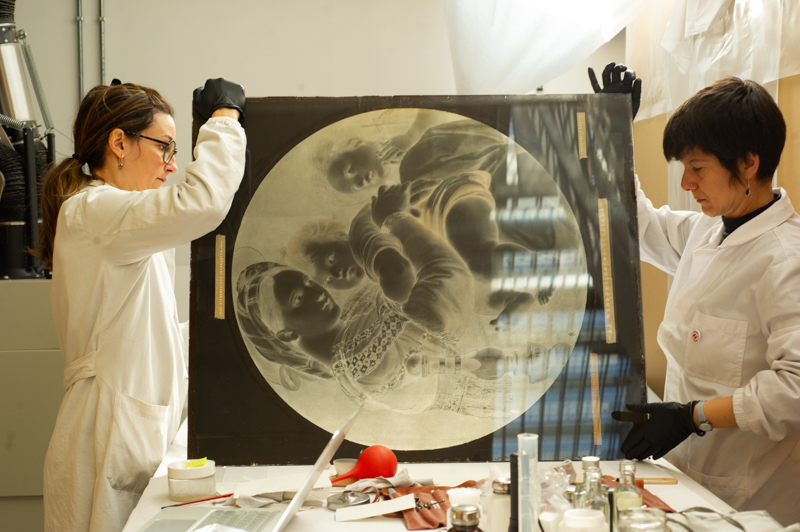
Alongside these conservation efforts, the Foundation has cultivated an extensive exhibition program in collaboration with both Italian and international institutions. The absence of a permanent venue has, in fact, fostered a widespread dissemination of its projects. Notable exhibitions include Fotografe!, displayed at Villa Bardini and Forte Belvedere in Florence; Fotografia Wulz. Un atelier, una famiglia, una città at Magazzino delle Idee in Trieste (following the inventory and digitization of the Wulz archive); and L’Italia è un desiderio at the Scuderie del Quirinale, with the latter also supported by an open call from the DG Contemporary Creativity of the Ministry of Culture and the MUFOCO museum. Concurrently, the Foundation has championed a census of photographic heritage across Tuscany and facilitated the establishment of the Tuscan Photography Network.
Looking ahead to 2026, three internationally prominent initiatives are planned: a photographic exhibition mounted outside the Paris City Hall, inaugurated for the 70th anniversary of the Rome-Paris twinning and promoted by the Italian Cultural Institute; a spin-off of the Fotografia Wulz exhibition, focusing on sisters Wanda and Marion Wulz, which will be presented at the Estorick Collection in London in collaboration with the Calliope Arts Foundation; and also in London, participation in an exhibition dedicated to Fosco Maraini, promoted by the Italian Cultural Institute.
Florence is thus poised to re-establish itself as a leading center for photographic culture, while Montecatini is preparing to forge a new identity deeply rooted in the preservation of visual heritage and specialized training. These two distinct, yet intricately interconnected, centers are set to collectively safeguard and advance the enduring legacy of Alinari.