


Renowned German filmmaker, writer, and screenwriter Alexander Kluge (born in Halberstadt, 1932) passed away last Wednesday in Munich at the age of 94. Kluge was a pivotal figure in the New German Cinema movement, notably as one of the signatories of the 1962 Oberhausen Manifesto – a groundbreaking declaration that challenged traditional filmmaking and advocated for a politically charged, radically experimental cinematic language.
His death, confirmed by the Suhrkamp publishing house on behalf of the family, unequivocally marks the end of a significant era for 20th-century cinema and critical thought. Yet, his profound body of work continues to serve as an indispensable compass for anyone seeking to engage with the world through an uncompromised and critical lens.
Alexander Kluge’s Cinema: Between Fragmentation and Reality
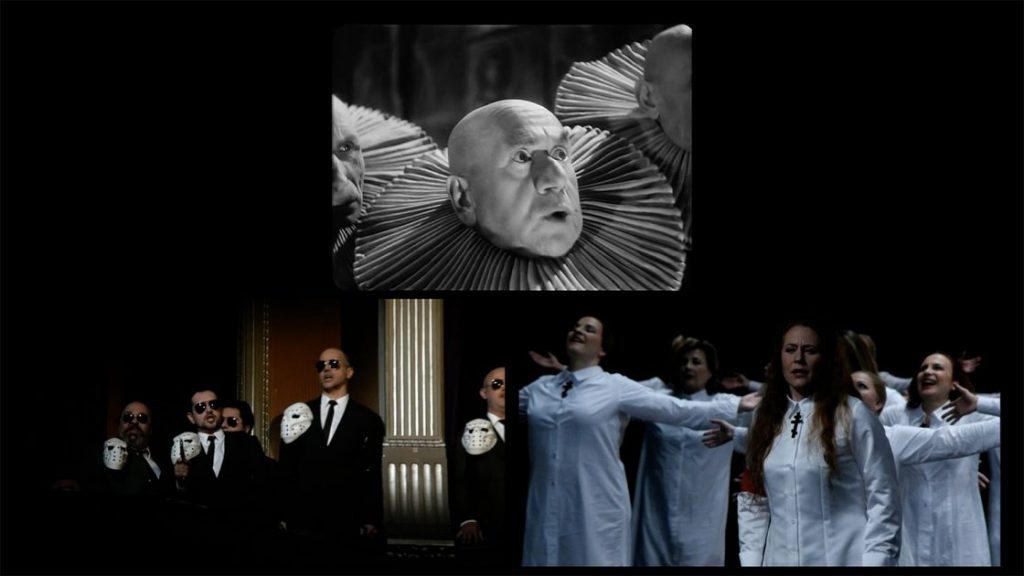
Kluge’s feature film debut, Yesterday Girl (original title: Abschied von gestern), in 1966, earned him the Silver Lion at the Venice Film Festival. The film introduced his distinctive style: fragmented editing, documentary inserts, and a non-linear narrative reflecting the instability of post-war Germany. His international acclaim solidified in 1968 when he won the Golden Lion with Artists Under the Big Top: Perplexed (original title: Die Artisten in der Zirkuskuppel: ratlos), an elegant and melancholic film that explored the failure of utopian ideals through a young circus performer’s efforts to revitalize her late father’s shows.
For Kluge, cinema was a powerful form of resistance. This civic commitment reached its peak in 1978 with the collective film Germany in Autumn (original title: Deutschland im Herbst), a crucial ensemble work that sought to process the trauma of RAF terrorism and the oppressive state climate of that period.
The Venice Film Festival once again honored him in 1982, bestowing the Golden Lion for Lifetime Achievement, recognizing him as a master who transformed film into a potent instrument of sociological inquiry.
Beyond Cinema: Engagement with Theory and Art
Kluge’s creative output was never confined to filmmaking. As a prolific writer and media theorist – having been educated under the tutelage of Theodor Adorno – he extensively explored the concept of an “oppositional public sphere,” striving to shield images from market trivialization.
His profound dialogue with the visual arts was equally significant, culminating in a historic collaboration with Fondazione Prada. In 2017, the exhibition The Boat is Leaking. The Captain Lied. at Ca’ Corner della Regina in Venice, showcased Kluge’s research within a compelling visual “constellation” alongside photographs by Thomas Demand, scenographies by Anna Viebrock, and the curatorial vision of Udo Kittelmann.